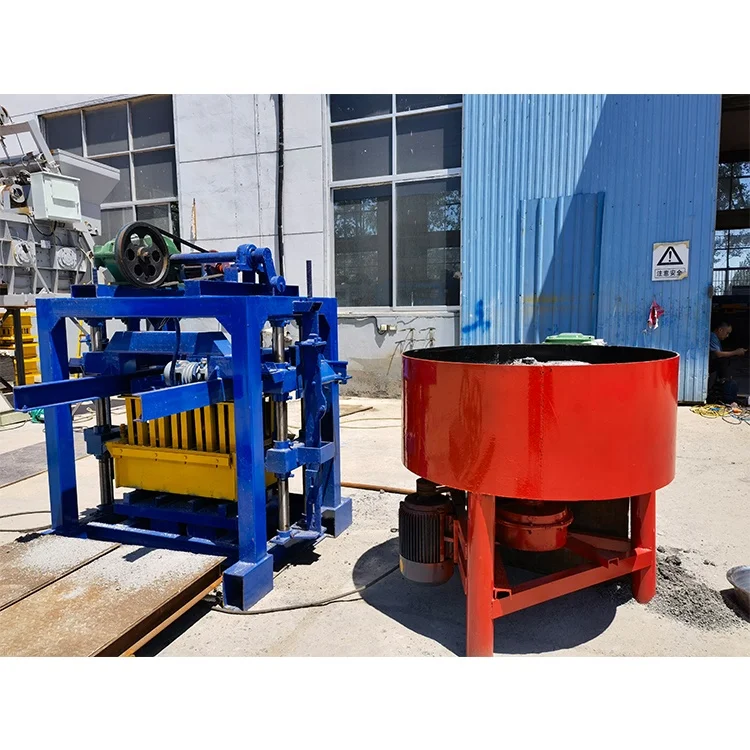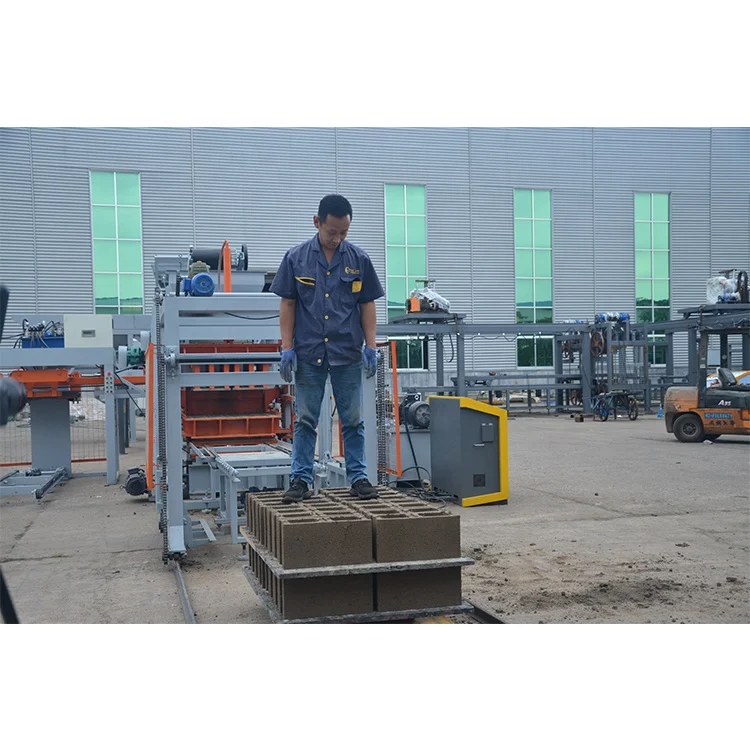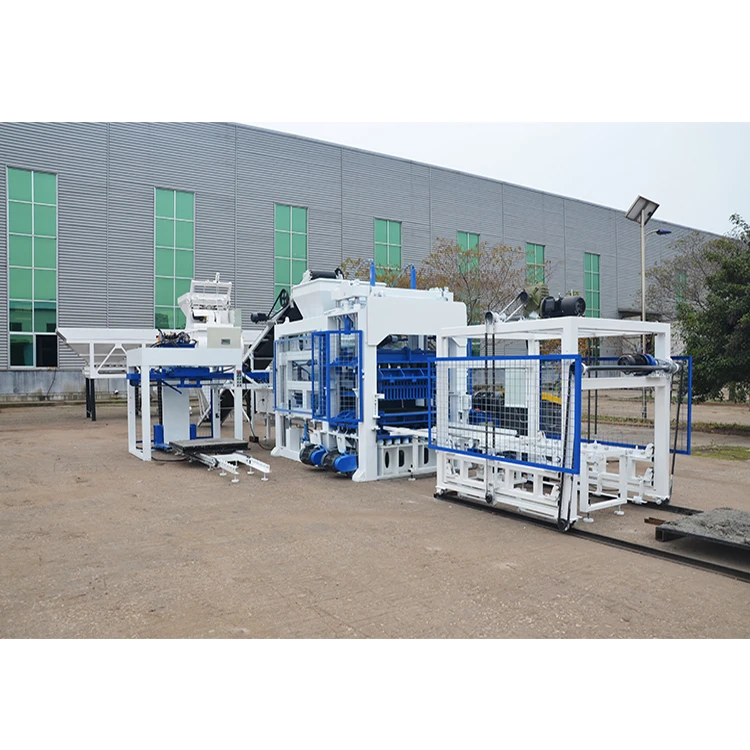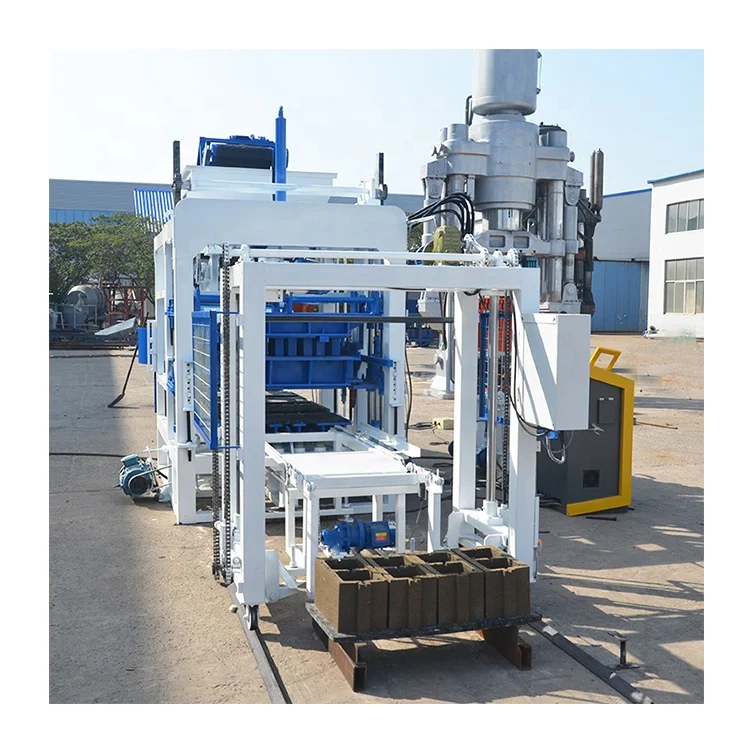


Description
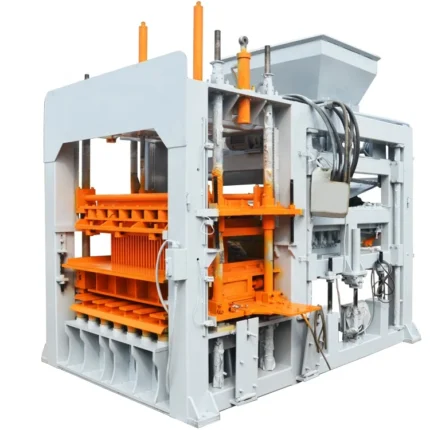
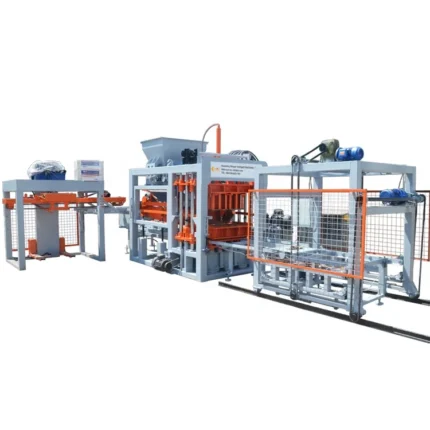
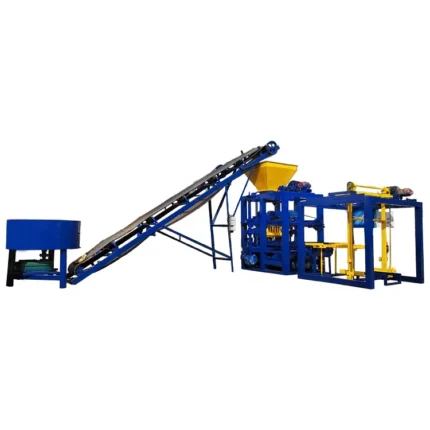
Staged Automation Path — The QT4-18 supports incremental control upgrades from manual pallet handling through to automatic stacking, letting you add intelligence where it removes the most operator burden first.
Technical Specifications
| Parameter | Value |
|---|---|
| Model | QT4-18 |
| Product Type | Hydraulic Block Making Machine |
| Overall Dimensions (L×W×H) | 3900×1600×2300 mm |
| Total Weight | 3T |
| Rated Power | 24 kW |
| Exciting Power (Vibration Force) | 40-50 kN |
| Molding Cycle | 15-25 s (basis not stated in source — confirm block format and material) |
| Mixer Model | JQ350 |
| Pallet Size | 850×550×25 mm |
| Output Capacity (400×200×200mm hollow, 4 pcs/mould) | 1200-1680 pcs/hr (basis: 15-20 s cycle per source table) |
| Output Capacity (400×150×200mm hollow) | 1800-2400 pcs/hr |
| Output Capacity (240×115×53mm solid brick) | 3240 pcs/hr |
| Daily Output — 8 hr (400×200×200mm hollow) | 9600-13440 pcs |
| Daily Output — 8 hr (400×150×200mm hollow) | 14400-19200 pcs |
| Daily Output — 8 hr (240×115×53mm solid brick) | 16200-19440 pcs |
| Automation Level | Semi-automatic (configurable to full automatic stacking) |
| Stacking Method | Automatic stacker available |
| Pallet Material Option | Fibre glass or wooden |
| Standards | CE declaration referenced |
Application Suitability
| Application | Material or Output |
|---|---|
| Hollow block production (400×200×200mm, 400×150×200mm) | Crushed stone, sand, cement, fly ash |
| Solid brick production (240×115×53mm) | Sand, cement, stone dust |
| Paving block production | Crushed aggregate with cement binder |
| Kerbstone production | Coarse aggregate and cement mix |
| On-site production for contractors | Locally sourced sand and stone |
| Format changeover via mould swap | Multiple block types on one press |
What "Fully Automatic" Actually Means on a QT4-18 Hydraulic Block Machine
Automation is not a switch you flip — it is a sequence of stations you add, and each one must be named in the contract before the machine ships.
Plant owners evaluating the automatic QT4-18 block making machine often see a single headline cycle rate and assume every station downstream of the press runs without an operator. In practice, the press itself may be PLC-controlled while pallet feeding, stacking, and curing rack handling remain manual. The gap between the quoted cycle rate and the actual daily throughput almost always traces back to which peripheral stations were included and which were left to the operator. I have seen lines where the press finished a cycle every 18 seconds, but the operator needed 25 seconds to pull and stack each pallet — so the real output matched the slower step, not the faster one. [NEED_CITE: mismatch between press cycle and manual handling in semi-automated lines]
Where the PLC Earns Its Place in Block Production
The automatic QT4-18 block making machine stores cycle parameters per mould inside the PLC, meaning the vibration duration, pressure hold time, and feed sequence for a 400×200×200mm hollow block are recalled automatically when that mould is mounted. This eliminates the operator guesswork that causes batch-to-batch density variation. Without stored recipes, each format change relies on manual adjustment, and the first pallets off the line after a swap often go to waste while the operator dials settings back in.
Automatic Stacking: The Station That Changes Labour Planning
When the automatic stacker is included, cured or green pallets are lifted and arranged without a worker at the end of the line. This is the single station that most directly reduces headcount on the production floor. A PLC-controlled hydraulic block machine with stacking removed from the operator’s shift allows the remaining crew to focus on raw material feeding and mould changes instead of hauling loaded pallets to the curing yard. The stacking station must be matched to the 850×550×25 mm pallet dimension — a mismatch here means the stacker cannot grip or align the pallets correctly. [NEED_CITE: pallet dimension tolerance requirements for automatic stacker systems]
Reading the Specs That Decide Block Density and Consistency
The vibration force of 40-50 kN works together with hydraulic pressure to compact the mix inside the mould cavity. Higher vibration alone will not produce a strong block if the hydraulic pressure is too low to hold the material during compaction. The PLC’s role is to manage both parameters in a timed sequence so that every cycle repeats identically. The JQ350 mixer upstream of the press must deliver a consistent mix — if water content or aggregate grading drifts, no PLC program can compensate for the resulting variation in block weight. The 24 kW rated power covers the vibration motor, hydraulic pump, and conveyor drive; buyers should confirm their site voltage and frequency before production starts, because a motor wound for 380V/50Hz will not run correctly on a 440V/60Hz supply without rewinding or a transformer. Mould change time depends on whether the machine uses a bolt-on or slide-in system, and this must be confirmed before ordering if format flexibility is a priority.
The Cost of Skipping the Automation Checklist Before Shipment
Leaving the PLC display language, local voltage, and stacking configuration to assumption means the machine arrives on site and cannot run. Commissioning delays of several days are common when the control panel shows text the local operator cannot read, or when the electrical cabinet is wired for a frequency that does not match the plant supply. The cost is not only the idle machine — it is the crew standing by, the curing compound drying out in the mixer, and the project deadline slipping while a technician flies in to reprogram the controller. [NEED_CITE: commissioning delays from unconfirmed PLC language and voltage specifications]
Why Source This PLC Controlled Hydraulic Block Machine Here
Block machinery is the single focus of the production facility, so the press, mould, pallet, and handling equipment are specified as one matched system rather than assembled from unrelated suppliers. Configuration is set against the buyer’s actual mix design and local aggregate, not a catalogue default. Mould design covers the formats the buyer’s market sells, with custom drawings available when standard moulds do not match. The automation level is selectable — a buyer can commission the QT4-18 as semi-automatic today and add automatic stacking or cubing as a later upgrade without replacing the press. Installation support includes on-site commissioning and operator training, with the PLC display language confirmed before the machine leaves the factory.
Documentation & Verification
- Line layout showing press, mixer, pallet feeder, and stacker positions for the QT4-18
- Capacity calculation stating the block format and cycle time assumption
- PLC program documentation with parameter screen descriptions in agreed language
- Electrical schematic showing voltage, frequency, and circuit protection ratings
- Factory test record on buyer’s specified block format before dispatch
- Packing photographs showing dismantled press and mould protection for container loading
Installation, Commissioning & Support
- Foundation pad must accommodate 3900×1600 mm footprint plus pallet feeder and stacker clearance
- Dedicated 24 kW power circuit at confirmed voltage and frequency with correct breaker rating
- Press arrives dismantled; reassembly, alignment, and hydraulic line connection on site
- First-run parameter setting for each mould format stored in the PLC memory
- Operator training covers PLC navigation, recipe selection, and fault code response
- Wear parts list with mould liner and hydraulic seal part numbers for reorder
What to Include in Your Enquiry
Send the block formats your market sells, the daily output you need per format, and your local aggregate type so the configuration can be matched to your mix. Confirm your site voltage, supply frequency, and preferred PLC display language to avoid commissioning delays after arrival. Specify which automation stations you need included — pallet feeder, stacker, cubing, or curing rack handling — so the quotation covers the full line, not just the press.
Frequently Asked Questions
Q: What does "fully automatic" include on this machine?
A: The term covers whichever stations are listed in the contract. On the QT4-18, full automation typically means PLC control of the press cycle plus automatic pallet feeding and stacking. Cubing and curing rack handling are separate additions. Every station not listed remains a manual step, so confirm the complete station list before ordering.
Q: How do I confirm voltage, frequency, and PLC language before shipment?
A: Provide your site electrical specifications and the preferred control panel language during the quotation stage. These details are written into the contract attachment and verified on the factory test record. Once confirmed, the motor winding, transformer ratio, and PLC text files are set before the machine enters production.
Q: Can I start semi-automatic and add stacking later?
A: Yes. The QT4-18 is designed so the automatic stacker can be added as a field upgrade. The PLC must be specified with the stacking program from the start, even if the stacker hardware is purchased later. Confirm this upgrade path in the initial quotation to avoid a PLC replacement down the line.
Q: How does the PLC handle mould changeover?
A: Each mould format has a stored recipe in the PLC containing vibration time, pressure hold, and feed sequence. When the operator selects the recipe after a physical mould swap, the press runs the correct parameters immediately. Mould change time still depends on the mounting system, which should be confirmed before purchase.
Q: How do I verify real daily output for my block format?
A: Request a capacity calculation that names your specific block size, the number of pieces per mould, and the cycle time assumed. A single cycles-per-hour figure without a format reference is not a reliable planning number. The supplier should provide output per eight-hour shift for each format you intend to produce.