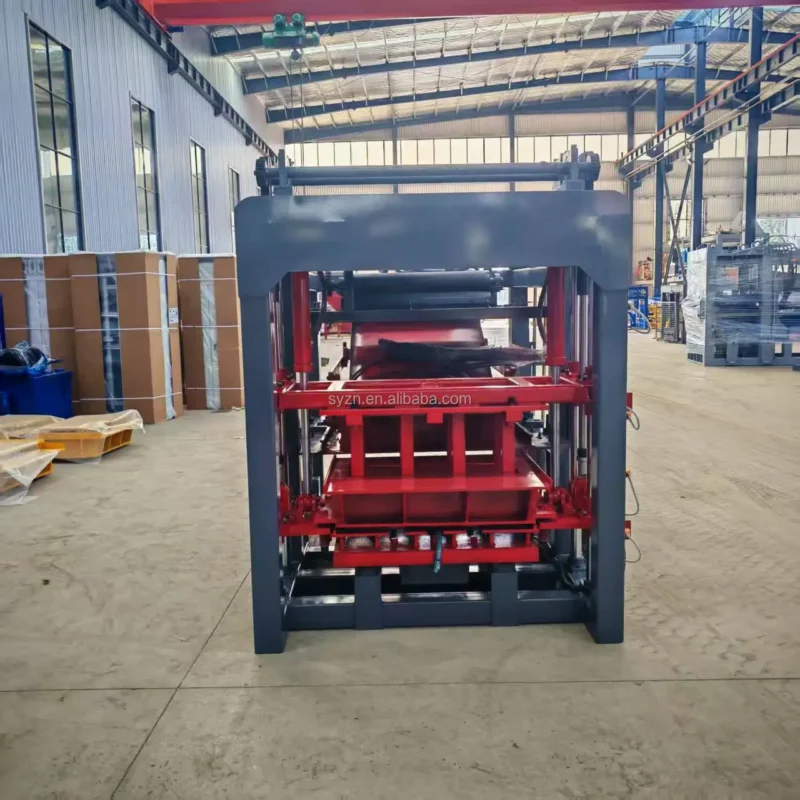


Description
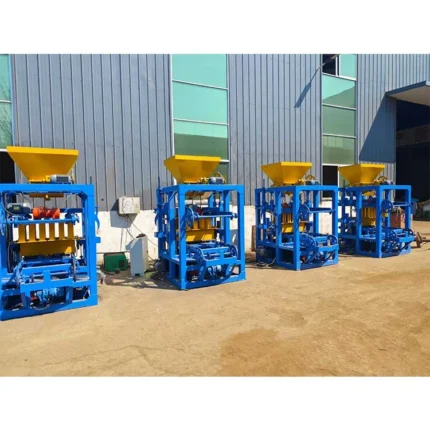
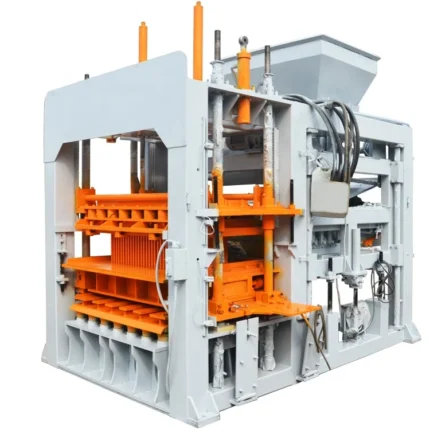
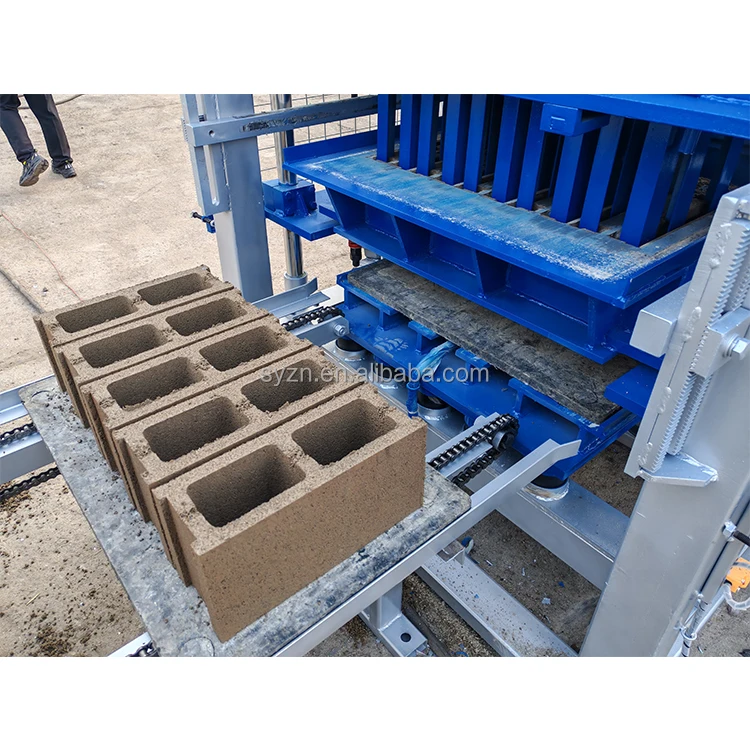
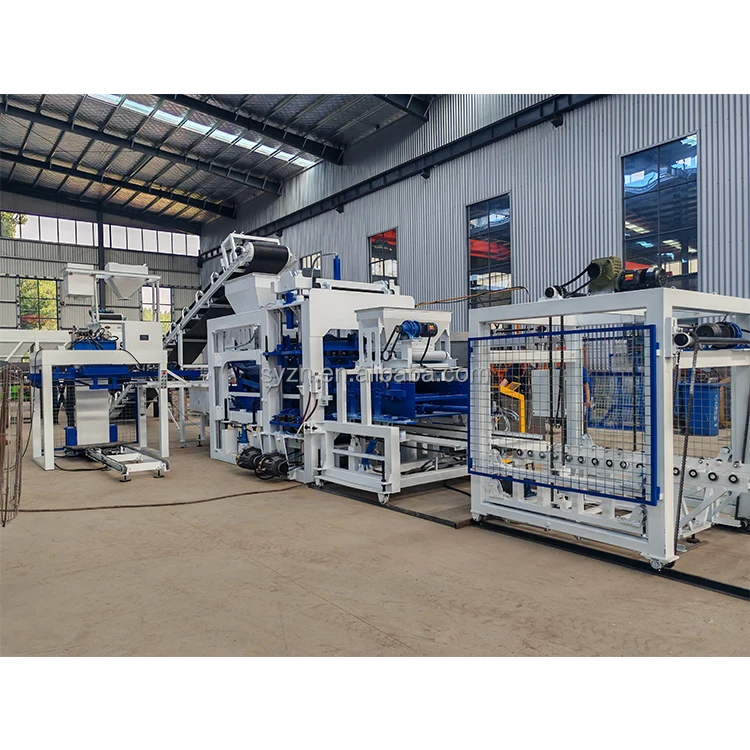
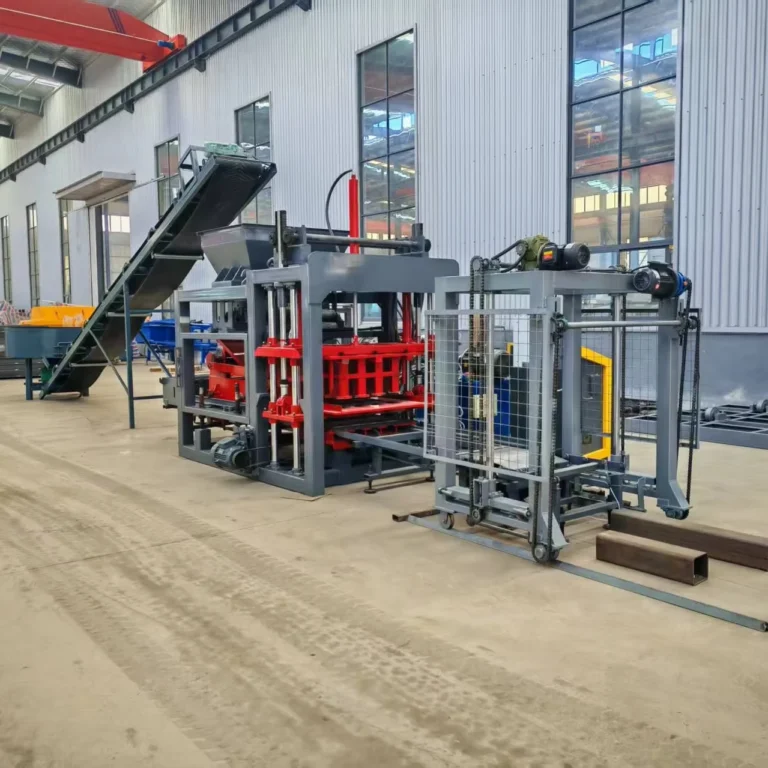
Automation That Removes the Operator from the Equation — the QT4-15A fully automatic block making machine is configured around your plant’s actual control language, voltage standard, and stacking workflow so the line runs on day one without waiting for a language pack update.
Technical Specifications
| Parameter | Value |
|---|---|
| Model | QT4-15A |
| Product Type | Fully Automatic Concrete Block Making Machine |
| Overall Dimensions (L×W×H) | 4100×1600×2600 mm |
| Rated Pressure | 16–21 MPa |
| Main Vibration Form | Platform Vibration |
| Vibration Frequency | 4200 r/min |
| Vibration Force | 55 kN |
| Pallet Size | 880×550 mm |
| Molding Cycle | 25–30 s (basis not stated in source — confirm block format / material / thickness) |
| Overall Power | 18.45 kW |
| Total Mass | 4 T |
| Demolding Method | Hydraulic |
| Factory Area Required | 300 m² |
| Control System | PLC (brand and language options to be confirmed) |
| Voltage & Frequency | Configurable to site requirement (confirm before production) |
| Automation Level | Fully automatic |
| Warranty | 1 year (whole machine, excluding spare parts) |
Application Suitability
| Application | Material or Output |
|---|---|
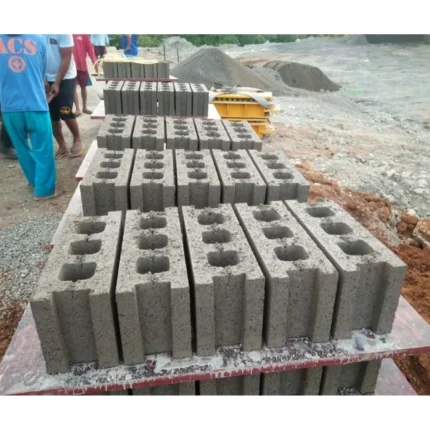
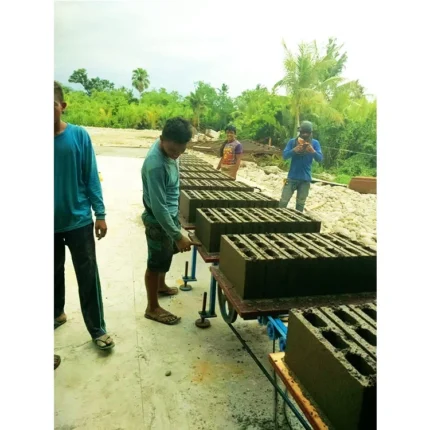
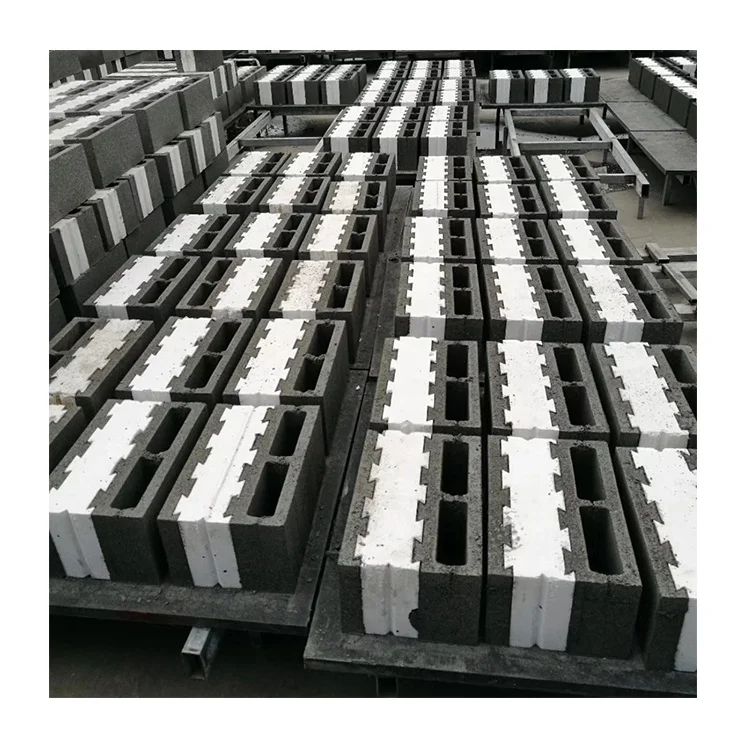
| Hollow block production | Crushed stone, sand, cement, fly ash |
| Solid block manufacturing | Gravel, slag, cement blends |
| Interlocking brick forming | Sand, dust, cement with fine aggregate |
| Paving block and colored paver production | Crushed stone, cement, pigment additives |
| Curbstone and kerb production | Coarse aggregate, sand, cement |
Why the PLC Screen Language Must Be Settled Before the Machine Ships
An automatic QT4-15A block making machine PLC controlled in the wrong language is not automatic — it is a very expensive paperweight waiting for a flight ticket.
I have spent nights in West African block yards watching a fully automatic line sit idle because the HMI displayed fault codes in English while the shift operator only read French. The PLC was doing its job; the human interface was not. That mismatch is the single most common avoidable delay on commissioning day, and it is entirely preventable if the control language is confirmed during the order stage rather than discovered on arrival. [NEED_CITE: HMI language configuration requirements for exported industrial machinery]
How PLC Automation Governs the Molding Cycle
The QT4-15A places the entire molding sequence — feed, vibrate, press, demold, eject — under PLC management, which means cycle timing does not drift with operator fatigue or shift changes. When the automatic QT4-15A block making machine PLC controlled system detects a pressure deviation outside the 16–21 MPa range, it adjusts dwell time without requiring manual intervention, keeping block density uniform from the first pallet to the last.
What Remote Diagnostics Actually Removes from Your Day
Remote diagnostic capability on the PLC allows the control logic to be reviewed and adjusted without an on-site visit. When a fault code appears, the support team can read the exact register state rather than relying on a phone description from the shop floor. This matters most in the first weeks after commissioning, when parameter fine-tuning against local aggregate and moisture content is still ongoing. [NEED_CITE: remote PLC diagnostics in concrete block production lines]
Reading the Numbers That Matter on the QT4-15A
The 55 kN vibration force at 4200 r/min is the figure that determines how tightly aggregate particles pack inside the mould cavity. Vibration alone does not guarantee density — it must work against the 16–21 MPa hydraulic pressure applied from above. When both values are matched to your specific mix design, the result is a block that reaches target compressive strength consistently. The 880×550 mm pallet size defines the footprint of every wet block leaving the press; if your curing racks or forklift forks are dimensioned for a different pallet, handling becomes the bottleneck the press never caused.
The Cost of Skipping the Configuration Conversation
Buyers who confirm voltage after the machine is already wired face rewiring charges, transformer rentals, or weeks of delay while a correct motor is sourced locally. [NEED_CITE: voltage and frequency standards by export market] A PLC locked to a language the control room cannot read does not just slow production — it encourages operators to bypass safety interlocks they cannot interpret. These are not hypothetical risks; they appear regularly on commissioning checklists.
Why Procurement Through This Channel Works
The QT4-15A is specified as a matched system — press, mould, pallet, and handling — rather than assembled from unrelated suppliers, which means cycle times across stations are synchronized before the line ships. Configuration is set against your actual mix design and local aggregate, not a catalogue default, so the vibration and pressure values arrive pre-tuned for your material. Mould options cover hollow, solid, interlocking, paving, and curbstone formats, and custom mould drawings can be produced to buyer specifications. The automation level is selectable, allowing a buyer to begin with manual pallet handling and add automatic stacking and cubing as volume grows. Installation includes on-site commissioning and operator training so the control room team understands every screen before the first production shift.
Documentation & Verification
- Machine specification sheet with confirmed voltage, frequency, and PLC language per order
- Line layout and capacity calculation stating the block format assumed for cycle time
- Hydraulic and electrical schematic with PLC program documentation
- Factory test record showing cycle time and block strength per mould format
- Mould drawing and format list including pallet dimension confirmation
- Operation and maintenance manual in the confirmed control language
Installation, Commissioning & Support
- Foundation must support 4 T static load across the 4100×1600 mm footprint with level tolerance confirmed before delivery
- Dedicated power circuit required for the 18.45 kW overall load at confirmed voltage and frequency
- Machine ships dismantled for container loading; reassembly and alignment completed on site
- First-run commissioning includes PLC parameter tuning against your local raw material and target format
- Operator training covers HMI navigation, mould change procedure, and fault code response
- Wear parts list and hydraulic seal kit provided with initial spare parts recommendation
- Preventive maintenance schedule aligned with vibration platform and hydraulic system intervals
What to Include in Your Inquiry
Share the block formats you intend to produce and the daily volume target for each, along with your local aggregate type and available cement grade. Confirm the voltage and frequency at your site, the language your control room operators read, and whether your existing curing area and forklift are compatible with the 880×550 mm pallet. If you are replacing an existing press, note the current automation level and where you want the QT4-15A to fit in the line.
Frequently Asked Questions
Q: What block format does the quoted cycle time assume, and what is the realistic daily output per format?
A: The 25–30 second molding cycle is listed without a stated block format, so daily output varies significantly between a standard hollow block and a thinner interlocking brick. Request a capacity calculation that names the exact format, wall thickness, and material density assumed, so you can plan curing space and pallet circulation around real numbers rather than a generic cycles-per-hour figure.
Q: What PLC brand is installed, what languages are available on the HMI, and is remote diagnostics supported?
A: The PLC brand and HMI language options must be confirmed during the order stage to match your control room operators’ reading language. Remote diagnostics capability depends on the selected PLC platform and the communication module installed. Specify your language requirement and whether you need remote access in your inquiry so the correct hardware is fitted before shipment.
Q: How long does a mould change take, and can one operator complete it within a shift break?
A: Mould change time on the QT4-15A depends on the format being swapped and the tooling provided. Some changes require alignment pins and hydraulic clamping release, which a trained operator can complete in a reasonable window. Request the mould change procedure and required tools with your quotation so you can plan format changeovers into your production schedule without losing a full shift.
Q: Is the automation level upgradeable after initial installation?
A: The QT4-15A supports a selectable automation path, meaning you can start with manual pallet handling and add automatic pallet feeding, stacking, and cubing as production volume grows. The PLC platform must be specified with upgrade headroom from the outset, so mention your future automation plans during the inquiry stage to ensure the control system is sized accordingly.
Q: What voltage and frequency configurations are available, and is the control language confirmed before shipment?
A: Voltage and frequency are configured to your site requirement and must be confirmed before production begins to avoid rewiring on arrival. The PLC display language is set based on your confirmed preference during the order process. Both items are verified in the pre-shipment documentation package so there are no surprises at commissioning.