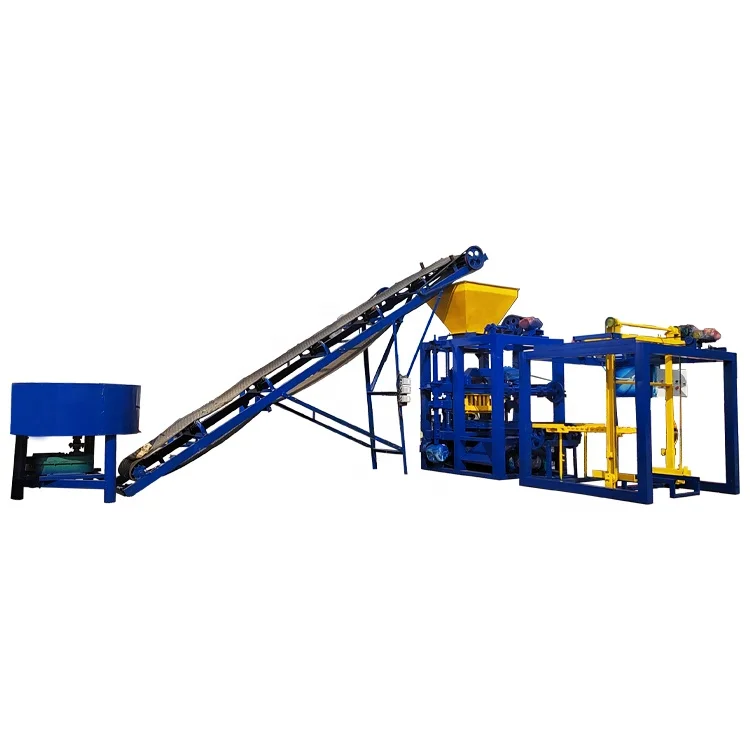


Description
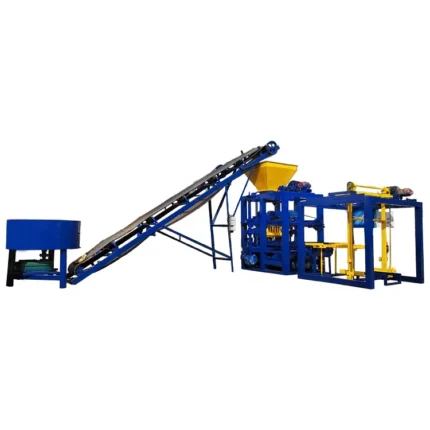
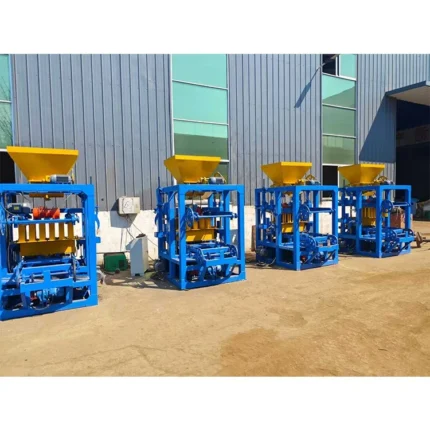
Configurable Vibration Match — the QTJ4-24 block making machine lets operators adjust platform vibration and demolding force to the buyer’s actual mix design, removing the guesswork that causes inconsistent block strength across batches.
Technical Specifications
| Parameter | Value |
|---|---|
| Model | QTJ4-24 |
| Product Type | Concrete Block Making Machine |
| Overall Dimensions (L×W×H) | 2060 × 1700 × 2650 mm |
| Rated Exiting Force | 35.5 KN |
| Main Vibration Form | Platform Vibration |
| Vibration Frequency | 4200 r/min |
| Pallet Size | 900 × 450 mm |
| Molding Cycle | 24 s (basis not stated in source — confirm block format / material / thickness) |
| Overall Power | 11.95 kW |
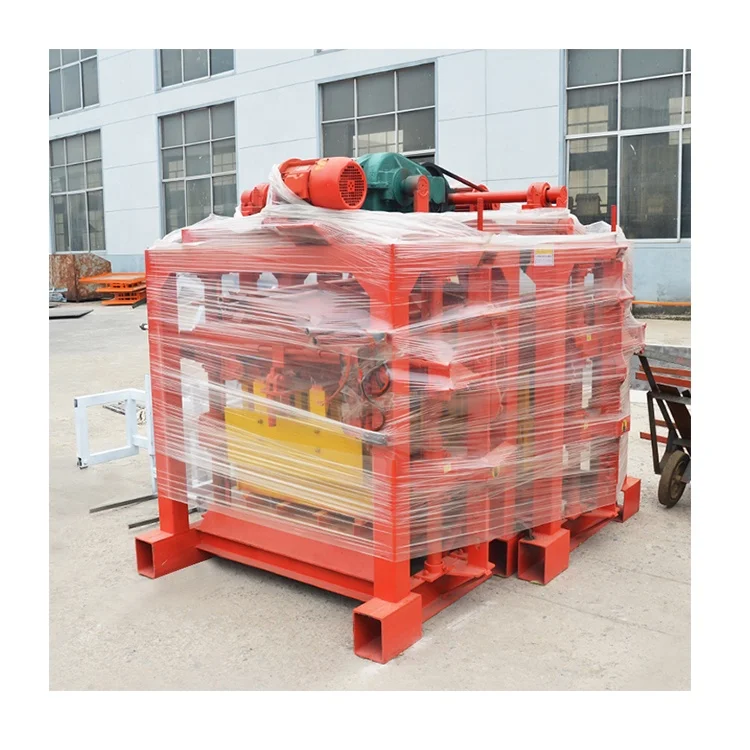
| Total Mass | 2000 kg |
| Demolding Method | Vibration |
| Factory Area | 260 m² |
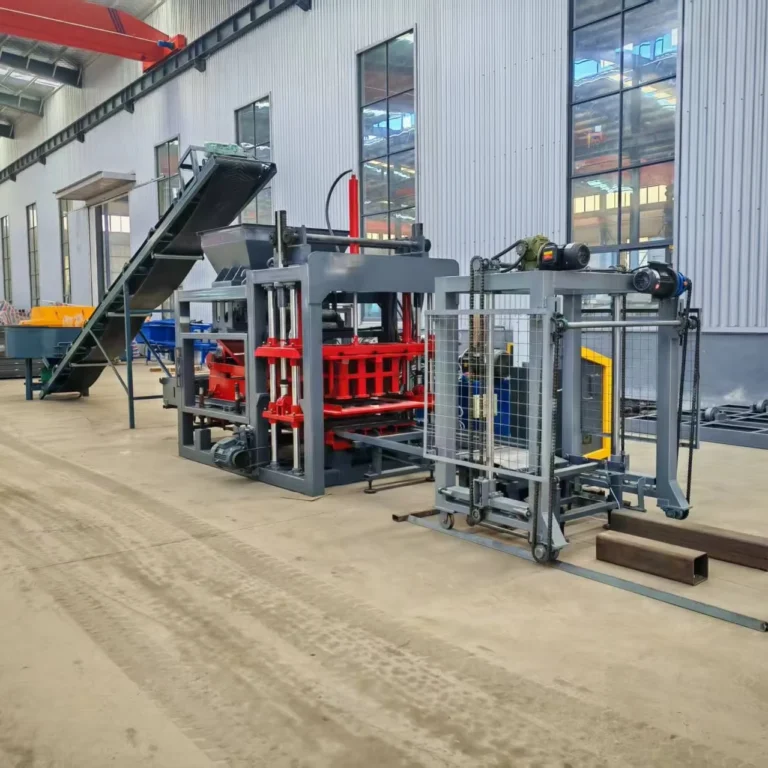
| Automation Level | Semi-automatic, PLC-ready for upgrade |
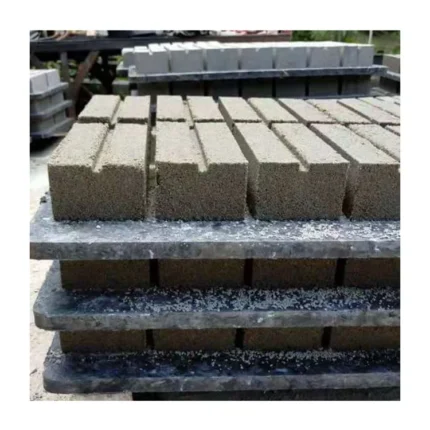
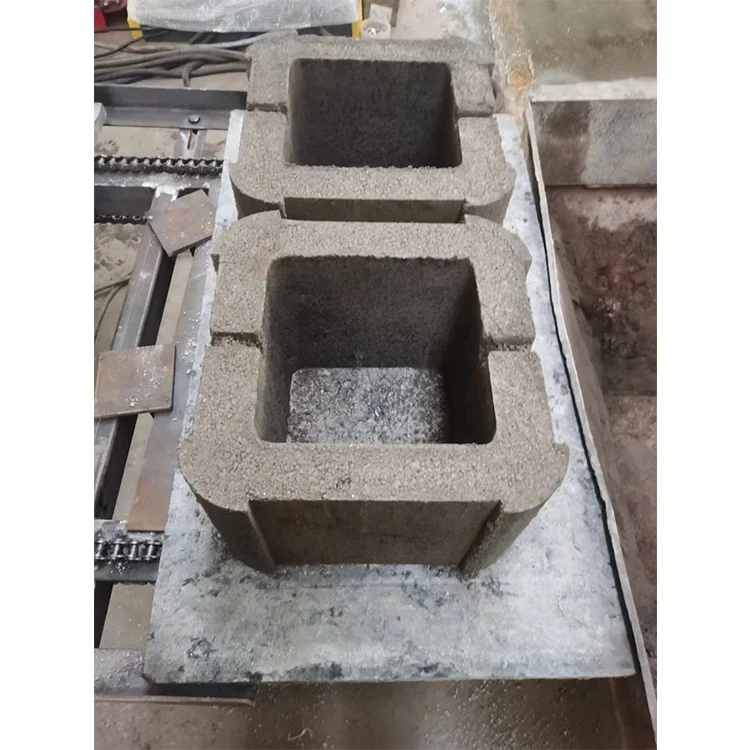
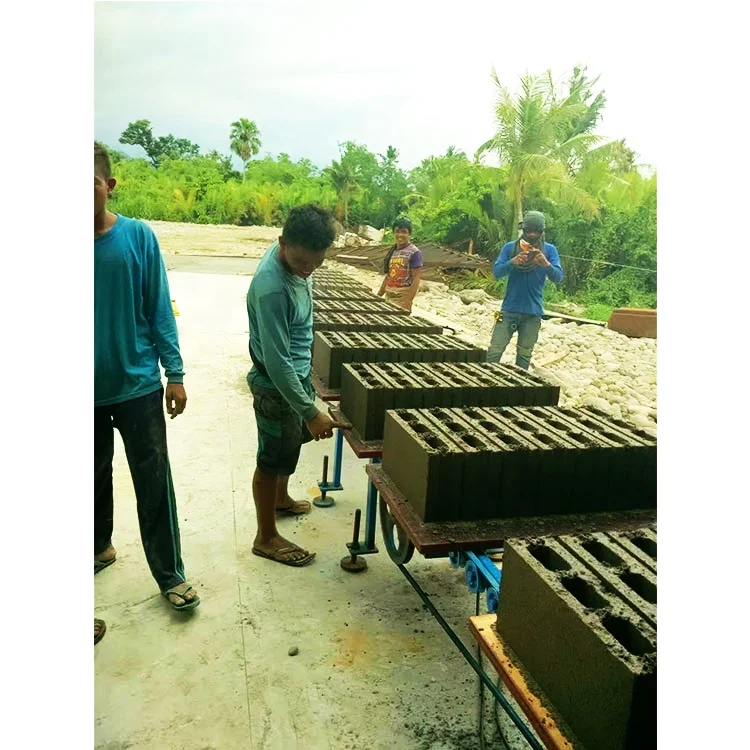
| Applied Products | Hollow blocks, solid blocks, pavers, interlocking blocks, curbstone, colored pavers |
| Raw Materials | Crushed stone, sand, cement, fly ash, gravel, slag |
| Warranty | 1 year (whole machine, excluding spare parts) |
Application Suitability
| Application | Material or Output |
|---|---|
| Hollow block production for residential walls | Crushed stone, sand, cement mix |
| Solid block manufacturing for load-bearing structures | Gravel, cement, slag blend |
| Interlocking paver production for walkways and plazas | Sand, cement, fly ash with color pigment |
| Curbstone forming for road and drainage projects | Coarse aggregate and cement |
| On-site block production for housing developments | Locally sourced aggregate and cement |
What "24-Second Cycle Time" Actually Means for Your Output
A molding cycle number without a stated block format is a starting point, not a daily output guarantee.
I have watched plant owners in Latin America quote a cycle time from a brochure and then wonder why their shift output falls far short of the math. The automatic QTJ4-24 block making machine lists a 24-second cycle, but that figure assumes a specific block format, material thickness, and mix consistency — none of which are stated in the source documentation [NEED_CITE: block machine capacity calculation standards by format]. When the block is taller, the aggregate is harder, or the mix is wetter than the baseline, the cycle stretches. The PLC controlled block machine configuration helps here: once parameters are locked for a given format, batch-to-batch consistency follows. But the first step is always confirming which format that 24-second figure assumes, then recalculating for every other mould you plan to run.
How PLC Control Changes the Operator’s Role
On a semi-automatic line, the operator controls pallet feeding, cycle initiation, and block removal. The QTJ4-24 ships in this baseline configuration, but its PLC-ready architecture means the control panel can accept automatic pallet feeding and stacking modules when the plant is ready. The shift is practical: instead of watching for pallet alignment and pressing cycle start, the operator monitors the HMI screen for fault codes and material levels. For plants running multiple block formats in a single shift, the PLC stores parameter sets per mould, so switching from hollow blocks to pavers does not mean re-dialing vibration frequency and cycle duration by hand.
Where Vibration Force Meets Local Aggregate
The rated exiting force of 35.5 KN and platform vibration at 4200 r/min define what this press can do to a mix — but only if the mix is known. Volcanic aggregate in Jamaica, river gravel in Colombia, and crushed limestone in Mexico all respond differently to the same vibration profile [NEED_CITE: aggregate hardness and block machine vibration requirements]. A semi-automatic operator can feel when blocks are under-compacted and adjust, but that judgment varies person to person. Moving to PLC-controlled vibration parameters locks the frequency and duration for each mix, so the block density stays within range regardless of who is on shift. This is where the automatic QTJ4-24 block making machine earns its name: not by replacing the operator, but by removing the variables the operator cannot control by eye.
Reading the Specs That Decide Daily Reality
The 900 × 450 mm pallet size is the dimension that governs everything downstream. It determines how many blocks press per cycle, what curing rack spacing you need, and whether your existing forklift can carry a loaded rack. Order pallets that do not match your curing area, and blocks cure unevenly or sit in yard space you do not have. The 11.95 kW overall power requirement tells the electrical team what dedicated circuit to prepare — and whether the local supply can sustain it during peak draw when the vibration motor and feed motor run simultaneously. The 2060 × 1700 × 2650 mm footprint means the press itself fits a compact bay, but the 260 m² factory area figure covers the full working zone including pallet return and block staging. The vibration-based demolding method means no hydraulic cylinder is pulling the mould off the block; compaction and release both come from the platform, which simplifies maintenance but places more demand on getting the vibration profile right for each format.
The Cost of Skipping Configuration Checks
I have seen lines where the pallet size was chosen from a catalogue without checking the curing rack the buyer already owned — pallets arrived, did not fit the racks, and blocks were stacked on the ground for weeks. Voltage mismatches are equally common: a machine wired for 380V/50Hz arriving at a site running 440V/60Hz means the motor burns or the PLC refuses to start [NEED_CITE: voltage and frequency standards by export market]. When the vibration parameters are not matched to the local aggregate before shipment, the first week of production becomes a trial-and-error exercise that burns raw material, burns pallets, and burns the buyer’s confidence in the line.
Why Source This Machine Through a Matched System
Block machinery as a single focus means the QTJ4-24 is not sold as a standalone press with pallets and moulds sourced separately. The vibration system, pallet dimensions, mould design, and handling equipment are specified as one line so cycle times match across stations. Configuration is set against the buyer’s actual mix design and target block format rather than a default catalogue setting. Mould design covers the formats the buyer’s market sells, including custom drawings for non-standard interlocking profiles. The automation level is selectable — a buyer can start with semi-automatic pallet handling and add automatic stacking and cubing later without replacing the press. Installation support includes parameter tuning on the buyer’s actual aggregate, not a generic commissioning checklist.
Documentation & Verification
- Line layout with capacity calculation stating the block format assumed for the 24-second cycle
- Machine specification sheet confirming pallet size, vibration frequency, and overall power
- Mould drawing and format list covering hollow, solid, paver, and interlocking profiles
- Voltage, frequency, and PLC display language confirmation before production begins
- Factory test record on buyer’s specified block format and mix design before dispatch
- Wear parts and mould maintenance list with replacement intervals
Installation, Commissioning & Support
- Foundation pad leveled for the 2060 × 1700 mm footprint with anchor bolt provisions
- Dedicated 11.95 kW circuit with correct voltage and frequency confirmed before wiring
- Machine shipped as a single assembled unit; vibration motor and platform aligned on arrival
- First-run parameter tuning on local aggregate to set vibration duration per block format
- Operator training covering mould change procedure, pallet loading, and PLC fault response
- Wear parts inventory for vibration springs, pallet guides, and mould liners included at handover
What to Include in Your Inquiry
Send the specific block formats you plan to produce, including dimensions and target wall thickness. State your local aggregate type and any mix design data available. Confirm the voltage, frequency, and preferred PLC display language at your site. If you already have curing racks and forklifts, share those dimensions so the pallet specification matches from day one.
Frequently Asked Questions
Q: How is the 24-second molding cycle verified, and which block format does it assume?
A: The 24-second cycle is listed without a stated block format, material, or thickness. Before ordering, request a capacity calculation that names the specific format — such as a 400 × 200 × 200 mm hollow block — so daily output projections reflect what you will actually produce.
Q: What automation level does the QTJ4-24 ship with, and what is the upgrade path?
A: The machine ships as a semi-automatic platform with PLC-ready control architecture. Automatic pallet feeding, stacking, and cubing modules can be added later without replacing the press, allowing phased investment as production volume grows.
Q: Can vibration force and frequency be adjusted for my local aggregate?
A: The platform vibration at 4200 r/min and 35.5 KN rated exiting force are adjustable within the control system. Parameters are tuned during commissioning based on your specific aggregate hardness and mix design to achieve consistent block density.
Q: What voltage, frequency, and PLC language options are confirmed before shipment?
A: Voltage, frequency, and PLC display language must be confirmed before production begins. This avoids commissioning delays caused by motor incompatibility or operators unable to read fault codes on arrival.
Q: How are mould changes handled, and what is the expected changeover time?
A: Mould changeover involves releasing the platform clamps and swapping the mould box. The actual time depends on operator experience and whether the line is semi-automatic or PLC-controlled, where stored parameter sets reduce manual re-dialing after each swap.