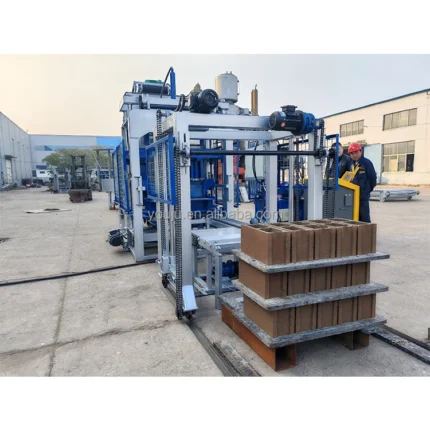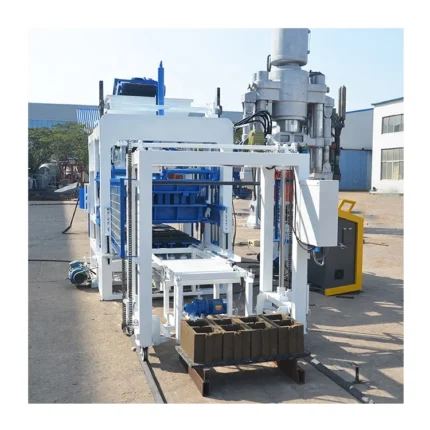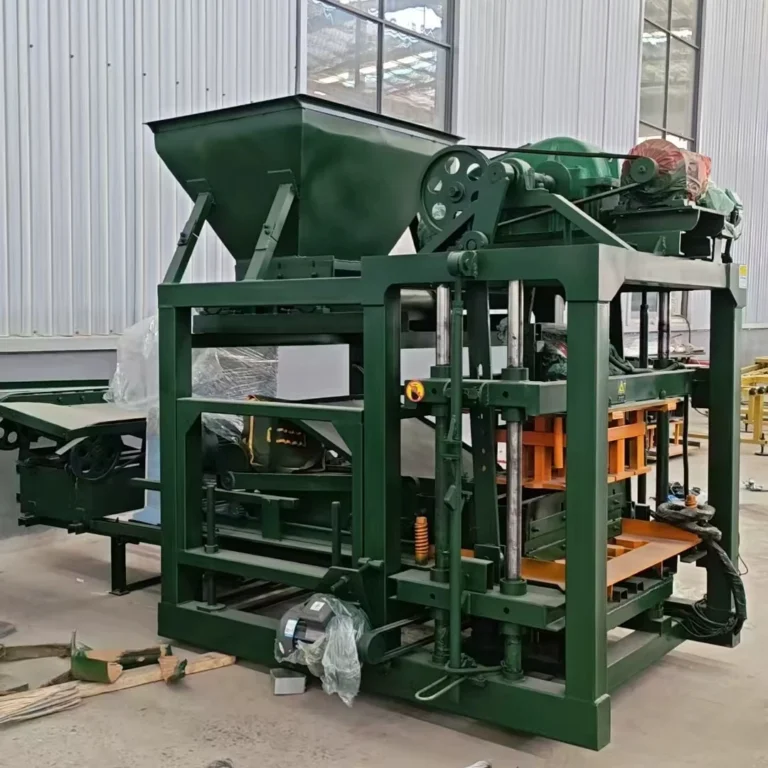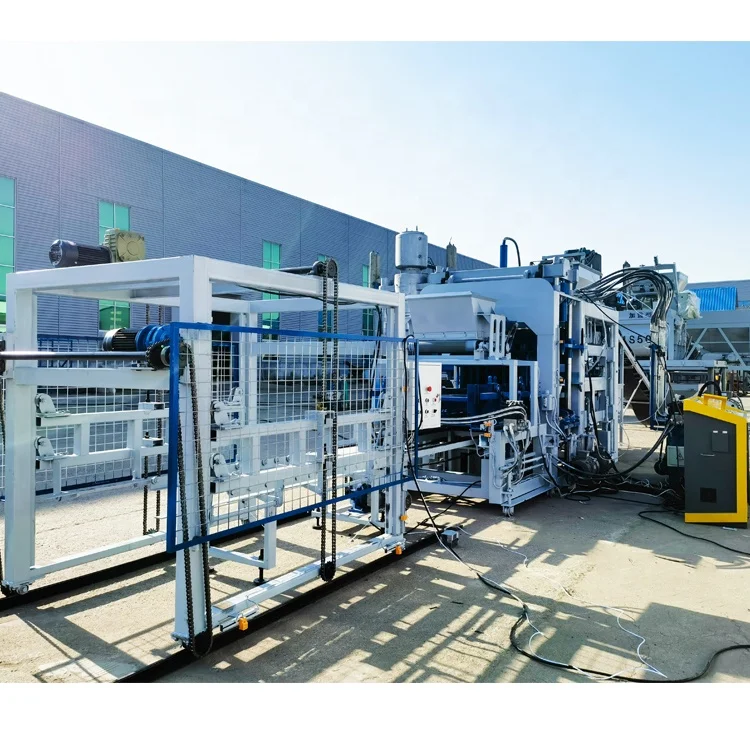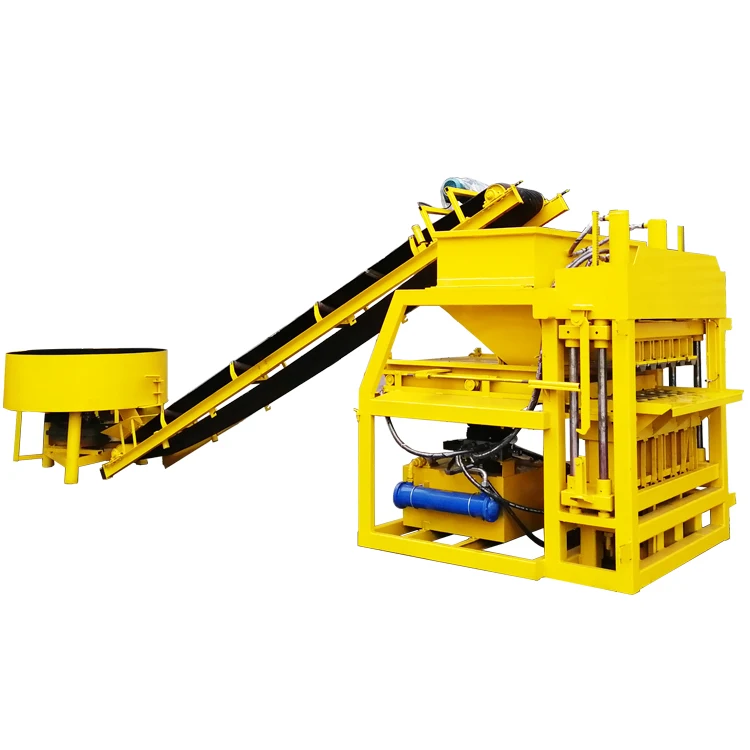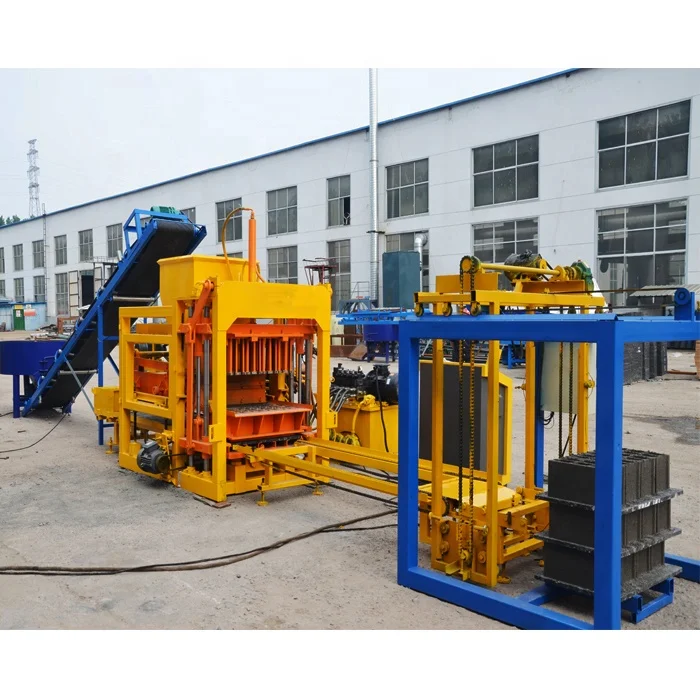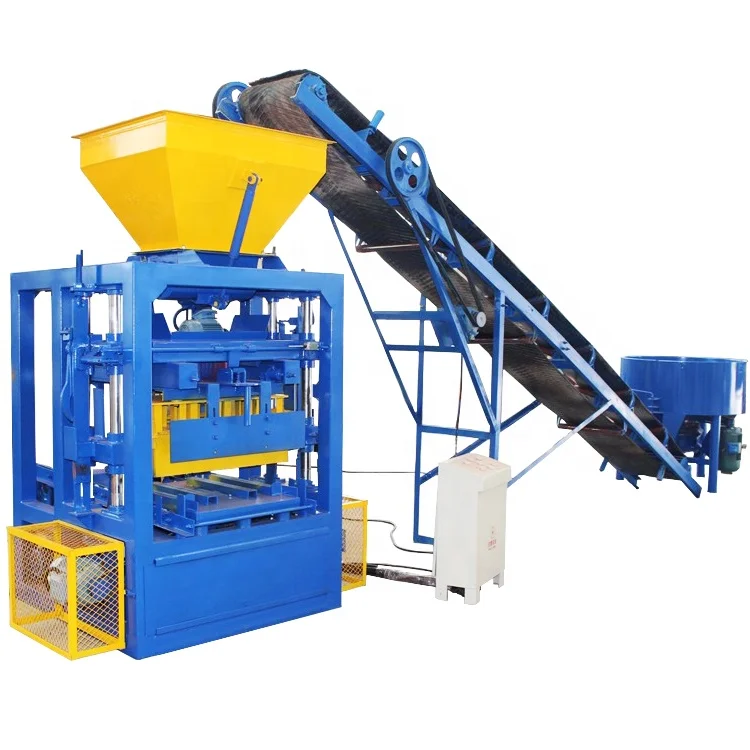
Description
Upgrade-Ready Control — the QTJ4-24 ships with electronic sequencing that guides the operator through each cycle step, and the automation level can be expanded to include pallet feeding and stacking without replacing the press.
Technical Specifications
| Parameter | Value |
|---|---|
| Model | QTJ4-24 |
| Product Type | Semi-Automatic Concrete Block Making Machine |
| Molding Type | Platform Vibration |
| Overall Dimensions (L×W×H) | 3600 mm × 1700 mm × 2560 mm (working state) |
| Total Mass | 1750 kg |
| Overall Power | 14.25 kW |
| Pallet Size | 850 mm × 450 mm |
| Mould Format | 390 × 190 × 190 mm (4 pcs/mold); 240 × 115 × 53 mm (21 pcs/mold) |
| Cycle Time | 24 seconds (basis not stated in source) |
| Vibration System | Lower platform (2 × 3 kW motors) + upper attached device (1.5 kW) |
| Elevating System | Cone-shape motor with JZQ250 speed reducer, V-belt drive |
| Delivery Device | Cycloidal pin wheel speed reducer with chain and V-belt drive |
| Control System | Electronic controlling part (PLC / MCC not specified in source) |
| Automation Level | Semi-automatic (mechanical and electronic combination) |
| Support Equipment Compatibility | JQ350 pan mixer, 6 m belt conveyor, auto stacker (optional), trolley |
Application Suitability
| Application | Material or Output |
|---|---|
| Small-scale block plant start-up | Hollow blocks from crushed stone, sand, and cement |
| On-site contractor production | Solid bricks from local aggregate and cement |
| Format expansion for existing producers | Paving blocks and kerbstones with matched mould changes |
| Entrepreneur first plant | Interlocking bricks and porous bricks from available raw materials |
What "24 Seconds per Cycle" Actually Means for Your Daily Output
Cycle time only matters when tied to the block format your market buys.
A 24-second cycle on a hollow block mould producing four pieces per press is a very different daily output than the same cycle on a solid brick mould producing twenty-one pieces. Sellers often quote the fastest cycle without stating the format, which leaves buyers disappointed when real production numbers fall short. The QTJ4-24 lists 24 seconds, but the basis — block format, material thickness, mix design — must be confirmed before that number translates into a shift plan. An automatic PLC controlled semi-automatic block making machine should always be sized against the specific product the buyer actually sells, not a catalogue default. [NEED_CITE: block format impact on daily output calculation]
How PLC Sequencing Removes Operator Guesswork
On a semi-automatic line, the operator still loads pallets and triggers certain actions, but the electronic control system manages the timing between vibration, pressing, and mould release. This means the operator follows a guided sequence rather than counting seconds in their head. When the automatic PLC controlled semi-automatic block making machine runs, the control logic enforces consistent dwell times across every cycle, reducing the variation that causes weak blocks at the start of a shift and cracked blocks at the end.
Dual Vibration Matched to Your Aggregate
The lower platform uses two 3 kW motors while a 1.5 kW attached device handles the upper vibration. This dual system lets the vibration force be tuned to the buyer’s mix — heavier aggregate needs more platform energy, while lighter materials with higher cement content respond to shorter bursts. The matching is done during commissioning, not left to a factory preset. Getting this wrong is one of the most common reasons block strength varies from batch to batch. [NEED_CITE: vibration force matching to aggregate density]
Reading the Specs That Actually Matter
The 850 mm × 450 mm pallet size is the dimension that must match the buyer’s existing curing racks and forklift forks — a mismatch here means rebuilding the curing area or buying new handling equipment. The 14.25 kW overall power rating determines the electrical supply requirement; buyers need to confirm their site can deliver this load on a dedicated circuit before the machine ships. The JZQ250 speed reducer on the elevating system is a standard industrial gearbox, which means replacement parts are available from multiple suppliers rather than locked to one source. The semi-automatic configuration means one operator handles pallet loading while the control system manages the press cycle — labour planning should account for this split.
The Hidden Cost of Skipping the Language Check
I once spent two days on the phone walking a Middle Eastern operator through alarm codes because the PLC display was still in Chinese. The machine ran fine, but every fault message was unreadable, so the line sat idle until someone could translate. Since then, every unit I commission gets a language confirmation before it leaves the factory. Voltage and frequency are equally easy to overlook — a 380 V / 50 Hz machine plugged into a 440 V / 60 Hz supply will run, but the motors will overheat and the cycle timing will drift. These are not defects; they are specification mismatches that could have been caught with a single email before production started. [NEED_CITE: voltage and frequency standards by export market]
Why Procurement Should Start Here
Block machinery is our single focus, so the QTJ4-24 is specified as part of a matched system — machine, mould, pallet, and handling equipment are sized together rather than assembled from separate catalogues. The vibration force is set against the buyer’s actual mix design and local aggregate, not a generic factory setting. Mould design covers the formats the buyer’s market sells, with custom drawings available when standard formats do not match. The automation level is selectable, meaning a buyer can start with semi-automatic operation and add automatic pallet feeding and stacking later without replacing the press. Factory testing is recorded against the buyer’s confirmed block format and cycle parameters before the machine is cleared for shipment.
Documentation & Verification
- Factory test record confirming vibration force and cycle timing on your confirmed block format
- Machine specification sheet with pallet dimensions matched to your curing layout
- Mould drawing and format list showing all available block profiles and piece counts per mould
- Voltage, frequency, and PLC display language confirmation signed off before production
- Operation and maintenance manual with wear parts list and replacement intervals
- Packing photographs and customs documentation support for smooth port clearance
Installation, Commissioning & Support
- Foundation pad must support 1750 kg operating mass with level tolerance across the 3600 mm frame length
- Dedicated electrical circuit sized for 14.25 kW total draw with correct voltage and frequency confirmed
- Machine ships as a stationary unit; on-site assembly covers conveyor alignment and mixer connection
- Commissioning includes vibration tuning to your mix and PLC parameter setting for confirmed block formats
- Operator training covers the semi-automatic cycle sequence, mould change procedure, and alarm response
- Wear parts list identifies vibration motor bearings, belt drives, and mould liners for first reorder
What We Need to Move Forward
Send the block format your market actually buys — dimensions, piece count per mould, and target daily output. Include your local aggregate type and cement ratio so vibration force can be matched before build. Confirm your site voltage, frequency, and the PLC display language your operators read.
Frequently Asked Questions
Q: How is the semi-automatic cycle controlled, and what does the operator still do manually?
A: The electronic control system manages vibration duration, press timing, and mould release sequence automatically. The operator loads pallets onto the platform and removes finished blocks at the end of the line. This split keeps labour requirements predictable while the control logic maintains cycle consistency.
Q: What is the upgrade path from semi-automatic to full automatic stacking?
A: The QTJ4-24 frame and press remain unchanged. An automatic stacker and pallet handling system can be added to the output end of the line, converting manual block removal into automated stacking and cubing without replacing the core machine.
Q: How are voltage, frequency, and PLC display language confirmed before shipment?
A: These three parameters are confirmed in writing during the quotation stage and re-verified before production begins. The factory test record includes the configured voltage and language setting, and a video of the PLC display is sent to the buyer for final sign-off.
Q: How is the vibration force matched to my local aggregate and mix design?
A: The dual vibration system — two 3 kW lower motors plus a 1.5 kW upper device — allows independent tuning of platform and mould energy. During commissioning, vibration duration and intensity are adjusted against the buyer’s confirmed mix until block density meets the target strength.