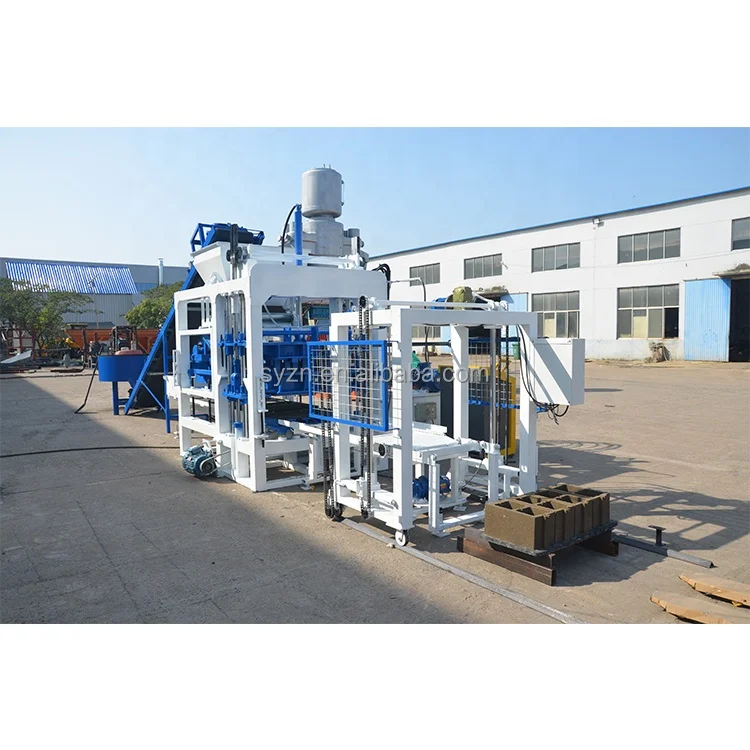


Description
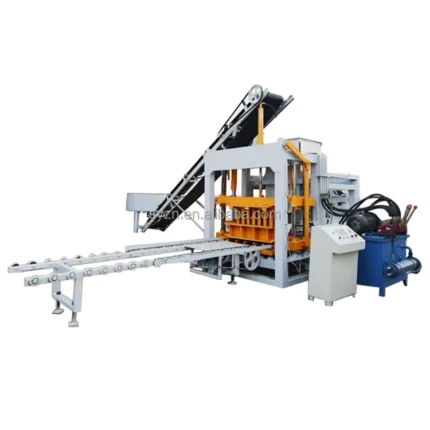
Matched System Control — the QT4-18 pairs PLC-managed hydraulic pressure with synchronized vibration, removing operator guesswork from every molding cycle.
Technical Specifications
| Parameter | Value |
|---|---|
| Model | QT4-18 |
| Product Type | Automatic Hydraulic Block Making Machine |
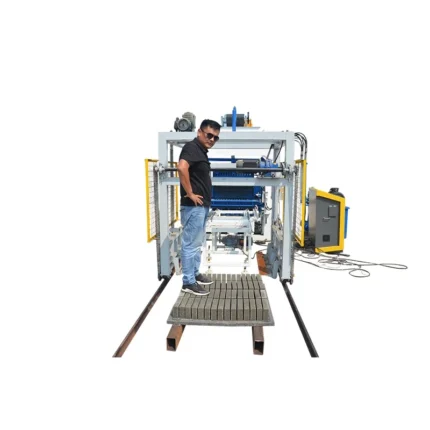
| Overall Dimensions (L×W×H) | 3900×1600×2300 mm |
| Molding Cycle | 15–25 s (basis not stated in source) |
| Vibration Force | 40–50 kN |
| Rated Power | 24 kW |
| Mixer Model | JQ350 |
| Pallet Size | 850×550×25 mm |
| Net Weight | 3 T |
| Control System | PLC control system |
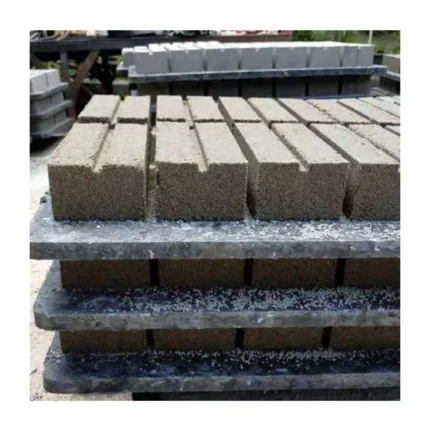
| Applied Products | Paver, solid block, hollow block, curbstone |
| Raw Materials | Crushed stones, sand, cement, dust, fly ash |
| Automation Level | Automatic operated |
| Voltage & Frequency | Configurable to site requirement (to be confirmed) |
| PLC Language Options | Configurable (to be confirmed) |
| Hydraulic Pressure | To be confirmed against hydraulic station rating |
Application Suitability
| Application | Material or Output |
|---|---|
| Hollow block production | Crushed stone, sand, cement, fly ash blends for structural and partition walls |
| Paving block production | Dense aggregate mixes for pedestrian and light-traffic paved surfaces |
| Solid brick forming | Fine-graded sand and cement for load-bearing masonry units |
| Curbstone manufacturing | Coarse aggregate with higher cement content for kerb and edge restraint units |
What the Molding Cycle Number Leaves Out for Automatic Hydraulic Block Making Machines
A cycle time only matters when tied to the exact block format, mix design, and target strength the buyer will actually produce.
Sellers often quote a single cycle figure that applies to one ideal format under laboratory conditions. When the same automatic hydraulic block making machine runs a taller hollow block with a leaner local aggregate, the press needs longer vibration to achieve full compaction. The operator then has to decide whether to shorten the cycle and ship weak product or extend it and miss the daily target. Without a format-by-format capacity sheet, neither the buyer nor the plant manager knows what the line will actually deliver once the first batch is mixed [NEED_CITE: block format influence on cycle time and daily output].
PLC as the Operator’s Second Set of Hands
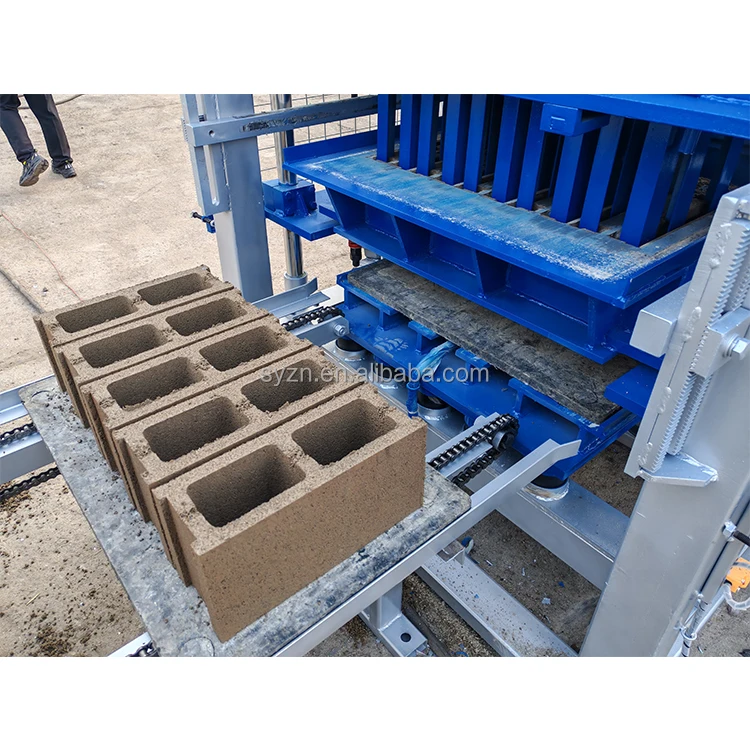
The PLC control system on the QT4-18 automates the sequence from pallet feed through press cycle to block discharge. Once the recipe for a given format is saved, the controller reproduces the same pressure ramp, vibration duration, and dwell time across every batch. This removes the drift that occurs when operators adjust timing by feel during long shifts.
Where Consistency Comes From
Batch-to-batch uniformity depends on matching vibration force with hydraulic pressure for the specific aggregate at hand. The QT4-18 delivers 40–50 kN of vibration while the hydraulic station applies independent forming pressure. Together they compact the mix from both axes, producing uniform density through the full height of a hollow block or paver. When a plant switches from river sand to crusher dust, the PLC recipe can be adjusted so the machine compensates rather than the operator guessing at manual overrides [NEED_CITE: hydraulic pressure and vibration force matching for concrete block density].
Reading the Specification Sheet with a Production Lens
The 850×550×25 mm pallet size defines how many blocks fit per cycle and therefore determines the press output for each format. A buyer whose curing yard uses 1000×600 mm pallets will face a mismatch the moment blocks arrive at the rack system. The 24 kW rated power covers the hydraulic pump, vibration motors, and mixer drive; confirming that the site transformer can sustain this draw at the local voltage and frequency prevents commissioning delays. The JQ350 mixer must be timed so fresh mix reaches the hopper before the press finishes its current cycle, otherwise the automatic pallet feeder waits and the quoted cycle time becomes theoretical rather than achievable.
The Cost of Skipping the Voltage and Language Check
A machine wired for a voltage the site cannot supply sits idle until a transformer arrives, and a PLC display in a language the operators cannot read halts production every time an alarm triggers. I once saw a block line in the Gulf stand silent for three days because the HMI defaulted to a language none of the crew could follow, and the site electrician had to retrace control wiring before anyone realized the frequency was also outside the motor nameplate range [NEED_CITE: common commissioning delays from unconfirmed voltage and PLC language]. These are not engineering failures; they are paperwork failures that surface only after the container is opened.
Why Buyers Source the QT4-18 Through This Line
Block machinery is the single focus here, so the QT4-18 is specified alongside its moulds, pallets, and handling equipment as one matched system rather than assembled from unrelated suppliers. The configuration is set against the buyer’s actual mix design and local aggregate, not a catalogue default. Mould drawings cover the formats the buyer’s market actually sells, with custom design available when a project requires a non-standard paver profile. The automation level can be selected so a plant starts with automatic press operation and adds stacking or cubing later without replacing the core machine. Installation support includes operator training on the PLC interface, so the crew that runs the line on day one is the same crew trained during commissioning.
Documentation & Verification
- Line layout showing pallet flow from feeder through press to curing rack for the QT4-18 footprint
- Capacity calculation sheet stating cycle time per block format and the mix assumed
- Mould drawing and format list for every included mould before production starts
- Voltage, frequency, and PLC display language written confirmation prior to assembly
- Factory test record run on the buyer’s target block format before container loading
- Hydraulic and electrical schematic matching the as-built machine for on-site troubleshooting
Installation, Commissioning & Support
- Foundation plan sized to the QT4-18’s 3900×1600 mm footprint and dynamic vibration load
- Dedicated circuit calculation for the 24 kW rated power at confirmed voltage and frequency
- PLC language and HMI labels verified against operator roster before power-on
- Mould change procedure walk-through covering each included format on the first production day
- Wear parts list cross-referenced to the hydraulic station and vibration assembly for first reorder
- Preventive maintenance schedule tied to the JQ350 mixer and automatic pallet feeder intervals
What to Share Before Requesting a Quote
Provide the target block formats, daily volume expectation, and the aggregate sources available near the plant site. Confirm the local voltage, frequency, and preferred PLC display language so the control cabinet can be wired and programmed before the machine leaves the factory.
Frequently Asked Questions
Q: How is cycle time verified for each block format on the QT4-18?
A: Each format — hollow block, paver, solid brick, or curbstone — is run during the factory test with the buyer’s agreed mix. The PLC records the actual vibration duration, pressure hold, and pallet cycle for that format, and those values appear on the capacity sheet. This ensures the quoted cycle time reflects the product the buyer will actually manufacture rather than a single generic figure.
Q: What does the PLC control cover and what can be added later?
A: The PLC on the QT4-18 automates the molding sequence, including pallet feed, press cycle parameters, and block discharge. Automatic stacking and cubing stations are available as separate modules. A plant can begin with automatic press operation and integrate stacking later, using the same PLC platform with additional I/O cards and updated software recipes.
Q: How are voltage, frequency, and control language confirmed before shipment?
A: After order confirmation, a written specification sheet lists the exact voltage, frequency, and PLC display language for the destination site. The buyer signs off on this document before the control cabinet is wired. During the factory test, the HMI is shown in the confirmed language and the motor nameplates are photographed against the agreed electrical standard.
Q: How is hydraulic pressure matched to the buyer’s mix design and target strength?
A: The hydraulic station pressure is set in relation to the vibration force and the specific aggregate blend the buyer will use. During the factory test, sample blocks are pressed at several pressure settings, and the resulting density and early strength are measured. The setting that meets the target strength without over-compacting the mix is then saved as the PLC recipe for that format.