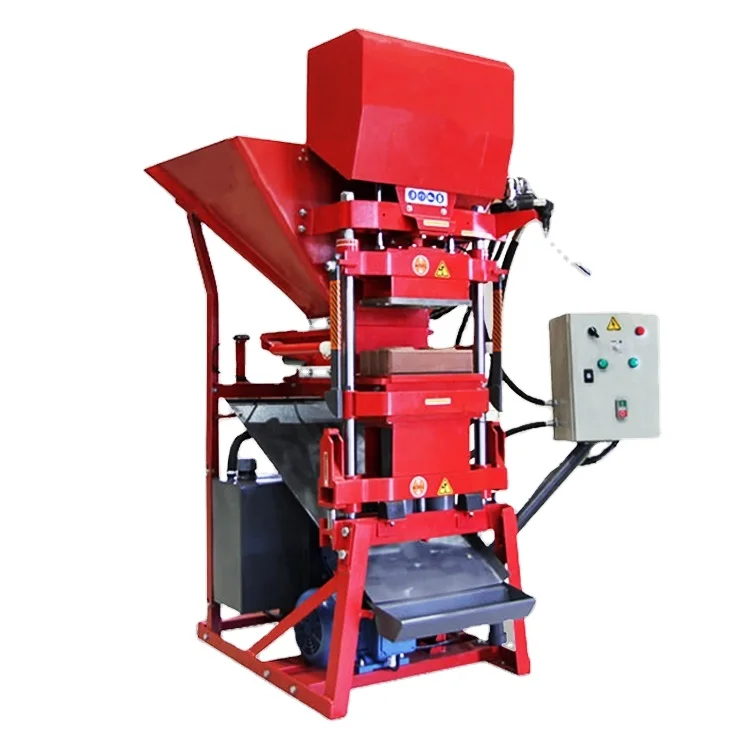

Description
Hydraulic and Control Matched — ECO 2700 configured against the buyer’s actual clay mix and interlocking format, not a catalogue default, so cycle pressure and automation level align with real site conditions.
Technical Specifications
| Parameter | Value |
|---|---|
| Model | ECO 2700 |
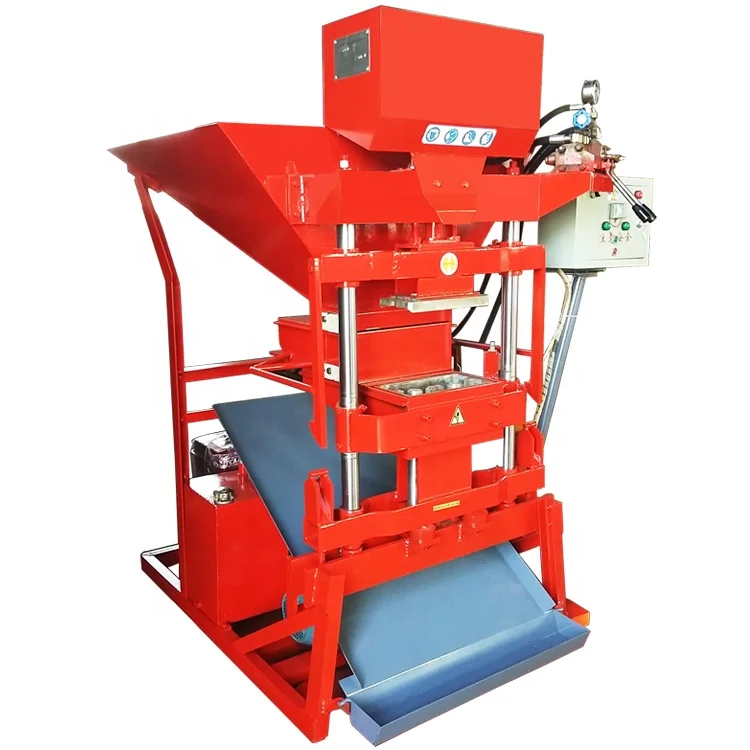
| Product Type | Clay Interlocking Brick Making Machine |
| Overall Dimensions | 1000(L) × 1000(W) × 1800(H) mm |
| Shaping Cycle | 15–20 seconds (basis not stated in source — confirm block format / material / thickness) |
| Rated Power | 5.5 kW |
| Hydraulic Pressure | 16 MPa |
| Voltage & Frequency | 380V, 3-phase, 50Hz (customizable to local voltage) |
| Net Weight | 1000 kg |
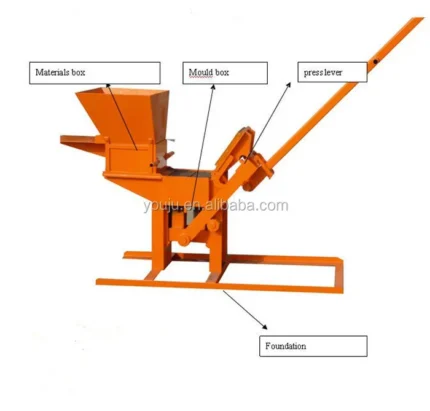
| Machine Type | Small sized block forming machine |
| Automation Level | Manual / low automation (upgrade path to PLC control available) |
| Mould Format | Interlocking brick / paver (specific formats to be confirmed) |
| Warranty | 1 year |
Application Suitability
| Application | Material or Output |
|---|---|
| Clay interlocking brick production | Local clay mixed with stabilizer or cement, site-specific aggregate |
| Interlocking paver forming | Clay-sand blends for pedestrian and light-traffic paving |
| Small-scale block forming for construction sites | Low-volume runs where portability and low investment matter |
| Low-investment plant startups | Entrepreneurs entering block production with room to scale automation later |
Why the PLC Conversation Must Happen Before You Sign
An automatic clay interlocking brick machine without confirmed control logic is a machine that arrives guessing.
I have watched buyers compare cycle times from different supplier brochures as if those numbers live in a vacuum. One clay interlocking brick project I reviewed ran a full shift before the operator realized the manual pallet feed could not keep pace with the press, turning the quoted shaping cycle into an average padded with idle seconds. The root cause was not the press itself but the gap between what the PLC controlled and what still depended on human timing [NEED_CITE: common causes of cycle time variance in small block plants]. When the control system and the automation level are not locked down before production, the machine leaves the factory with assumptions that may not match your site.
From Manual Operation to PLC-Controlled Consistency
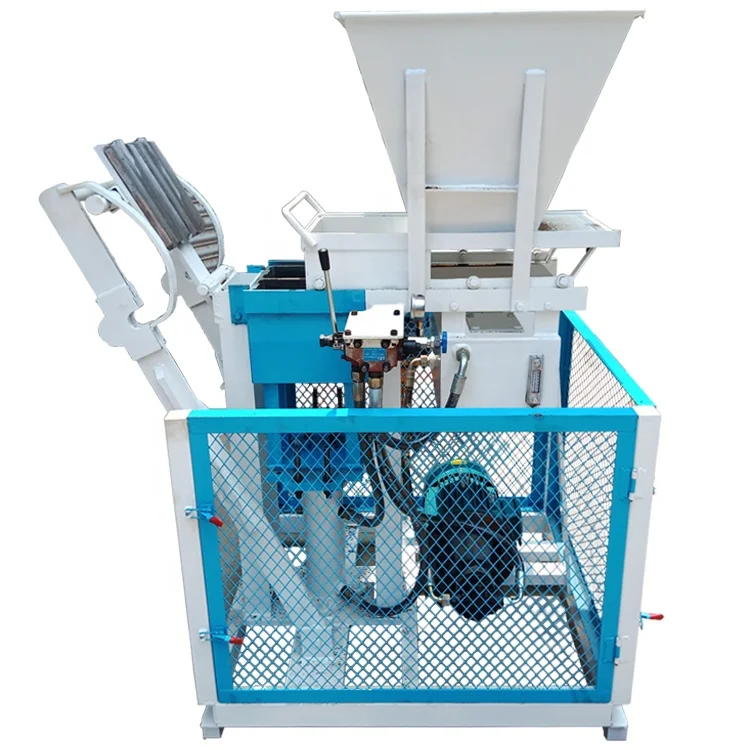
The ECO 2700 ships as a small sized block forming machine with manual or low-automation operation, which keeps the initial investment contained for first-time plant owners. The shaping cycle of 15–20 seconds is achievable under controlled conditions, but repeatability depends on whether pallet feeding and mould closing are operator-driven or machine-driven. Adding a PLC controlled interlocking brick machine package replaces those manual triggers with timed sequences, so every cycle follows the same pressure ramp and dwell. This is where an automatic clay interlocking brick machine earns its name — not from speed alone, but from removing the variance that a tired operator introduces on the third shift.
The Upgrade Path That Keeps the Original Press
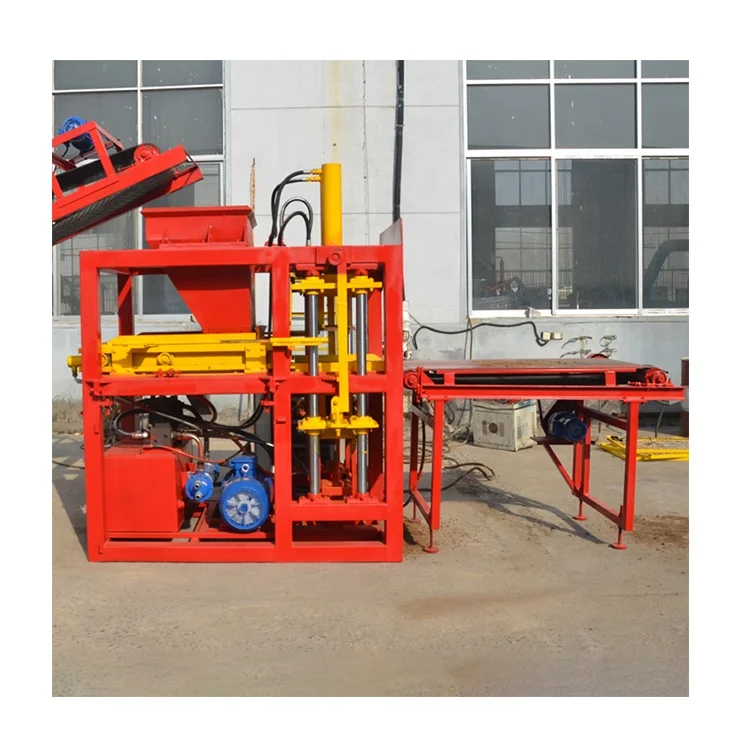
What makes this PLC controlled interlocking brick machine configuration worth considering is that the upgrade does not require swapping the press. The 5.5 kW motor and 16 MPa hydraulic system remain the core forming unit; automation layers — automatic pallet feeding, stacker, and eventually cubing — bolt on as separate stations. A buyer can start with manual pallet handling, validate the clay mix and interlocking format against local market demand, then add PLC-controlled pallet indexing once daily volume justifies it [NEED_CITE: typical automation upgrade sequences in small block plants]. The control cabinet is pre-wired for these additions, so the upgrade is a module installation rather than a rewiring project.
Reading the Specs That Actually Shape the Brick
The 16 MPa hydraulic pressure determines how densely the clay mix is compacted before vibration finishes the consolidation. For interlocking bricks, the interlock geometry demands tight dimensional tolerance, and that tolerance comes from pressure consistency across every cycle — a PLC-controlled hydraulic valve holds that pressure within a narrow band, whereas a manual lever depends on operator feel. The 380V 3-phase 50Hz power supply is standard across much of the export market, but buyers in regions running 220V 60Hz or 415V 50Hz must confirm the motor winding and transformer match before the machine ships. At 1000 kg net weight and a 1000 × 1000 mm footprint, the ECO 2700 sits on a standard concrete pad without special foundation work, though the hydraulic power unit needs level mounting to keep the oil reservoir pickup submerged. The 5.5 kW rated power draws roughly 8–10 amps per phase at 380V, meaning a dedicated 16A breaker with motor-rated protection is sufficient for most installations.
What Misconfigured Automation Costs After Arrival
A PLC that speaks a language the operator cannot read turns a sophisticated control system into an expensive timer. I have seen commissioning delays stretch into weeks because the HMI display arrived in a language the site team did not share with the technician, forcing every parameter adjustment through translation [NEED_CITE: PLC display language and commissioning delays in export machinery]. Voltage mismatch is the other silent killer: a 380V motor on a 440V supply runs hot and fails early, while the same motor on 220V never reaches the torque needed to hit 16 MPa. Neither scenario appears in the factory test record because the machine ran perfectly on the shop floor.
Why Source This Configuration Here
Block machinery is the single focus of this operation, so the ECO 2700 is not a catalog item pulled from a generalist lineup — the hydraulic circuit, mould interface, and control logic are specified as one matched system. Machine and mould are quoted together against the buyer’s target interlocking format, meaning the mould drawing and cycle time assumption are documented before production starts. Voltage, frequency, and PLC display language are confirmed in writing during the order stage, not discovered at commissioning. The automation level is selectable and upgradeable: a buyer investing in manual operation today has a documented path to add pallet feeding and stacking without replacing the press. Factory testing includes a run with the buyer’s confirmed mould installed, and the test record ships with the machine.
Documentation & Verification
- Machine specification sheet listing confirmed voltage, frequency, and PLC language
- Mould drawing and format list matching the interlocking profile you selected
- Hydraulic and electrical schematic for your site’s maintenance team
- Factory test record showing shaping cycle and pressure repeatability with your mould installed
- Wear parts and mould maintenance list with replacement intervals
Installation, Commissioning & Support
- 1000 × 1000 mm footprint fits a standard concrete pad with level tolerance for the hydraulic unit
- 5.5 kW motor requires a dedicated 3-phase breaker rated for motor starting current
- Machine ships as a single unit at 1000 kg, forklift-offloadable at most sites
- First commissioning includes PLC parameter setting for your confirmed interlocking format
- Operator training covers mould change procedure and hydraulic pressure adjustment
- Wear parts list and mould spares documented with supply lead times
What to Include in Your Inquiry
Send the specific interlocking brick profile or drawing you plan to produce, along with your local clay or clay-sand mix composition. Confirm your site voltage and frequency so the motor and control cabinet are wound correctly before assembly. If you are considering future automation, state which stations — pallet feeding, stacking, cubing — you want pre-wired for upgrade.
Frequently Asked Questions
Q: What is the current automation level of the ECO 2700, and can it be upgraded to full PLC control?
A: The ECO 2700 ships with manual or low-automation operation as standard. A PLC control package can be specified at order or added later, covering cycle sequencing, hydraulic pressure regulation, and pallet indexing. The control cabinet is pre-wired for automatic pallet feeding and stacking modules, so upgrading does not require rewiring the main press.
Q: How are voltage and PLC display language confirmed before shipment?
A: Voltage, frequency, and HMI language are locked during the order confirmation stage. The buyer provides the site electrical specification, and the motor winding, transformer, and PLC program are set accordingly. A written confirmation document is issued before production begins, and the factory test runs on the confirmed voltage.
Q: How is cycle consistency verified once the machine is in automatic mode?
A: The factory test record documents shaping cycle time and hydraulic pressure readings across a production run using the buyer’s confirmed mould. On site, the PLC logs each cycle’s pressure peak and dwell time, allowing the operator to spot deviations immediately and adjust the hydraulic valve or mix consistency before an entire batch is affected.
Q: Which additional stations are needed to move from semi-automatic to fully automatic operation?
A: The typical upgrade sequence adds automatic pallet feeding first, then a stacker for green product, and finally a cubing station for cured output. Each module connects to the existing PLC without replacing the press or hydraulic unit. The ECO 2700 control cabinet ships with reserved I/O for these additions when specified at order.
Q: How are wear parts and mould spares handled after the machine is running?
A: A wear parts list and mould maintenance schedule ship with the machine, identifying components with their replacement intervals. Moulds are produced to the buyer’s confirmed interlocking format, and replacement moulds or wear components are supplied against the original drawing so dimensional consistency is maintained across changeovers.