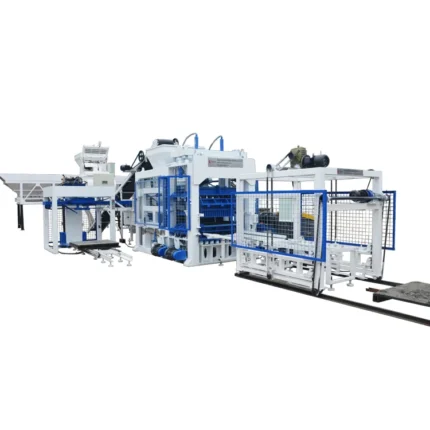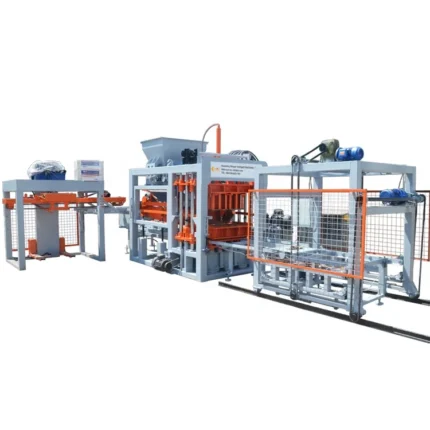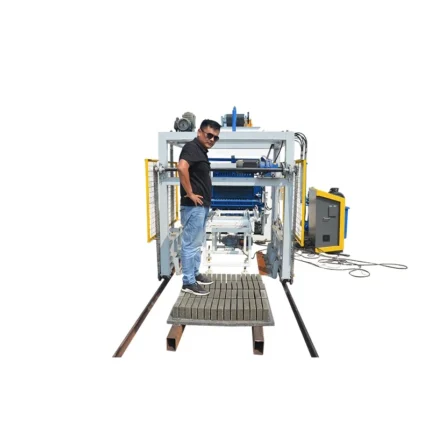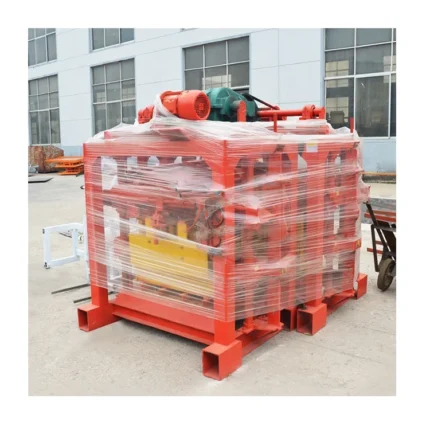



Description
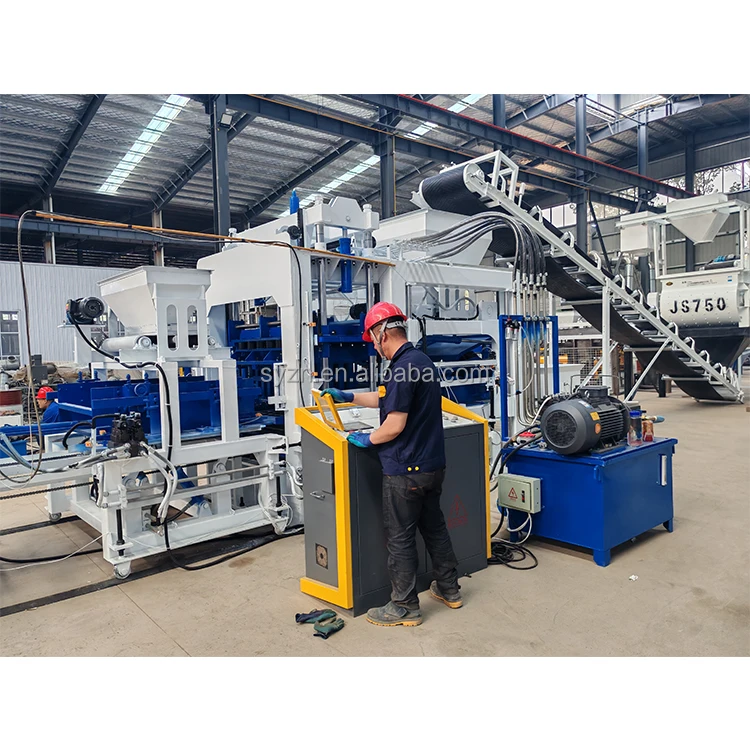
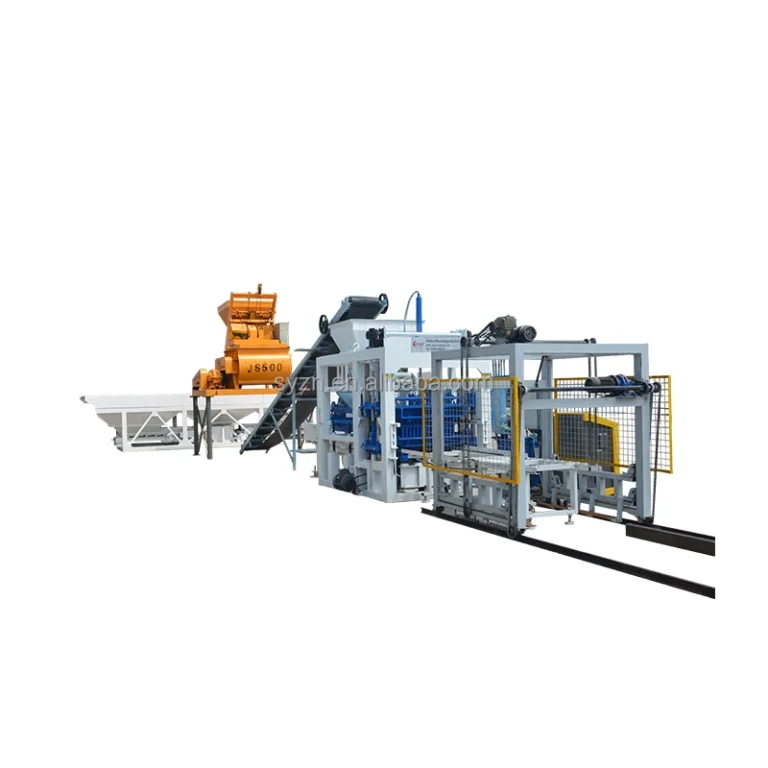
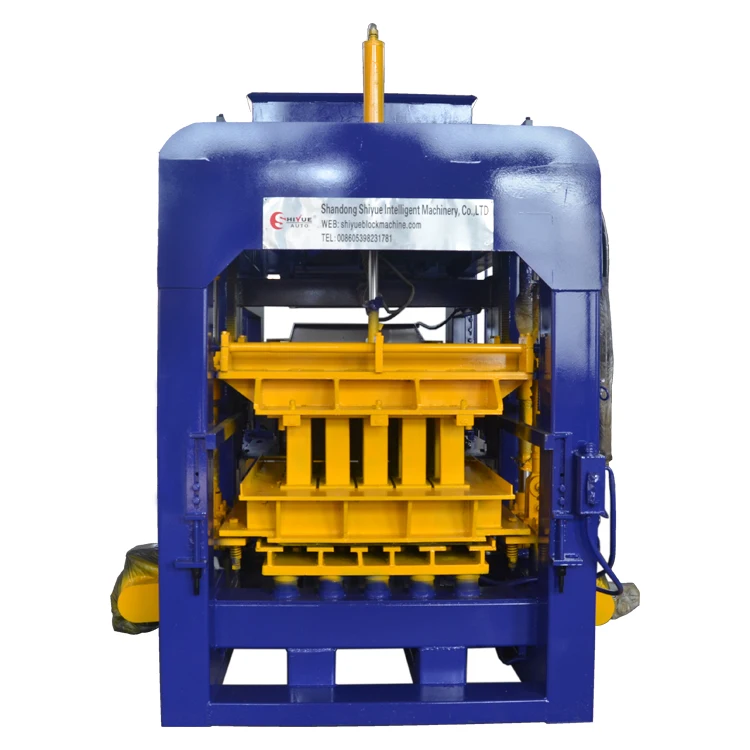
Matched Control Logic — the Qt4-25a pairs PLC sequencing with a 60 KN vibration force and 1020×850 mm pallet so cycle timing stays consistent from the first block to the last.
Technical Specifications
| Parameter | Value |
|---|---|
| Model | Qt4-25a |
| Product Type | Automatic Block Making Machine |
| Overall Dimensions (L×W×H) | 7100 × 1600 × 2610 mm |
| Net Weight | 5800 kg |
| Rated Power | 27.5 kW |
| Voltage & Frequency | 380 V (other configurations available on request) |
| Vibration Force | 60 KN |
| Pallet Size | 1020 × 850 × 40 mm |
| Output — 400×200×200 mm hollow block | 960 pcs/h, 7680 pcs/day (4 pcs/mould) |
| Output — 400×150×200 mm hollow block | 1440 pcs/h, 11520 pcs/day (6 pcs/mould) |
| Output — 225×112.5×53 mm solid brick | 3840 pcs/h, 30720 pcs/day (16 pcs/mould) |
| Control System | PLC (brand and display language confirmed before shipment) |
| Automation Level | Semi-automatic; upgrade path available for pallet feeding and stacking |
| Warranty | 1 year |
| Standards | ISO 9001:2008, CE |
Application Suitability
| Application | Material or Output |
|---|---|
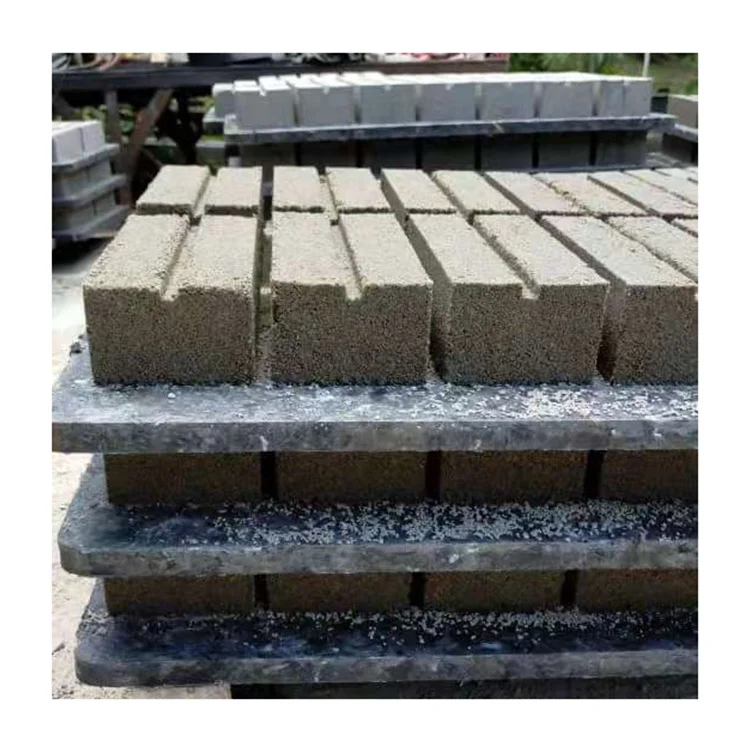
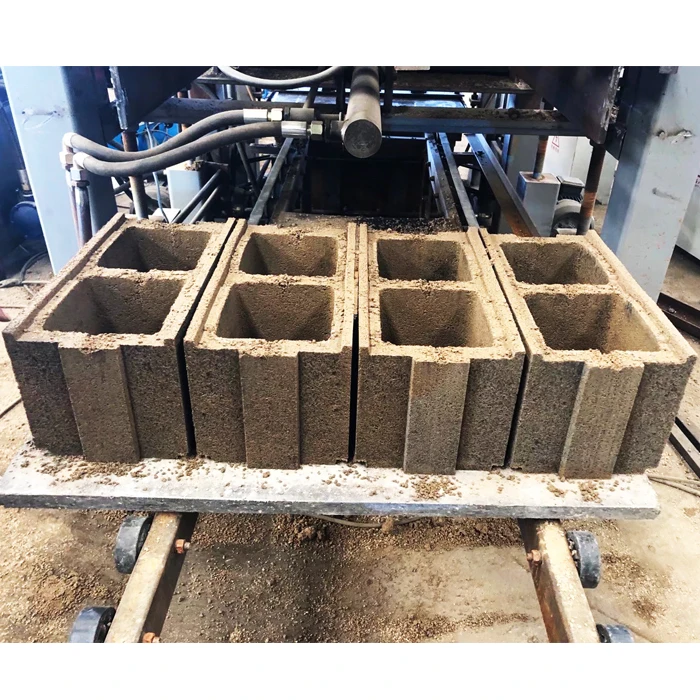
| Standard hollow block production | 400×200×200 mm and 400×150×200 mm formats from crushed stone, sand, and cement |
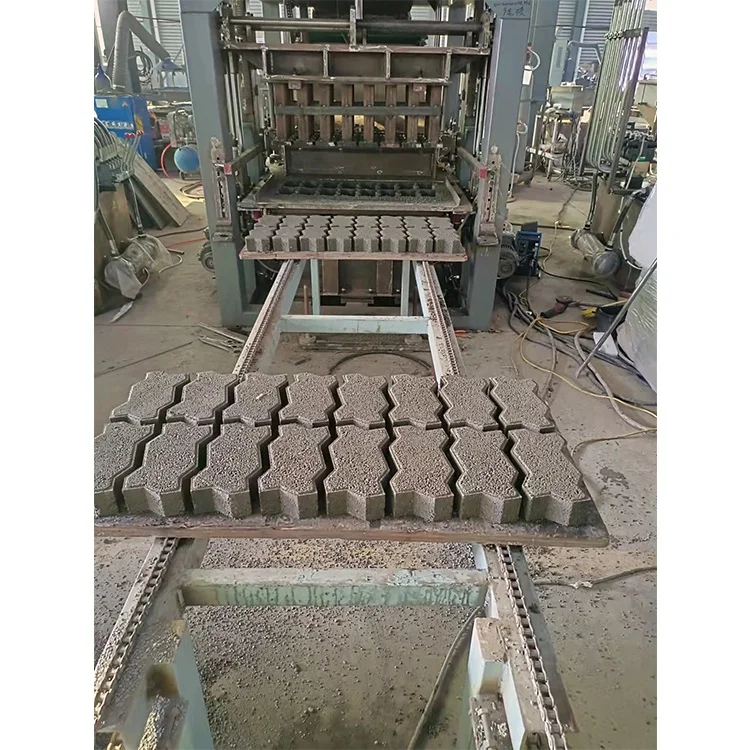
| Solid brick production | 225×112.5×53 mm bricks from local aggregate and cement |
| First block plant setup | Small-to-medium plants with manual pallet handling and outdoor curing yards |
| Format expansion on existing lines | Adding hollow or solid formats to a running yard using the same pallet size |
What "960 Blocks per Hour" Actually Means on the Shop Floor
Capacity only matters when the block format is named next to the number.
When a quotation lists output without stating the mould cavity count or the block dimensions it assumes, the real daily total often lands well below expectation. I have watched lines in West Africa sit idle while operators waited for pallets because the quoted cycle time never accounted for the manual return loop. With the Qt4-25a, every figure above is tied to a specific format and cavity count, so you can calculate shifts against the product you actually sell. The automatic block making machine PLC controlled sequence holds the vibration and press timing steady, but the pallet handling rhythm still depends on how the rest of the yard is laid out. [NEED_CITE: typical pallet return cycle times in semi-automatic block plants]
PLC Sequencing That Removes Operator Guesswork
The control panel runs the press through a fixed sequence — feed, vibrate, press, lift, eject — so cycle timing does not drift when a new shift takes over. I once spent a full day in Lagos re-writing a relay panel that let operators skip the pre-vibration step; the blocks looked fine until they cured soft in the middle. With the Qt4-25a, the automatic block making machine PLC controlled logic locks the vibration duration and hydraulic dwell together, preventing that shortcut. The screen language is confirmed before the machine ships, so the operator is not staring at an English menu on day one.
Matching Vibration to Pallet Area
A 60 KN vibration force spread across a 1020×850 mm pallet gives roughly uniform compaction from corner to corner, which is what keeps block density consistent. If the force were concentrated in a smaller zone, the outer cavities would produce lighter blocks that fail the drop test. The pallet size also dictates the curing rack spacing, so the yard layout can be drawn before the machine arrives. I have seen plants where the rack pitch was guessed, and the forklift could not turn between rows — a mistake that only shows up once production starts. [NEED_CITE: vibration distribution and block density uniformity standards]
Reading the Numbers Behind the Qt4-25a
The 27.5 kW rated power covers the main vibration motor, hydraulic pump, and feed conveyor; it tells the electrical contractor the minimum dedicated feeder size. The 5800 kg net weight keeps the frame stable under 60 KN vibration without a massive foundation, though a level concrete slab is still required to stop the pallets rocking during ejection. Cycle time for the 400×200×200 mm hollow block works out to roughly fifteen seconds per mould when the operator keeps pallets flowing, which is the real test of the yard logistics rather than the press itself. Voltage is 380 V by default, but frequency must match the site supply — a 50 Hz motor on a 60 Hz grid runs hot and shortens bearing life. Confirming that detail before shipment avoids the most common commissioning delay I see on export jobs.
The Cost of Skipping the Voltage Conversation
When voltage and frequency are not locked down before the machine leaves the factory, the first week on site becomes a scramble for step-down transformers and soft starters. Motors overheat, PLC power supplies trip, and the warranty clock is already ticking while the line sits dark. I have watched a whole container of equipment wait two weeks at a port because the control cabinet was wired for a supply the site did not have. The Qt4-25a control system can be built to the buyer’s grid, but only if the question is asked before production starts. [NEED_CITE: voltage and frequency mismatch incidents in exported machinery]
Why Source the Qt4-25a Through This Line
The machine, mould, pallet, and handling stations are specified as one package, so the 1020×850 mm pallet matches both the press opening and the curing rack you will build. Configuration is set against your local aggregate and target block format, not a catalogue default — the 60 KN vibration force is confirmed against your mix design before the frame is welded. Moulds for the formats your market actually buys, including custom drawings, ship with the press. Automation is selectable: you can start with manual pallet return and add automatic feeding and stacking later without swapping the press. Installation support includes operator training on the PLC screen that was configured in your language before dispatch.
Documentation & Verification
- Line layout drawing stating capacity per block format and pallet return path
- Machine specification sheet with 60 KN vibration and 27.5 kW power verified
- Mould drawing and cavity count list for each block size you order
- Voltage, frequency, and PLC display language confirmation sheet signed before production
- Factory test record showing actual cycle time on your chosen block format
- Packing photographs and customs documentation support for smooth port clearance
Installation, Commissioning & Support
- Level concrete slab sized to the 7100×1600 mm footprint to prevent pallet rock during ejection
- Dedicated 27.5 kW feeder with correct voltage and frequency confirmed before the cabinet is wired
- Machine ships partly assembled; vibration motor and hydraulic pack are bolted on site
- First-day commissioning includes PLC parameter check against your block format and mix
- Operator training covers the configured screen language so no translation step is needed
- Wear parts list covers PLC sensors and hydraulic seals for the first year of production
What We Need to Quote the Right Configuration
Send the block format you sell most, the daily volume you need to hit, and a sieve analysis of your local aggregate so the vibration force can be matched to the mix. Tell us the site voltage and frequency, the preferred PLC display language, and whether you plan to start with manual pallet handling or go straight to automatic stacking. If you already have curing racks or forklifts on site, share their dimensions so the pallet size works with the yard you have.
Frequently Asked Questions
Q: How is capacity verified per block format, and what cycle time does each mould actually deliver?
A: Every capacity figure is tied to a specific block size and cavity count — 960 pcs/h for the 400×200×200 mm hollow block at four cavities, for example. The PLC logs the actual cycle time during the factory test, and that record ships with the machine so you can compare it against your yard logistics before production starts.
Q: What PLC brand and display language options are available, and can the system support remote diagnostics?
A: PLC brand and screen language are confirmed during the quotation stage so the panel matches your operator’s needs. Remote diagnostics depend on the site’s internet availability; if a modem is fitted, parameter logs can be pulled without a technician flying in for every fault code.
Q: How does the automation upgrade path work — can I add automatic pallet feeding and stacking later?
A: The Qt4-25a frame and PLC I/O reserve space for an automatic pallet feeder and stacker, so you can add them without replacing the press. The upgrade is mostly a matter of bolting on the new stations and loading the extended PLC program, keeping the original investment intact.
Q: What voltage and frequency configurations are confirmed before shipment to avoid commissioning delays?
A: Voltage and frequency are locked on the specification sheet before production begins — 380 V is standard, but other values are built to order. The motor nameplate and PLC power supply are then matched to that exact supply, eliminating the transformer scramble I often see on export sites.
Q: Which wear parts are PLC or sensor-related, and how are replacements supplied after the first year?
A: Proximity sensors on the mould lift and pallet indexer are the most common PLC-linked wear items. A spare set ships with the machine, and the parts list includes part numbers so replacements can be ordered directly or sourced locally if the brand is available in your region.