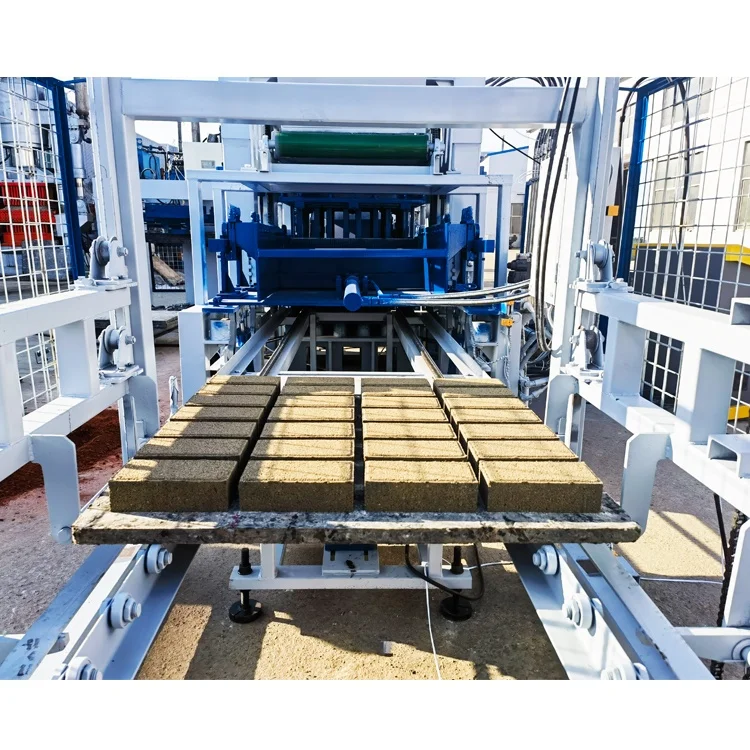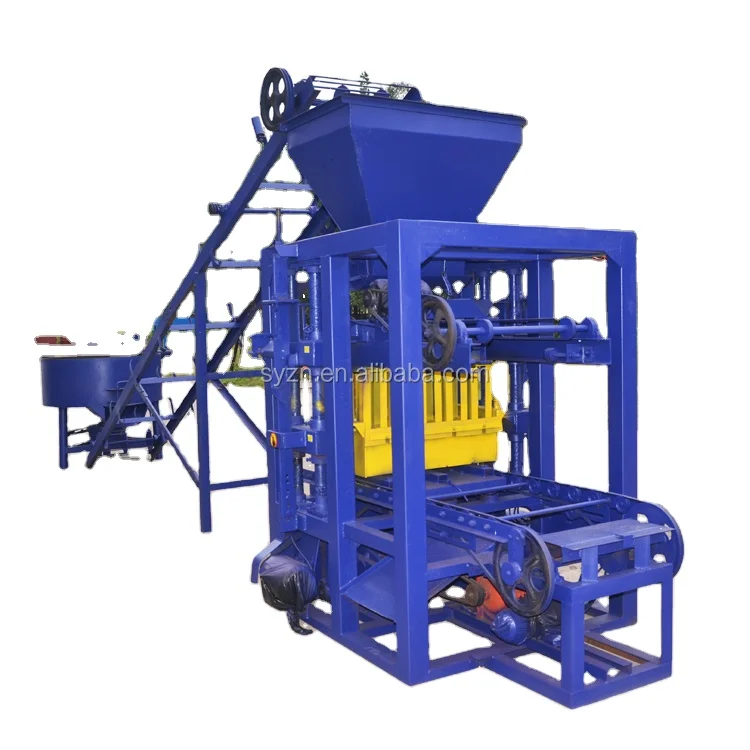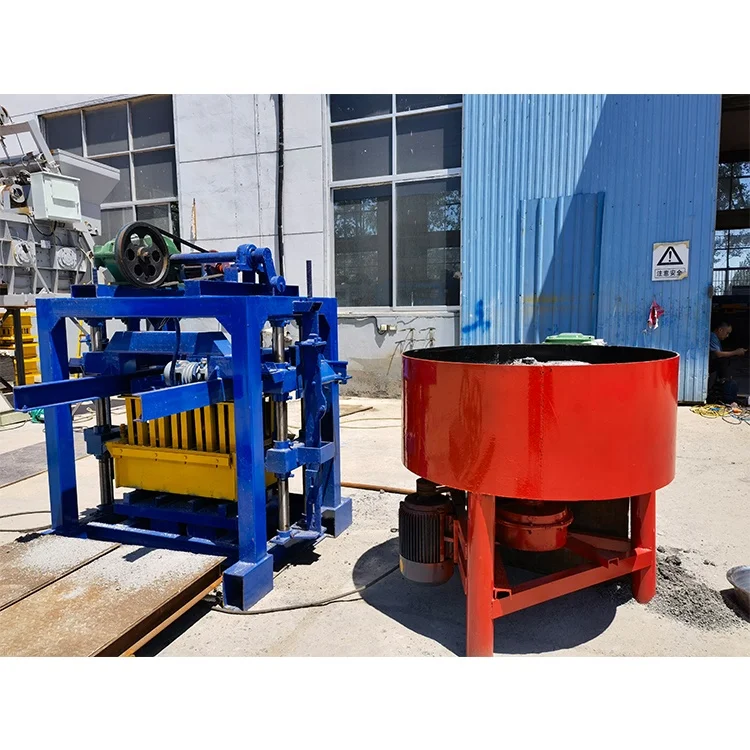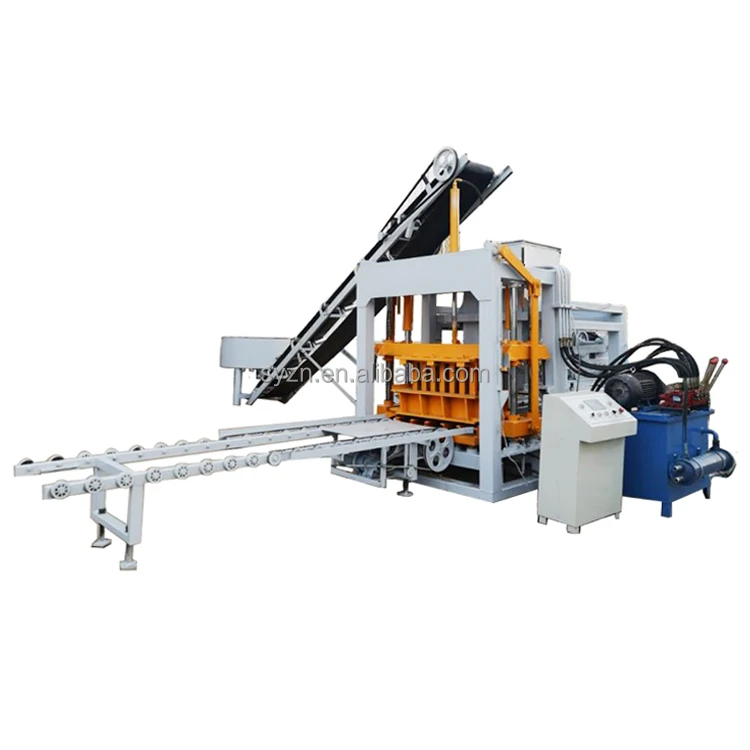


Description
Automation-First Approach — the QT4-20 block making machine lets you specify exactly which stations run automatically and which stay manual, so you only pay for the automation your plant actually needs today.
Technical Specifications
| Parameter | Value |
|---|---|
| Model | QT4-20 |
| Product Type | Hydraulic Vibration Block Making Machine |
| Overall Dimensions (L×W×H) | 7100×1600×2610 mm |
| Rated Pressure | 16-21 MPa |
| Main Vibration Form | Platform Vibration |
| Vibration Frequency | 4600 r/min |
| Vibration Force | 45 kN |
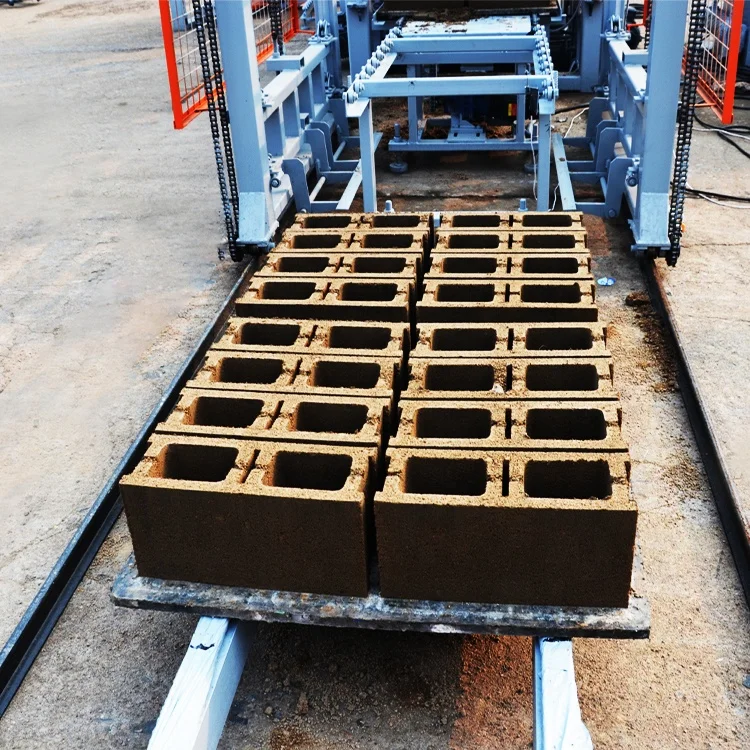
| Pallet Size | 1020×570 mm |
| Molding Cycle | 20-30 s (basis to be confirmed per block format) |
| Overall Power | 27.5 kW |
| Total Mass | 6 T |
| Demolding Method | Hydraulic |
| General Water Consumption | 12 T/Day |
| Factory Area | 500 m² |
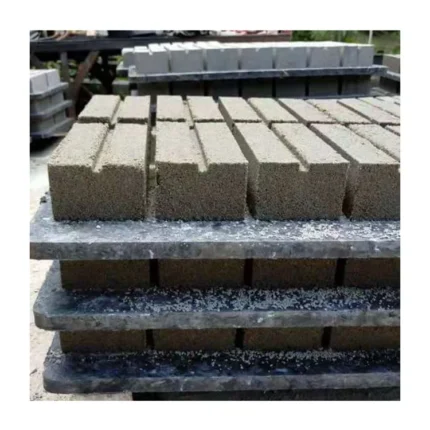
| Applied Products | Concrete blocks, hollow/solid blocks, pavers, interlocking blocks, curbstone |
| Raw Materials | Crushed stone, sand, cement, fly ash, gravel, slag |
| Control System | PLC configurable, language confirmed before dispatch |
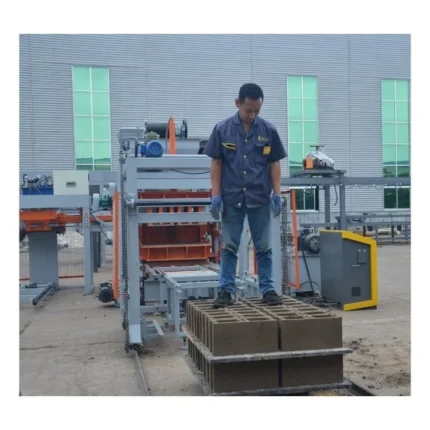
| Automation Level | Selectable from semi-automatic to fully automatic stacking and cubing |
| Warranty | 1 year (whole machine, excluding spare parts) |
Application Suitability
| Application | Material or Output |
|---|---|
| Hollow block production for residential walls | Crushed stone, sand, cement, fly ash |
| Solid paver manufacturing for walkways and driveways | Gravel, sand, cement, colored pigment |
| Interlocking block runs for retaining structures | Slag, sand, cement blends |
| Curbstone pressing for road and pavement edges | Coarse aggregate and cement mixes |
Why the PLC Language Question Beats the Price Question
A control panel locked to the wrong language costs more in commissioning delays than any discount ever saves.
Every time an automatic QT4-20 block making machine lands on a job site with its HMI displaying Chinese or an unsupported local script, the first two days vanish into remote troubleshooting. I learned this after a shipment to Indonesia where the operator stared at fault codes he could not read, and it took four days of video calls to reset the display language. Now every unit we configure has the target language verified in writing before the PLC program is compiled. [NEED_CITE: PLC localization standards for exported industrial machinery]
From Semi-Automatic Start to Full-Line Automation
The QT4-20 is designed so that pallet feeding, stacking, and cubing stations can be added or upgraded without swapping the core press. A buyer launching a first block plant often begins with manual pallet handling and a single operator, then bolts on an automatic stacker once daily volumes justify the extra station. This staged automation path means the PLC controlled block making machine you install today does not become obsolete when your output targets grow.
What the PLC Actually Removes from the Operator
Cycle timing, vibration duration, and hydraulic pressure sequencing all live inside the programmable controller rather than in the operator’s head. Once the recipe for a specific block format is saved, batch-to-batch consistency no longer depends on one experienced worker remembering to adjust the dwell time. The PLC also logs fault histories, so when a limit switch drifts or a solenoid sticks, the maintenance team sees the exact timestamp and error code instead of guessing. [NEED_CITE: PLC fault logging benefits in concrete product manufacturing]
Reading the Specs That Actually Shape Block Quality
The 16-21 MPa rated pressure works together with the 45 kN platform vibration at 4600 r/min to compact the mix into a dense, uniform block. Too little pressure and the hollow block walls crumble at the edges; too much vibration without adequate hydraulic hold and the core bars shift, producing uneven cavities. The 1020×570 mm pallet size determines how many blocks sit on each board, which in turn dictates the curing rack spacing and the forklift fork width your yard already uses. A 20-30 s molding cycle is achievable on standard hollow formats, but thicker pavers or interlocking profiles with deeper draw will extend that figure, so capacity calculations must always state the exact block being produced. The 27.5 kW total power draw means the main breaker and cable run must be sized before the machine arrives, not after.
When Automation Scope Is Left Undefined
Quotations that list "automatic block machine" without specifying whether pallet feeding, stacking, or cubing is included leave buyers discovering hidden manual stations on arrival. The result is a line that still needs three workers where one was expected, and pallets piled by hand in the curing yard. Voltage mismatches discovered at commissioning add weeks of transformer sourcing. [NEED_CITE: common specification gaps in block machine export contracts]
Why This Is the Right Place to Source
Block machinery is the single focus here, so the press, moulds, pallets, and handling equipment are specified as one matched system rather than assembled from separate vendors. The QT4-20 configuration is set against your actual mix design and local aggregate, not a catalogue default. Mould design covers the formats your market sells, including custom drawings when a standard cavity layout does not fit. Automation level is selectable and upgradable, and every machine ships with voltage, frequency, and PLC display language confirmed in writing before production begins. Installation support includes operator training so your team runs the line confidently from day one.
Documentation & Verification
- Line layout showing each automation station and its cycle contribution
- Capacity calculation stating the exact block format assumed
- Hydraulic and electrical schematic matched to your confirmed voltage
- PLC language and control voltage confirmation sheet signed before production
- Factory test record on your selected mould and pallet size
- Wear parts list with mould cavity count and reorder codes
Installation, Commissioning & Support
- Foundation pad must accommodate the 7100×1600 mm footprint plus pallet return clearance
- Dedicated 27.5 kW circuit with confirmed voltage and frequency before cable pull
- Machine arrives dismantled; reassembly covers vibration platform, hydraulic pack, and PLC cabinet
- First-day commissioning verifies saved recipes against your target block dimensions
- Operator training covers mould change sequence and PLC fault navigation
- Wear parts kit includes high-wear hydraulic seals and vibration motor brushes
Before You Request a Quote
Tell us which block formats you sell most, the daily volume you need per format, and whether your yard already has curing racks and forklifts sized for 1020×570 mm pallets. Share your site voltage and frequency along with the preferred PLC display language. If you are replacing an existing press, note which handling stations you want to keep and which you want to automate.
Frequently Asked Questions
Q: Can the QT4-20 start as semi-automatic and add full stacking later?
A: Yes. The press is designed with mounting points and PLC I/O reserves for pallet feeding, stacking, and cubing stations. You can ship the machine in semi-automatic configuration and bolt on the additional modules when your volume justifies it, without replacing the core press or rewriting the base program.
Q: How is PLC language locked before the machine leaves the factory?
A: We confirm the target display language in writing during the quotation stage. The PLC program is compiled with that language file before the factory test, and a screenshot of the HMI home screen is sent to you for sign-off. This prevents the multi-day remote reset delays we have seen when language is left at a default setting.
Q: What cycle time should I plan for per block format?
A: The 20-30 s range applies to standard hollow block formats. Thicker pavers or interlocking profiles with deeper draw typically extend the cycle. We provide a capacity calculation that states the exact block format, mould cavity count, and assumed curing time so your daily output projection matches reality.
Q: Which automation stations are included in a standard quotation?
A: Every quotation lists pallet feeding, stacking, and cubing as separate line items so you see exactly what is automated and what remains manual. If a station is not listed, it is not included. This prevents the surprise of arriving on site to find workers still handling pallets by hand.