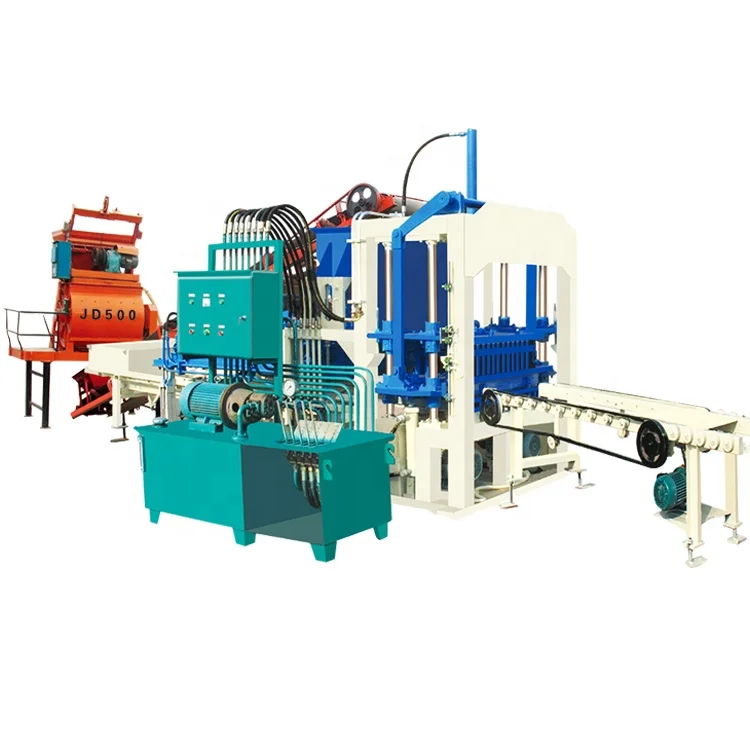
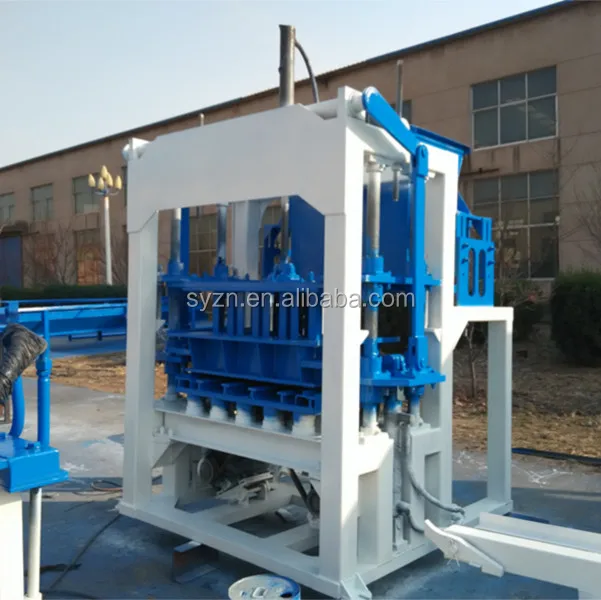


Description
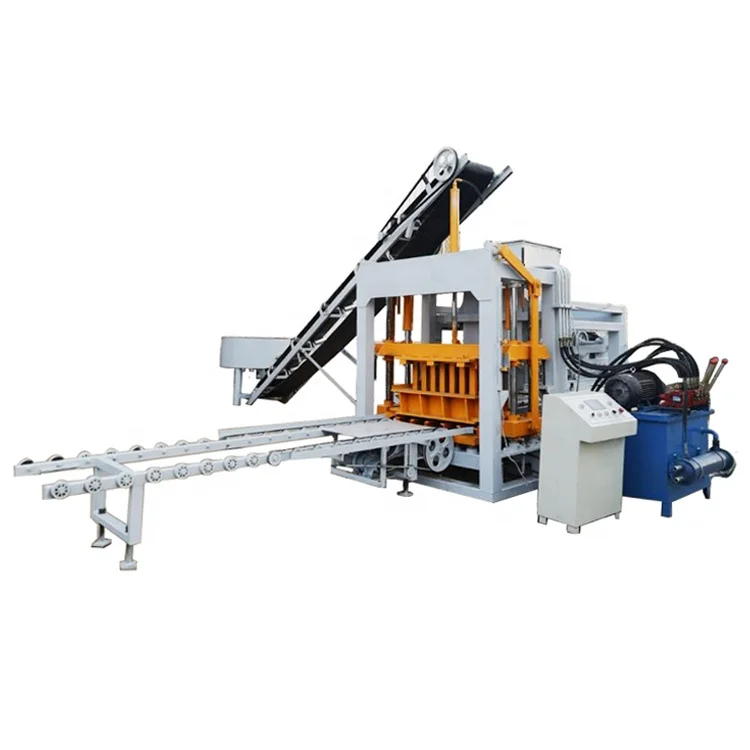
Matched Control Logic — every QT4-20 procedure from raw feed to hydraulic demolding runs through one PLC programme tuned to your block format, not a catalogue default.
Technical Specifications
| Parameter | Value |
|---|---|
| Model | QT4-20 |
| Product Type | Automatic Hydraulic Block Making Machine |
| Overall Dimensions (L×W×H) | 7100 × 1600 × 2610 mm |
| Rated Hydraulic Pressure | 21 MPa |
| Vibration Force | 60 kN |
| Vibration Frequency | 2800–4500 r/min |
| Main Vibration Form | Platform Vibration |
| Pallet Size | 1020 × 570 mm |
| Molding Cycle | 15–25 s (basis not stated in source — confirm block format / material / thickness) |
| Overall Power | 27.5 kW |
| Total Mass | 5.8 T |
| Demolding Method | Hydraulic |
| General Water Consumption | 8 T/Day (basis not stated in source — confirm block format / production hours) |
| Control System | PLC with person-machine conversation interface |
| Automation Level | Automatic production line |
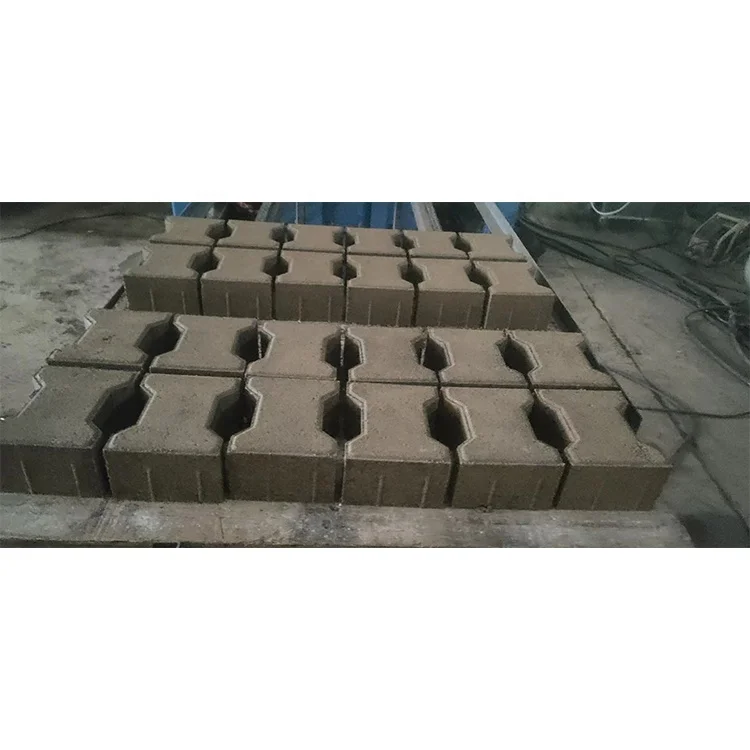
| Applied Products | Concrete blocks, hollow/solid blocks, pavers, interlocking blocks, curbstone, colored pavers |
| Raw Materials | Crushed stone, sand, cement, dust, fly ash, gravel, slag |
| Factory Area | 500 m² |
| Standards | CE (where applicable) |
Application Suitability
| Application | Material or Output |
|---|---|
| Hollow block production for wall construction | Crushed stone, sand, cement, fly ash blends |
| Solid concrete block manufacturing | Gravel, cement, sand mixes |
| Interlocking paver and colored paver runs | Fine aggregate with pigment dosing |
| Curbstone and kerb production | Coarse aggregate with high cement content |
| On-site block production for housing projects | Locally sourced sand, dust, and slag |
Why PLC Language Confirmation Must Happen Before Shipment
An automatic QT4-20 block machine PLC controlled from day one only works if the operator can actually read the screen.
I have watched commissioning stall for an entire first shift because the HMI displayed Chinese prompts on a machine sitting in a West African plant. The operator could not confirm alarm codes, the technician could not navigate the recipe menu, and the project manager spent the afternoon searching for a translator who understood hydraulic block terminology. That lost day is entirely preventable. Voltage mismatches cause similar delays — a 380V/50Hz machine wired into a 440V/60Hz supply trips breakers before the first cycle completes. [NEED_CITE: voltage and frequency standards by export market]
What the PLC Actually Governs on the QT4-20
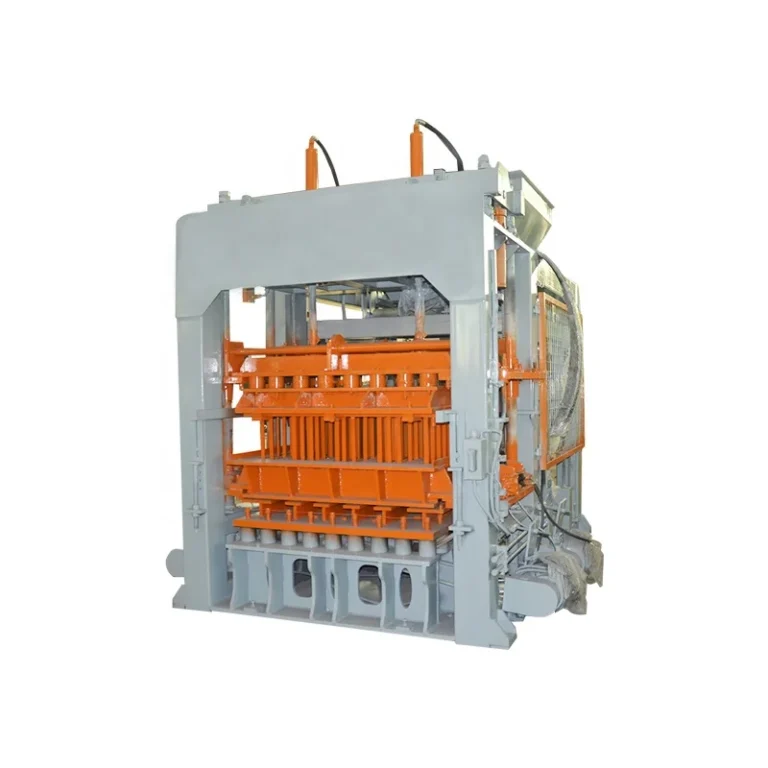
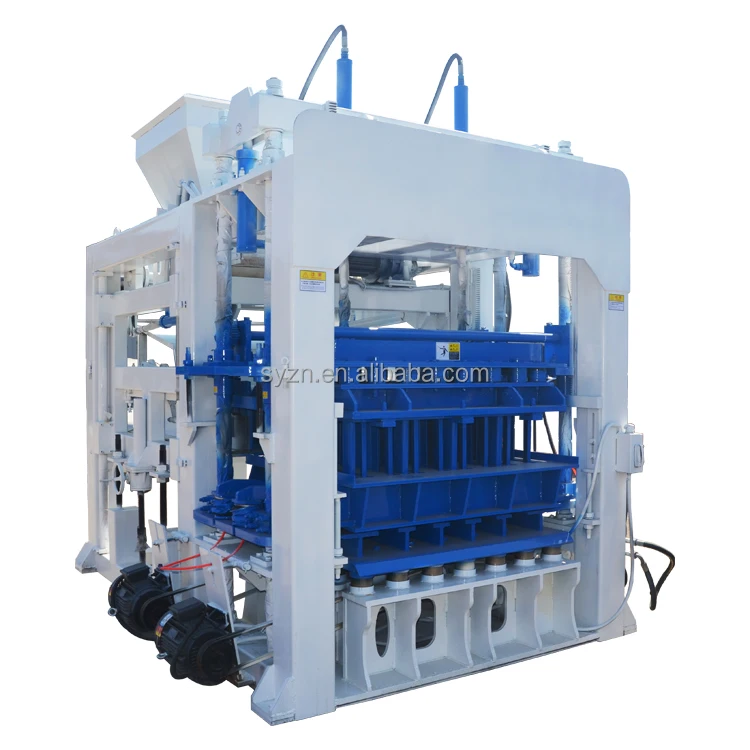
The automatic QT4-20 block machine PLC controlled cycle manages raw material feeding, vibration timing, hydraulic pressure application, and demolding in a single programmed sequence. Operators interact through the person-machine conversation interface to select block format recipes rather than adjusting individual valves or timers. This removes the variation that comes from manual cycle management and keeps compaction parameters consistent across every pallet produced during a shift.
Removing Manual Intervention From the Production Loop
The automation level here means the press cycle runs without the operator triggering each station manually. Feeding, pressing, vibrating, and demolding follow the PLC programme once the line is started, which reduces the number of personnel needed at the press itself. For a plant owner moving from a semi-automatic setup, the shift means one operator monitors the HMI and pallet flow instead of physically managing each stage. The consistency gain shows up in block density readings that hold within a tighter band from the first pallet to the last. [NEED_CITE: CE machinery directive requirements for industrial equipment]
Reading the Specs That Actually Determine Block Quality
The 21 MPa rated hydraulic pressure and 60 kN platform vibration force work together to compact the mix into the mould cavity — pressure alone without sufficient vibration leaves voids, while vibration without adequate pressure produces blocks that crumble at the edges. The 2800–4500 r/min vibration frequency range allows tuning to different aggregate sizes; coarser gravel needs higher amplitude at lower frequency, while fine sand with fly ash responds better at the upper range. The 1020 × 570 mm pallet size determines how many blocks form per cycle and must match the curing rack dimensions and forklift capacity already on site. The 27.5 kW overall power draw tells the electrical contractor what dedicated circuit and breaker rating to prepare before the machine arrives.
When Automation Configuration Goes Wrong
A PLC-controlled press is only as useful as the recipe it runs. If the control programme is written for a mix design the buyer cannot source locally — say, a specific fly ash grade unavailable in the destination market — the machine arrives with parameters calibrated for material that does not exist on site. Operators then spend weeks adjusting feed ratios and vibration durations manually, which defeats the purpose of buying an automatic line in the first place. Pallet handling gaps cause similar frustration: the press cycles automatically, but workers still carry pallets by hand because the feeding and stacking stations were never specified. [NEED_CITE: common commissioning failures in exported block making equipment]
Why This Configuration Approach Holds Up
Block machinery is the single focus here, so the QT4-20 press, moulds, pallets, and handling equipment are specified as one matched system rather than assembled from separate suppliers. The control programme is set against the buyer’s actual mix design and target block format before the machine leaves the factory, not loaded from a catalogue default. Mould design covers the formats the buyer’s market actually sells, including custom drawings when standard cavities do not match local demand. The automation level is selectable, meaning a buyer can start with the base automatic press and add pallet feeding, stacking, and cubing stations later without replacing the core machine. Factory testing documents the PLC programme, hydraulic pressure curve, and vibration frequency so the buyer has a baseline to reference during on-site commissioning.
Documentation & Verification
- Line layout and capacity calculation stating the block format assumed for the QT4-20 cycle time
- Machine specification sheet covering hydraulic pressure, vibration force, and pallet dimensions
- PLC programme printout with recipe parameters for each confirmed block format
- Voltage, frequency, and control language confirmation signed before production begins
- Factory test record documenting hydraulic pressure curve and vibration frequency at run-off
Installation, Commissioning & Support
- Foundation must accommodate the 7100 × 1600 mm footprint and 5.8 T mass with level tolerances for platform vibration alignment
- Dedicated circuit rated for 27.5 kW overall power at the confirmed voltage and frequency
- On-site PLC programme verification against local mix design and aggregate before full production starts
- Operator training on the person-machine conversation interface covering recipe selection and alarm response
- Mould and hydraulic wear parts list provided with recommended replacement intervals
What to Prepare Before Sending an Inquiry
Share the specific block formats your market sells, the daily output you need per format, and the raw materials available locally including aggregate type and cement grade. Confirm your site voltage, frequency, and preferred PLC display language so the control system matches your electrical supply and operator capability. Let us know your current pallet handling setup and curing area dimensions so the line configuration accounts for the equipment already in place.
Frequently Asked Questions
Q: How is the 15–25 s moulding cycle verified for each block format and mix design?
A: The cycle time is confirmed during factory testing using the specific mould cavity and a mix sample matching the buyer’s local aggregate. The PLC records the actual feed, vibration, and compaction duration for each format, and these values are documented in the factory test record shipped with the machine.
Q: Can the PLC display language and voltage be set before shipment?
A: Yes. Voltage, frequency, and HMI language are confirmed during the order stage before production begins. The automatic QT4-20 block machine PLC controlled interface is loaded with the agreed language, and electrical components are installed to match the destination supply so no rewiring or translation is needed at commissioning.
Q: What is the upgrade path from the base press to a full automatic line?
A: The QT4-20 can start as an automatic press with manual pallet handling and later accept automatic pallet feeding, stacking, and cubing stations. The PLC architecture supports adding these modules without replacing the main control unit, provided the line layout reserves space for expansion.
Q: How are hydraulic pressure and vibration force matched to local aggregate?
A: The 21 MPa pressure and 60 kN vibration are tuned during factory testing against a sample of the buyer’s aggregate blend. Frequency within the 2800–4500 r/min range and vibration duration are adjusted so the resulting block density meets the target strength without cracking or edge damage.