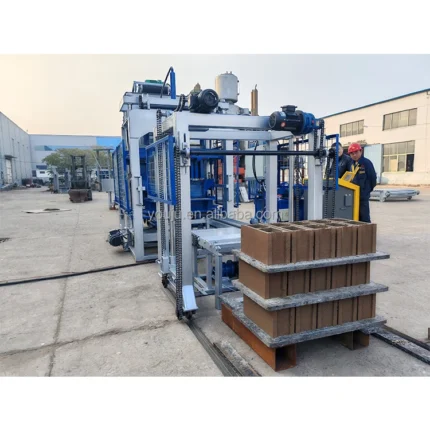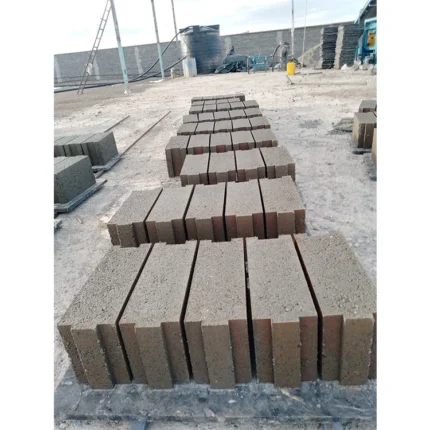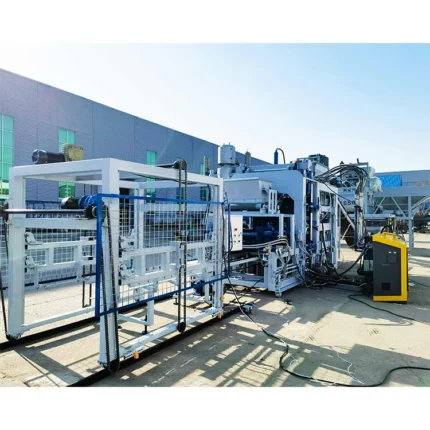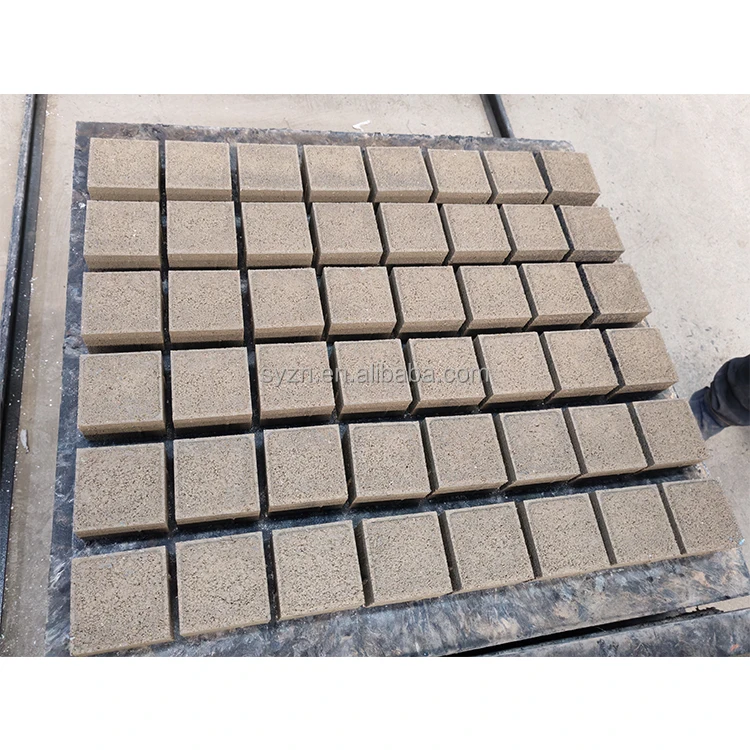


Description
Controlled Operation — The automatic QT4-16 block making machine PLC controlled system is specified around your local voltage, operator language, and target block format before production begins, so the control logic matches what your plant actually runs.
Technical Specifications
| Parameter | Value |
|---|---|
| Model | QT4-16 |
| Product Type | Fully Automatic Concrete Block Making Machine |
| Overall Dimensions (L×W×H) | 7400 × 1950 × 2800 mm |
| Total Mass | 5 T |
| Rated Pressure | 21 MPa |
| Main Vibration Form | Platform Vibration |
| Vibration Frequency | 2800–4500 r/min |
| Vibration Force | 40 kN |
| Pallet Size | 900 × 550 mm |
| Molding Cycle | 15–20 s (basis not stated in source — confirm block format and material) |
| Demolding Method | Hydraulic |
| Factory Area | 600 m² |
| Control System | PLC intelligent control with man-machine interface, fault diagnosis system, remote control function |
| Automation Level | Full automatic |
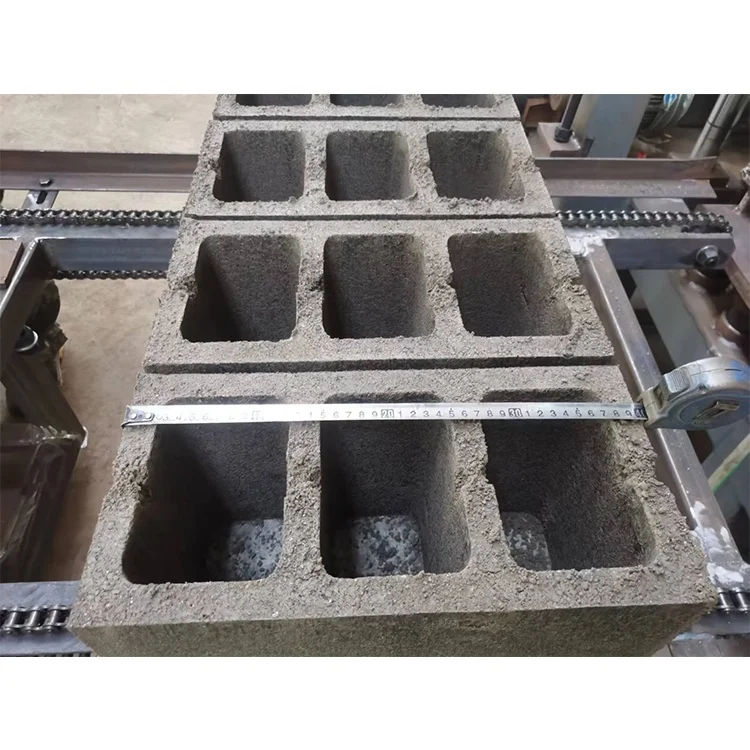
| Applied Products | Concrete blocks, hollow/solid blocks, pavers, interlocking blocks, curbstone, colored pavers |
| Raw Materials | Crushed stone, sand, cement, dust, fly ash, gravel, slag |
Application Suitability
| Application | Material or Output |
|---|---|
| Hollow block production for commercial and residential walls | Crushed stone, sand, cement, and fly ash blends |
| Solid block manufacturing for load-bearing structures | Gravel, sand, and cement with high hydraulic compaction |
| Interlocking paver and colored paver runs | Fine aggregates, cement, and pigment-loaded surface mixes |
| Kerbstone and curb production for infrastructure projects | Coarse aggregate blends requiring extended vibration cycles |
Why PLC Language and Voltage Must Be Locked Before Production Starts
The automatic QT4-16 block making machine PLC controlled interface is confirmed in writing — display language, voltage, and frequency — before the control cabinet is wired.
A common failure pattern in cross-border machinery procurement surfaces only after the crate arrives on-site: the PLC display defaults to a language the local operator cannot read, or the control cabinet is wired for 380V/50Hz while the plant runs on 415V/60Hz. Commissioning then stalls while transformers are sourced or firmware is reflashed [NEED_CITE: voltage and frequency standards by export market]. I have watched entire block plants sit idle for weeks because these three parameters were never written into the purchase order. The QT4-16 is configured against the buyer’s confirmed electrical supply and operator language during the proposal stage, not assumed from a catalogue default.
How the PLC Removes Operator Guesswork
The automatic QT4-16 block making machine PLC controlled system manages the full production sequence — feeder positioning, vibration timing, hydraulic press cycle, and demolding — through a single logic program tied to the selected block format. When an operator selects a mould profile on the man-machine interface, the system loads the corresponding vibration duration, pressure dwell, and cycle timing. This eliminates the need for a senior operator to manually adjust parameters every time the format changes, which is where most batch-to-batch inconsistency originates in semi-automatic plants.
Fault Diagnosis That Catches Problems Before the Press Stalls
The built-in fault diagnosis system monitors hydraulic pressure thresholds, vibration motor feedback, and limit switch states in real time. When a sensor reads outside its expected window, the PLC triggers a warning code on the display rather than allowing the press to continue cycling with a misaligned mould or a stalled feeder [NEED_CITE: PLC fault diagnosis standards in hydraulic block presses]. The remote control function extends this visibility off-site, letting a technical manager or our support team scrutinize cycle logs and diagnose faults without needing to be physically on the factory floor. For a plant owner managing multiple sites or operating in a region where specialized technicians are scarce, this diagnostic layer is what separates a minor adjustment from a multi-day shutdown.
Reading the Specs That Actually Matter
The 21 MPa rated pressure and 40 kN vibration force together determine the density and compressive strength of the finished block — pressure compacts the mix while vibration settles fine particles into voids, and neither alone produces a structurally sound product. The 2800–4500 r/min vibration frequency range allows adjustment for different aggregates; lower frequencies work better with coarse gravel, while higher frequencies suit fine sand and fly ash blends. The 900 × 550 mm pallet size must align with the curing rack dimensions and forklift capacity already in the plant — specifying a pallet without checking the downstream handling equipment creates a bottleneck right after the press. The 15–20 second molding cycle is a machine capability figure; actual cycle time depends on the block format, wall thickness, and mix workability, all of which should be validated during factory testing.
What Happens When the Control System Is an Afterthought
When automation is treated as an optional extra rather than the backbone of the line, the consequences compound silently. Operators revert to manual overrides because the PLC does not have the right program for their mix design, wearing out hydraulic valves faster than projected. Without a fault diagnosis system, a failing proximity switch goes unnoticed until the feeder misaligns and damages a mould. Remote diagnostics that are unavailable or incompatible with the site’s internet infrastructure leave the plant dependent on in-person service visits, which in many export markets means waiting days for a technician to arrive [NEED_CITE: industrial remote monitoring connectivity requirements]. These are not hypothetical risks — they are the recurring pattern in block plants that bought a press without buying the control system that makes it run predictably.
Why Sourcing This Machine Through a Control-First Approach
Every configuration decision starts from the automation layer outward. The PLC program, mould change logic, and stacking sequence are specified as a matched set so that upgrading from semi-automatic to full automatic later does not require replacing the control cabinet. Vibration frequency and hydraulic pressure are tuned against the buyer’s actual mix design and target block format during factory testing, not set to a generic default. The fault diagnosis code list is documented in the operation manual in the same language as the PLC display, so the local maintenance team can respond to warnings without translation delays. Voltage, frequency, and control language are locked in writing before production, which is the single most effective step toward avoiding commissioning delays.
Documentation & Verification
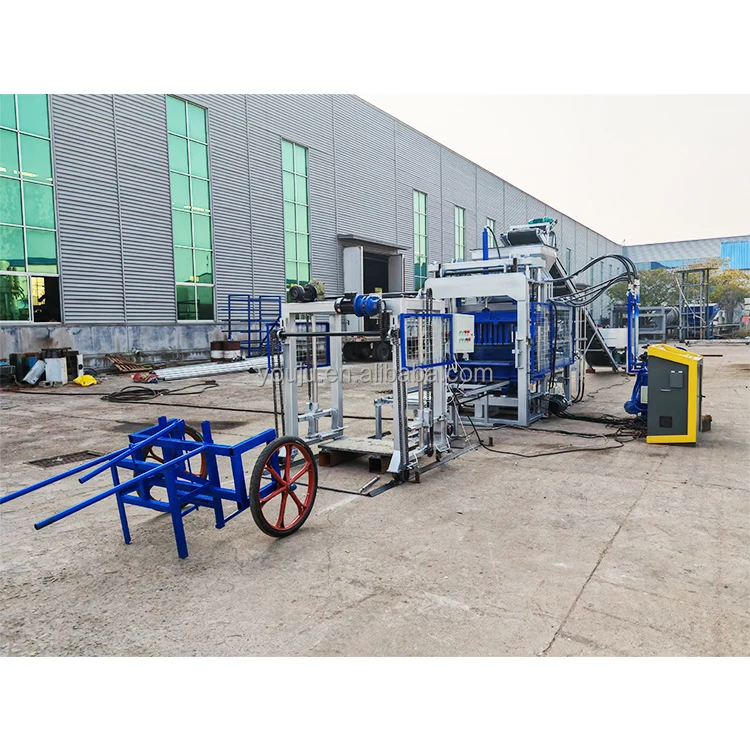
- Line layout showing QT4-16 press position, pallet flow, and curing area footprint
- PLC program logic sheet with block format profiles and cycle timing parameters
- Hydraulic and electrical schematic matching the as-built control cabinet
- Factory test record using your confirmed mix design and target block format
- Fault diagnosis code list in the confirmed PLC display language
Installation, Commissioning & Support
- Foundation plan sized to the 7400 × 1950 mm footprint with vibration isolation requirements
- Dedicated circuit specification matching confirmed voltage and frequency for the 5 T machine
- PLC parameter loading and block format calibration during on-site commissioning
- Operator training on the man-machine interface in the confirmed display language
- Hydraulic valve and vibration motor wear parts list with first replacement intervals
- Remote diagnostics connectivity check and protocol setup during initial startup
What We Need to Configure Your QT4-16 Correctly
To match the PLC programs and automation sequence to your actual production requirements, we need the specific block formats you intend to run, the daily output target for each format, and the aggregate materials available locally. Confirming your site’s voltage, frequency, and preferred operator language at the inquiry stage prevents the most common commissioning delays. If you have an existing curing area, pallet fleet, or forklift capacity, share those dimensions so the pallet handling and stacking configuration fits your current infrastructure.
Frequently Asked Questions
Q: How is the PLC display language and control interface configured for our market?
A: The display language is confirmed in writing during the proposal stage and loaded into the man-machine interface before the control cabinet leaves the factory. Menu structures and fault code labels are translated to match, so your operators navigate the system without ambiguity from the first production run.
Q: What does the fault diagnosis system actually detect and how does the operator respond?
A: The system monitors hydraulic pressure, vibration motor feedback, and limit switch states. When a reading falls outside the expected window, a warning code appears on the PLC display. The operator references the fault code list in the manual to identify and resolve the issue without waiting for external support.
Q: Can the QT4-16 automation level be upgraded later with automatic stacking or cubing?
A: The control architecture supports adding automatic pallet stacking and cubing stations as extensions to the existing PLC program. Upgrading does not require replacing the main control cabinet, provided the automation-ready I/O ports were specified in the original configuration.
Q: How does the vibration system maintain consistency across different block formats?
A: The platform vibration frequency is adjustable between 2800 and 4500 r/min, and the PLC stores format-specific vibration profiles. When the operator selects a block type, the system applies the corresponding duration and frequency, maintaining density and strength within the target range for each format.
Q: What remote diagnostics are available after installation and what connectivity is needed?
A: The remote control function allows off-site access to cycle logs, fault histories, and parameter adjustments. A stable internet connection at the plant is required; the exact protocol and bandwidth needs are confirmed during commissioning to match your site’s available infrastructure.