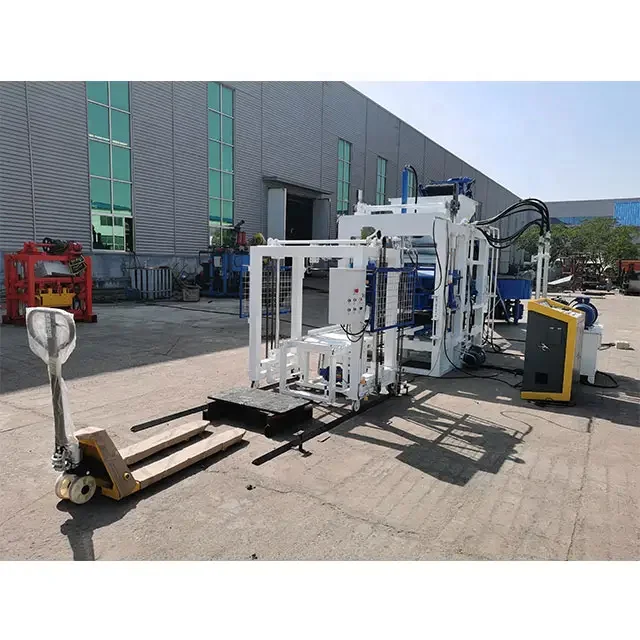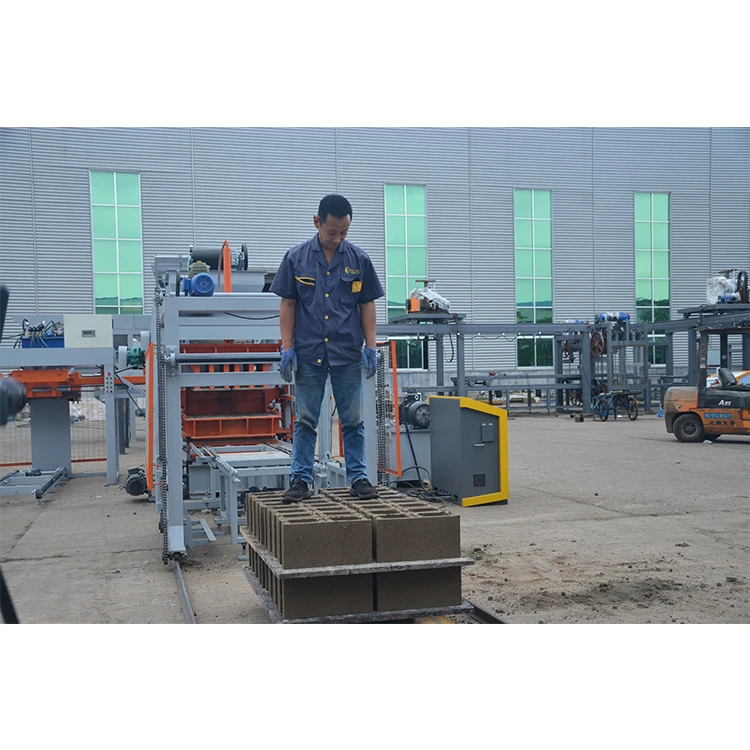


Description
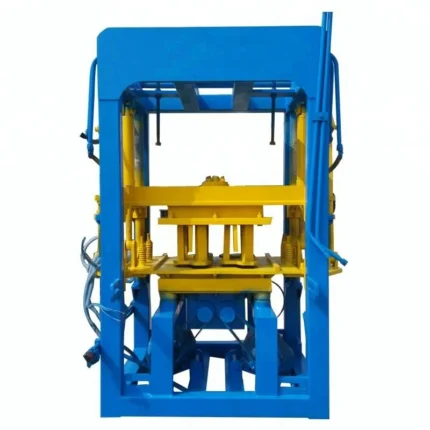
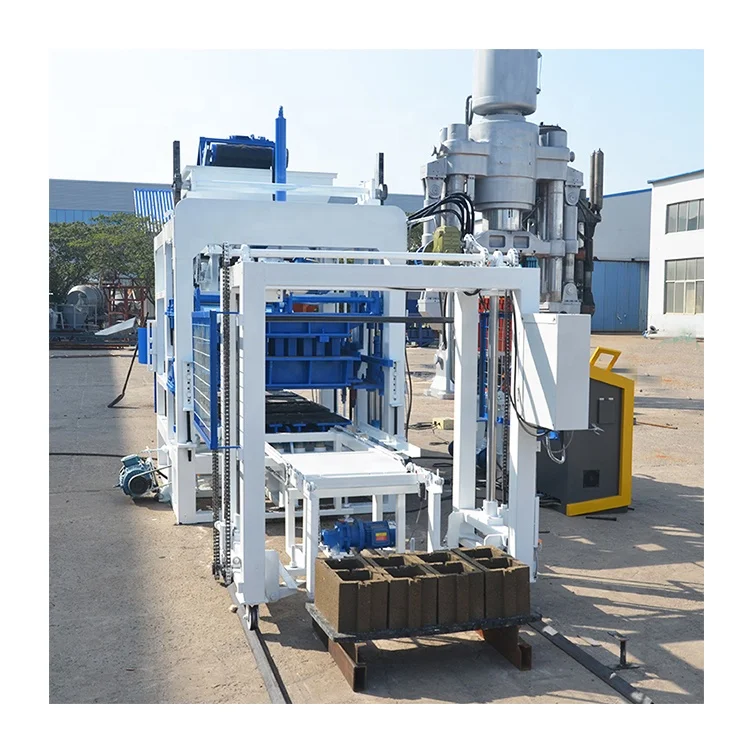
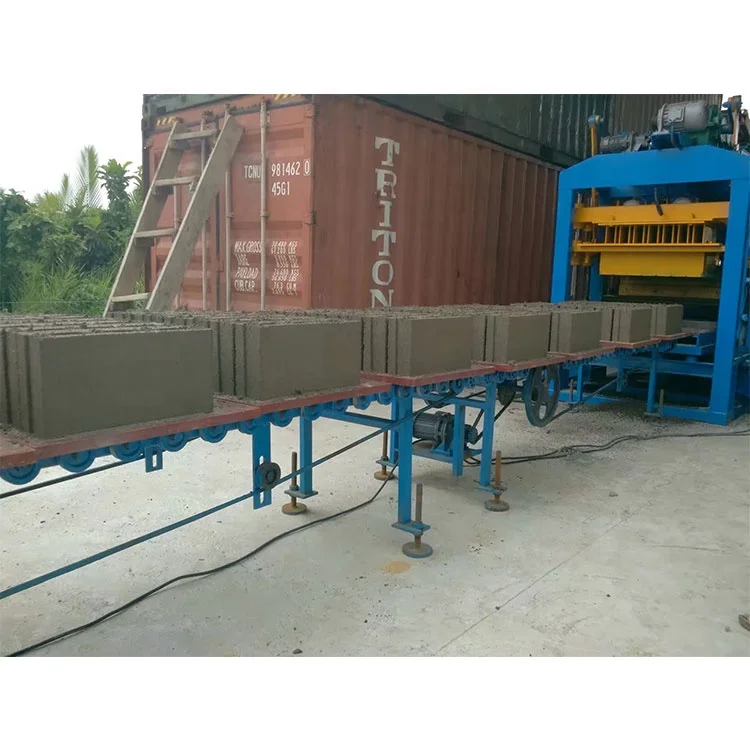
Integrated Mould, Pallet & Handling Configuration — every QT6-15 line we ship is specified as a matched system against the buyer’s actual block format, curing footprint, and local aggregate, not assembled from catalogue defaults.
Technical Specifications
| Parameter | Value |
|---|---|
| Model | QT6-15 |
| Product Type | Automatic Interlocking Brick Block Making Machine |
| Molding Way | Vibration and hydraulic pressing |
| Rated Pressure | 21 MPa |
| Molding Cycle | 15s–20s (basis not stated in source — confirm block format / material / thickness) |
| Pallet Size | 900×700 mm |
| Main Machine Weight | 6000 kg |
| Output: Hollow Block 400×200×200 mm | 6 pcs/pallet, 1440 pcs/h, 11520 pcs/8h |
| Output: Paving Brick 200×100×60 mm | 21 pcs/pallet, 5040 pcs/h, 40320 pcs/8h |
| Output: Solid Brick 240×115×53 mm | 32 pcs/pallet, 7680 pcs/h, 61440 pcs/8h |
| Control System | PLC (brand and language configurable) |
| Voltage & Frequency | Customizable to local standard |
| Automation Level | Automatic (simple line and full line configurations available) |
| Supporting Equipment (Simple Line) | JS500 mixer, 8 m conveyor belt, automatic stacker |
| Supporting Equipment (Full Line) | Cement silo, screw conveyor, cement scale, batching machine, pallet loader, block and pallet separator |
| Raw Materials | Cement, sand, fly ash, stone powder, slag |
| Mould Compatibility | Hollow blocks, pavers, curbstones, solid bricks |
| Warranty | 1 year (excluding wearing parts) |
| Assembly State | Dismantled for container loading |
Application Suitability
| Application | Material or Output |
|---|---|
| Hollow block production for building walls | Cement, sand, crushed stone or fly ash mixes |
| Color paving brick and sidewalk paver runs | Pigmented face mix over standard body aggregate |
| Solid brick manufacturing | Dense sand-cement or stone powder blends |
| Curbstone and interlocking brick production | Coarse aggregate with higher cement content |
| On-site production for housing projects | Locally sourced river sand and crusher dust |
| Block plant format expansion | Same pallet, multiple moulds across product range |
What "1440 Blocks per Hour" Actually Means on the QT6-15
Output figures are only honest when tied to a specific block size, pallet count, and cycle assumption.
The automatic QT6-15 block making machine PLC controlled is listed at 1440 hollow blocks per hour — but that assumes a 400×200×200 mm hollow block at six pieces per pallet and a cycle time at the faster end of the range. Switch to a 200×100×60 mm paving brick and the hourly count jumps to 5040, while a standard solid brick pushes it to 7680. These are very different products with very different curing and handling requirements. I have watched buyers sign contracts based on the highest number on the spec sheet, only to discover their actual daily production — of the format they actually sell — falls well short. That gap is not a machine failure; it is a quoting failure. [NEED_CITE: block machine capacity calculation standards by format]
How the PLC Removes Operator Guesswork from Every Cycle
The QT6-15 automatic block making machine PLC controlled runs a vibration and hydraulic pressing sequence that holds 21 MPa rated pressure through each molding cycle. Once the cycle parameters are set for a given block format, the PLC repeats them without operator adjustment. This means the first block of a shift and the last block of a shift receive identical vibration duration and press force, which is where batch-to-batch consistency actually comes from.
The Upgrade Path Most Quotations Leave Unmentioned
A buyer starting with the simple line — JS500 mixer, 8 m conveyor, and automatic stacker — can add a pallet loader, block-and-pallet separator, and full cubing station later without replacing the press. The QT6-15 was designed so the automation level is selectable at order and expandable on site. I have seen plants begin semi-automatic to manage initial investment, then add full stacking and curing rack handling within a year once production volume justifies it. [NEED_CITE: block production line automation upgrade stages]
Reading the Specs That Actually Determine Block Strength
The 21 MPa rated pressure works together with the vibration system to compact the mix into the mould cavity. Hydraulic pressure alone squeezes; vibration alone settles. The combination is what drives aggregate particles into tight contact, producing the density needed for load-bearing hollow blocks. The 900×700 mm pallet size dictates how many blocks fit per cycle and must align with the curing rack spacing and forklift capacity already on site — a mismatch here means double-handling every pallet. The 6000 kg main machine weight provides the mass needed to absorb vibration reaction forces; a lighter frame transfers that energy into the foundation, causing premature mould wear and inconsistent compaction. Mould change across hollow, paver, curbstone, and solid brick formats is supported on a single press, so one machine covers a full product range rather than sitting idle between runs.
The Cost of Skipping Configuration Details Before Shipment
When the PLC display language is not confirmed before production, the operator on site faces a control screen they cannot read — commissioning stalls until a translator or reprogrammed HMI arrives. When voltage and frequency are assumed rather than verified, motors overheat or contactors fail within the first week. [NEED_CITE: industrial equipment commissioning delays due to electrical mismatch] These are not warranty claims; they are specification gaps that could have been closed with a single confirmation document before the machine left the factory.
Why the Line Matters More Than the Press Alone
Block machinery is the single focus here, so the QT6-15 press, mould, pallet, and handling equipment are specified as one matched system. The configuration is set against the buyer’s actual mix design and local aggregate, not a catalogue default. Mould design covers the formats the buyer’s market actually sells, including custom drawings when standard formats do not fit. The automation level is selectable, so a buyer can begin with a simple line and add pallet handling and cubing as volume grows. Installation and commissioning support includes operator training, and mould and wear parts are documented and available from the first replacement cycle onward.
Documentation & Verification
- Line layout and capacity calculation stating the block format assumed for each output figure
- Voltage, frequency, and PLC display language confirmation sheet signed before production
- Hydraulic and electrical schematic with every valve and sensor labeled
- Mould drawing and format list for every included mould
- Factory test record showing actual cycle time per block format
Installation, Commissioning & Support
- Foundation plan based on the QT6-15’s 6000 kg weight and vibration reaction forces
- Voltage and frequency confirmed to local standard before electrical panel build
- Machine dismantled for container loading with top cylinder removed for height clearance
- On-site reassembly and PLC parameter setup for each target block format
- Operator training covering mould change, cycle adjustment, and daily maintenance
- Wear parts and mould list provided with recommended replacement intervals
Before You Request a Quote
Tell us which block formats your market actually buys — dimensions, daily volume per format, and the raw materials you can source locally. Share your existing curing area dimensions and forklift capacity so the 900×700 mm pallet choice is confirmed against real site conditions. Specify your local voltage, frequency, and the language your operators need on the PLC display.
Frequently Asked Questions
Q: How is the output capacity verified, and which block format is each figure based on?
A: Every output figure we quote is tied to a specific block dimension, pallet count, and cycle time. For the QT6-15, hollow block capacity assumes a 400×200×200 mm format at six pieces per pallet. We provide a written capacity calculation document with your quotation so there is no ambiguity about which format each number represents.
Q: What automation level does the QT6-15 support, and can I upgrade later?
A: The QT6-15 ships as a simple line with mixer, conveyor, and stacker, or as a full line with batching, pallet loading, and block separation. The press itself is the same in both configurations. You can start semi-automatic and add pallet handling and cubing stations as your production volume grows.
Q: How is the PLC control language and voltage confirmed before shipment?
A: We send a confirmation sheet listing voltage, frequency, and PLC display language before production begins. You sign off on it, and the electrical panel is built to those specifications. This step prevents the most common commissioning delay we see on international shipments.
Q: How long does a mould change take, and what formats can one machine run?
A: The QT6-15 accepts moulds for hollow blocks, paving bricks, solid bricks, and curbstones on the same press. Mould change time depends on the format and operator familiarity. We provide a mould change procedure in the operation manual and train your team during commissioning.
Q: Which supporting equipment is included versus optional?
A: The simple line includes a JS500 mixer, 8 m conveyor belt, and automatic stacker. Cement silo, screw conveyor, cement scale, batching machine, pallet loader, and block-and-pallet separator are available as full-line additions. Each is specified to match the QT6-15 cycle time so the press is never left waiting.