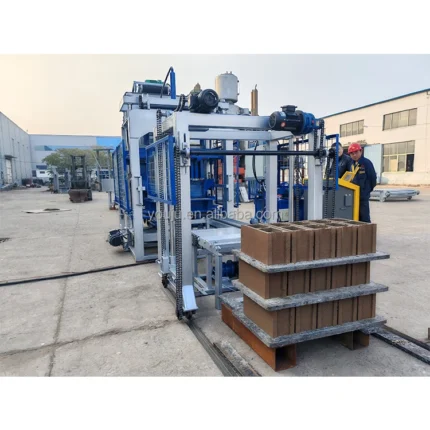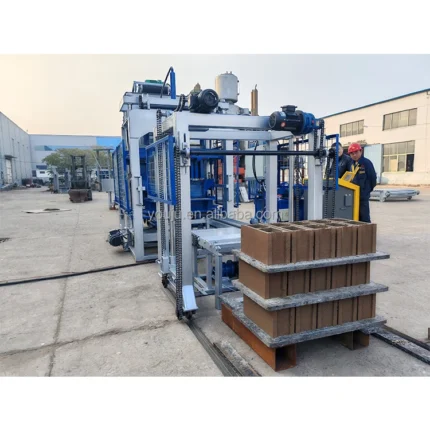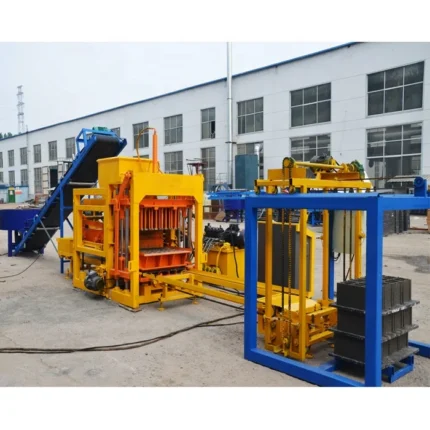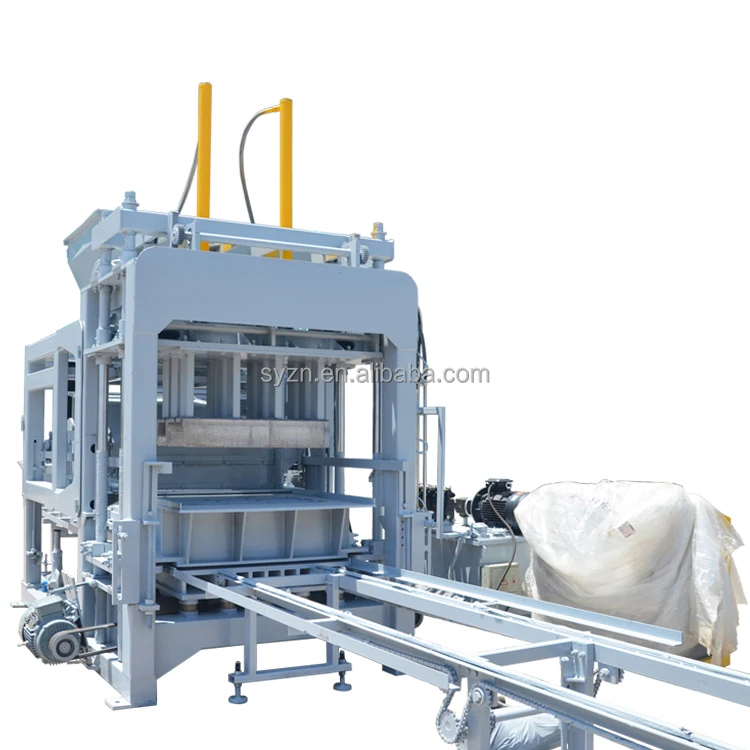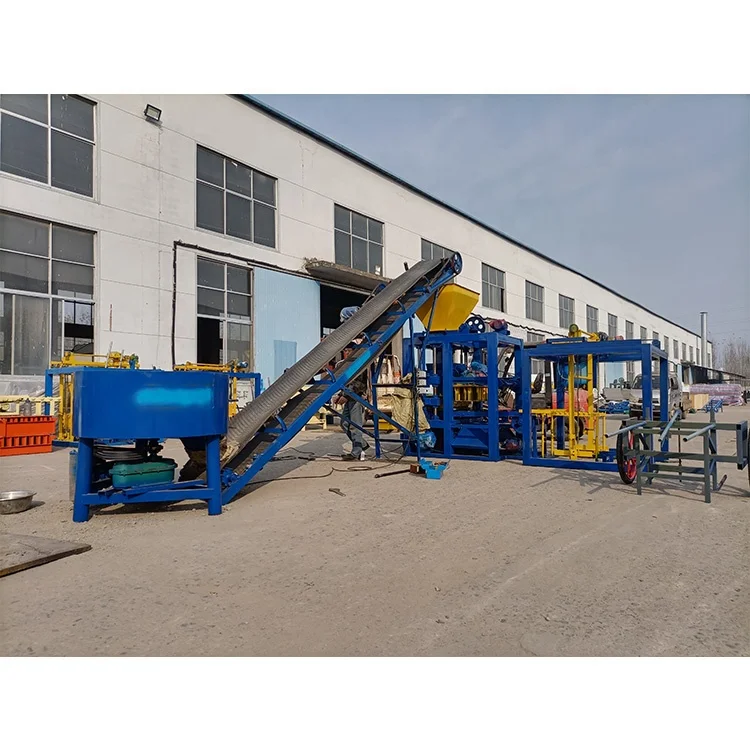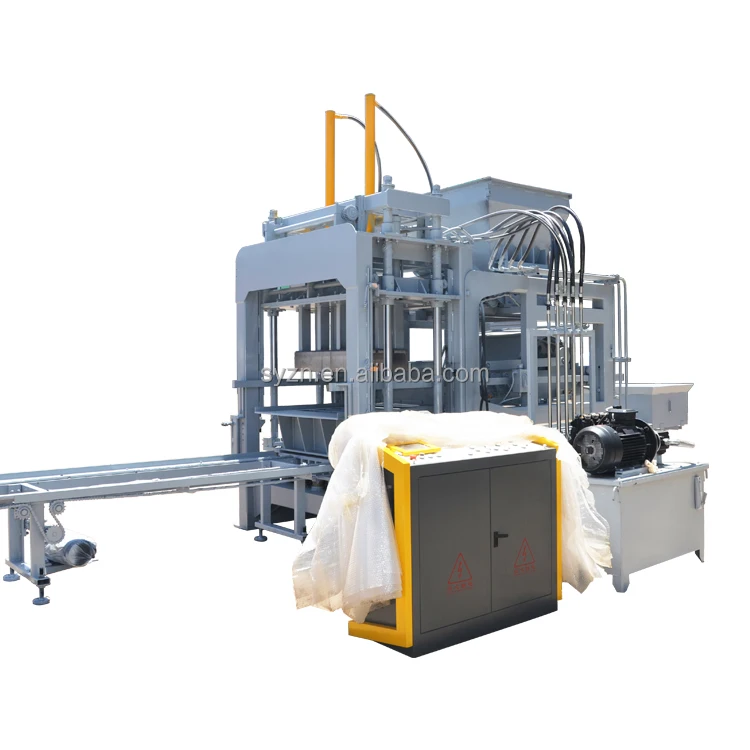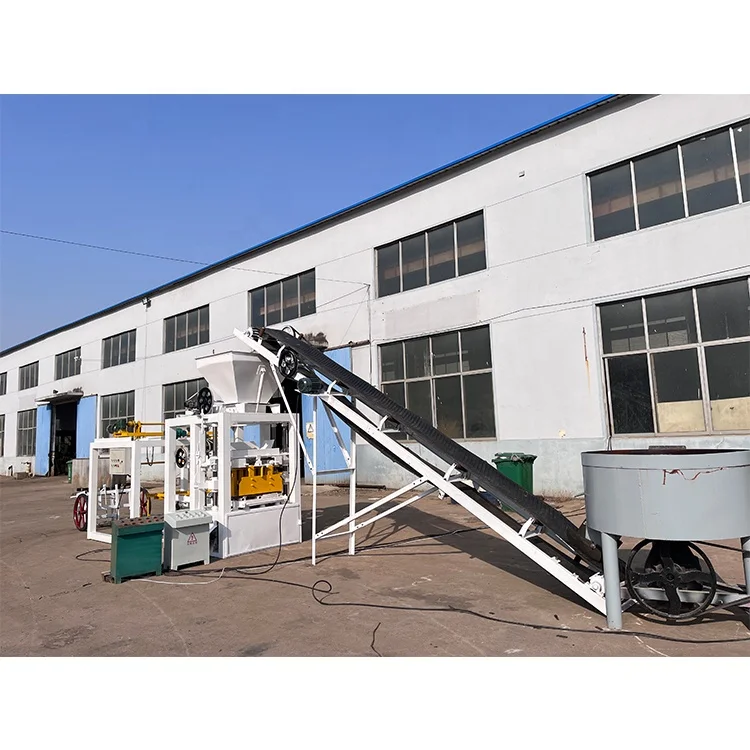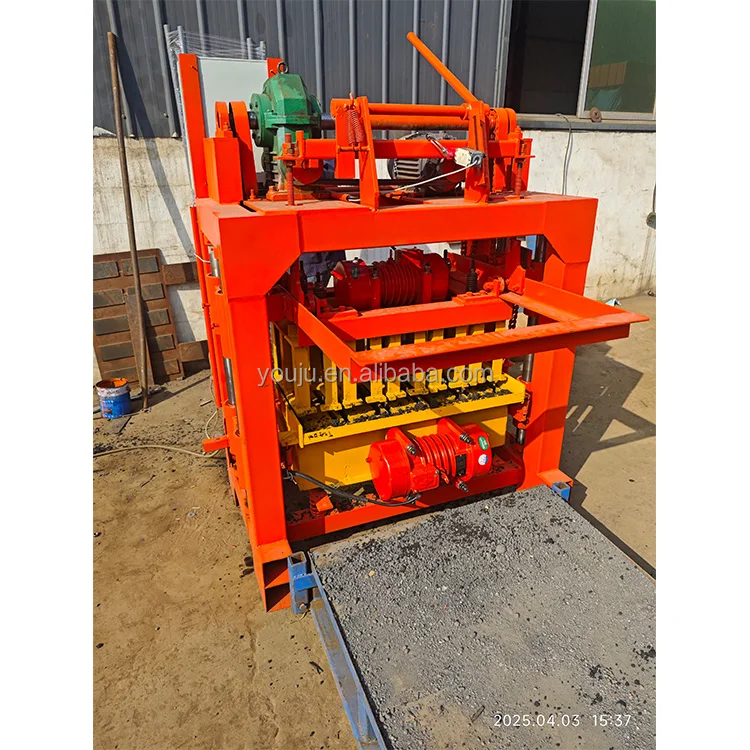
Description
Control Language and Automation Path — every QTJ4-40 leaves our factory with its PLC display language, voltage, and frequency confirmed in writing before the crate is sealed, so the operator on your site reads alarms in a language they understand.
Technical Specifications
| Parameter | Value |
|---|---|
| Model | QTJ4-40 |
| Product Type | Manual Concrete Block Making Machine |
| Overall Dimensions (L×W×H) | 1350×1460×1800 mm |
| Net Weight | 1000 kg |
| Rated Power | 9.5 kW |
| Voltage | Configurable to buyer’s local supply (basis to be confirmed) |
| Vibration Frequency | 2800 r/min |
| Standard Mould Format | 390×190×190 mm, 4 pcs per mould |
| Workers Required | 3–5 |
| Automation Level | Manual operation, PLC control optional |
| Stacking Method | Manual |
| Warranty | 1 year |
| Certification | National patent No. 022692541 |
Application Suitability
| Application | Material or Output |
|---|---|
| Small-scale hollow block production | Crushed stone, sand, cement, and water mix |
| On-site block manufacturing for contractors | Local aggregate with cement binder |
| Startup block plants with limited capital | Solid and hollow blocks via interchangeable moulds |
| Custom-format block runs | Interchangeable mould sets for pavers and kerbstones |
What "PLC Controlled" Really Means on a Manual Block Machine
The QTJ4-40 is a manually operated press where PLC governs vibration timing and cycle sequencing — not pallet feeding, stacking, or material dosing.
I have watched operators in the Middle East pull the main breaker because an alarm message appeared in a language they could not read. A PLC controlled manual block making machine is only as useful as the language on its screen and the clarity of what it actually controls. When the control panel says "PLC" but the pallets are still fed by hand and the stacker is a person with gloves, the gap between expectation and daily reality widens fast [NEED_CITE: common misalignment between PLC marketing claims and actual automation level on manual block presses].
What the Control System Actually Governs
On the QTJ4-40, the PLC controlled manual block making machine manages vibration duration and cycle timing. The operator still positions the pallet, feeds the mould, and removes the finished block by hand. This matters because buyers comparing quotations often assume "PLC" means the entire sequence is automated. Here, the controller removes guesswork from vibration timing — the single variable that most affects block density consistency under manual handling.
Where the Operator Still Makes the Block
Material dosing, pallet placement, and block removal all remain manual steps. The vibration frequency of 2800 r/min is fixed; what changes from cycle to cycle is how evenly the operator fills the mould and how consistently the mix is prepared upstream. Batch-to-batch strength variation on a machine at this automation level traces back to the mix recipe and the operator’s discipline, not the controller [NEED_CITE: block strength variation sources on manually operated vibration presses].
Reading the Specifications Without Optimism Bias
The 9.5 kW rated power tells you the vibration motor capacity — it does not tell you the compaction force delivered to the block. Vibration frequency alone does not guarantee density; the mass of the vibration table and the mould clamping arrangement determine how much of that energy reaches the concrete. The 4 pcs per mould figure at 390×190×190 mm is a geometry fact, not a daily output claim — cycle time under manual pallet handling depends entirely on your crew’s workflow and the distance between the press and the curing area.
The Cost of Skipping the Language and Voltage Conversation
When voltage, frequency, and display language are not confirmed before production, the machine arrives and the electrician discovers a three-phase mismatch or the operator stares at a fault code in English. Commissioning stalls. The contractor on a project deadline loses days while the correct transformer is sourced or a language pack is sent by email. I now treat the control language confirmation as a hold-point in our shipping checklist — no crate leaves until the buyer signs off on the screen language their crew will actually read [NEED_CITE: export equipment commissioning delays caused by unconfirmed electrical and language specifications].
Why Buyers Source the QTJ4-40 Through This Channel
Block machinery is our single focus, so the press, mould, pallet, and handling equipment are specified as one matched system rather than assembled from unrelated suppliers. Configuration is set against your actual mix design and local aggregate, not a catalogue default. Mould design covers the formats your market sells, with custom drawings accepted. The automation level is selectable — you can start with the QTJ4-40 in manual mode and add pallet feeding or stacking later as production scales. Installation support includes operator training on the control interface in the confirmed language.
Documentation & Verification
- Electrical schematic showing confirmed voltage, frequency, and PLC I/O mapping
- Control display language sign-off sheet before dispatch
- Factory test record running your target block format
- Mould drawing and format list with cycle assumptions stated
- Operation manual translated to the confirmed operator language
- Wear parts list with part numbers for first reorder
Installation, Commissioning & Support
- Foundation pad sized to the 1350×1460 mm footprint with vibration isolation
- Dedicated circuit matching confirmed voltage and 9.5 kW draw
- Machine ships assembled; vibration motor and hopper bolt on at site
- First-run cycle timed against your mix to establish baseline settings
- Operator trained on PLC alarm screens in confirmed language
- Mould wear plate and vibration motor brush included in first spare kit
What We Need From You to Quote Accurately
Tell us the block formats your market actually buys, the daily volume you need to hit, and the aggregate available within trucking distance of your site. Confirm your local voltage, phase, and frequency, and the language your operators read. If you already have pallets or a curing area with fixed rack dimensions, share those sizes so the system is configured around what you have, not what we assume.
Frequently Asked Questions
Q: Does the QTJ4-40 include PLC control, or is it purely manual?
A: The PLC is available as an option and governs vibration timing and cycle sequencing. Pallet feeding, material dosing, and block stacking remain manual operations. If your quotation references PLC, request the electrical schematic to confirm exactly which functions the controller manages before production begins.
Q: How is daily output calculated for the QTJ4-40 under manual operation?
A: Output depends on cycle time, which is driven by how fast your crew moves pallets and finished blocks. The mould produces 4 pcs of 390×190×190 mm hollow blocks per cycle. Ask for a capacity calculation that states the assumed block format and manual handling workflow rather than a single headline number.
Q: What voltage and control language options are confirmed before shipment?
A: Voltage and frequency are configured to your local supply and confirmed in writing before production. The PLC display language is agreed separately — I personally check this before dispatch so your operators read alarms and menus in a language they understand on day one.
Q: Can the QTJ4-40 be upgraded to semi-automatic or automatic later?
A: The upgrade path can include automatic pallet feeding, stacking, and cubing added in stages. Ask for the upgrade documentation that lists which components are added at each stage and the corresponding investment, so you can plan the transition as production volume grows.
Q: How does 2800 r/min vibration frequency affect block strength?
A: Vibration frequency is one factor; the mass of the vibration table and how evenly the mould is filled determine the compaction energy reaching the concrete. Your mix design and local aggregate gradation play an equal role. Request a test run with your material to verify density before the machine ships.