Description
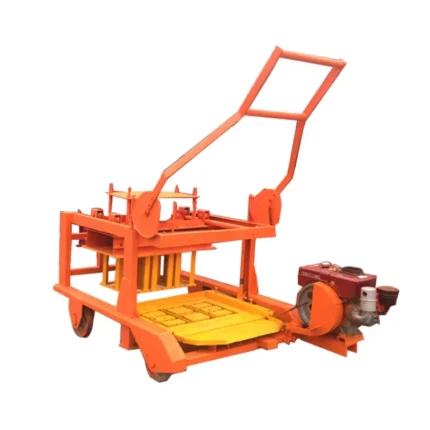
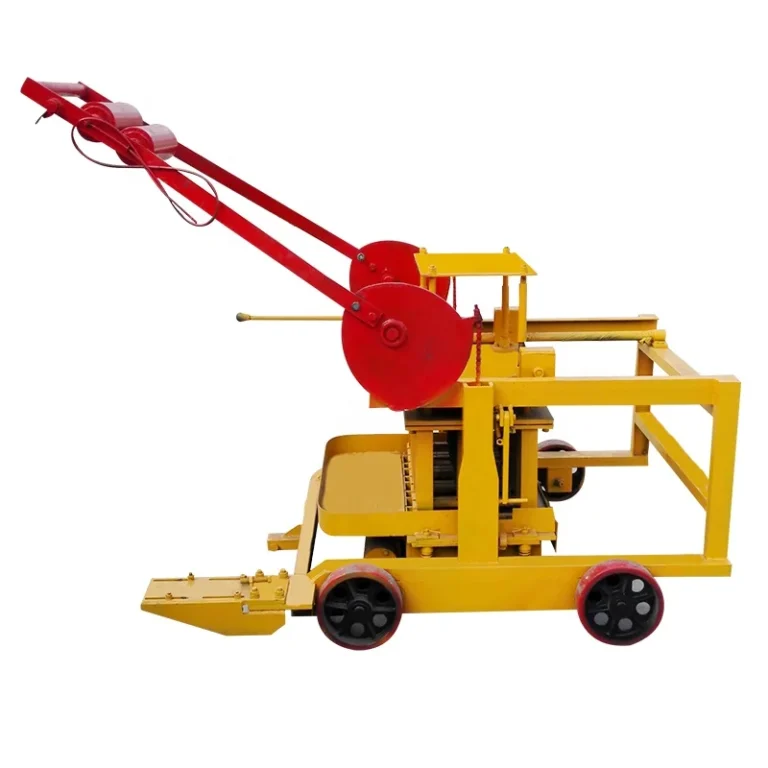
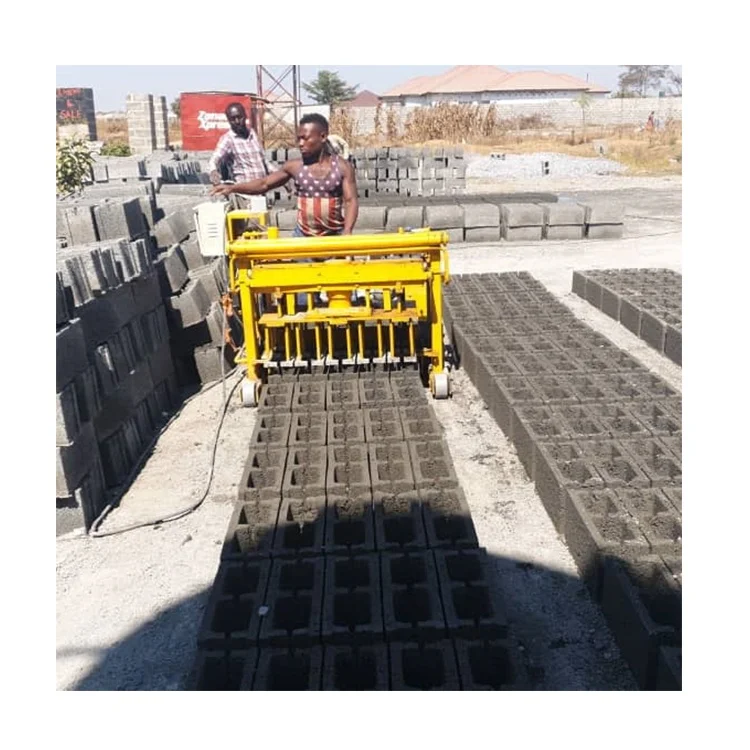
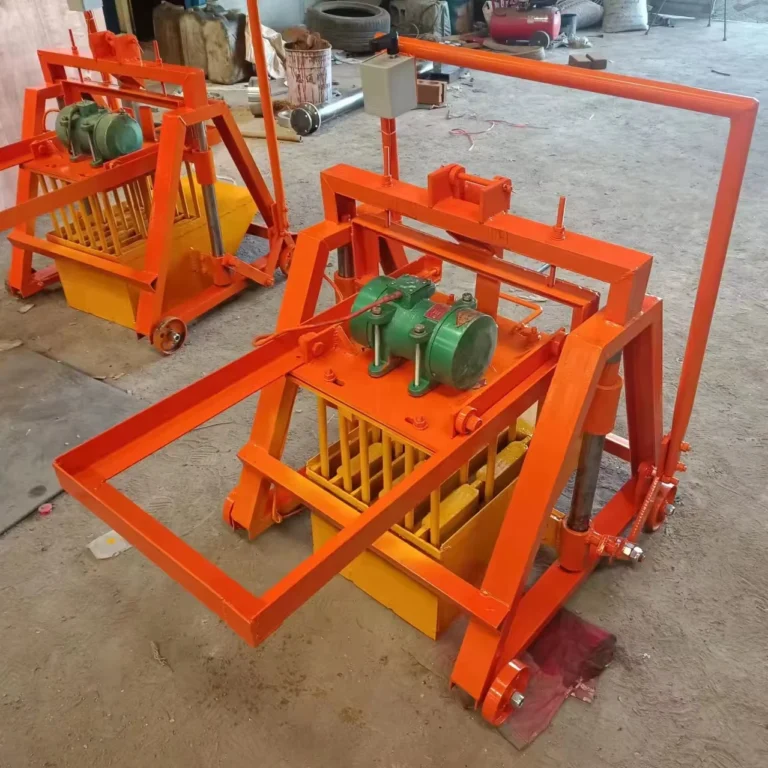
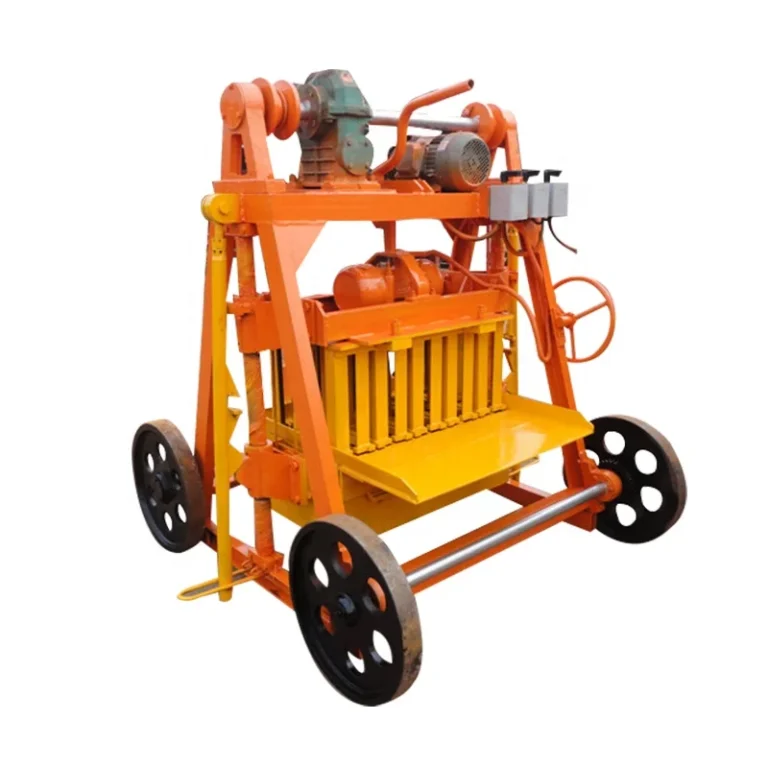
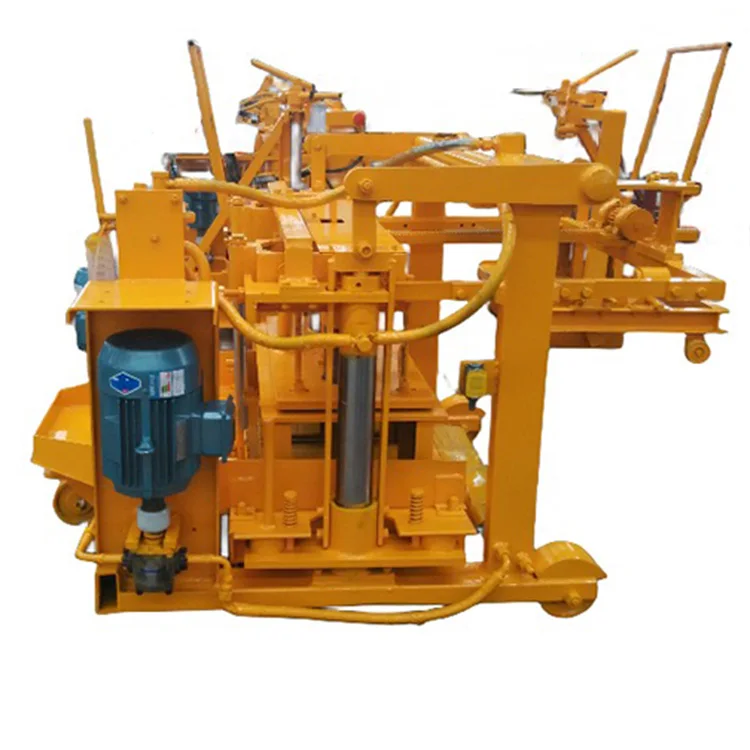
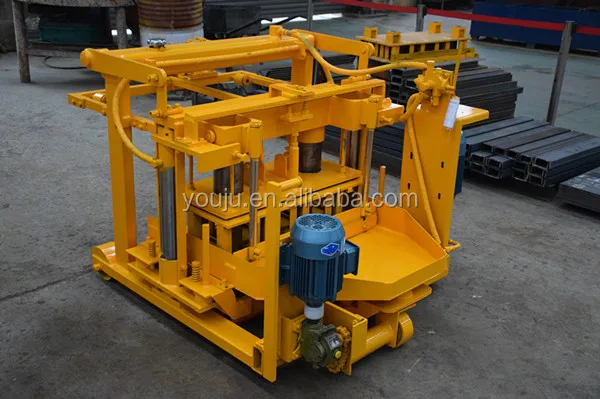
Controlled Mobile Production — The QMY4-30 mobile block making machine pairs simple on-site mobility with selectable control configurations, eliminating the fixed-plant requirement while keeping block format and cycle output in the operator’s hands.
Technical Specifications
| Parameter | Value |
|---|---|
| Product Type | Mobile Hollow Block Making Machine |
| Model | QMY4-30 |
| Rated Power | 5 kW |
| Cycle Time | 30 seconds per mould |
| Overall Dimensions (L×W×H) | 1200 × 1200 × 1100 mm |
| Net Weight | 950 kg |
| Mould Format | Changeable — hollow block and solid brick |
| Automation Level | Manual / low-cost mobile type, 2-worker operation |
| Output Capacity (400×200×200 mm hollow block, 4 pcs/mould) | 480 pcs/hour |
| Output Capacity (400×150×200 mm hollow block, 5 pcs/mould) | 600 pcs/hour |
| Output Capacity (400×100×200 mm hollow block, 7 pcs/mould) | 840 pcs/hour |
| Daily Output (400×200×200 mm, 8-hour shift) | 3,840 pcs |
| Daily Output (400×150×200 mm, 8-hour shift) | 4,800 pcs |
| Daily Output (400×100×200 mm, 8-hour shift) | 6,720 pcs |
| Raw Materials | Cement, sand, crushed stones, slag |
| Assembly State | Mobile, no fixed plant required |
| Voltage & Frequency | (basis to be confirmed — varies by destination market) |
| Control System | (basis to be confirmed — manual or PLC configurable) |
| Warranty | One year |
Application Suitability
| Application | Material or Output |
|---|---|
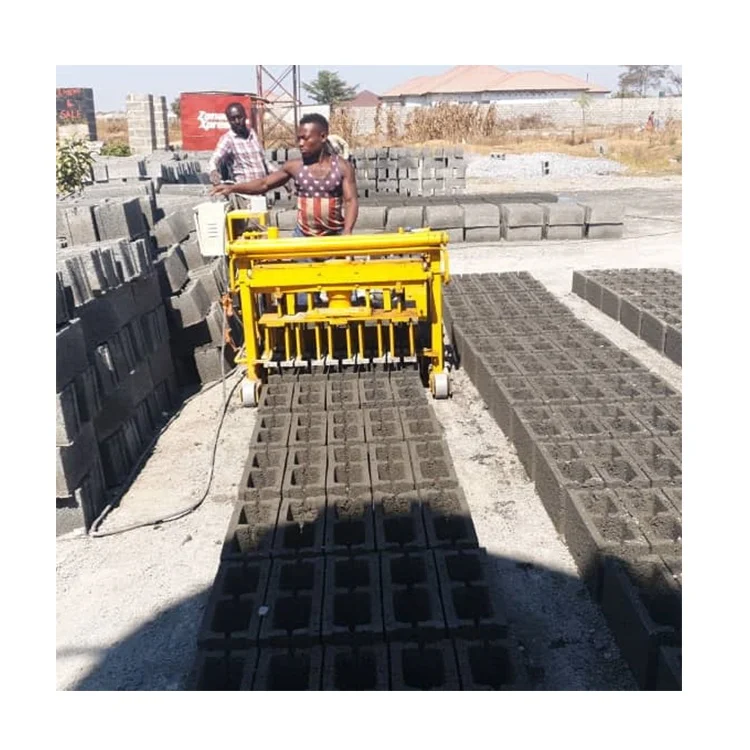
| On-site block production for housing developments | Hollow blocks from local crushed stone and cement, up to 3,840 pcs per 8-hour shift at 400×200×200 mm |
| Small-scale block supply business | Solid bricks and hollow blocks from sand-cement mixes, two-worker operation |
| Remote or temporary construction projects | Mobile production without fixed-plant infrastructure, powered by standard 5 kW utility connection |
| Start-up block operations with limited capital | Entry-level production on cement, sand and slag with changeable mould formats |
Why the Control Language Must Be Set Before the Crate Is Nailed Shut
A control panel the operator cannot read is not automation — it is decoration.
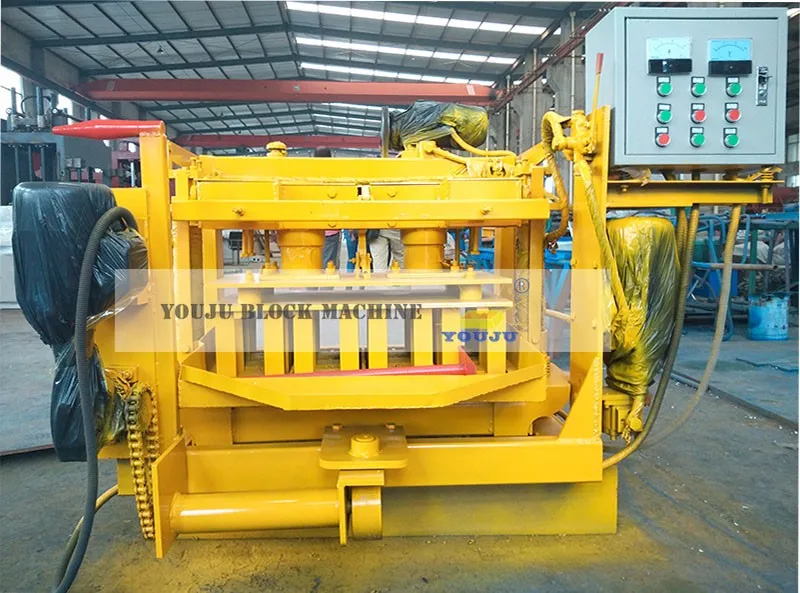
I spent the better part of an afternoon watching two workers on a project site stare at a PLC display that was showing Chinese characters. The automatic mobile block making machine PLC controlled interface had every parameter the crew needed — cycle timing, vibration sequence, fault codes — none of which meant anything on a job site in West Africa. The machine was physically ready. The operator was ready. The language file was not. That single oversight cost an entire first production day. When sourcing any control-equipped block press, the interface language must be confirmed as part of the production order, not left as a default that gets discovered during commissioning. [NEED_CITE: industrial machinery export labeling and control language requirements by destination market]
What the Intelligent Control Layer Actually Manages
The QMY4-30 starts as a two-worker mobile press with a straightforward manual cycle. Where the intelligent control layer adds value is in removing guesswork from the pressing sequence — the vibration duration, the pressure hold time, the interval between mould cycles. Each of these variables directly affects block density and dimensional consistency. On a manual setup, operators develop a rhythm over days. On a configured control setup, that rhythm is embedded from the first hour of production. The automatic mobile block making machine PLC controlled option allows the press to hold cycle parameters steady across a full shift, regardless of operator fatigue or shift changeover.
The Upgrade Path From Manual to Controlled Operation
A buyer entering block production often starts with the lowest viable investment, which for the QMY4-30 means the manual two-worker configuration. Production volumes grow, shift patterns extend, and the tolerance for inconsistent block weight between the morning crew and the evening crew shrinks. That is where a control upgrade matters — it layers repeatable timing onto a machine whose mechanical core, the mould frame, vibration motor and hydraulic circuit, remain unchanged. The upgrade is about adding consistency to the existing press, not replacing the press itself. [NEED_CITE: typical automation upgrade intervals for mobile block presses in developing market block plants]
Reading the Specification Sheet Against Your Actual Block Format
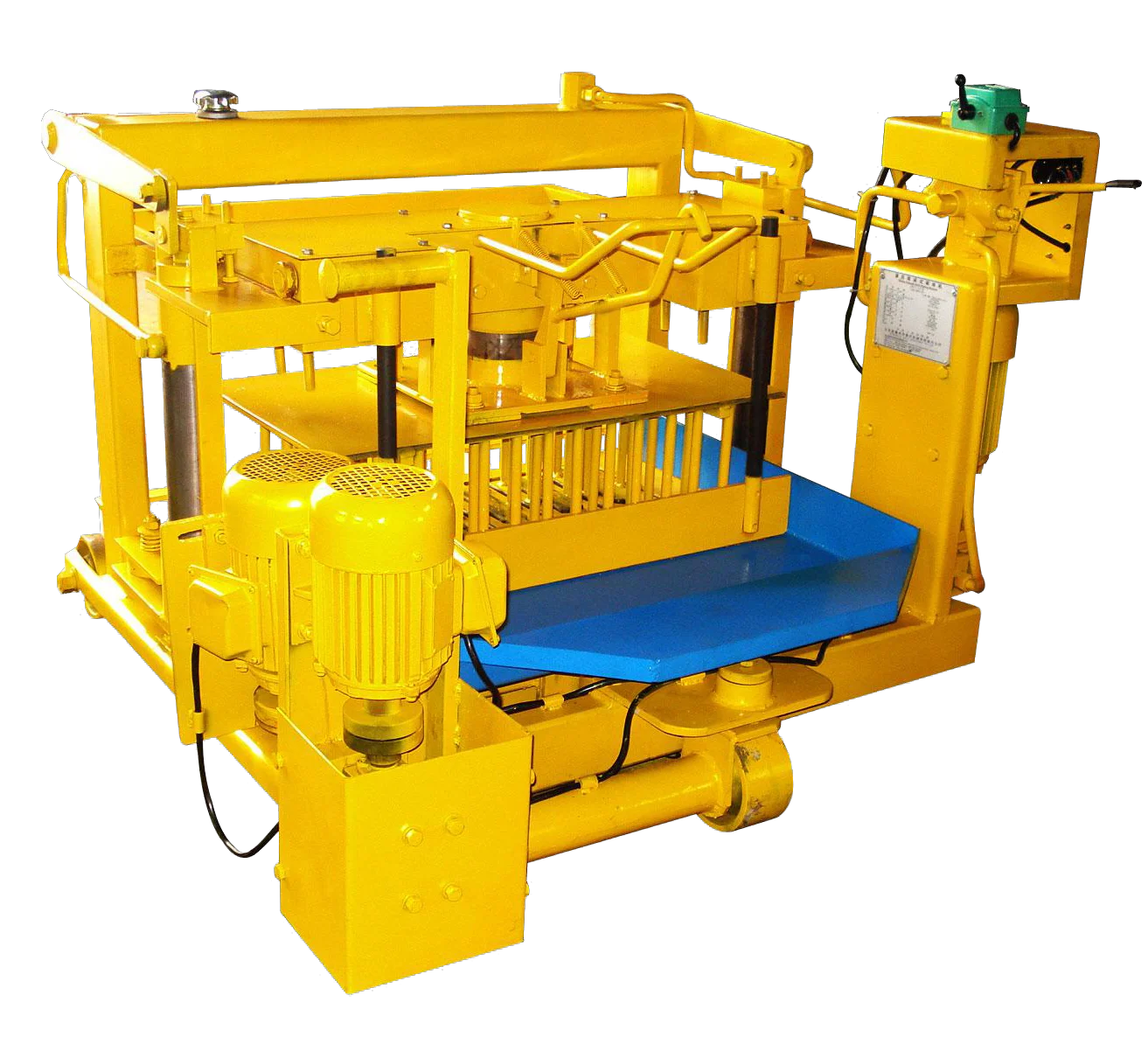
The QMY4-30 delivers a 30-second cycle time per mould, and that figure holds across all three documented block formats. What changes is the piece count per cycle: four pieces for a 400×200×200 mm hollow block, five for the 150 mm width variant, and seven for the 100 mm partition block. A rated power draw of 5 kW keeps the utility requirement within reach of most construction-site generator sets and low-capacity grid connections. The 950 kg net weight is low enough for two workers to reposition the machine across a slab with a pry bar and roller bars, which is the practical meaning of "mobile" on a working site. The changeable mould system means that a buyer purchasing for hollow block production today can add solid brick moulds later without modifying the press frame — only the mould box and core rods change.
The Real Cost of Skipping Configuration Details at Order Stage
A machine arrives at a project site and will not start because the voltage is wrong for the local grid. A mould set was specified for a block dimension the local market does not buy. The PLC display is in a language no one on site reads. Each of these is a single-line item that was either confirmed or not confirmed during the quotation exchange. The consequences, however, are measured in days of lost production, air-freighted replacement parts, and commissioning technicians flown in to resolve what should have been an email conversation before dispatch. These are not rare edge cases — they appear regularly on sites where the focus during purchasing was on the press price and not on the configuration checklist around it. [NEED_CITE: common commissioning delay causes reported by on-site machinery installation contractors]
Why Buyers Place Repeat Orders Through This Supply Channel
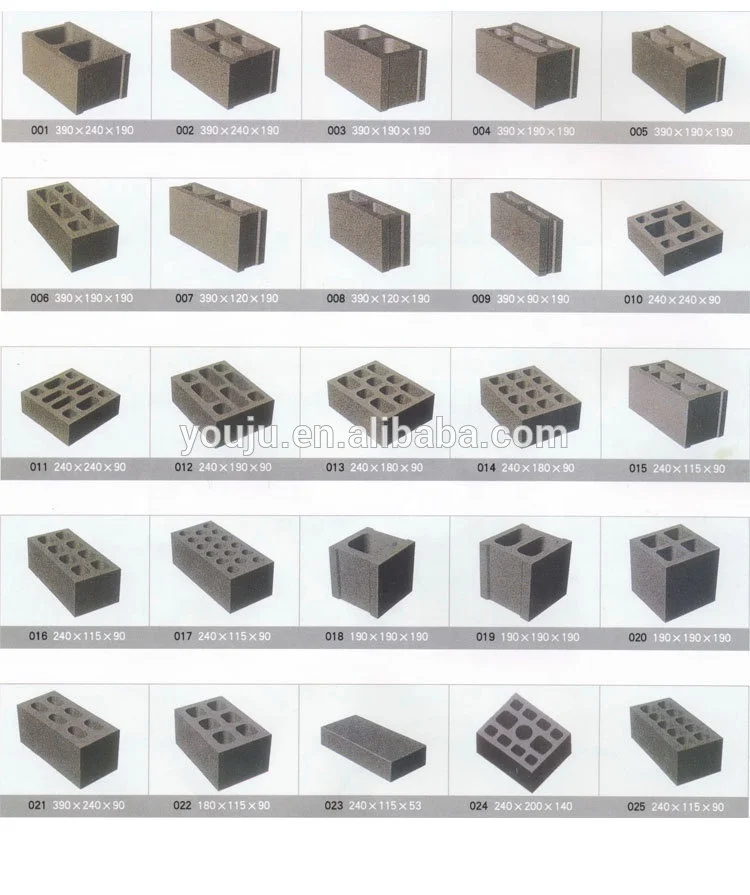
Block machinery is the single production focus here, so the QMY4-30 is specified as part of a matched system — press, mould, pallet dimensions and handling — rather than assembled from unrelated catalog items. The machine configuration is set against the buyer’s actual mix design and local aggregate, not a generic factory default that assumes material the buyer cannot source. Mould design covers the formats the buyer’s market actually purchases, with custom drawings available when standard format lists fall short. The automation level is selectable, meaning a buyer can start with manual two-worker operation and move toward controlled cycling as production volume justifies the investment. Installation support includes operator training so the crew understands the press behaviour before the commissioning technician leaves site.
Documentation & Verification
- Machine specification sheet listing every confirmed parameter against your target block format
- Capacity calculation showing output per format, not a single unqualified headline number
- Mould drawing and format list confirming dimensional match with your local market blocks
- Voltage, frequency and control display language written confirmation before production begins
- Factory test record documenting cycle times and block sample dimensions before crate closure
- Operation and maintenance manual covering mould change procedure and wear part replacement intervals
Installation, Commissioning & Support
- QMY4-30 requires a level, compacted surface — no fixed foundation or slab needed due to mobile assembly state
- 5 kW power draw fits standard construction-site generator capacity; confirm voltage and frequency match before dispatch
- Machine ships as a single assembly; two workers can reposition the 950 kg unit across a production slab
- First-day commissioning includes cycle timing verification and vibration adjustment to your local aggregate mix
- Mould changeover training covers bolt sequence, core rod alignment and format-specific cycle settings
- One-year warranty covers mechanical and electrical components; wear parts list provided with initial order
What to Include With Your Inquiry
Send the block formats your market actually buys — dimensions, hollow or solid, and the target daily output you need to meet. Include your local voltage and frequency, the control panel language your operators require, and a description of the raw materials available on your site. If you already have pallets, a curing area, or upstream mixing equipment in place, note their specifications so the QMY4-30 can be configured to fit what is already there rather than forcing a duplicate purchase.
Frequently Asked Questions
Q: How is each output figure for the QMY4-30 verified against block format?
A: Every capacity number ties to a specific mould and block dimension. The 480-piece hourly rate assumes a 400×200×200 mm hollow block at four pieces per cycle, while the 840-piece rate assumes the 100 mm partition format at seven pieces per cycle. The 30-second cycle time is constant; piece count per cycle is what changes with the mould.
Q: Can the QMY4-30 move from manual operation to a controlled cycle later?
A: Yes. The press frame, vibration assembly and mould interface remain the same. A control upgrade layers programmable cycle timing onto the existing machine, bringing batch-to-batch consistency without replacing the mechanical core. This path is planned during the initial order so the wiring and sensor mounts are prepared at the factory.
Q: How do I make sure the control language matches my operators before the machine ships?
A: Voltage, frequency and display language are confirmed as written line items in the production order, not left to default settings. The factory test record includes a photograph of the active control screen in the confirmed language before the machine is crated for dispatch.
Q: What is the mould change process and how does it affect daily scheduling?
A: Mould changeover on the QMY4-30 involves releasing the mould box clamps, lifting the current mould out, lowering the new one in and re-aligning the core rods. The procedure is covered in operator training. Scheduling format changes at shift start or break minimises lost cycle time across the production day.
Q: What support is available after the commissioning technician leaves the site?
A: A wear parts list and replacement intervals are provided with the initial documentation set. Remote troubleshooting covers control parameter questions and fault code interpretation. Mould and spare part orders are fulfilled against the format list established at the time of the original purchase.