

Description
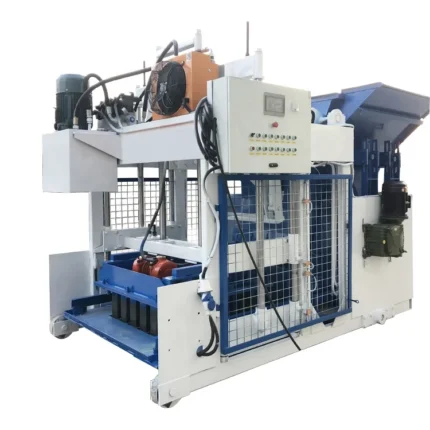
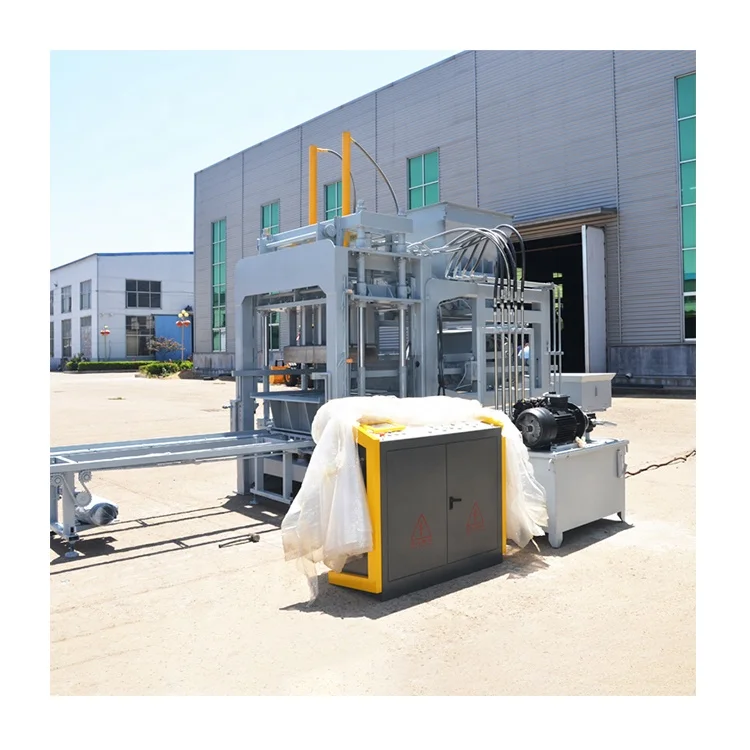
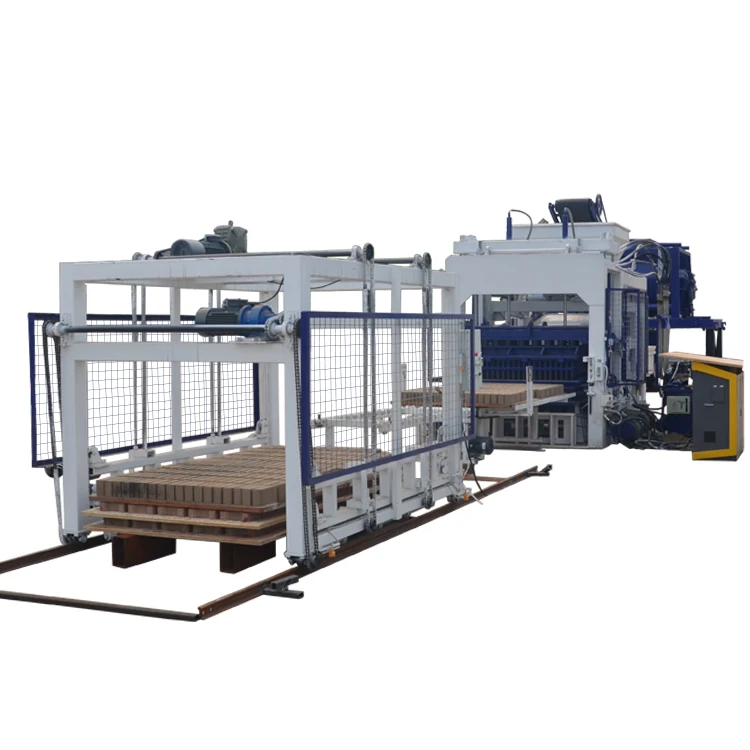
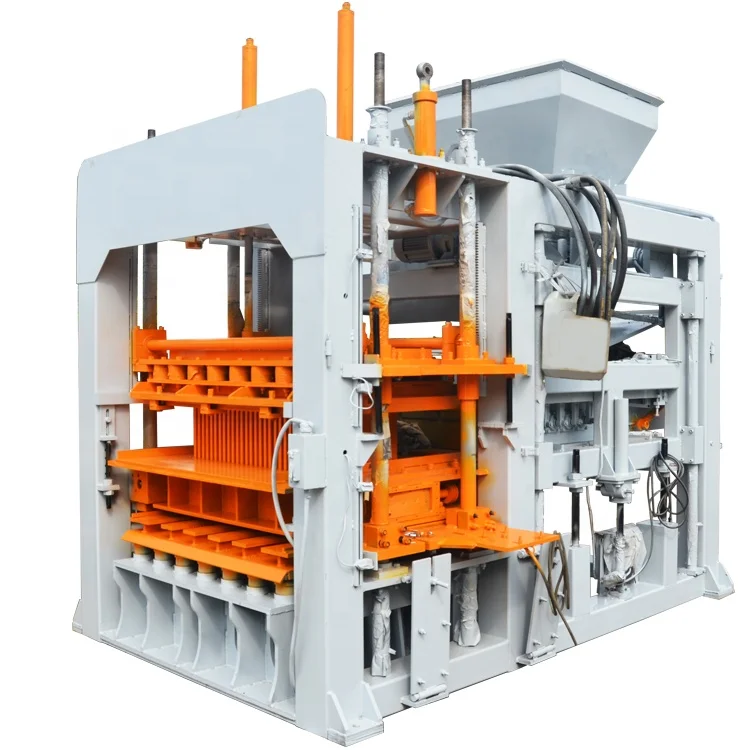
Integrated system matching — The QT8-15 automatic concrete block making machine PLC controlled is specified as one matched system where press cycle, pallet handling, and mould format are balanced before shipment rather than assembled from separate vendors on site.
Technical Specifications
| Parameter | Value |
|---|---|
| Model | QT8-15 |
| Product Type | Automatic Concrete Block Making Machine |
| Overall Dimensions (L×W×H) | 8300×1860×3000 mm |
| Rated Pressure | 21 MPa |
| Main Vibration Form | Platform Vibration |
| Vibration Frequency | 2800–4500 r/min |
| Vibration Force | 45 kN |
| Pallet Size | 950×900 mm |
| Molding Cycle | 15–20 s (basis to be confirmed by block format and mix) |
| Overall Power | 55.5 kW |
| Total Mass | 8 T |
| Demolding Method | Hydraulic |
| Factory Area Required | 300 m² |
| Automation Level | Automatic |
| Control System | PLC-controlled (language configurable before dispatch) |
| Voltage & Frequency | Configurable to buyer market (to be confirmed) |
Application Suitability
| Application | Material or Output |
|---|---|
| Hollow block production for wall construction | Crushed stone, sand, cement, fly ash |
| Solid block manufacturing for load-bearing structures | Gravel, sand, cement blends |
| Interlocking paver production for driveways and walkways | Colored concrete mixes with fine aggregate |
| Kerbstone and curb formation for road projects | High-density concrete with slag or dust |
| Porous and permeable block runs for drainage systems | Open-graded aggregate with reduced cement |
What the PLC Screen Language Determines on Day One
A control panel in the wrong language stops an automatic line before the first cycle completes.
Years ago in Ecuador, I stood in front of a fully automatic block press while two local operators stared at a Chinese-only PLC display, unable to acknowledge a fault alarm. The line sat idle for two full shifts while we re-flashed the HMI. That delay was not a machinery failure — it was a specification omission. When you source an automatic concrete block making machine PLC controlled, the display language, alarm text, and manual-mode labels must be locked in writing before the control cabinet is wired [NEED_CITE: PLC interface language requirements for export industrial machinery].
The QT8-15 control system allows language selection across English, Spanish, and other market-specific options. Confirming this at the quotation stage — not at the container-loading stage — keeps commissioning on schedule and prevents operators from guessing at fault codes during the first production week.
Removing the Operator from the Cycle Loop
The core value of the QT8-15 as an automatic concrete block making machine PLC controlled lies in what it takes away from the operator. Pallet feeding, vibration timing, hydraulic press stroke, and demoulding sequence all execute within the PLC logic once the recipe is loaded. The operator loads raw material and monitors the HMI — the 15–20 second molding cycle runs without manual intervention per stroke.
This matters most during shift changes and overnight runs, where fatigue introduces timing variation on semi-automatic machines. Locked cycle parameters hold block height and density within the tolerance the PLC recipe defines, independent of who is standing at the panel.
Automation That Leaves an Upgrade Path Open
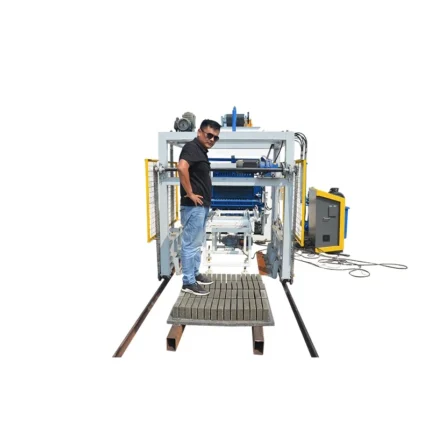
Starting with the QT8-15 does not mean committing to a fixed automation ceiling. The PLC architecture supports adding automatic stacking and cubing modules after initial commissioning, so a plant can begin with manual pallet collection at the discharge end and introduce robotic stacking later when volume justifies the capital.
Batching accuracy and mould-change logic are already resident in the base control system. Adding downstream automation later connects to existing I/O without a full PLC replacement [NEED_CITE: modular PLC expansion for concrete block press lines]. Buyers planning a phased build-out should confirm the I/O reserve count and communication protocol at the quotation stage so the upgrade path remains a wiring exercise rather than a control-system swap.
Reading the Specs That Actually Shape Block Quality
Rated pressure at 21 MPa and vibration force at 45 kN work together — neither spec alone predicts block density. High hydraulic pressure without adequate vibration leaves air trapped in the mix; strong vibration without sufficient press force produces blocks that are uniform in shape but weak in compressive strength. The QT8-15 platform vibration, adjustable across 2800–4500 r/min, lets the operator dial frequency to the specific aggregate gradation and cement ratio in use locally.
Pallet size at 950×900 mm is a dimension that reaches beyond the press itself. It must match the curing rack spacing, the forklift tine width, and the stacking pattern the plant already runs or plans to run. Confirming pallet compatibility before the machine ships prevents a situation where blocks are produced efficiently but cannot be moved to the curing yard without manual rehandling.
The 55.5 kW total power draw defines the transformer and dedicated circuit the site must prepare before the machine arrives. A 300 m² factory area requirement sets the minimum building footprint, including press clearance, pallet return path, and space for a day’s output on curing racks.
The Downtime Cost of Skipping Configuration Checks
When voltage and frequency are assumed rather than confirmed, the motor contactors and PLC power supply may arrive mismatched to the local grid. The result is not a slow start — it is a machine that cannot be energized at all until replacement components clear customs. Plants in regions with 220V/60Hz or 380V/50Hz standards each need a different electrical build [NEED_CITE: voltage and frequency standards by export market].
Equally costly is a pallet size selected without reference to the curing yard. Blocks produced on the wrong pallet dimensions sit on the press discharge until someone moves them by hand, turning an automatic line into a semi-automatic one with extra labour. These configuration gaps are not machine defects — they are specification failures that surface only after the container is opened.
What This Supply Approach Delivers
Block machinery as a single focus means the QT8-15 press, moulds, pallets, and handling equipment are specified as one matched set rather than sourced from separate vendors and reconciled on site.
Configuration is set against the buyer’s actual mix design and local aggregate, not a catalogue default, so vibration frequency and press pressure are calibrated to material the plant can actually obtain.
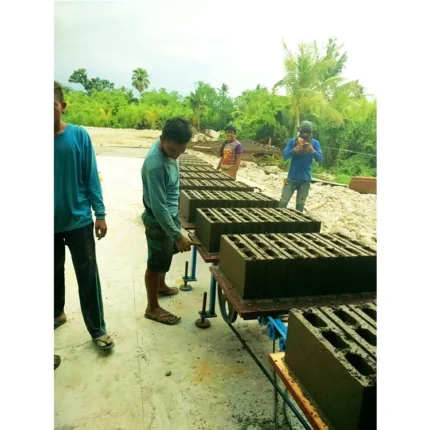
Mould design covers the specific formats the buyer’s market sells — hollow, solid, interlocking, paver, kerbstone — with custom drawings accepted to buyer specifications.
Automation level is selectable at order and upgradeable later, so a buyer can commission the QT8-15 in its base automatic form and add stacking or cubing when production volume demands it.
Installation support includes on-site commissioning and operator training, so the PLC recipes and maintenance intervals are transferred to the local team before the service engineer departs.
Documentation & Verification
- Line layout drawing with capacity stated per block format and mix assumption
- Machine specification sheet with confirmed voltage, frequency, and PLC language
- Mould drawing pack covering every format included in the purchase order
- Pallet specification matched to buyer curing rack and forklift dimensions
- Hydraulic and electrical schematic for on-site fault tracing and maintenance
- Factory test record showing actual cycle time on buyer-specified mould
Installation, Commissioning & Support
- 300 m² minimum floor area with level concrete slab rated for 8 T static load plus dynamic vibration
- Dedicated 55.5 kW circuit with correct voltage and frequency confirmed before electrical panel build
- Machine ships in dismantled sections for container loading — reassembly on site with alignment checks
- PLC language, alarm text, and recipe parameters loaded and verified during commissioning week
- Operator training covers mould change procedure, daily lubrication points, and HMI fault acknowledgement
- Wear parts list with hydraulic seal and vibration motor bearing intervals documented at handover
Before You Send the Inquiry
To size the QT8-15 correctly for your line, share the target block formats, the daily output you need per format, and the raw materials available locally including aggregate type and cement grade. Confirm your site voltage, frequency, and the PLC display language your operators require. If you have existing curing racks or forklifts, provide their dimensions so pallet size is matched from the start.
Frequently Asked Questions
Q: How is daily output verified per block format on the QT8-15?
A: The 15–20 second molding cycle is a range, not a single figure. Actual output depends on block format, mix design, and pallet fill pattern. We provide a capacity calculation document that states output per specific block format — hollow, solid, or paver — so buyers can plan against realistic numbers rather than a headline cycle rate.
Q: Which PLC language options are available, and is remote diagnostics supported?
A: The control system supports multiple display languages including English and Spanish, confirmed before production. Remote diagnostics capability depends on the communication module selected at order. Buyers planning remote support should specify internet connectivity at the site and the preferred diagnostic protocol during the quotation stage.
Q: Can automation be upgraded after the QT8-15 is commissioned?
A: Yes. The base PLC architecture reserves I/O capacity for downstream additions such as automatic stacking and cubing. Upgrading later is primarily a mechanical installation and wiring task rather than a full control replacement. Confirming the upgrade path at order ensures the correct PLC hardware is installed from day one.
Q: How are vibration and pressure calibrated to my local mix design?
A: Vibration frequency is adjustable across 2800–4500 r/min, and hydraulic pressure is set to match the cement-to-aggregate ratio in your local materials. During commissioning, test cycles run with your actual raw material, and parameters are tuned until block density and surface finish meet the target specification.
Q: How long does a mould change take on this machine?
A: Mould change time depends on the clamping system selected and the operator’s familiarity with the procedure. The QT8-15 supports mould formats for hollow, solid, interlocking, and paver blocks. Training during commissioning covers the full change sequence so your team can execute format switches within a practical window.