

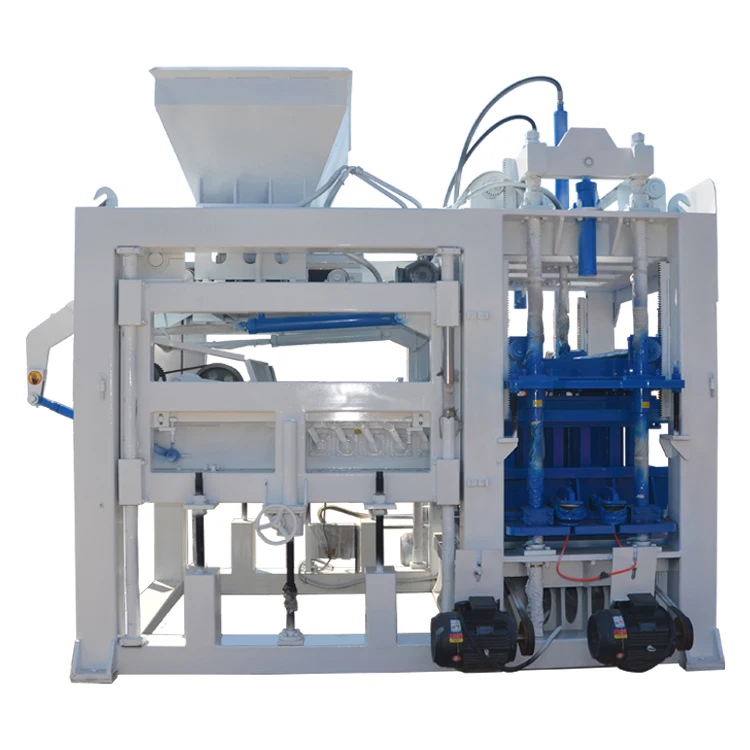


Description
PLC-Driven Consistency — Every cycle on the QT10-15 is governed by a programmable logic controller that removes operator guesswork from batching, vibration timing, and pallet indexing.
Technical Specifications
| Parameter | Value |
|---|---|
| Model | QT10-15 |
| Product Type | Cement Block Making Machine |
| Control System | PLC control cabinet |
| Hydraulic System | Independent integrated hydraulic station |
| Vibration Mode | Vertical station mode resonance, automatic FM-AM |
| Mould Change System | Quick mould replacement, multi-function with one machine |
| Cycle Time (400×200×200mm hollow block) | 15–20s |
| Output Capacity (400×200×200mm hollow block) | 1800–2400 pcs/hour (14400–19200 pcs/8hr) |
| Cycle Time (400×150×200mm hollow block) | 15–20s |
| Output Capacity (400×150×200mm hollow block) | 2160–2880 pcs/hour (17280–23040 pcs/8hr) |
| Cycle Time (240×115×53mm standard brick) | 15–20s |
| Output Capacity (240×115×53mm standard brick) | 8928–11160 pcs/hour (71424–89280 pcs/8hr) |
| Cycle Time (200×100×60mm paving block) | 20–25s |
| Output Capacity (200×100×60mm paving block) | 5184–6480 pcs/hour (41472–51840 pcs/8hr) |
| Cycle Time (225×112.5×60mm paving block) | 20–25s |
| Output Capacity (225×112.5×60mm paving block) | 4032–5040 pcs/hour (32256–40320 pcs/8hr) |
| Mould Qty per Cycle (400×200×200mm) | 10 pcs |
| Mould Qty per Cycle (400×150×200mm) | 12 pcs |
| Mould Qty per Cycle (240×115×53mm) | 62 pcs |
| Mould Qty per Cycle (200×100×60mm) | 27 pcs |
| Mould Qty per Cycle (225×112.5×60mm) | 24 pcs |
| Automation Level | Automatic (stacking, pallet handling, and cubing scope basis to be confirmed) |
| Warranty | 1 year for whole machine (excluding spare parts) |
| Payment Terms | 30% T/T deposit, 70% balance before delivery |
Application Suitability
| Application | Material or Output |
|---|---|
| Hollow block production | Crushed stone, cement, sand, and fly ash blends for load-bearing and partition walls |
| Multi-cellular brick production | Lightweight aggregate mixes with cement binder for thermal insulation blocks |
| Paving block production | High-strength concrete mixes with fine aggregate for pedestrian and vehicular surfaces |
| Standard solid brick production | Dense aggregate and cement for masonry and structural infill |
What the PLC Actually Controls on the QT10-15
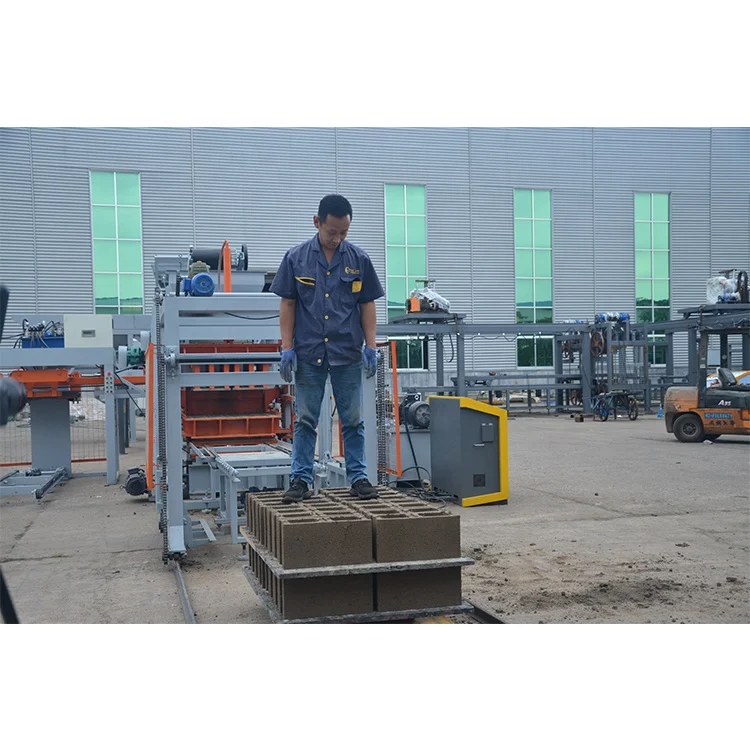
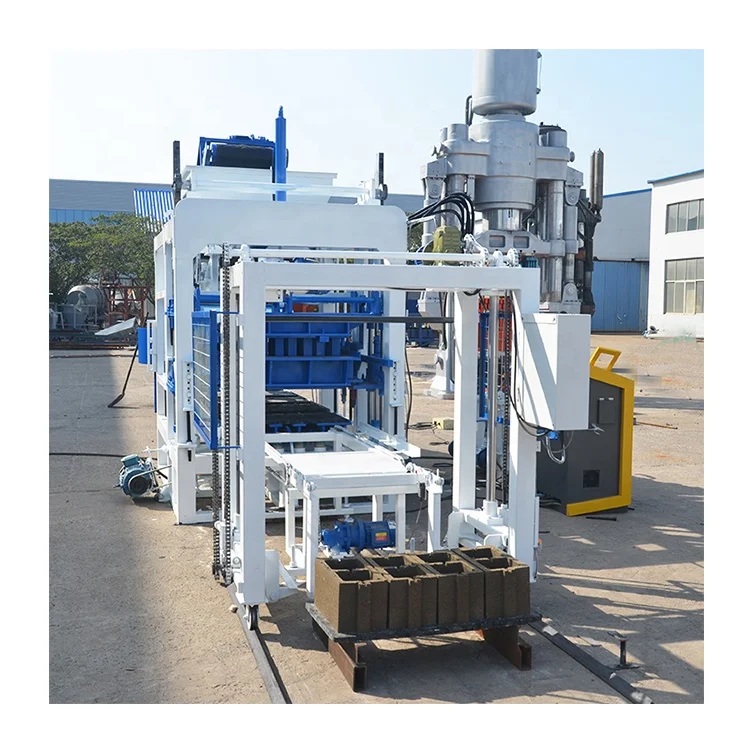
The automatic QT10-15 cement block machine PLC controlled system manages feed timing, vibration duration, hydraulic pressure sequencing, and pallet indexing within every single cycle.
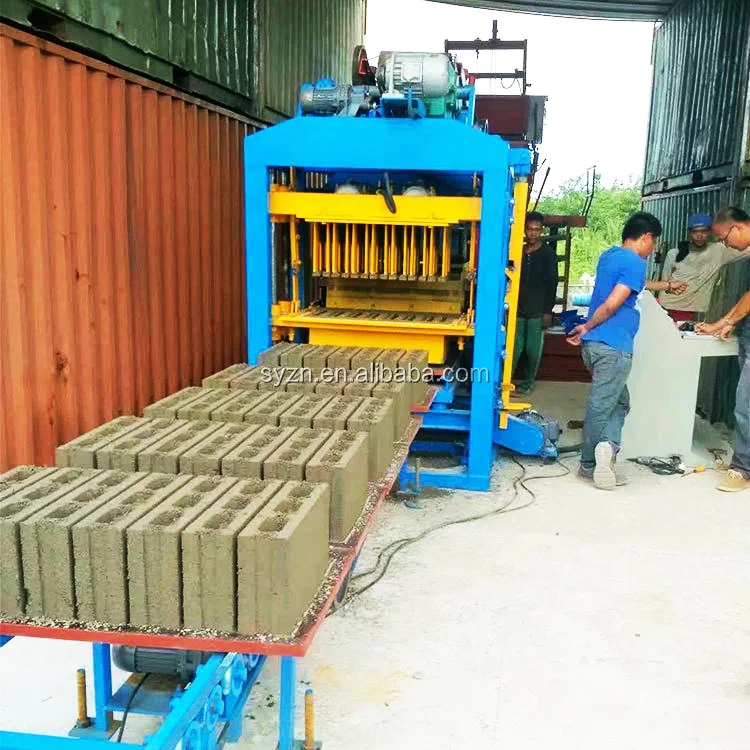
Capacity numbers on a brochure look clean until you realize the stated figure assumes a specific block format, and a different mould cuts output noticeably. The pain is not the machine — it is the gap between what was quoted and what the plant actually produces on the format the market buys [NEED_CITE: block format impact on real daily output]. An automatic QT10-15 cement block machine PLC controlled setup lets you store parameters for each mould so switching from hollow block to paving block does not mean a full shift of trial and error.
How the PLC Removes Operator Variability
On a manual or relay-logic press, the operator decides when to stop vibration, when to release pressure, and when to index the next pallet — three decisions repeated hundreds of times a shift. The automatic QT10-15 cement block machine PLC controlled architecture locks each of those decisions into a stored program tied to the active mould. Batch-to-batch consistency follows directly: the first block of the morning and the last block before shutdown receive identical vibration duration and hydraulic dwell, which is the single biggest factor in compressive strength uniformity across a production run.
Independent Hydraulic Station and System Reliability
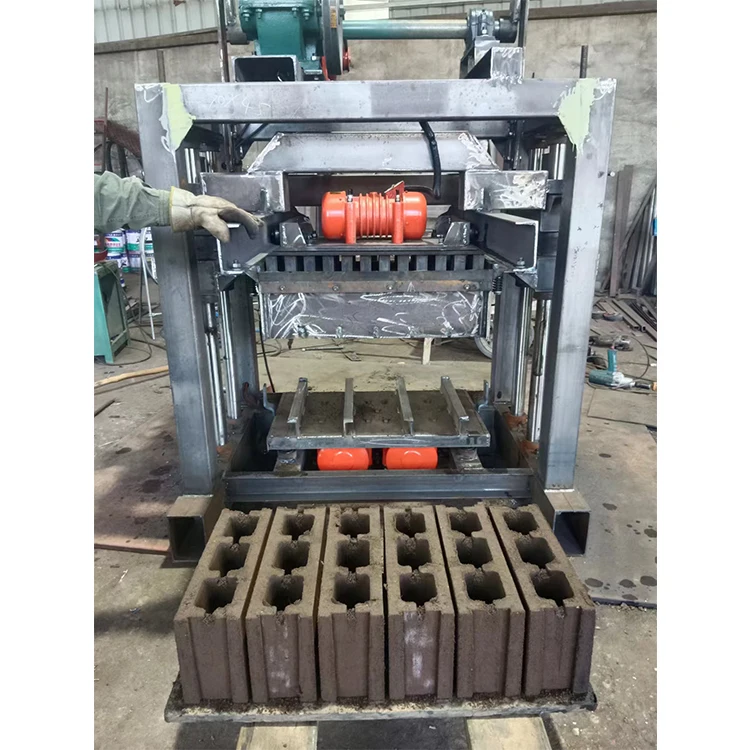
The QT10-15 places its hydraulic station in a separate cabinet rather than bolting valves and pumps directly to the vibrating frame. This isolation matters because continuous vibration transmits shock loads into hose fittings, valve spools, and seal faces, accelerating wear [NEED_CITE: hydraulic component failure rates in high-vibration environments]. When the station sits independent of the press, filtration and oil temperature remain more stable, and maintenance access does not require working around the mould box or feeder assembly.
Reading the Specs That Matter for Automation
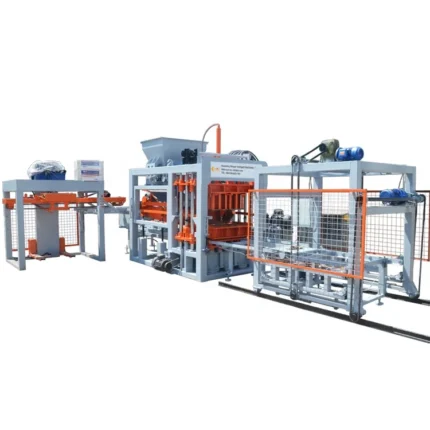
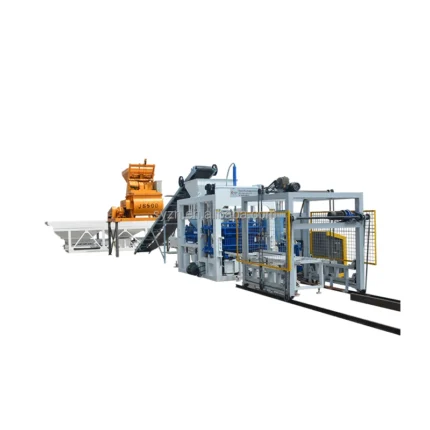
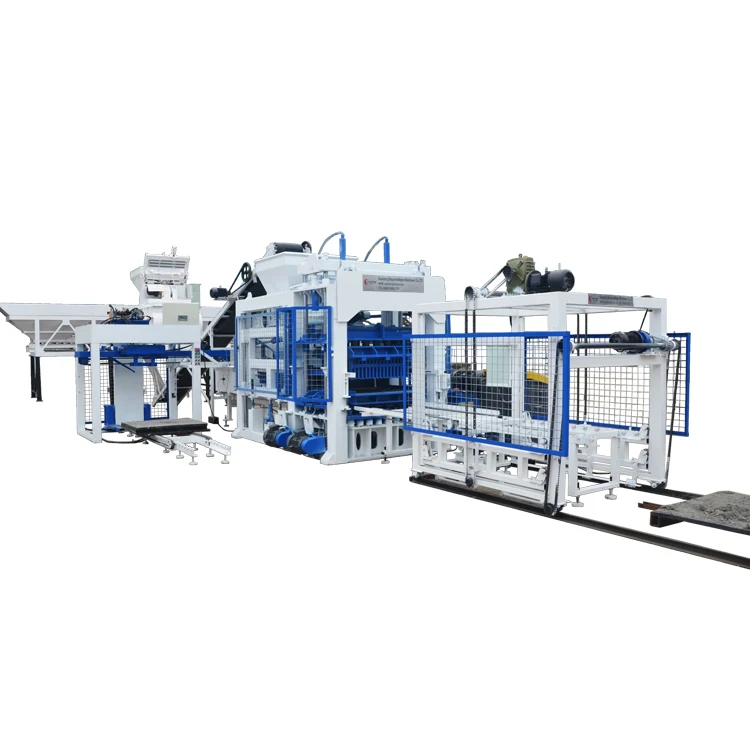
The PLC control cabinet is the decision point for the entire line — pallet feed, material feed, vibration, and hydraulic press all sequence from it. The independent integrated hydraulic station means pressure and flow are available on demand rather than shared with other plant equipment, which keeps cycle time stable when multiple formats run in a single shift. Vertical station mode resonance with automatic FM-AM adjusts vibration frequency and amplitude to the active mould, so a dense paving block receives different energy input than a lightweight hollow block without the operator recalibrating manually. Quick mould replacement ties into this: the PLC recalls the stored parameter set for the new format, and the mechanical swap is the only downtime.
When Automation Scope Is Not Defined Upfront
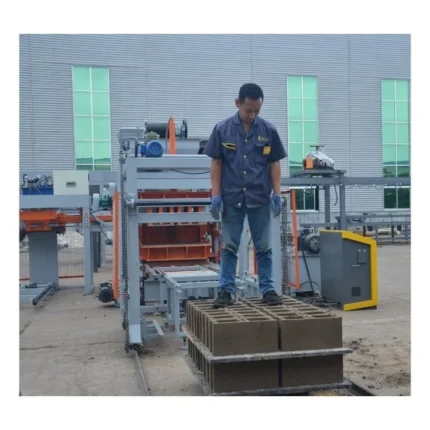
A buyer who assumes "automatic" includes pallet stacking and cubing may receive a machine that still requires two workers at the output end to pull wet blocks off the line. The cost is not just labour — it is pallet bottleneck, uneven curing because blocks sit too long before racking, and pallet inventory that must be larger to absorb the delay [NEED_CITE: pallet circulation requirements in semi-automatic versus fully automatic block lines]. Confirming the automation scope — pallet feeding, stacking, cubing — before the order is placed avoids a plant layout that cannot deliver the throughput the press itself is capable of.
Why Procurement Through This Channel Works
Configuration starts from the buyer’s actual mix design and target block format, not a catalogue default, so the vibration and hydraulic settings match local aggregate rather than a generic test mix. Mould design covers the formats the buyer’s market actually sells, with custom drawings available when standard moulds do not match local dimensions. The automation level is selectable, allowing a buyer to start with semi-automatic pallet handling and add stacking and cubing later without replacing the press. Voltage, frequency, and PLC display language are confirmed before production, which eliminates the commissioning delays that come from mismatched electrical standards or an interface the local operator cannot read. Installation support includes on-site commissioning and operator training, so the parameter library is populated and the crew is competent before the engineering team leaves.
Documentation & Verification
- Line layout with capacity calculation stating the block format assumed for each output figure
- Machine specification sheet covering PLC I/O mapping and hydraulic circuit ratings
- Mould drawing and format list confirming included and optional block types
- Voltage, frequency, and PLC display language confirmation record before production
- Factory test record with cycle timing on at least one buyer-specified block format
- Hydraulic and electrical schematic for local maintenance team reference
Installation, Commissioning & Support
- Foundation plan sized to the QT10-15 vibration load and pallet conveyor footprint
- Dedicated electrical circuit matching confirmed voltage and frequency for the PLC cabinet and hydraulic pump motor
- Machine shipped in dismantled modules with reassembly sequence documented per component
- Commissioning includes PLC parameter loading for each purchased mould format and cycle verification
- Operator training covers PLC interface navigation, mould change procedure, and alarm response
- Wear parts list with hydraulic seals and vibration springs identified by part number
What to Prepare Before Sending an Inquiry
A useful inquiry names the block formats that dominate the local market, the daily volume each format must deliver, and the aggregate materials available on site. Include the plant voltage and frequency, the preferred PLC display language, and whether pallet stacking and cubing need to be part of the quotation or will be handled separately. If an existing curing area or forklift fleet constrains pallet size, state that dimension early so the pallet feed and return system are sized correctly from the start.
Frequently Asked Questions
Q: How is output capacity verified, and which block format does each figure assume?
A: Each capacity figure in the specification table is tied to a specific block dimension and cycle time range. The 400×200×200mm hollow block, for example, assumes a 15–20 second cycle and yields 1800–2400 pieces per hour. Quoting capacity without naming the format hides the real daily output a plant should plan around.
Q: What automation level is included — does the scope cover automatic pallet feeding, stacking, and cubing?
A: The QT10-15 is listed as automatic, but the exact scope of pallet feeding, stacking, and cubing needs confirmation before ordering. Defining which stations are included ensures the line layout matches the buyer’s labour plan and curing area capacity.
Q: Can the PLC control language and voltage be confirmed to match the target market before production?
A: Yes. Voltage, frequency, and PLC display language are confirmed during the order stage and verified again before shipment. This prevents commissioning delays caused by electrical mismatches or an interface the local operator cannot navigate.
Q: What is the upgrade path from semi-automatic to fully automatic operation on this platform?
A: The platform supports starting with semi-automatic pallet handling and adding automatic stacking and cubing modules later. The PLC architecture accommodates additional I/O for upstream and downstream stations without replacing the control cabinet.
Q: How does the independent hydraulic station improve long-term reliability versus integrated designs?
A: Separating the hydraulic station from the vibrating frame reduces shock transmission to hoses, valves, and seals. This isolation keeps oil temperature and filtration more stable, extending service intervals and reducing unplanned downtime on the press.