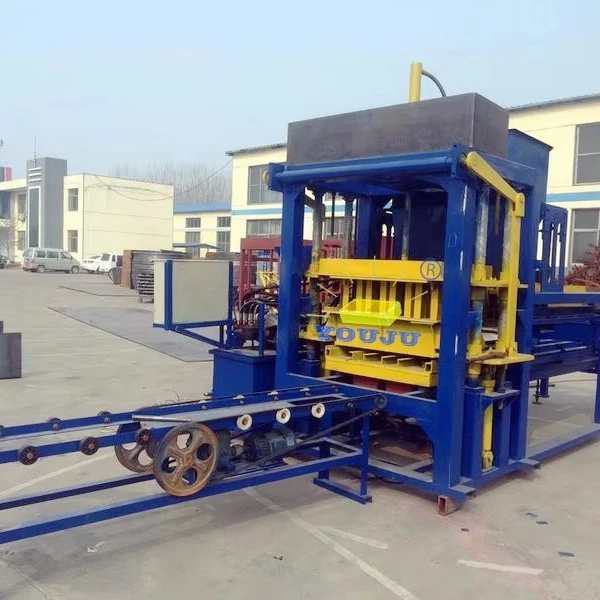


Description
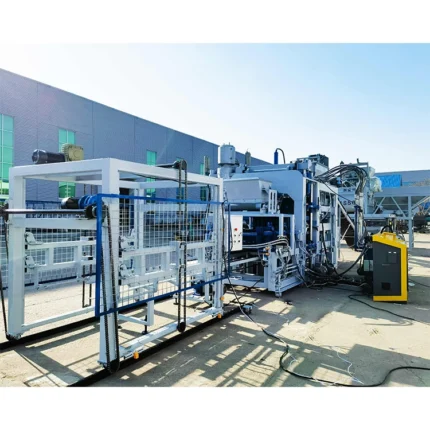
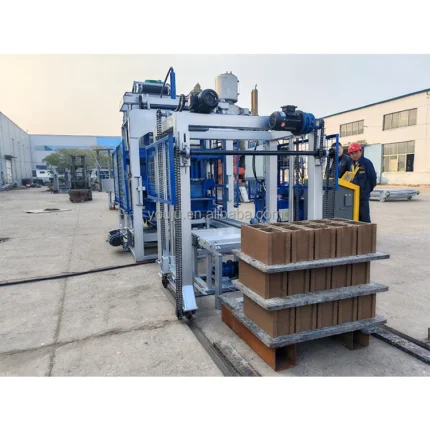
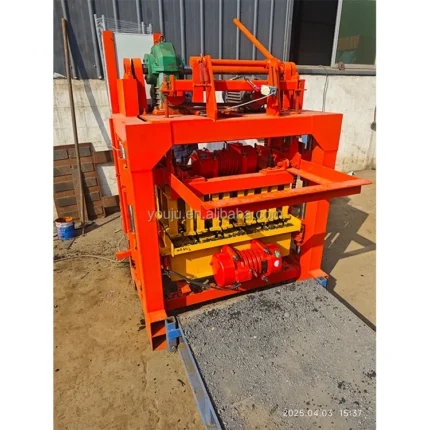
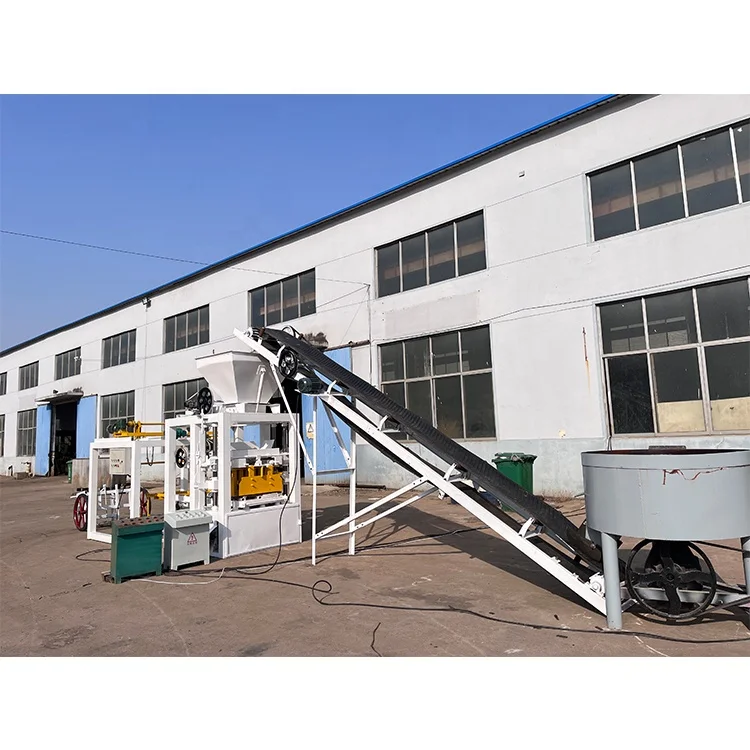
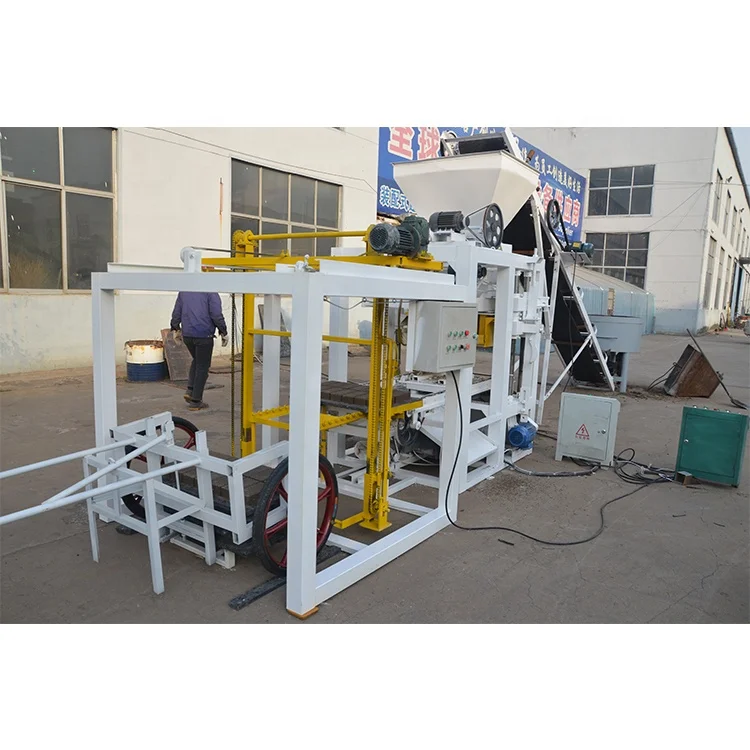
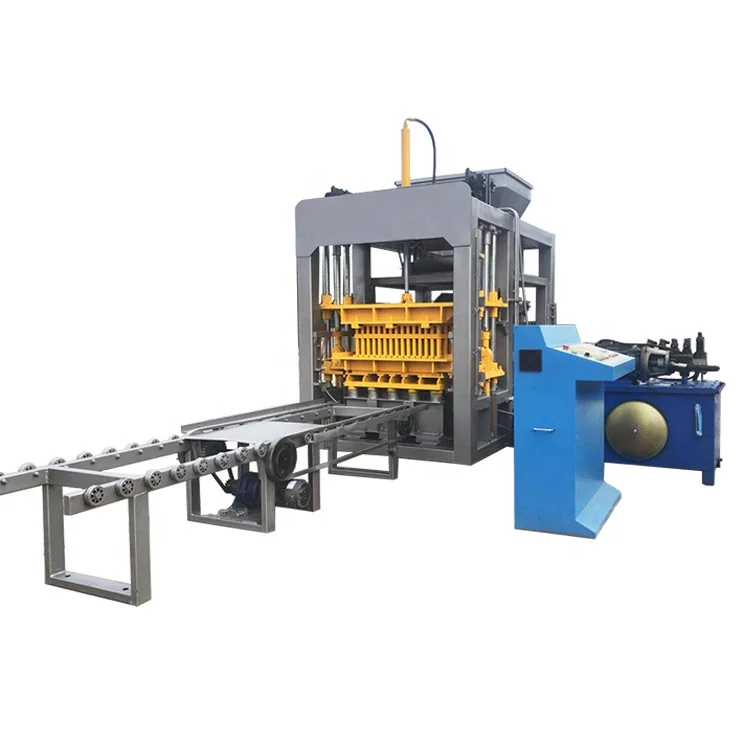
Matched System Design — the QT4-20 is specified as a complete pressing, moulding and control unit rather than a standalone press, ensuring cycle times and automation logic align from raw feed through to stacking.
Technical Specifications
| Parameter | Value |
|---|---|
| Product Type | Hydraulic Vibration Block Making Machine |
| Model | QT4-20 |
| Overall Dimensions (L×W×H) | 7100 × 1600 × 2610 mm |
| Total Mass | 5 T |
| Rated Pressure | 16–21 MPa |
| Main Vibration Form | Platform Vibration |
| Vibration Frequency | 4600 r/min |
| Vibration Force | 40 KN |
| Molding Cycle | 15–25 s |
| Molding Area | 400 × 800 mm |
| Pallet Size | 1020 × 570 mm |
| Demolding Method | Hydraulic |
| Overall Power | 27.5 kW |
| Control System | PLC Control (basis not stated in source — confirm language options) |
| Voltage & Frequency | Configurable (basis not stated in source — confirm target market standard) |
| Factory Area Required | 500 m² |
| Standards | CE |
Application Suitability
| Application | Material or Output |
|---|---|
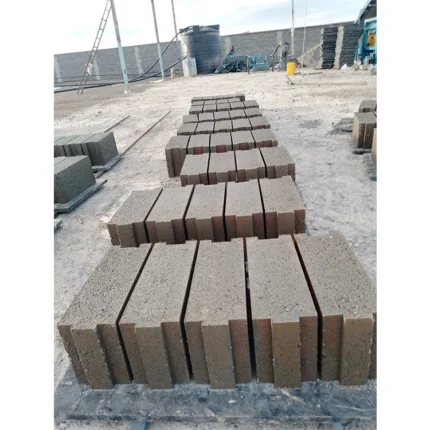
| Hollow block production | Crushed stone, sand, cement, fly ash |
| Solid block production | Gravel, slag, dust, cement blends |
| Porous brick manufacturing | Lightweight aggregate and cement mixes |
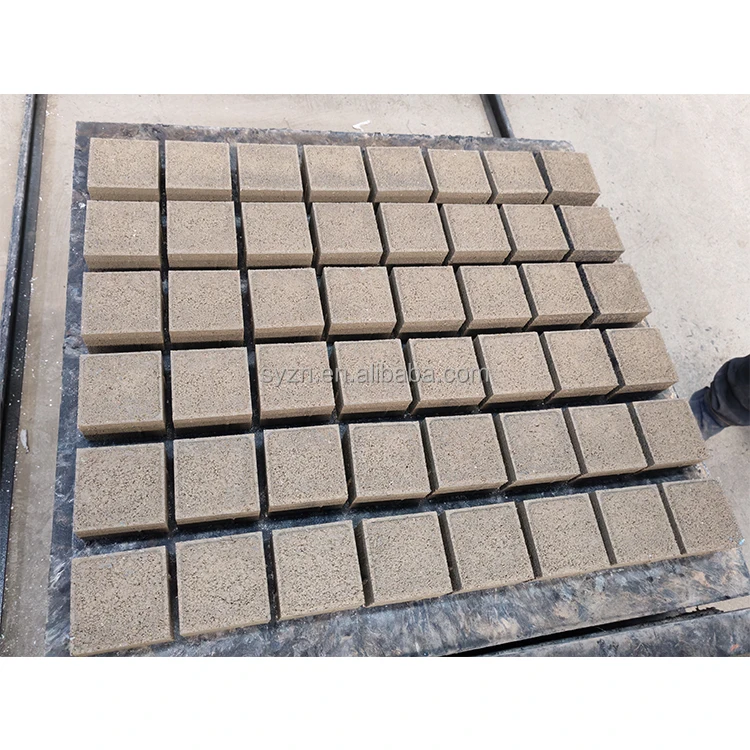
| Paving brick production | High-density crushed stone and sand |
What "7200 Blocks Per Day" Leaves Out
Cycle time is only meaningful when tied to a specific block format and mix design.
Many quotations state daily output without naming the mould or the aggregate used during testing. The automatic QT4-20 block machine PLC controlled is rated at 7,200–9,600 pieces per day for 400×200×200 mm hollow blocks at a 15–20 second cycle with 4 pieces per mould. Switch to a solid paver and the cycle lengthens, the mould count changes, and daily throughput shifts accordingly. A buyer who benchmarks on hollow block figures and then runs interlocking pavers will see a different number on the counter. [NEED_CITE: how block format and mix design affect cycle time]
How PLC Control Removes Operator Guesswork
On a manual or relay-controlled press, the operator decides when to vibrate, when to apply pressure, and when to demould. Shift changes and fatigue introduce variation. The automatic QT4-20 block machine PLC controlled stores cycle parameters per mould format, so the same 40 KN vibration force and 16–21 MPa hydraulic pressure are applied identically whether it is the morning shift or the night shift running porous bricks.
From Semi-Automatic to Fully Automated Handling
This platform supports incremental automation. A plant can begin with manual pallet handling and add automatic pallet feeding, stacking, and cubing later without replacing the press. The PLC architecture on the QT4-20 accommodates these upgrades by accepting additional I/O modules and sequence routines, allowing the automatic QT4-20 block machine PLC controlled to grow with the operation’s labour and output requirements. [NEED_CITE: PLC scalability for block production lines]
Reading the Spec Sheet Against Real Conditions
The 4600 r/min platform vibration and 40 KN force are tuned to work within the 16–21 MPa hydraulic pressure range. If local aggregate is rounded river gravel rather than angular crushed stone, the mix may need a higher cement content or longer vibration to reach the same density. The 1020×570 mm pallet size must also match the curing rack spacing and the forklift tine width already on site — a mismatch here means building new racks or buying new handling equipment after the press arrives.
The 27.5 kW total power draw requires a dedicated circuit with adequate breaker capacity. Voltage and frequency must be confirmed in writing before the control cabinet is wired; a 415 V site receiving a 380 V cabinet will idle for weeks waiting for replacement components. [NEED_CITE: voltage and frequency standards by export market]
The Cost of Skipping Configuration Details
A machine ordered on catalogue defaults often arrives with a mould that does not match the block the local market actually buys, forcing a second mould purchase before the first production run. Pallets specified without considering the curing area layout mean blocks are stacked by hand in the yard, negating the labour savings the automation was meant to deliver. When PLC display language is not confirmed, operators cannot navigate fault codes during commissioning, extending the time from arrival to first saleable output. [NEED_CITE: common commissioning delays in block machinery exports]
Why Source This Machine Here
Block machinery is the single focus, so the press, mould, pallet, and handling equipment are specified together as a matched system rather than assembled from unrelated suppliers. Configuration starts from the buyer’s actual mix design and target block format, not a default catalogue entry. Mould design covers the formats the local market demands, including custom drawings. The automation level is selectable — start semi-automatic on the QT4-20 and upgrade to full stacking and cubing when volume justifies it. Installation includes on-site commissioning and operator training so the PLC parameters are validated with local materials before handover.
Documentation & Verification
- Line layout showing QT4-20 placement and pallet flow within 500 m² plant area
- Capacity calculation per block format with stated mould count and cycle time
- Hydraulic and electrical schematic matching confirmed voltage and frequency
- Factory test record using buyer-specified aggregate and mix proportions
- PLC program printout with confirmed display language before dispatch
- Mould drawing and format list covering all ordered block types
Installation, Commissioning & Support
- Foundation must support 5 T static load plus dynamic vibration across 7100 mm footprint
- Dedicated 27.5 kW circuit with breaker rated for confirmed voltage and frequency
- Hydraulic demolding system calibrated on-site to match actual block mix density
- PLC parameters set per mould format during commissioning with local raw materials
- Operator training covers cycle adjustment, fault diagnosis, and mould change procedure
- Wear parts list and hydraulic seal kit provided for first scheduled maintenance interval
Preparing Your Inquiry
Share the block formats your market currently demands along with the daily volume target for each, so the capacity calculation reflects actual production rather than a single showcase figure. Confirm site voltage, frequency, and the preferred PLC display language to avoid rewiring or reprogramming after the QT4-20 arrives. If existing curing racks or forklifts are in place, provide pallet dimensions and aisle widths so the 1020×570 mm pallet specification is validated against your handling infrastructure.
Frequently Asked Questions
Q: How does the PLC control system maintain consistency across different block formats?
A: The PLC stores a separate parameter set for each mould — vibration duration, pressure hold time, and feed cycle are recalled automatically when the operator selects a format. This prevents the variation that occurs when settings are adjusted manually between runs, keeping block density uniform across shifts.
Q: What automation level does the QT4-20 offer, and can it be upgraded later?
A: The press can be configured from semi-automatic with manual pallet handling through to fully automatic pallet feeding, stacking, and cubing. The PLC architecture accepts additional I/O modules, so automation stations can be added as production volume grows without replacing the core machine.
Q: How are vibration force and hydraulic pressure matched to local aggregate?
A: The 40 KN vibration force at 4600 r/min works within a 16–21 MPa pressure range. Before production, the mix design is tested with local aggregate to determine the pressure and cycle time that achieve target block density, and those values are locked in the PLC for repeatable output.
Q: What PLC language options are available and how are they confirmed?
A: Display language is confirmed in writing before the control cabinet is assembled. The PLC interface can be set to the operator’s preferred language so fault codes and cycle menus are readable during commissioning, reducing downtime caused by navigation errors on site.
Q: Which pallet size should I specify for my curing area?
A: The standard 1020×570 mm pallet must align with existing curing rack spacing and forklift tine width. Providing rack dimensions and handling equipment details before order allows the pallet specification to be validated, avoiding costly yard reconfiguration after delivery.