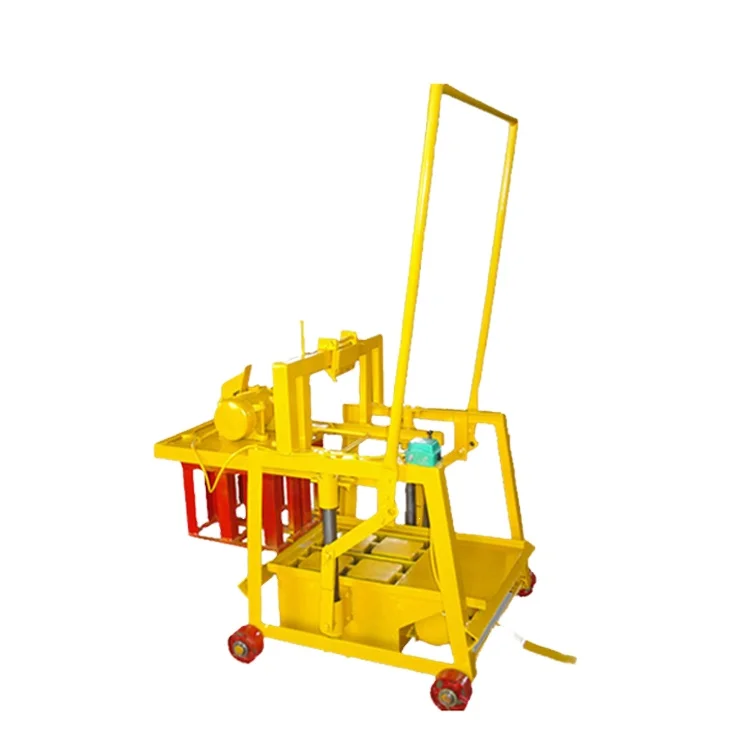
Description
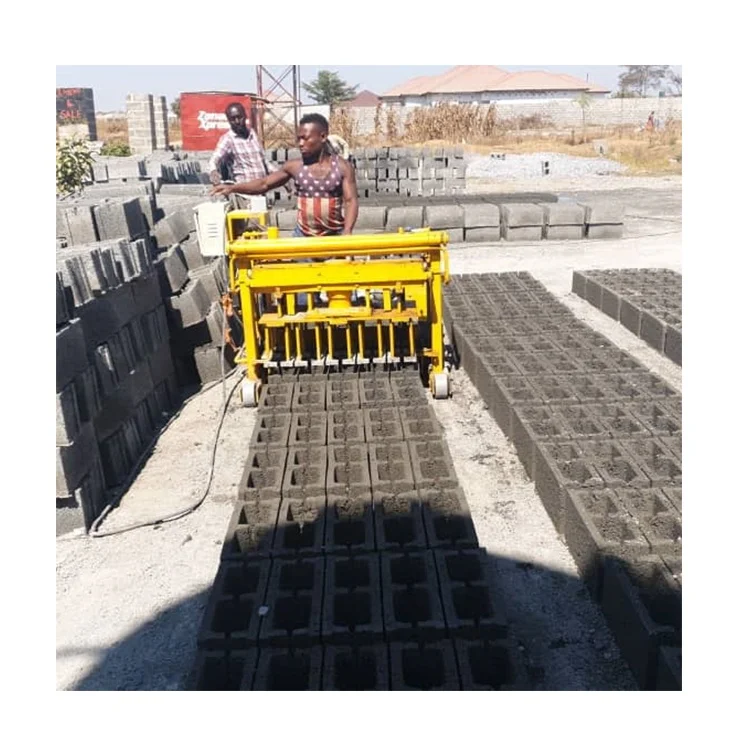
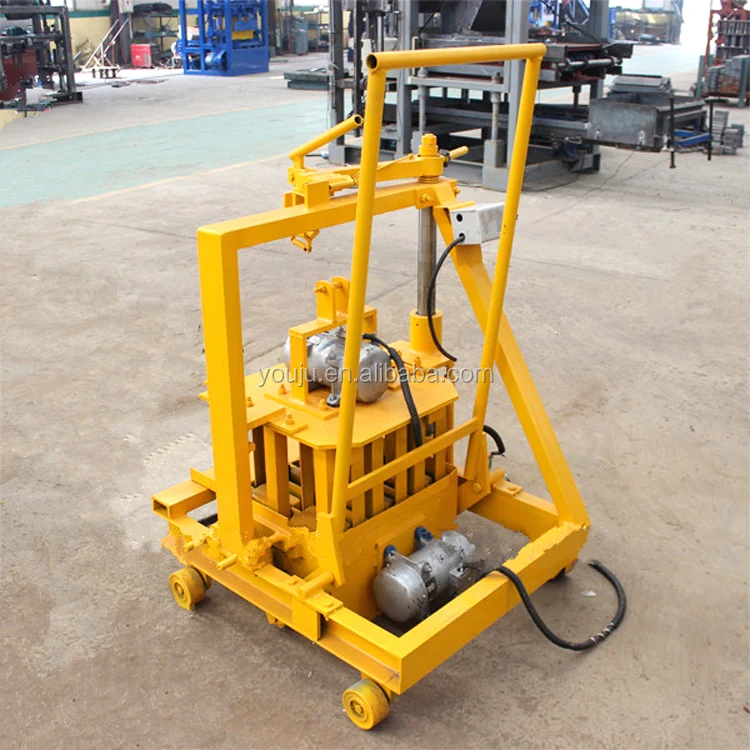
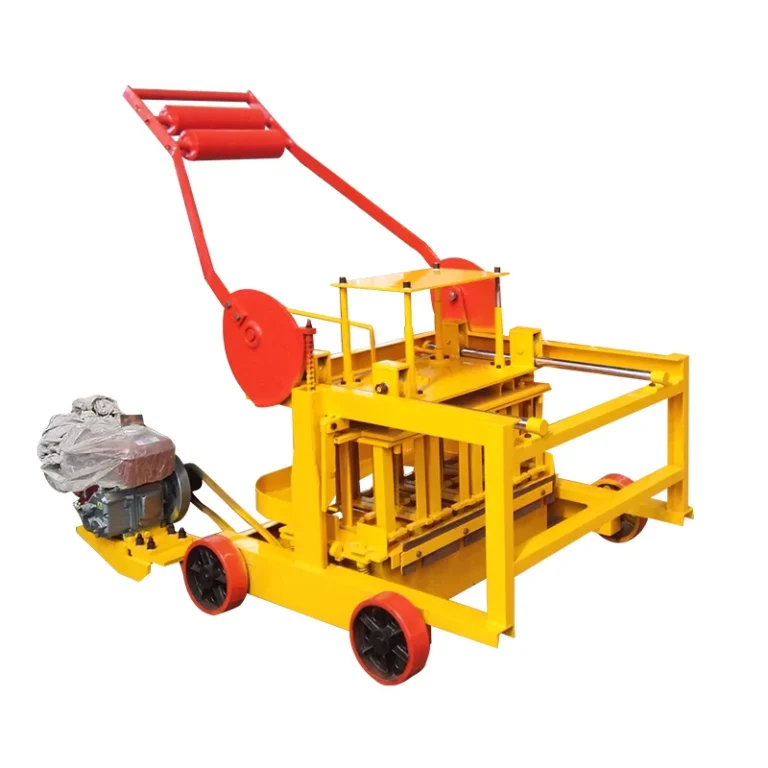
Single-focus block machinery engineering — the QMJ2-45 egg-laying press is specified as a matched system of machine, mould, and manual handling, giving buyers a verified starting point before adding PLC batching and automatic stacking later.
Technical Specifications
| Parameter | Value |
|---|---|
| Model | QMJ2-45 |
| Product Type | Mobile Concrete Block Making Machine |
| Machine Type | Mobile / Egg-laying (no pallets required) |
| Operation Mode | Manual |
| Power Source | Hydraulic / Engine (diesel or electric options available) |
| Mould Change | Yes, supports multiple hollow brick formats |
| Cycle Time (400×200×200mm hollow brick) | 25-30s |
| Output Capacity (400×200×200mm hollow brick, 2 pcs/mould) | 160 pcs/h, 1280 pcs/8hr |
| Output Capacity (400×150×200mm hollow brick, 3 pcs/mould) | 240 pcs/h, 4800 pcs/8hr |
| Output Capacity (400×100×200mm hollow brick, 4 pcs/mould) | 320 pcs/h, 2560 pcs/8hr |
| Pallet Requirement | None (egg-laying design) |
| Labour Requirement | 1 to 3 workers |
| Control System | Manual (no PLC on base model) |
| Automation Level | Manual (upgrade path available) |
Application Suitability
| Application | Material or Output |
|---|---|
| Small-scale on-site production | Concrete hollow blocks without a fixed plant infrastructure |
| Remote construction sites | 400×200×200mm, 400×150×200mm, and 400×100×200mm formats |
| First block plant investment | Low-capital egg-laying operation on flat, cured concrete ground |
| Mobile contractor production | Blocks laid directly on the floor, no pallets or curing racks required |
Why the Voltage Question Must Precede the Shipment
A mobile block machine that cannot be wired on arrival is just a heavy metal box sitting on your site.
I learned this the hard way early in my career when a mobile unit arrived at an African job site configured for a voltage standard that did not match the local grid. The contractor lost weeks of production while the electrical cabinet was rebuilt locally. When you are evaluating an automatic mobile block machine or planning an upgrade to one, confirming the exact three-phase voltage and frequency at your site is the first technical step, not an afterthought during commissioning [NEED_CITE: voltage and frequency standards by export market]. Skipping this verification delays every subsequent automation retrofit you planned.
The Automation Upgrade Path from Manual to PLC
The base QMJ2-45 operates manually, but the mechanical architecture is built to accept automation components as your production volume justifies the investment. A PLC-controlled mobile block machine configuration typically adds automated batching, consistent moisture control, and remote diagnostics. This means you can start with low-capital manual pressing and later add the intelligent control layer that removes batch-to-batch variation from human judgement.
Removing the Operator from the Consistency Equation
Manual egg-laying machines rely on the operator to judge mix consistency, vibration duration, and timing. When you transition to a PLC-controlled mobile block machine setup, the system handles the batching ratios and cycle timing automatically. This shift does not just reduce labour; it ensures that the thousandth block of the shift has the same density and dimensional tolerance as the first, which is critical when your buyers demand consistent compressive strength [NEED_CITE: concrete block compressive strength testing standards].
Matching Hydraulic Pressure and Vibration to the Mix
The density of a hollow block is the result of hydraulic pressure and vibration force working against your specific mix design and local aggregate. If the vibration force is too low for a stiff, low-water mix, the block will lack strength. If the pressure is too high for a wet mix, the block will crack or deform upon demoulding. The QMJ2-45 allows for adjustment, but these settings must be matched to the raw materials you actually source locally, not a generic catalogue default.
The Hidden Costs of Ignoring Site Conditions
Egg-laying machines require a flat, hard surface to move across while laying blocks. If your site is uneven or soft, the machine will tilt during the laying cycle, resulting in blocks with inconsistent wall thickness and poor interlocking geometry. Buyers who overlook the ground preparation requirements often find that their daily reject rate climbs, negating the low-capital advantage of the mobile design [NEED_CITE: site preparation requirements for mobile block laying equipment].
Why Procurement Verification Matters Here
We treat the QMJ2-45 as part of a broader production strategy rather than an isolated press. Because we focus exclusively on block machinery, the mould drawings, pallet specifications for future fixed-plant expansions, and automation upgrade sheets are specified together. This ensures that when you are ready to move from manual egg-laying to a PLC-controlled stationary line, the transition is a planned engineering step rather than a complete equipment replacement.
Documentation & Verification
- Capacity calculation document stating the block format assumed for each output figure.
- Mould drawing and format list supplied with the quotation for 400×200×200mm, 400×150×200mm, and 400×100×200mm.
- Upgrade specification sheet detailing the PLC, batching, and stacking components available for future retrofit.
- Voltage, frequency, and control language confirmation sheet signed off before production begins.
Installation, Commissioning & Support
- Site preparation guide specifying the flat concrete surface required for the QMJ2-45 to travel and lay evenly.
- Electrical cabinet configured to your confirmed three-phase voltage and frequency before dispatch.
- On-site commissioning to calibrate vibration time and hydraulic pressure to your local aggregate and mix design.
- Operator training covering manual cycle timing, mould change procedures, and daily hydraulic fluid checks.
- Wear parts list identifying the high-friction components that require periodic replacement based on your shift volume.
Moving Forward with Your Specification
To provide an accurate configuration and upgrade proposal, we need to know your target block formats, the compressive strength required by your local building codes, and the exact electrical supply at your site. Please also share your raw material source and whether you intend to keep the operation manual or begin with a PLC batching system.
Frequently Asked Questions
Q: How is daily output verified per block format, and what cycle time does each figure assume?
A: Output is not a single number; it depends entirely on the block size you are pressing. For the QMJ2-45, a 400×200×200mm hollow block (2 pcs/mould) assumes a 25-30 second cycle time, yielding approximately 160 pieces per hour. Smaller formats like the 400×100×200mm (4 pcs/mould) yield more units per hour but the cycle time remains the constant baseline.
Q: What automation components can be added later to the manual QMJ2-45?
A: The manual base model can be retrofitted with a PLC control system, automatic batching hoppers, and moisture sensors. This upgrade path allows you to transition from operator-dependent manual pressing to a system that manages cycle timing and mix ratios automatically, ensuring batch-to-batch consistency as your production volume grows.
Q: How does the egg-laying design affect block strength compared to pallet-based pressing?
A: Egg-laying machines press blocks directly onto the ground without a rigid pallet to support the underside during vibration. This requires a stiffer, lower-water mix design to prevent the block from slumping after the mould lifts. When the mix is calibrated correctly, the resulting density and strength are suitable for standard non-load-bearing and load-bearing applications.
Q: What electrical details must be confirmed before the machine is shipped?
A: You must confirm the exact three-phase voltage, frequency, and plug type at your site. If you are upgrading to a PLC system, the display language and sensor calibrations must also be specified. Arriving with an unmatched electrical cabinet will halt your project until local electricians can rebuild the system.
Q: How does the labour requirement change when moving from manual to automatic stacking?
A: In manual operation, one to three workers are needed to feed the mix, operate the lever, and manage the laying path. When you add automatic stacking and cubing to a stationary line, the manual handling of finished blocks is eliminated, allowing you to reallocate those workers to quality control and raw material feeding.