Description
Automation readiness from day one — the QMJ2-45 mobile block machine provides a defined upgrade path from manual egg-laying production to PLC-controlled batching and stacking, so your first equipment investment doesn’t become obsolete when output demand grows.
Technical Specifications
| Parameter | Value |
|---|---|
| Model | QMJ2-45 |
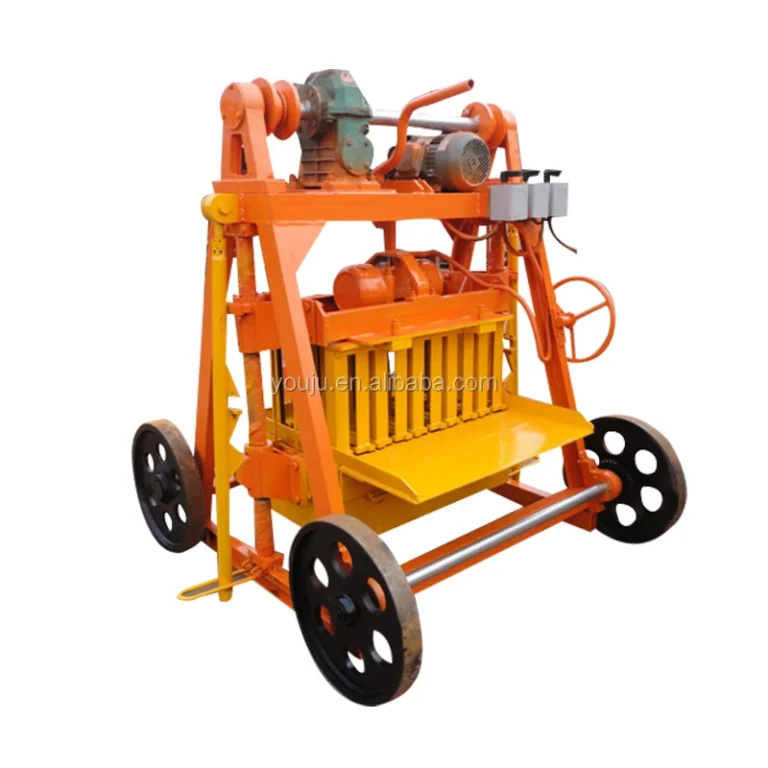
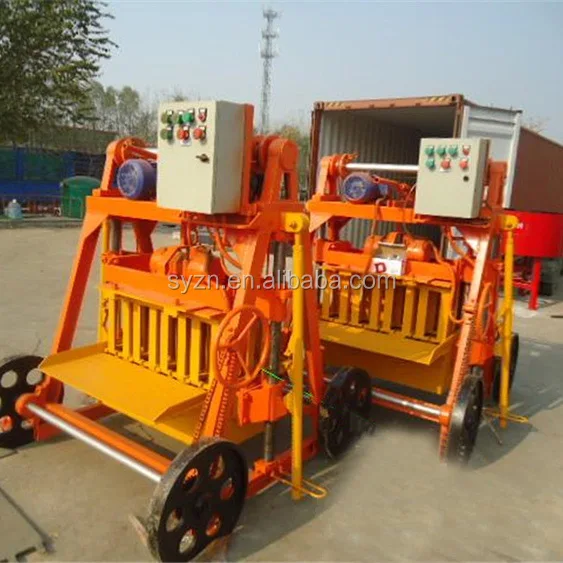
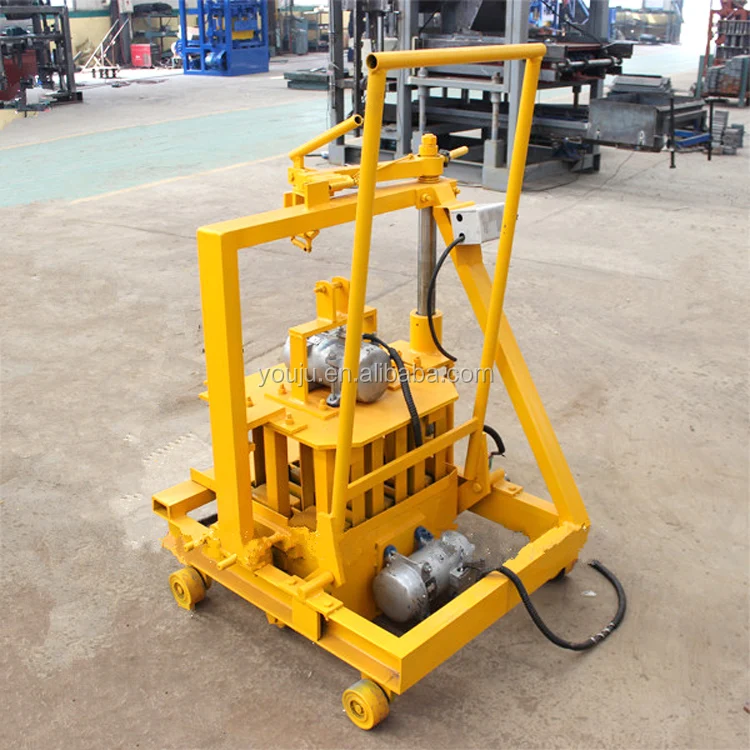
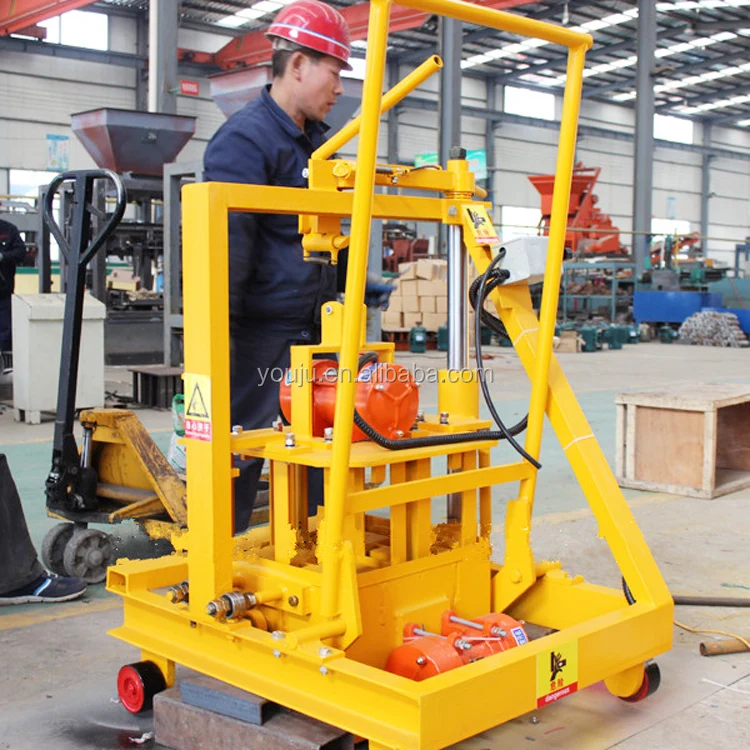
| Product Type | Mobile Concrete Block Making Machine |
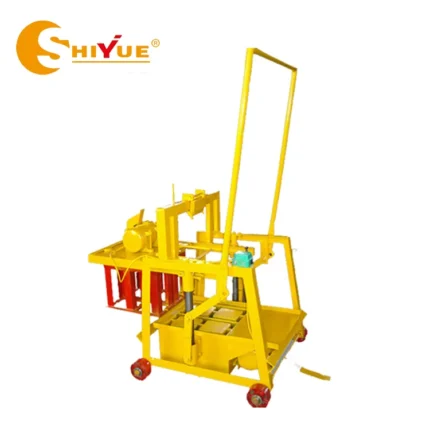
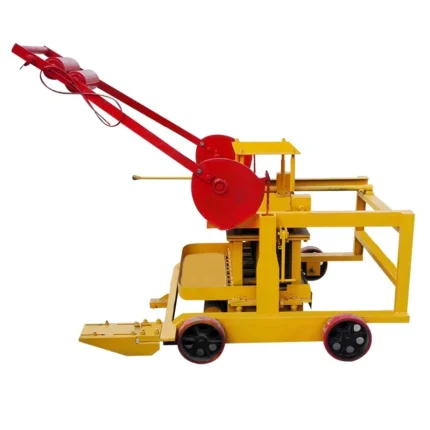
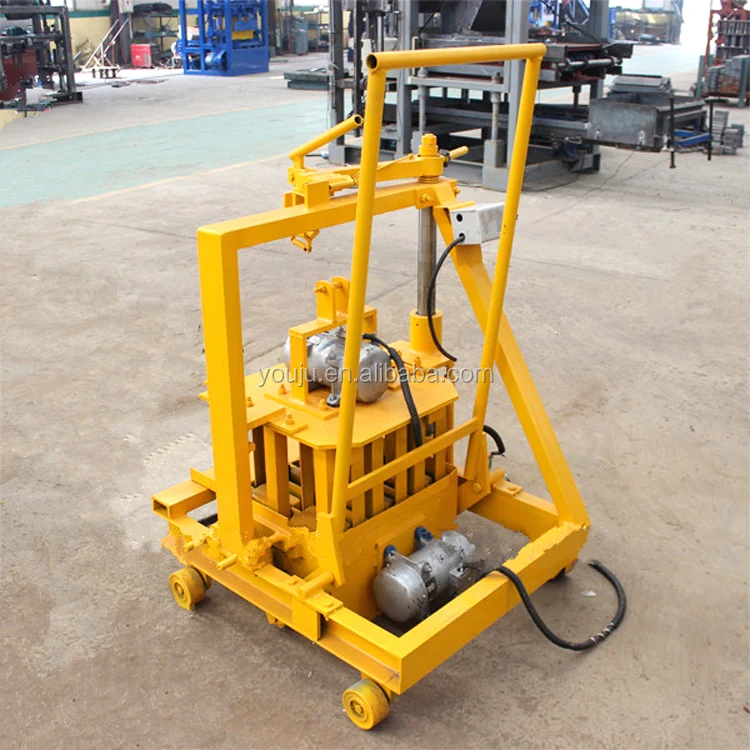
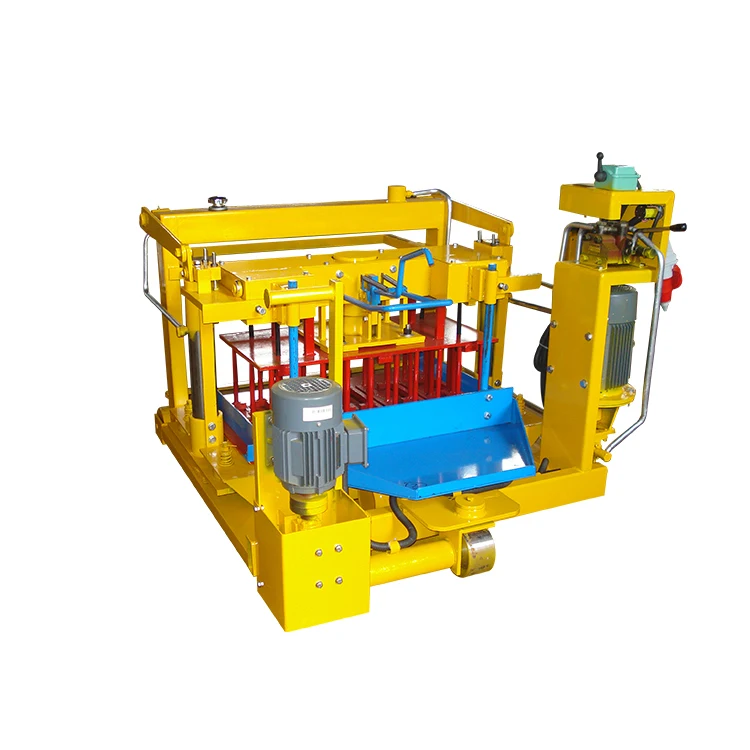
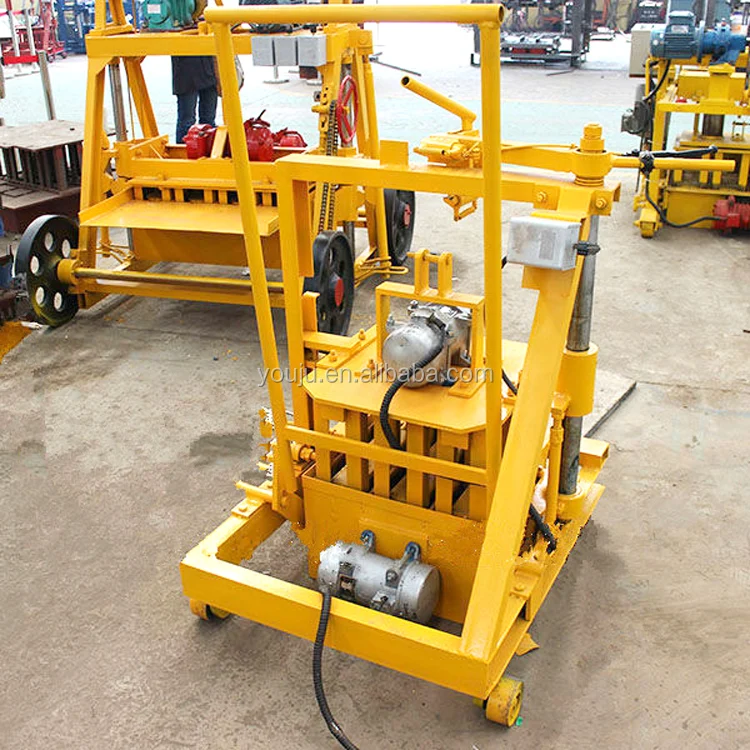
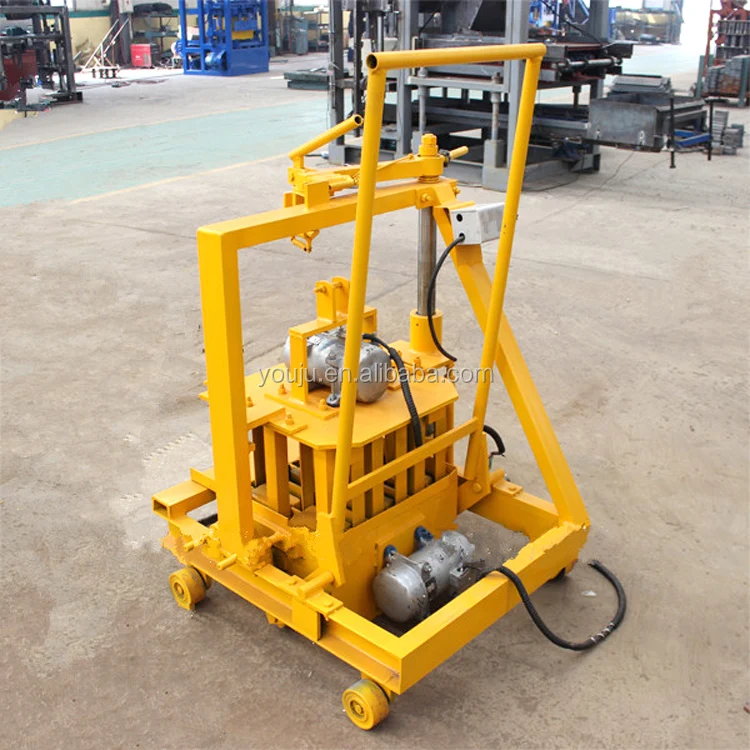
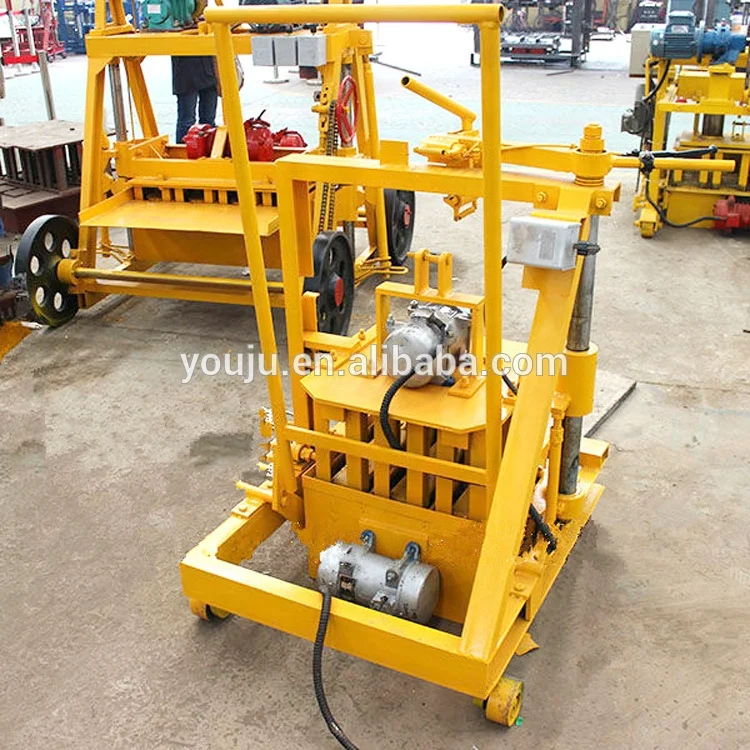
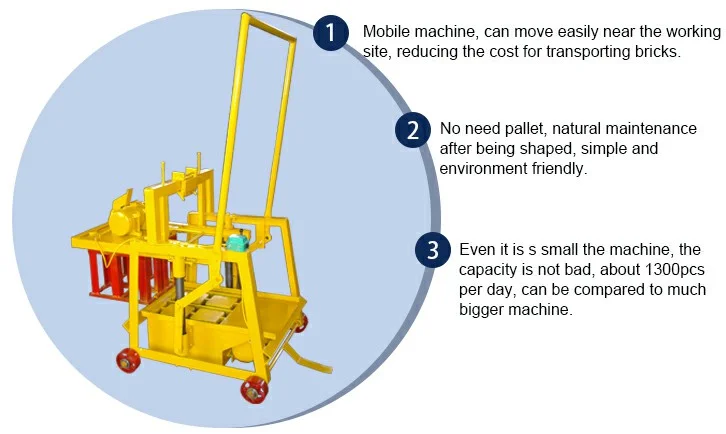
| Machine Design | Palletless egg-laying, free-moving on-site |
| Mould Cycle Time | 25–30 s per cycle |
| Output (400×200×200 mm hollow block) | 2 moulds/cycle, approx. 160 pcs/h, 1280 pcs/8 hr |
| Output (400×100×200 mm hollow block) | 4 moulds/cycle, approx. 320 pcs/h, 2560 pcs/8 hr |
| Output (400×150×200 mm hollow block) | 3 moulds/cycle, approx. 240 pcs/h (8 hr figure requires manufacturer confirmation) |
| Automation Level | Manual operation |
| Labor Requirement | 1–3 workers per shift |
| Pallet Requirement | None |
| Power Source | Electric motor (voltage & frequency to be confirmed) |
| Standards | ISO 9001:2000, CE |
Application Suitability
| Application | Output or Material Context |
|---|---|
| On-site hollow block production | Crushed stone, sand, and cement mixes laid directly on the ground |
| First-stage block plant | Low initial investment before market demand justifies a full automatic line |
| Project-based production | Single housing or infrastructure site without fixed plant infrastructure |
| Remote or off-grid sites | Palletless operation eliminates pallet transport and curing rack logistics |
Why "Cycles per Hour" Tells Only Half the Story for Mobile Block Machines
The cycle time of an automatic mobile block machine must be measured against the format your market actually buys, not the most favourable one on the spec sheet.
Buyers frequently compare mobile units based on a headline output number that assumes the smallest block format. When production shifts to the larger hollow blocks that carry the real margin, daily output drops while the cycle time remains fixed. [NEED_CITE: capacity calculation transparency in block machinery quotations]. Knowing the exact cycle time across every format you plan to produce — and matching it to your local aggregate and mix design — is what separates a realistic business plan from a disappointing first month on site.
The PLC Boundary: Where Manual Ends and Control Begins
At this tier, the operator controls every movement. The value of the QMJ2-45 is not in what it automates, but in what it defines. Every cycle time, every mould format, and every output figure recorded during manual operation becomes the baseline that a PLC-controlled mobile block making machine must eventually match or improve upon when you upgrade.
Planning the Upgrade Before You Need It
Batch-to-batch consistency depends on more than the press itself. When you eventually add PLC-controlled batching, automatic pallet feeding, or stacking, the cycle time and mould change intervals you establish now dictate the specifications of those future stations. [NEED_CITE: integration of control systems across block production line stages]. Starting with clear data from the manual stage removes guesswork from the automation specification later.
Reading the Spec Sheet Like a Plant Engineer
The 25–30 s cycle time is the governing constraint for every format listed. For the 400×200×200 mm block, two moulds drop per cycle; for the 400×100×200 mm, four moulds drop in the same window. This difference in moulds per cycle — not a change in machine speed — is what drives the output variation between formats. Palletless egg-laying design means ground preparation and concrete curing conditions directly affect block quality, since there is no pallet to absorb vibration or provide a controlled curing surface. The 1–3 worker labour requirement is the figure that automation is ultimately designed to reduce, so recording actual labour cost per thousand blocks at this stage informs the return calculation for future equipment decisions.
What Unconfirmed Electrical Data Costs You on Site
The QMJ2-45 spec sheet does not state rated power, voltage, or frequency. Shipping a motor wound for the wrong supply means the machine sits idle while a replacement is sourced, and commissioning delays compound into missed project milestones. [NEED_CITE: electrical configuration mismatches in exported industrial machinery]. Confirming these parameters in writing before production begins — and having them documented on the factory test record — is a non-negotiable step for any export shipment.
Why the Line Matters More Than the Press
Shiyue Intelligent Machinery approaches block production as a matched system rather than a collection of individual machines. The QMJ2-45 is specified alongside the pallet strategy, curing area layout, and future automation stations as one coherent production concept. Configuration is set against the buyer’s actual mix design and local aggregate, not a catalogue default. Mould design covers the formats the buyer’s market sells, with custom drawings available. The automation level is selectable — a buyer can start with manual egg-laying and transition to PLC-controlled semi-automatic or full automatic operation on the same product roadmap. Installation, commissioning, and operator training are included so the baseline data collected on day one is accurate and usable for future planning.
Documentation & Verification
- Machine specification sheet confirming voltage, frequency, and motor rating for your site
- Mould drawing and format list for every hollow block dimension in your product range
- Factory test record showing cycle time measured against your specified block format
- Electrical schematic for on-site troubleshooting and future PLC integration planning
- Operation and maintenance manual in the control language confirmed before shipment
- Wear parts and mould list with interchangeability notes for format changeover
Installation, Commissioning & Support
- Level ground preparation with adequate curing area sized for palletless egg-laying output
- Electrical supply confirmation for motor rated power, voltage, and frequency before dispatch
- Machine assembled on-site from shipping configuration with all moulds fitted and tested
- First-run cycle time verification across each hollow block format with operator present
- Manual mould change procedure trained to the workers who will perform it daily
- Wear parts inventory sized to cover the interval until the first planned reorder
What We Need to Size Your Upgrade Path
To provide an accurate configuration, share the specific hollow block formats your market demands, your local aggregate type and source, and the daily output you need to achieve within your first year. Let us know your site voltage and frequency, and whether operator interface language has been decided. If you plan to transition to PLC-controlled production, tell us the timeline so the upgrade path is engineered into the initial quotation rather than retrofitted later.
Frequently Asked Questions
Q: What automation components can be added to a QMJ2-45, and when does a full automatic line make more sense?
A: The upgrade path typically begins with PLC-controlled batching and progresses to automatic pallet feeding and stacking. When your daily output demand consistently exceeds what manual egg-laying can deliver within a single shift, a full automatic line eliminates the labour bottleneck entirely and delivers batch-to-batch consistency that manual operation cannot maintain.
Q: How do I verify the real daily output when source data shows inconsistencies across formats?
A: Request a written capacity calculation that states the assumed block format, moulds per cycle, and cycle time for each format you plan to produce. Cross-check the arithmetic — hourly output multiplied by shift hours — against the stated daily figure before building a production plan or financial model around it.
Q: Voltage and frequency are not stated — how is electrical configuration confirmed before shipment?
A: The manufacturer must receive your site voltage, frequency, and phase specification in writing before production begins. This data appears on the factory test record and electrical schematic, ensuring the motor and any future PLC components match your supply on arrival and commissioning proceeds without delay.
Q: Can the manual mould change be upgraded to a quick-change system?
A: Quick-change mould systems become relevant at the semi-automatic tier where format flexibility must be realised within a shift rather than between production runs. At the manual stage, mould interchangeability is adequate; the decision to invest in rapid changeover should be based on how frequently your market requires format switching within a single day.
Q: What PLC control options are available when moving from this manual tier upward?
A: PLC-controlled mobile block making machines add batching accuracy, automated pallet handling, and remote diagnostics capability. The control language, display interface, and communication protocol must be specified during the quotation stage so the system integrates with your existing equipment and is operable by your local workforce from commissioning day one.