
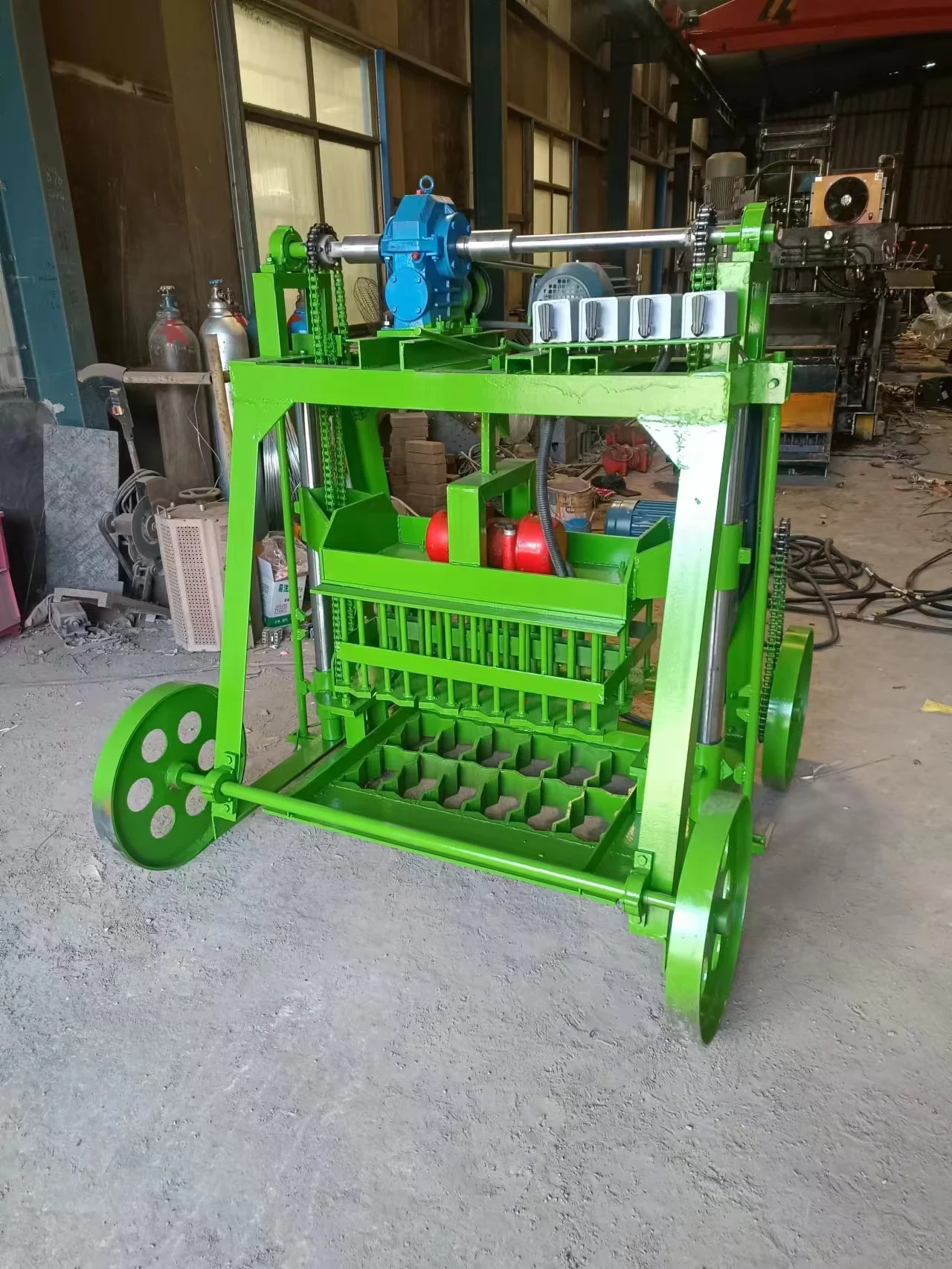
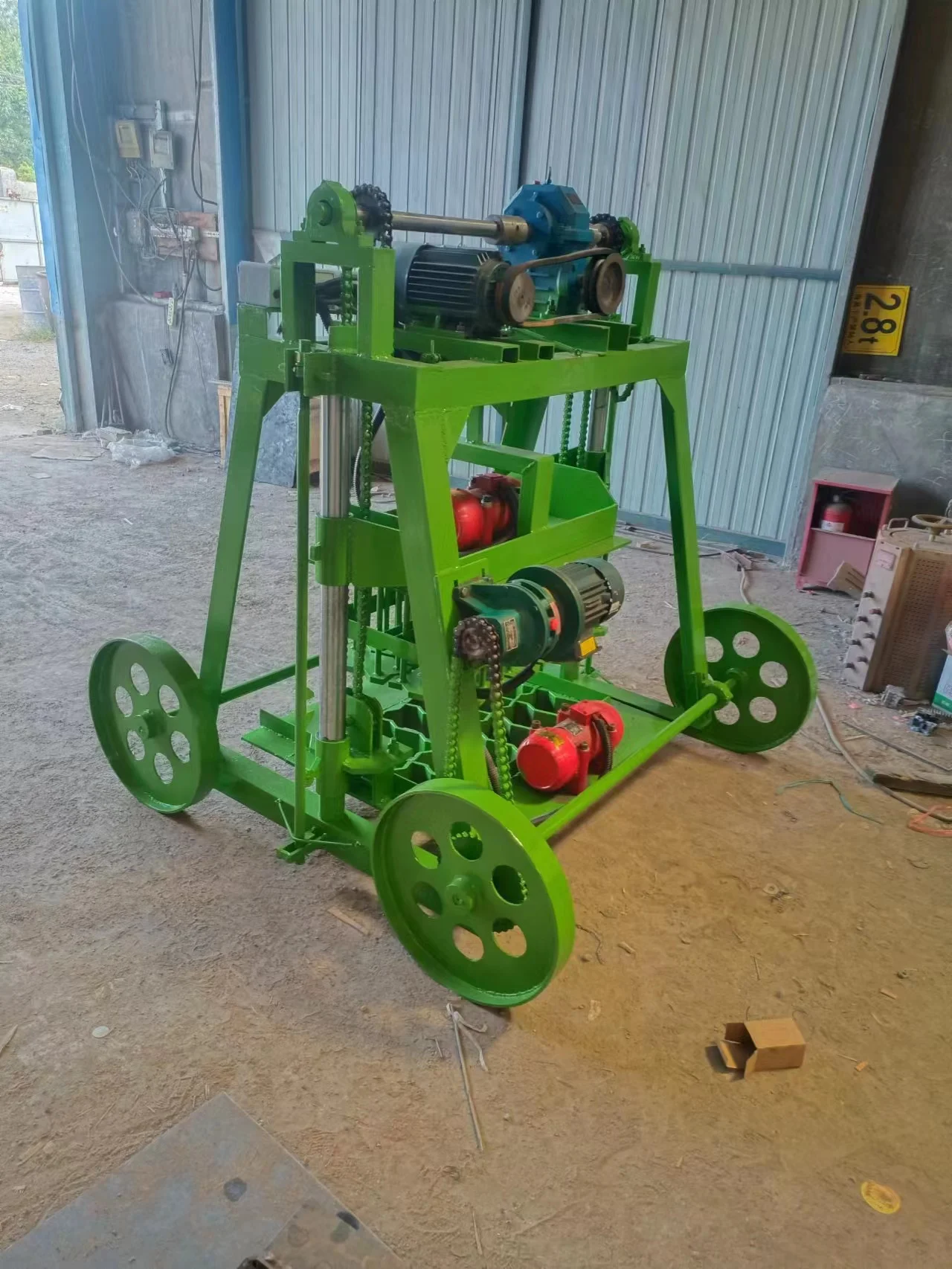

Description
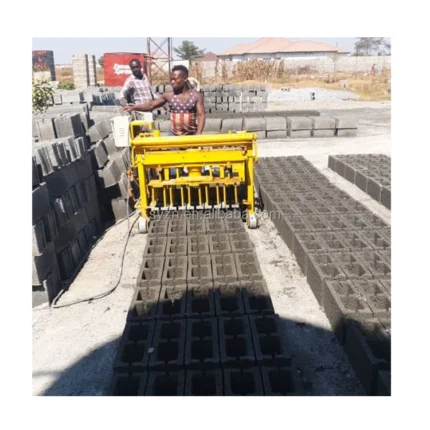
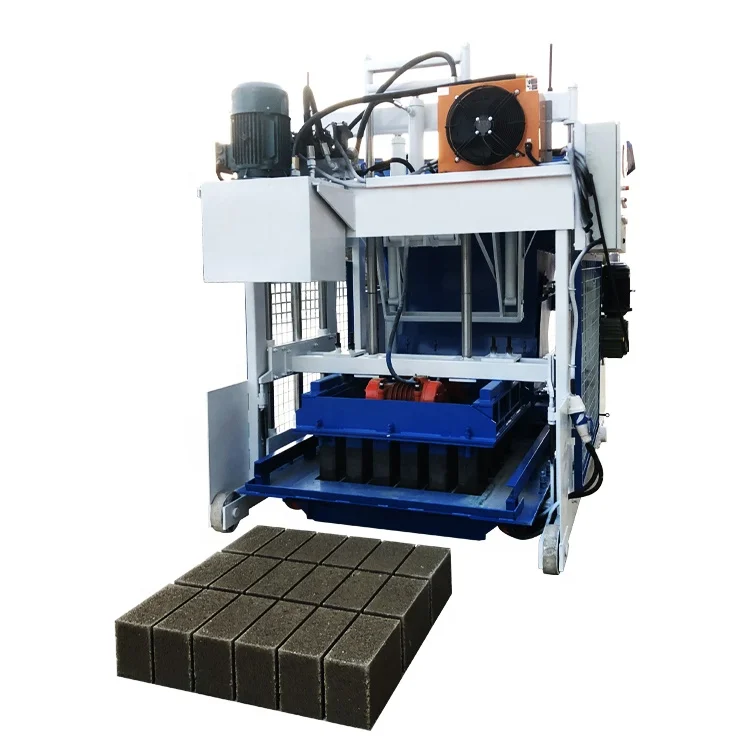
Mould Design Capability — the QMJ4-45 egg-laying press is supplied with format-specific moulds matched to the hollow blocks your local market actually sells, not a single default cavity.
Technical Specifications
| Parameter | Value |
|---|---|
| Model | QMJ4-45 |
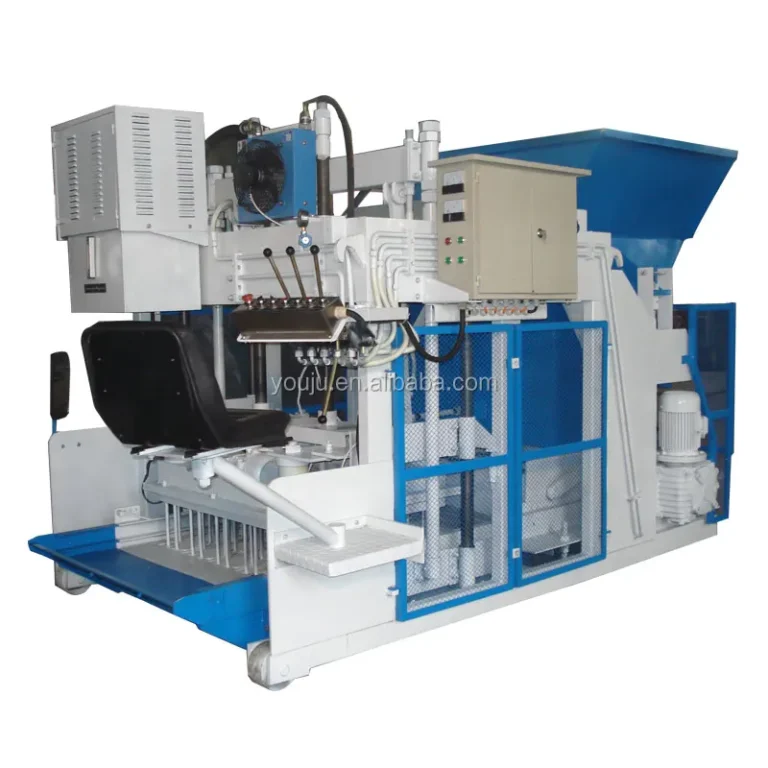
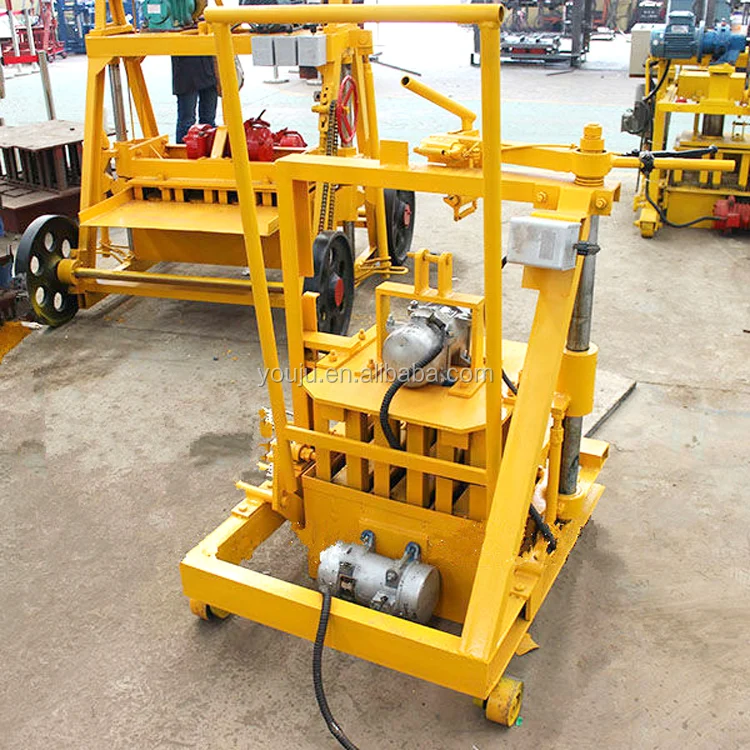
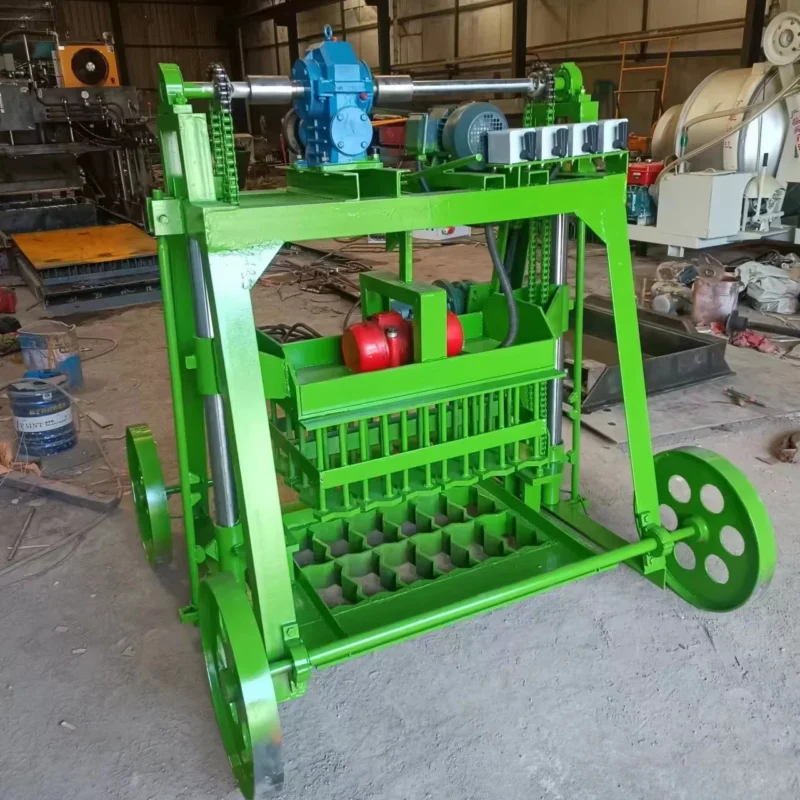
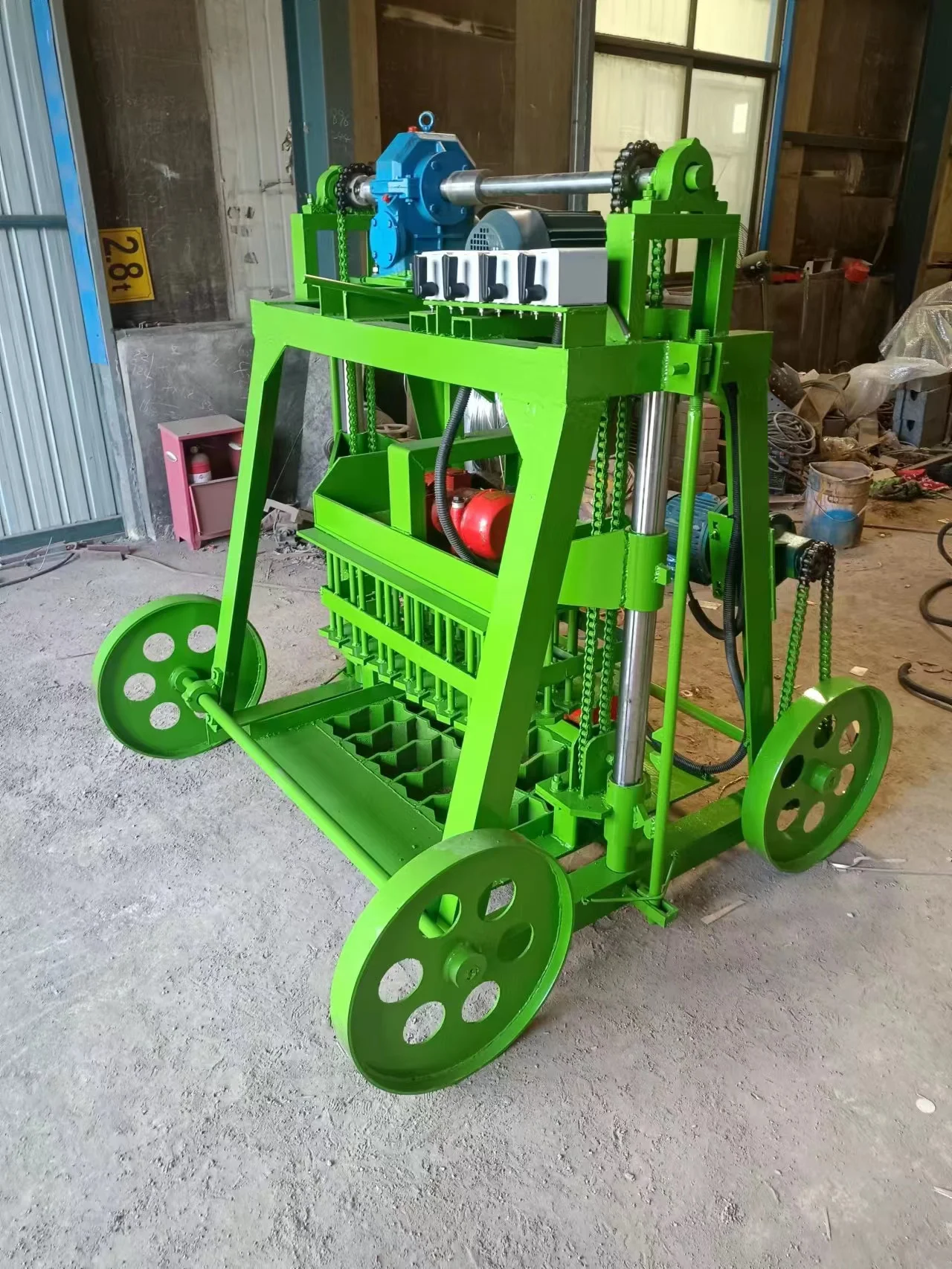
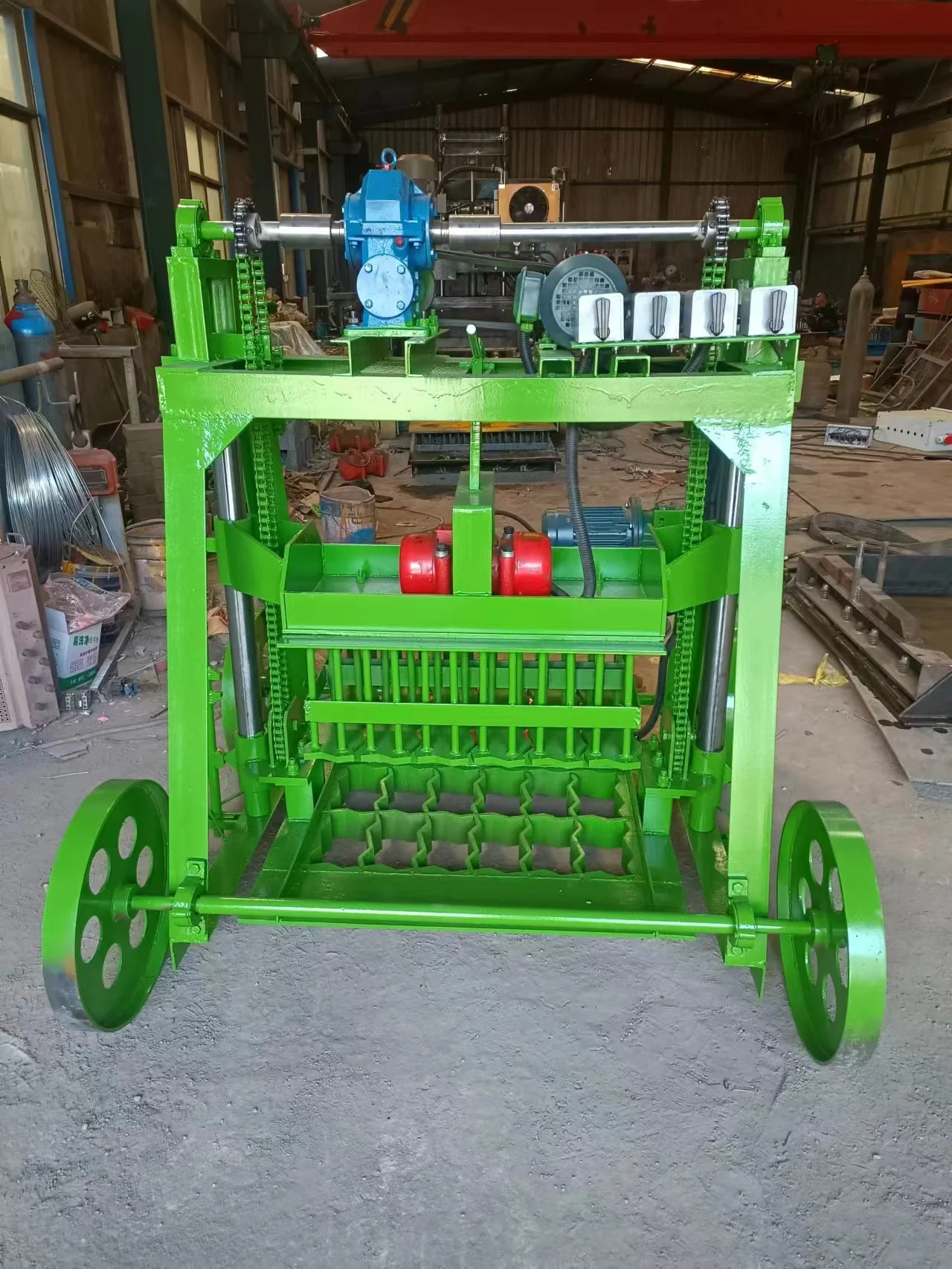
| Product Type | Mobile Egg Laying Block Making Machine |
| Molding Capacity | 4 pcs/mould (basis: 400×200×200mm hollow block) |
| Molding Cycle | 40-45 s |
| Vibration Frequency | 2400 r/min |
| Vibration Method | Mould vibration |
| Productivity (400×200×200mm) | 3000 pcs/day (8 h, 4 pcs/mould, 40-45 s cycle) |
| Productivity (400×150×200mm) | 3500 pcs/day (8 h, 5 pcs/mould, 40-45 s cycle) |
| Productivity (400×120×200mm) | 4500 pcs/day (8 h, 6 pcs/mould, 40-45 s cycle) |
| Demold Method | Manual |
| Turning Method | Manual |
| Power Source | Diesel / Petrol engine |
| Total Power | 6 kW |
| Automation Level | Manual / Egg-laying (no fixed plant required) |
| Pallet Requirement | Not required (egg-laying type) |
| Warranty | One year guarantee for the whole machine |
Application Suitability
| Application | Material or Output |
|---|---|
| On-site housing project production | 400×200×200mm hollow blocks from crushed stone, sand and cement |
| Remote or off-grid block making | 400×150×200mm hollow blocks where grid electricity is unavailable |
| First-plant entrepreneur setup | 400×120×200mm hollow blocks with minimal ground preparation |
| Supplementary mobile unit for existing plants | Hollow block formats alongside a fixed station’s paver or solid block output |
What "3000 Blocks a Day" Really Means on Site
Every output figure here is tied to a specific block size, mould cavity count and cycle time — never a blanket promise.
Capacity numbers quoted without a format assumption are the single biggest source of disappointment in mobile block making. A contractor planning a housing project around a single daily figure often discovers the machine cannot sustain that number on the thicker wall block the architect specified. The QMJ4-45 delivers 3000 pieces per eight-hour shift only when running the 400×200×200mm hollow format at four pieces per mould; switching to the narrower 400×120×200mm cavity raises that figure because six blocks drop per cycle [NEED_CITE: capacity calculation methods for egg-laying block machines]. Knowing this before purchase prevents the gap between the brochure and the curing yard.
Where Manual Operation Draws the Line
The QMJ4-45 is an automatic mobile egg laying block machine PLC controlled upgrade starting point in the sense that its manual demold and turning actions define the baseline you measure any future automation against. An operator physically releases each mould and steers the unit to the next laying position, which keeps capital cost low but caps sustainable output at the speed one person can walk the line. For a small contractor producing on a single housing site, this is acceptable; for a commercial block yard, it signals where a pallet-return or stacking add-on eventually earns its place.
Engine Power and the Off-Grid Reality
Diesel or petrol drive means the QMJ4-45 runs where grid connections do not reach, a common condition on rural housing projects and remote infrastructure camps. The 6 kW total power demand is low enough for a small engine to cover, but fuel consumption scales with vibration frequency and cycle count over a full shift. Buyers planning later to add an electric batching mixer or conveyor must confirm voltage and frequency with the local utility before that equipment arrives [NEED_CITE: voltage and frequency standards by export market]. Leaving this to the last week before commissioning is how entire crews end up standing idle.
Reading the Specs That Actually Shape Output
Mould vibration at 2400 r/min is the compaction method here, not hydraulic pressure, so block density depends heavily on the operator’s mix moisture and aggregate grading. The 40-45 second cycle applies across the three listed hollow formats, meaning daily output differences come entirely from cavity count per mould rather than faster cycling. Because demold and turning are manual, the real bottleneck on a hot site is operator fatigue, not the vibration motor. An automatic mobile egg laying block machine PLC controlled upgrade path would begin by instrumenting these manual steps with sensors, giving you data to decide which station to automate first.
The Cost of Skipping the Control Language Check
Sending a machine to a site where the operator cannot read the control display is a mistake I have seen repeated across multiple export markets. Even on a largely manual egg-laying unit, any future batching station or PLC panel will carry a language setting that must be confirmed before the unit leaves the factory [NEED_CITE: PLC interface language requirements for export machinery]. One afternoon spent verifying this avoids the far more expensive morning when a crew refuses to touch a screen they cannot read.
Why Sourcing This Press Here Makes Sense
Block machinery is the single focus of this supply operation, so the QMJ4-45 arrives as a matched system — mould, engine, vibration assembly — rather than a press bodged together from unrelated vendors. Configuration is set against your actual mix design and target hollow block format, not a catalogue default. Mould drawings are provided for every cavity size you plan to run, and custom formats can be quoted from your own drawings. The automation level is selectable, meaning you can start fully manual and add pallet handling or PLC control as volume justifies the investment. Installation guidance covers ground preparation, engine commissioning and operator training on the vibration system, so the first week of production is not spent troubleshooting avoidable issues.
Documentation & Verification
- Capacity calculation sheet stating daily output per hollow block format and assumed cycle time
- Mould drawing and format list for every cavity size included in the order
- Voltage and control language confirmation for any batching or PLC add-on
- Factory test record showing vibration frequency and mould cycle before dispatch
- Operation and maintenance manual covering engine service intervals and mould wear parts
Installation, Commissioning & Support
- Level compacted ground required; no fixed foundation or curing rack infrastructure needed for the QMJ4-45 egg-laying operation
- Diesel or petrol engine to be filled with correct grade fuel and oil before first start-up on site
- Vibration motor wiring checked against the 6 kW total power rating before continuous running
- Mould change procedure walked through with operators for each hollow block format ordered
- Wear parts list and first replacement schedule supplied with the machine documentation
What to Include in Your First Enquiry
Specify the hollow block dimensions you plan to produce, the daily volume your curing area can hold, and the local aggregate available for your mix. If you foresee adding an electric batching station later, include your site voltage and frequency so the automatic mobile egg laying block machine PLC controlled upgrade path can be scoped from the start. Mention the control language your operators need on any future display panel.
Frequently Asked Questions
Q: How is daily output verified for each hollow block format?
A: Every output figure is tied to a specific mould cavity count and the 40-45 second cycle. The 400×200×200mm format yields 3000 pieces over eight hours at four blocks per cycle, while the 400×120×200mm format yields 4500 at six per cycle. A capacity document is supplied stating these assumptions so you can plan curing space accurately.
Q: What does manual demold and turning mean for labour over a full shift?
A: One operator releases the mould and steers the machine to the next position every 40-45 seconds. Over an eight-hour shift this is physically demanding, and fatigue will reduce sustainable pace. Planning rest rotations or considering a future pallet-return upgrade keeps output consistent through the last hour.
Q: Can the QMJ4-45 be upgraded with PLC control or automatic stacking later?
A: The manual baseline leaves room to add sensors, an electric batching station, or a pallet-handling system as volume grows. Any automatic mobile egg laying block machine PLC controlled upgrade should be discussed before the initial order so mounting points and wiring routes are prepared at the factory.
Q: What voltage and frequency details matter if I add a batching mixer?
A: The QMJ4-45 itself runs on an engine, but an electric mixer or conveyor needs your site voltage, frequency and phase confirmed in advance. Control language for any PLC panel must also be specified so the display matches your operators’ working language upon arrival.
Q: Which wear parts should I order with the first shipment?
A: Mould liners, vibration motor brushes and engine service filters are the items most likely to need replacement within the first year. A wear parts list with part numbers is included in the documentation, and ordering spares with the initial machine avoids a production stop while waiting for international freight.