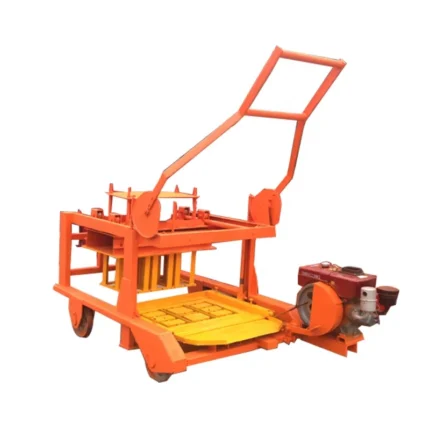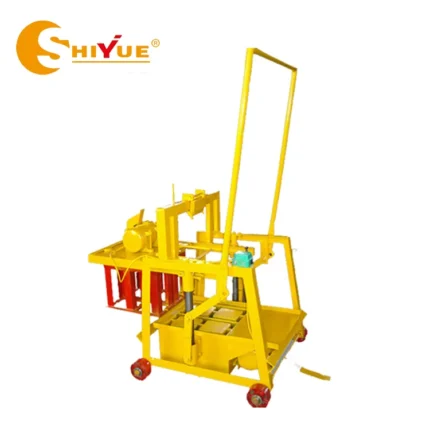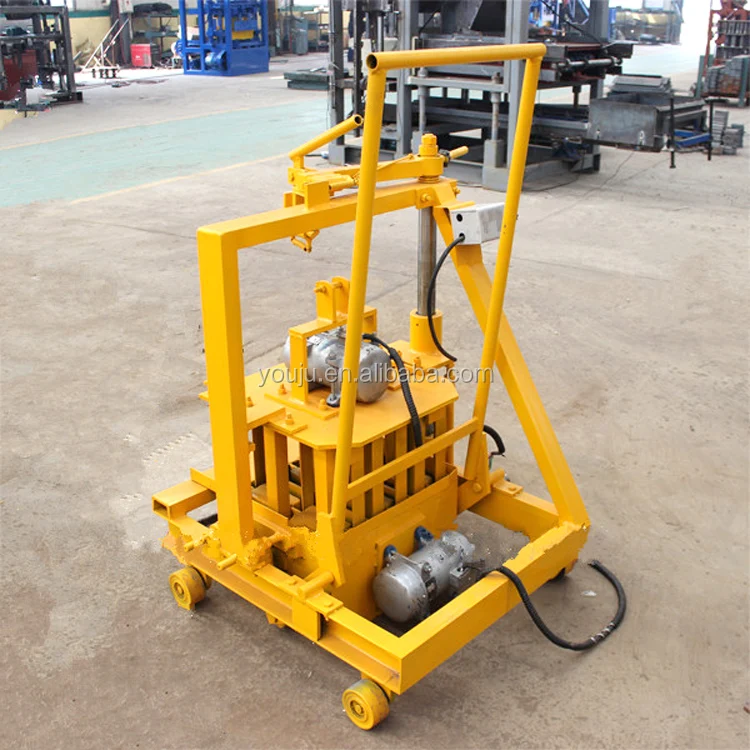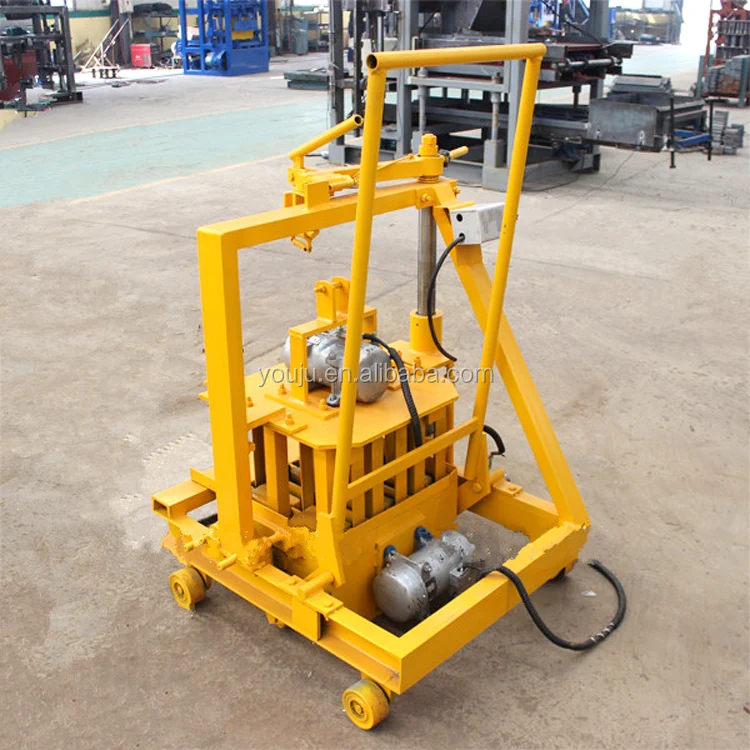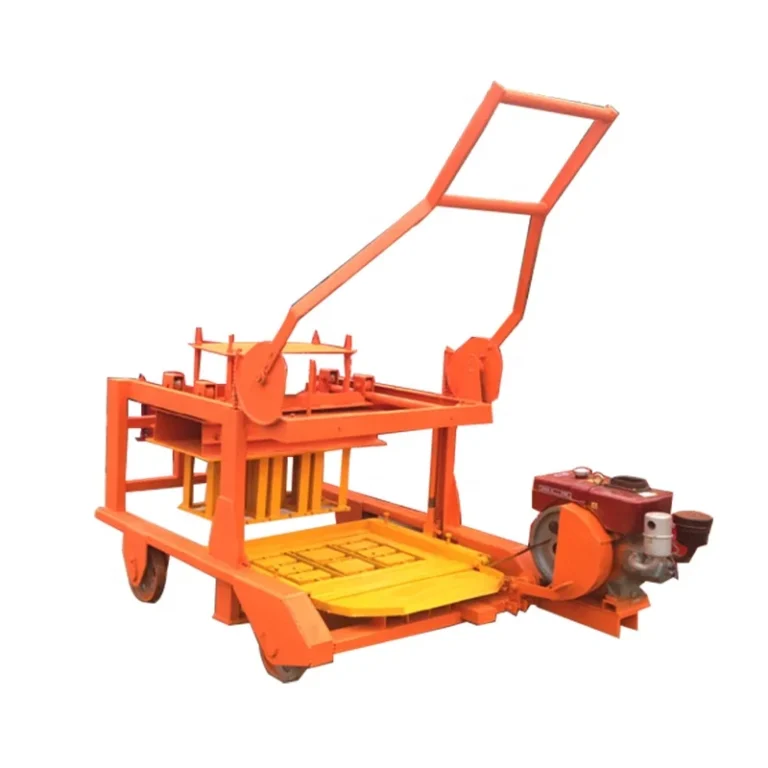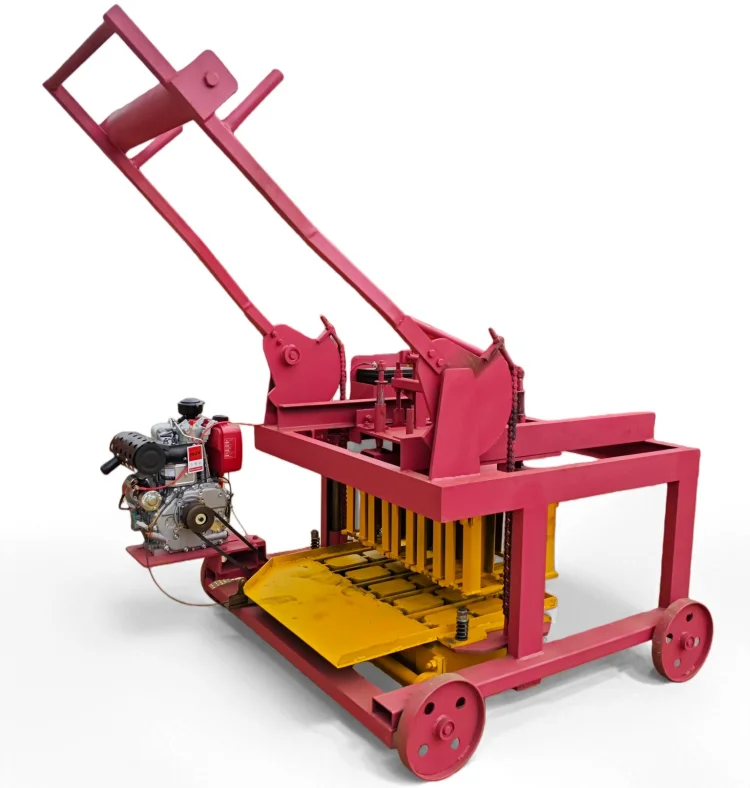
Description
Single-focus configuration — every pallet, mould, and control setting on the QMR4-45 is matched to your actual site conditions rather than pulled from a catalogue default.
Technical Specifications
| Parameter | Value |
|---|---|
| Model | QMR4-45 |
| Product Type | Mobile Block Making Machine |
| Power Source | Diesel |
| Engine Power | 8 hp |
| Molding Cycle | 45 s |
| Molding Form | Vibration and Pressure |
| Vibration Force | 60 kN |
| Total Weight | 800 kg |
| Overall Dimensions | 2420 × 1320 × 1650 mm |
| Automation Level | Semi-automatic (manual pallet handling, mobile operation) |
| Pallet Requirement | No pallet required |
| Block Formats | Paver brick, hollow block, concrete block, solid brick, fly ash brick |
| Basic Equipment Included | JZC350 / JQ350 Diesel Concrete Mixer; Trolley |
| Output Capacity | basis to be confirmed |
Application Suitability
| Application | Material or Output |
|---|---|
| On-site residential build | Hollow blocks from local crushed aggregate and cement |
| Remote housing project | Solid bricks and pavers where grid power is unavailable |
| First-time block enterprise | Entry-scale production of paver and kerb formats |
| Fly ash utilisation plant | Fly ash bricks from thermal power plant by-product |
Why the Automation Question Must Precede the Quotation
The gap between a quoted cycle time and a realistic daily count is almost always a material-handling problem, not a press problem.
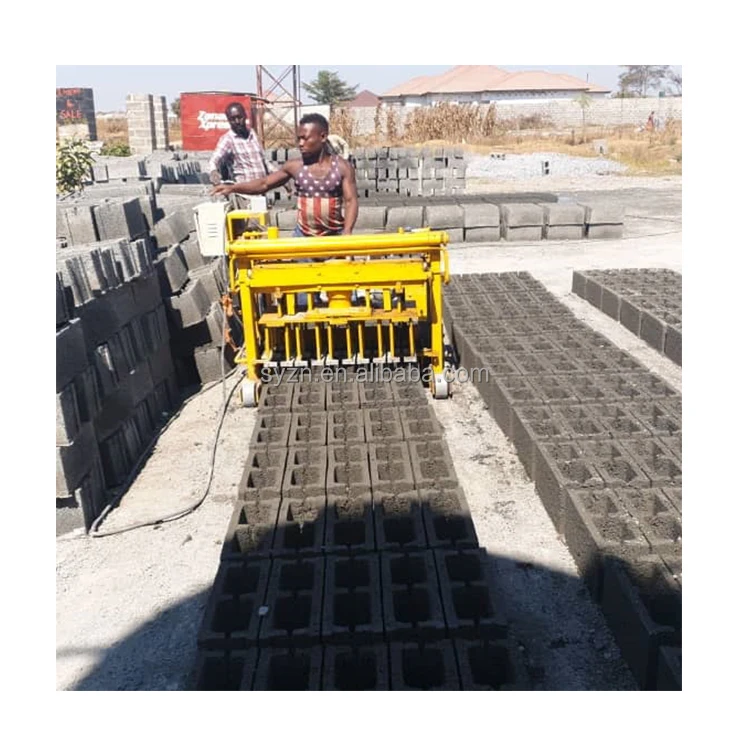
An automatic mobile block making machine with PLC control sounds definitive, but the word "automatic" covers a wide range. On a machine of this class, it may mean that vibration timing and pressure are managed by the controller, while the operator still moves the freshly pressed blocks to the curing area by hand. I have watched crews spend more time carrying wet blocks across a yard than the press spends compacting them [NEED_CITE: material handling as the primary bottleneck in small block plants]. The QMR4-45 eliminates the pallet variable entirely — blocks are pressed directly onto the ground and cured in place — but stacking, covering, and turning remain manual tasks. Knowing exactly which steps are automated and which still need hands is the only way to size your crew correctly.
What Semi-Automatic Actually Covers on the QMR4-45
The 45-second molding cycle governs the press itself: vibration force, pressure application, and the dwell time required to consolidate the mix into a coherent block. This portion of the workflow is managed by the machine, which is where an automatic mobile block making machine with PLC control adds its real value. What sits outside that envelope — feeding the mixer, wheeling the mixed material to the press, moving the press forward to the next casting position, and protecting the green blocks from weather — all remain operator tasks. Recognising that boundary is essential before you compare quotations.
The Upgrade Path from Manual to Controlled Operation
A diesel-powered press with a fixed vibration cycle leaves consistency in the operator’s hands. Moving toward PLC control shifts that responsibility to a programmable sequence: vibration duration, pressure application, and cycle initiation can all be standardised so that the ten-thousandth block of the day matches the first [NEED_CITE: PLC control and batch consistency in concrete product manufacturing]. The QMR4-45 is available in a configuration that supports this transition, allowing a buyer to begin with semi-automatic operation and introduce controlled sequences as volume and quality demands increase. This matters most when you are selling blocks to a market that inspects for dimensional tolerance and compressive strength.
Reading the Specs That Actually Matter
The 60 kN vibration force works in combination with mechanical pressure to compact the mix; neither figure alone determines block density. A high vibration value with insufficient pressure produces a block that appears formed but crumbles under load. The 8 hp diesel engine is the critical enabler for off-grid sites, removing dependency on local three-phase supply, which is often unreliable or absent on remote African and South Asian build locations. The no-pallet design removes a major ongoing material cost, but it demands a well-prepared, level casting surface — uneven ground translates directly into uneven blocks. The 800 kg total weight means the machine can be relocated around a site by a small crew or a light vehicle, which is the defining advantage of the mobile format.
The Hidden Cost of Choosing the Wrong Control Level
Specifying a machine without confirming the control language and electrical standard for your market delays commissioning by weeks, not days. I have seen a unit sit idle because the PLC display arrived in a language the local operator could not read, and a replacement display module had to be shipped internationally [NEED_CITE: control language confirmation for export machinery]. Similarly, buying a diesel unit for a site that actually has reliable grid power means paying a fuel premium on every block produced for the life of the machine. The consequence of a misconfigured automation level is not a failed machine — it is a crew that never reaches the daily output the press is mechanically capable of delivering.
Why Buyers Source This Machine Here
Block machinery is our single focus, so the QMR4-45 is specified as a matched system of press, mixer, and trolley rather than assembled from unrelated suppliers. We configure the vibration and pressure settings against your actual mix design and local aggregate, not a generic factory default. Mould supply covers the formats your market actually sells, and custom mould design is available to your drawings. The automation level is selectable, so you can begin semi-automatic and move toward PLC-controlled operation when volume justifies the investment. Installation support includes on-site commissioning and operator training, which is where most remote-site projects either succeed or stall.
Documentation & Verification
- Machine specification sheet stating the block format used for cycle time calculation
- Mould drawing and format list covering all ordered block types
- Voltage and control language confirmation document for diesel-electric hybrid variants
- Factory test record on the buyer’s confirmed mix design before dispatch
- Operation and maintenance manual with illustrated wear parts catalogue
- Packing photographs and customs documentation support for shipment
Installation, Commissioning & Support
- Site ground preparation to a level tolerance suitable for no-pallet ground casting with the QMR4-45
- Fuel supply and storage planning for the 8 hp diesel engine on remote locations
- Machine assembly and vibration calibration during on-site commissioning visit
- Operator training covering mix loading, press cycling, and daily maintenance routines
- Sealed wear parts and mould spares kit checked line-by-line before first shipment
- Scheduled maintenance interval sheet matched to the 45-second molding cycle intensity
Before You Send Your Inquiry
To size the QMR4-45 correctly for your site, tell us the specific block formats your market demands, your target daily output, and the local raw materials you intend to use. Confirm whether grid electricity is available and reliable, or whether diesel-only operation is required. Let us know the language your operators need on the control interface so we can specify it before the machine enters production.
Frequently Asked Questions
Q: What block formats does the QMR4-45 produce, and how does cycle time vary?
A: The QMR4-45 produces hollow blocks, solid bricks, paver bricks, concrete blocks, and fly ash bricks. The stated 45-second molding cycle is a baseline; actual cycle duration varies with block thickness, mix consistency, and the compaction density required for your target strength. Confirm the specific format and mix to receive an accurate capacity calculation.
Q: Can the QMR4-45 be upgraded from diesel to electric or to PLC control?
A: The machine is available with diesel power for off-grid sites and can be configured with electrical control elements for PLC-managed sequences. Upgrading from a purely manual operation to a PLC-controlled automatic mobile block making machine with PLC control is a selectable option at the point of order. Confirm your site’s electrical availability and target automation level early in the inquiry process.
Q: What control system and language options are available?
A: The control system is configurable, and the display language must be confirmed before production begins. We have seen units delayed at commissioning because this step was overlooked. Specify the operator language and any site-specific electrical requirements during the quotation stage so the correct module is installed at the factory.
Q: How does the no-pallet design affect block consistency and curing?
A: Eliminating pallets removes a major consumable cost and a material-handling step. However, it requires a well-levelled casting surface, as ground irregularities transfer directly into block dimensional variance. Curing takes place in situ, so weather protection and watering schedules must be planned around the ground-casting layout rather than a pallet-based rack system.
Q: What spare parts should be ordered with the first shipment?
A: Hydraulic seals, vibration motor bearings, and mould wear liners are the most commonly replaced items in the first year of operation. I always walk through the wear parts list line by line with the buyer before shipping, because waiting for a seal to arrive by courier on a remote site can idle the machine for weeks. Order a full first-year spares kit with the machine.