Description
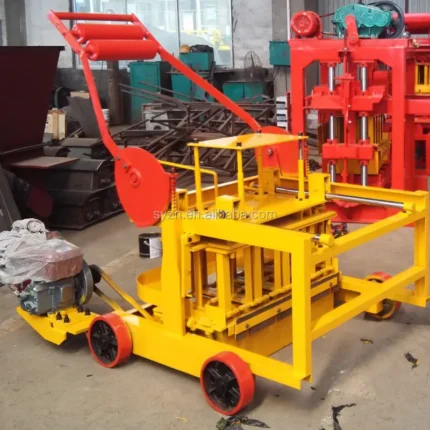
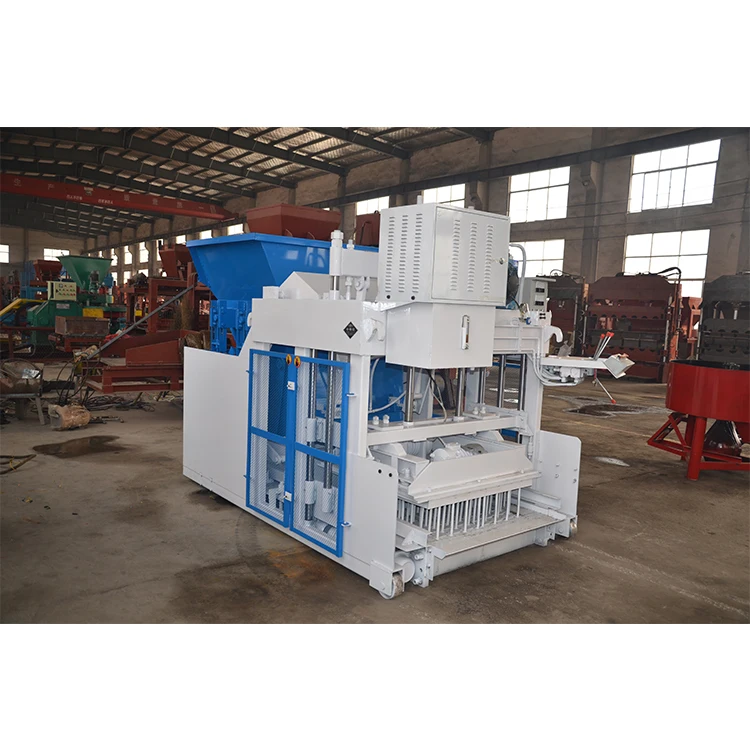
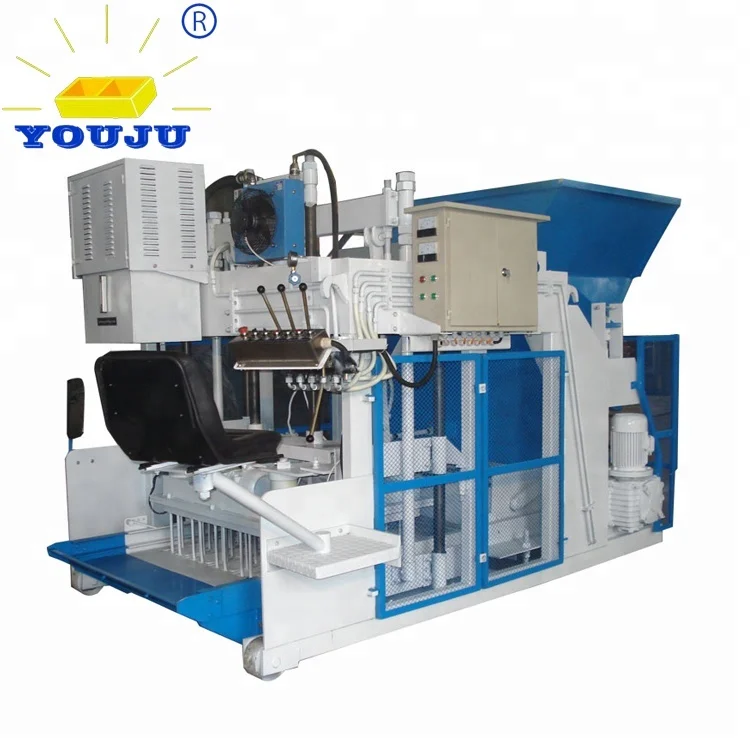
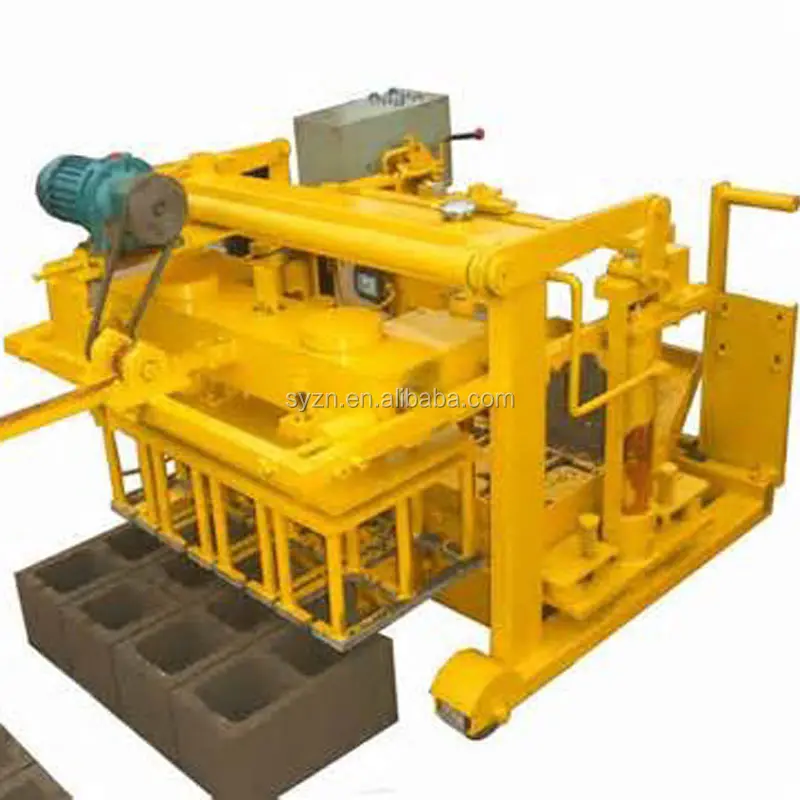
Controlled Demolding Precision — hydraulic transmission paired with mould vibration keeps the QMY4-30 cycle consistent even when the operator is working on uneven ground far from a fixed plant.
Technical Specifications
| Parameter | Value |
|---|---|
| Model | QMY4-30 |
| Product Type | Mobile Egg Laying Concrete Block Making Machine |
| Hydraulic Method | Mould vibration |
| Demold Method | Hydraulic |
| Molding Cycle | 25–30 s |
| Total Power | 5.95 kW |
| Output Capacity (400×200×200 mm hollow block) | 480 pcs/h, 3 840 pcs/8 h |
| Output Capacity (400×150×200 mm block) | 600 pcs/h, 4 800 pcs/8 h |
| Output Capacity (400×100×200 mm block) | 840 pcs/h, 6 720 pcs/8 h |
| Pallet Requirement | Palletless (egg laying / mobile type) |
| Automation Level | Manual / Mobile operation, upgrade-ready |
| Operating Environment | Mountainous, hilly, industrial mining, desert and coastal areas |
| Standards | ISO 9001:2000, CE |
Application Suitability
| Application | Material or Output |
|---|---|
| Housing project on-site hollow block production | Crushed stone, sand and cement laid directly on compacted ground |
| Remote terrain masonry block supply | Solid and hollow formats produced without fixed plant infrastructure |
| Small-scale paver and solid block manufacturing | Local aggregate blends matched to site-available raw materials |
| Mobile contracting operations across multiple sites | Machine relocated between job sites without dismantling a production line |
Why the Voltage Question Beats the Price Discussion
A control panel that speaks the wrong language stops production before the first block is laid.
When I configured a mobile egg laying block machine for a francophone site in West Africa, the HMI shipped with a Chinese interface. The crew stared at the screen for two days until we pushed a remote firmware update. Language is only part of the story; voltage sag on a rural generator can trip the PLC mid-cycle, leaving half-pressed blocks in the mould [NEED_CITE: voltage and frequency standards by export market]. Confirming supply characteristics before the automatic mobile block machine leaves the factory avoids the kind of silence that costs a contractor an entire pouring window.
Mould Vibration Meets Hydraulic Demolding
The QMY4-30 uses mould vibration excitation rather than table vibration, so the energy is delivered directly into the concrete mass inside the cavity. Hydraulic demolding then lifts the mould box away without jolting the fresh block. This combination matters on a PLC controlled egg laying block machine because the cycle repeats every 25–30 seconds and any misalignment accumulates into uneven block heights across a hundred-meter run.
Palletless Operation Changes the Site Layout
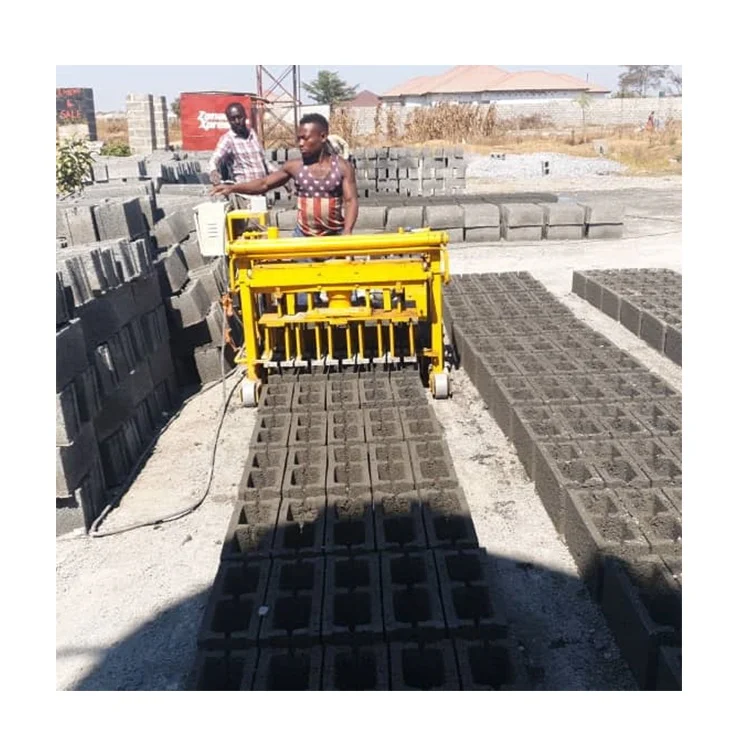
Egg laying means the machine deposits blocks straight onto the ground and drives forward, leaving the curing area behind it. No pallets to purchase, no pallet return conveyor to power, no forklift shifting stacks to a curing rack. For a contractor working a hillside housing development, that removes an entire logistics loop and lets the automatic mobile block machine follow the building footprint instead of forcing production back to a single yard.
Reading the Numbers Behind the Cycle Time
Output is stated per block format because the same 25–30 second cycle produces four 400×200×200 mm hollow blocks or seven 400×100×200 mm blocks. Total power sits at 5.95 kW, which a small diesel generator can cover on a remote site. Mould vibration rather than full hydraulic press means the energy draw stays within that envelope while still achieving consistent density [NEED_CITE: concrete block density standards for load-bearing masonry]. Hydraulic demolding replaces the manual lever pull that older mobile machines required, reducing operator fatigue and keeping block corners intact.
When the Wrong Configuration Silences the Line
Specify the machine for a mix the local quarry cannot supply and every batch arrives with a different slump; the vibration setting that worked on Monday leaves blocks crumbling on Wednesday. Ignore the site voltage and the contactor welds shut mid-cycle, trapping a half-formed block inside the mould box. Overlook HMI language and the operator ignores a fault code because the alarm text is unreadable, turning a sensor wipe into a two-day shutdown [NEED_CITE: CE machinery directive requirements for industrial equipment].
Why Procurement Conversations Start Here
Block machinery is the only product line, so the machine, mould and future handling equipment are specified as one system rather than assembled from separate catalogues. Configuration is set against the buyer’s actual mix design and local aggregate, not a default table. Mould design covers the formats the local market actually buys, with custom drawings available. Automation level is selectable; a buyer can start with manual mobile operation and add semi-automatic feeding later. Installation and commissioning include operator training so the crew runs the first cycle independently.
Documentation & Verification
- Line layout showing block format assumed in the capacity calculation
- Machine specification sheet with voltage and control language confirmed
- Mould drawing and format list matched to buyer’s market demand
- Hydraulic and electrical schematic for local maintenance teams
- Factory test record run on the buyer’s target block format
- CE declaration and ISO 9001:2000 certificate copies included in shipment
Installation, Commissioning & Support
- Level compacted ground required; no fixed foundation pads for the 5.95 kW mobile unit
- Power feed confirmed to site voltage and frequency before the PLC is energized
- Machine arrives assembled; wheels and steering ready for immediate site relocation
- HMI language screenshot signed off by the buyer before dispatch
- Operator training covers mould change, vibration adjustment and daily greasing points
- Wear parts list and mould inventory supplied with first shipment
Shaping the Inquiry
Tell us which block formats your local market moves fastest, the daily output you need per format, and the aggregate sources within hauling distance of your site. Share the site voltage, frequency and whether you run on grid or generator power, plus the language your operators read on a screen. If you plan to add semi-automatic feeding or stacking later, mention it now so the PLC controlled egg laying block machine is wired with upgrade headroom.
Frequently Asked Questions
Q: How is realistic daily output calculated per block format?
A: Output is tied to the 25–30 second molding cycle and the number of cavities per mould. For a 400×200×200 mm hollow block the rate is 480 pieces per hour, giving 3 840 pieces over an eight-hour shift. Smaller formats fill more cavities per cycle, raising the hourly figure. These numbers assume continuous operation without unplanned stops.
Q: What automation upgrades are possible after starting manual?
A: The QMY4-30 control architecture allows semi-automatic raw material feeding and conveyor-based stacking to be added later. Wiring and PLC I/O are specified with upgrade headroom so the transition does not require a full panel replacement. Buyers typically add automation once daily volume justifies a second shift.
Q: Is the control system configurable for local power and language?
A: Voltage, frequency and HMI display language are confirmed before production. We supply a screenshot of the final interface for buyer sign-off, preventing the kind of language mismatch that once stalled a francophone site for two days. Generator supply characteristics are also reviewed to avoid brownout trips.
Q: How does mould change work on a mobile machine?
A: The mould box unbolts from the vibration table and a replacement slides into the same locating pins. Format changes are planned around the block sizes the buyer’s market actually sells, and custom moulds can be designed from buyer drawings. Spare mould inventory is discussed during the quotation stage.
Q: What remote support is included at commissioning?
A: An engineer guides the first production run on site, covering cycle tuning, vibration adjustment and fault code reading. Remote diagnostics remain available over the PLC connection for subsequent troubleshooting. Wear parts and hydraulic seal kits are listed in the documentation pack shipped with the automatic mobile block machine.