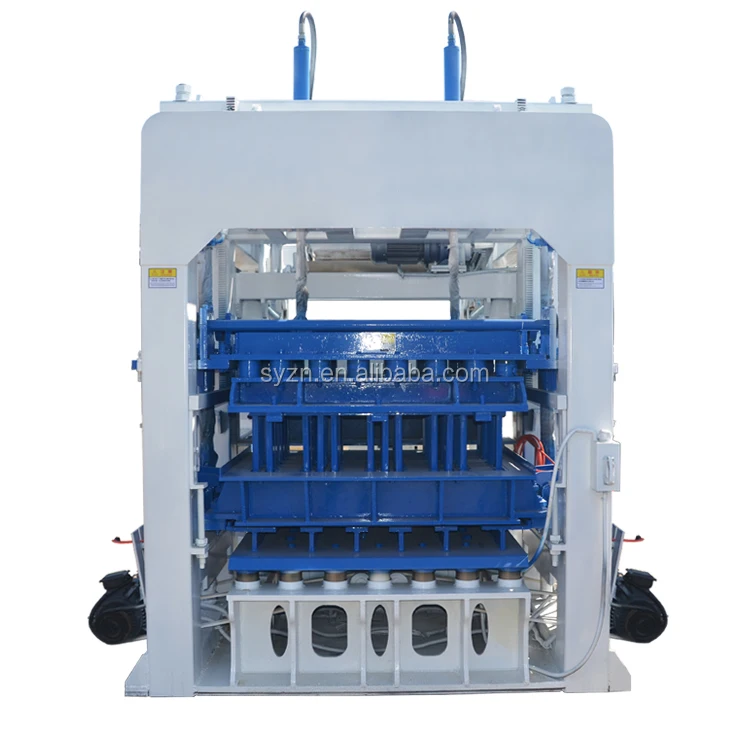


Description
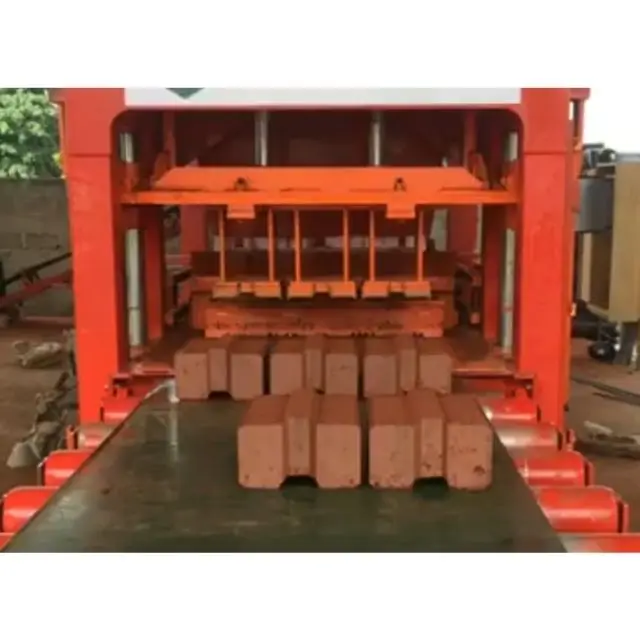
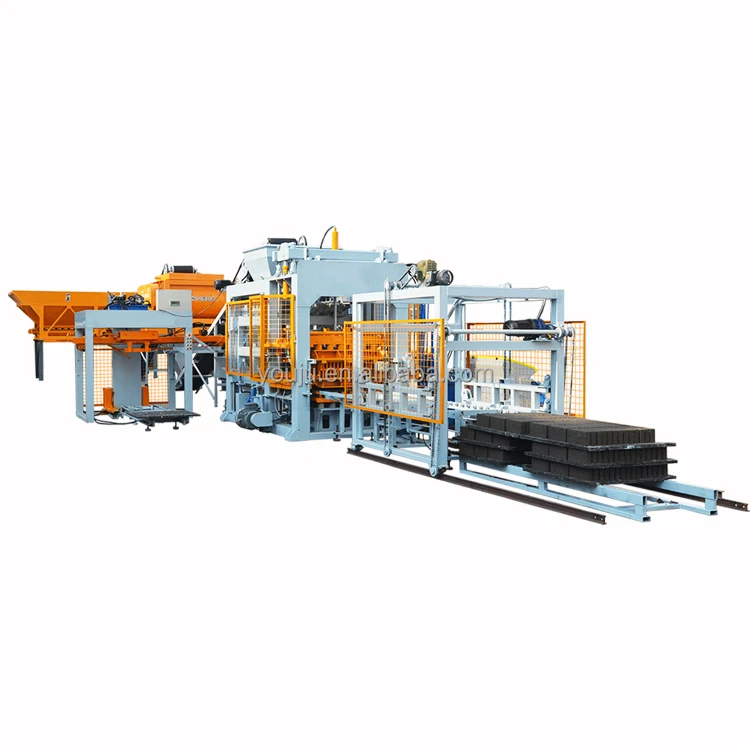
Automation as a matched loop — The QT10-15 integrates PLC control, pallet feeding, hydraulic pressing, and vibration into one coordinated cycle, removing the operator from decisions that should already be made before the shift starts.
Technical Specifications
| Parameter | Value |
|---|---|
| Model | QT10-15 |
| Product Type | Automatic Concrete Block Making Machine |
| Control System | PLC control cabinet |
| Hydraulic System | Independent integrated hydraulic station |
| Vibration Mode | Vertical station mode resonance, automatic FM-AM |
| Mould Change | Simple replacement for multi-function production |
| Line Components | Pallet feed machine, block making machine, storage hopper, conveyor, hydraulic unit, PLC control cabinet |
| Automation Level | Automatic (PLC, pallet feed, conveyor, storage hopper) |
| Cycle Time (hollow blocks & bricks) | 15–20 seconds |
| Cycle Time (paving blocks) | 20–25 seconds |
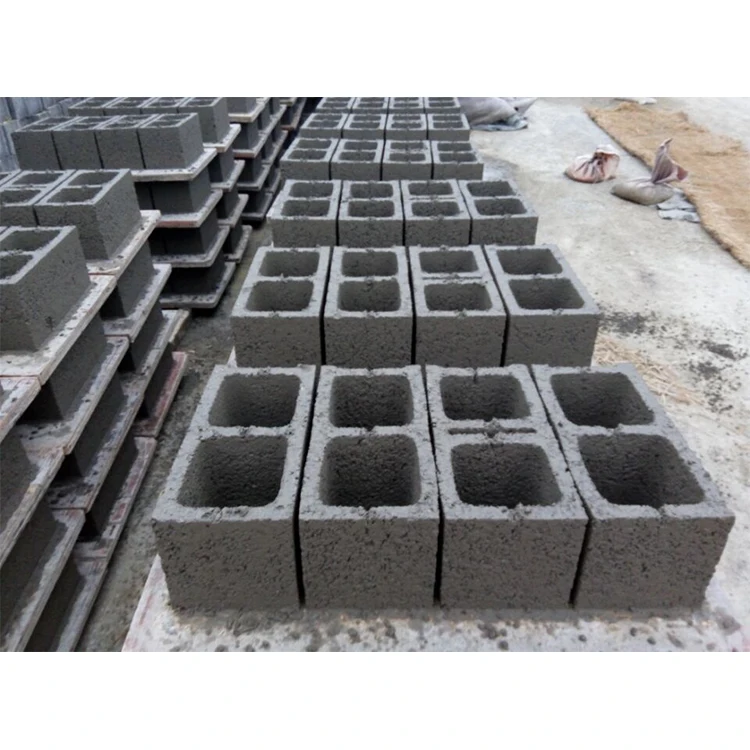
| Output – 400×200×200 mm hollow block | 1,800–2,400 pcs/hour (basis: 10 pcs/mould, 15–20 s cycle) |
| Output – 400×150×200 mm hollow block | 2,160–2,880 pcs/hour (basis: 12 pcs/mould, 15–20 s cycle) |
| Output – 240×115×53 mm solid brick | 8,928–11,160 pcs/hour (basis: 62 pcs/mould, 15–20 s cycle) |
| Output – 200×100×60 mm paving block | 5,184–6,480 pcs/hour (basis: 27 pcs/mould, 20–25 s cycle) |
| Output – 225×112.5×60 mm paving block | 4,032–5,040 pcs/hour (basis: 24 pcs/mould, 20–25 s cycle) |
| Voltage & Frequency | (basis not stated in source — confirm before production) |
| Pallet Size | (basis not stated in source — confirm with curing area layout) |
| Hydraulic Pressure | (basis not stated in source — confirm with block format) |
| Vibration Force | (basis not stated in source — confirm with mix design) |
| Rated Power | (basis not stated in source — confirm with electrical layout) |
| Overall Dimensions | (basis not stated in source — confirm with plant layout) |
| Net Weight | (basis not stated in source — confirm with foundation design) |
| PLC Display Language | (basis not stated in source — confirm before shipment) |
| Warranty | 1 year for the whole machine (excluding spare parts) |
Application Suitability
| Application | Material or Output |
|---|---|
| Hollow block production plants | Crushed stone, sand, cement, fly ash aggregates |
| Solid brick manufacturing | Local quarry sand, cement, stone dust blends |
| Paving block and kerbstone lines | High-strength concrete mixes with fine aggregate |
| Multi-format concrete product factories | Quick mould change between hollow, solid, and paver formats |
| On-site block production for housing projects | Locally sourced aggregate with standard cement binder |
What "Cycles per Hour" Leaves Out About Your Real Daily Output
Every capacity figure on this page is tied to a specific block size, mould cavity count, and cycle time — not a single headline number.
I once stood in a block yard in Southeast Asia watching a crew stack hollow blocks by hand because the automatic stacker was never specified with the press. The machine itself ran fine, but the line bottleneck was a manual pallet return that nobody had asked about during quotation. Capacity tables in this industry often quote cycles per hour against one ideal format and leave the buyer to assume that number holds across the entire product range. With the QT10-15 automatic block making machine PLC controlled cycle logic, the PLC stores separate recipes for each mould so that vibration time, hydraulic dwell, and feed volume adjust to the format actually in production. [NEED_CITE: common capacity misrepresentation in block machine quotations]
How the PLC Removes the Operator from Micro-Decisions
On a manual or semi-automatic press, the operator watches every pallet enter the feed station and decides when to advance the cycle. The QT10-15 automatic block making machine PLC controlled sequence governs pallet feeding, material distribution into the mould box, vibration tuning, hydraulic pressing, and pallet discharge as one continuous loop. The operator’s role shifts from cycle-by-cycle intervention to monitoring the line at the stacking end and managing raw material supply.
Recipe Storage and Batch-to-Batch Consistency Across Shifts
When a plant runs three or four block formats in a single day, the transition between moulds is where quality drifts. The PLC stores vibration duration, hydraulic pressure hold time, and feed volume for each mould registered in the system. Switching from a 400×200×200 mm hollow block to a 200×100×60 mm paver means the controller recalls the stored parameters rather than relying on the operator to reset dials manually. [NEED_CITE: PLC recipe management for multi-format block production]
Independent Hydraulic Station and Vibration Isolation
The hydraulic station sits in its own enclosure, separated from the vibration table and the dust that concrete mixing generates. This isolation protects valve spools and cylinder seals from abrasive particulate and keeps hydraulic pressure stable across long production runs. The vertical station mode resonance system uses automatic FM-AM tuning, adjusting vibration frequency and amplitude to the mould geometry and the mix in the hopper rather than running a single fixed setting. That matters when a plant switches between a lightweight hollow block mix and a dense paving block aggregate — the vibration profile needs to follow the material.
Reading the Capacity Table Against Your Actual Product Mix
The numbers in the specification table are not interchangeable. A 400×200×200 mm hollow block at 10 cavities per mould yields 1,800–2,400 pieces per hour on a 15–20 second cycle, while a 240×115×53 mm solid brick at 62 cavities per mould delivers 8,928–11,160 pieces per hour on the same cycle range. Paving blocks need a longer cycle — 20–25 seconds — because the surface finish demands slower material settlement. Planning daily output means choosing which format dominates your shift and calculating against that row, not averaging across the table. [NEED_CITE: block format selection and cycle time impact on daily output planning]
The Cost of Skipping Voltage and Language Confirmation
I arrived on a project site once to find a brand-new automatic line sitting silent because the local grid ran at a frequency the control cabinet was never built for. Three weeks of production lost while a transformer was sourced locally. The QT10-15 automatic block making machine PLC controlled cabinet must be confirmed for local voltage, frequency, and display language before the machine enters production — not after it arrives at the port. A signed confirmation sheet covering these three parameters is the single most important document in the pre-shipment paperwork. [NEED_CITE: voltage and frequency standards by export market]
Why Procurement Here Differs from Catalogue Ordering
Block machinery as a single focus means the press, mould, pallet, and handling equipment are specified as one matched system rather than assembled from separate suppliers. Configuration is set against your actual mix design, local aggregate, and the block formats your market sells — not a catalogue default. Mould design covers the formats you need, including custom drawings when your market demands a shape outside the standard range. The automation level is selectable, so a plant can begin with semi-automatic pallet handling and add automatic stacking and cubing as volume grows. Installation includes commissioning support with operator training so the crew understands the PLC interface from day one.
Documentation & Verification
- Line layout and capacity calculation stating the block format, cavity count, and cycle time assumed for each output figure
- Voltage, frequency, and PLC display language confirmation sheet signed before the QT10-15 enters production
- Hydraulic and electrical schematic enabling your local maintenance team to trace faults without remote support
- Factory test record showing actual cycle times and block dimensions for your chosen mould before dispatch
- Mould drawing and format list confirming cavity count and dimensional tolerances for every block in your range
- Wear parts and mould list identifying replacement items with part numbers for future ordering
Installation, Commissioning & Support
- Foundation must accommodate the QT10-15 overall dimensions and vibration load transmitted through the press frame
- Electrical supply must match confirmed voltage and frequency with a dedicated circuit for the independent hydraulic station
- Machine arrives partially dismantled for container loading; reassembly includes pallet feed alignment and conveyor tensioning
- First-run commissioning covers PLC parameter entry, vibration tuning against your mix, and hydraulic pressure calibration
- Operator training addresses PLC recipe recall, mould change procedure, and daily inspection points on hydraulic seals
- Wear parts inventory planned around the mould list and hydraulic component schedule supplied with the machine
What We Need Before Quoting Your Line
To size the QT10-15 correctly for your plant, we need to know which block formats your market sells and the daily volume you target for each. Share your local aggregate type and any existing mix design data so the vibration and hydraulic settings can be matched before the machine ships. Confirm your site voltage, frequency, and preferred PLC display language, along with the curing area layout and pallet dimensions you already use. If you are adding this line to an existing operation, describe the upstream and downstream equipment so the conveyor and pallet feed can be aligned to your current flow.
Frequently Asked Questions
Q: Can the PLC display language be set to our local language before shipment?
A: Yes. The PLC display language is confirmed during the pre-production documentation stage and set before the QT10-15 leaves the factory. This is part of the signed voltage and control confirmation sheet, so the operator interface is readable from the first day of commissioning. Specify your preferred language at the inquiry stage to avoid delays.
Q: Does the QT10-15 line include pallet feeding, stacking, and cubing?
A: The standard configuration includes a pallet feed machine, conveyor, and storage hopper alongside the press and PLC cabinet. Automatic stacking and cubing are available as line extensions depending on the automation level you select. Confirm your target automation scope during quotation so the line layout reflects the full material flow from raw feed to cured block output.
Q: How do I verify real daily output for my block format?
A: Request the line layout and capacity calculation document, which states the block format, mould cavity count, and cycle time assumed for every output figure. Compare the row matching your primary product against your planned shift length. If your format is not listed in the standard table, ask for a custom calculation based on your mould drawing and confirmed cycle time.
Q: What is the mould change procedure, and does the PLC store recipes?
A: Mould replacement on the QT10-15 is a mechanical swap followed by PLC recipe selection. The controller stores vibration duration, hydraulic hold time, and feed volume for each registered mould. Once the new mould is bolted in, the operator recalls the matching recipe from the PLC menu rather than adjusting parameters manually, reducing changeover time and preventing setup errors.
Q: Can I start semi-automatic and add stacking later?
A: The automation level is selectable, and the QT10-15 platform supports upgrades from semi-automatic pallet handling to full automatic stacking and cubing. The PLC architecture accommodates additional I/O for downstream equipment. Discuss your phased plan at the quotation stage so the base machine is wired and programmed to accept future expansion without a full control cabinet replacement.