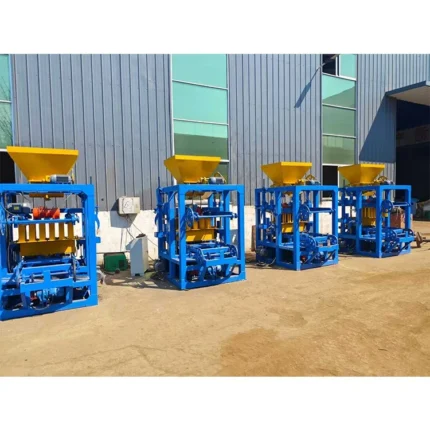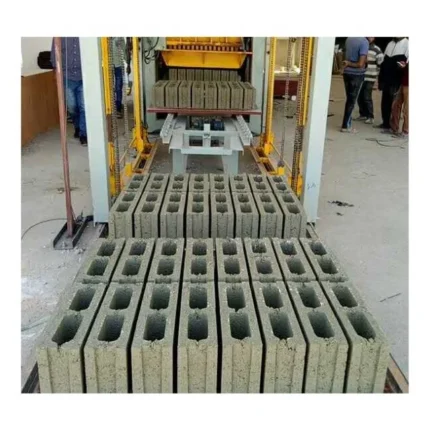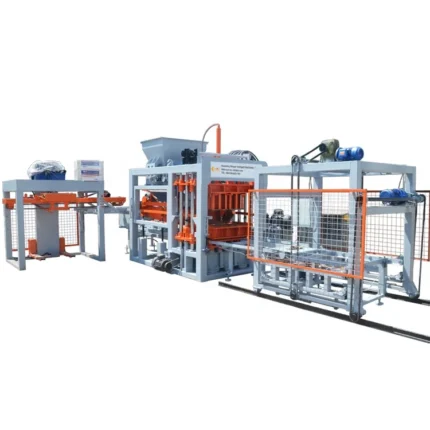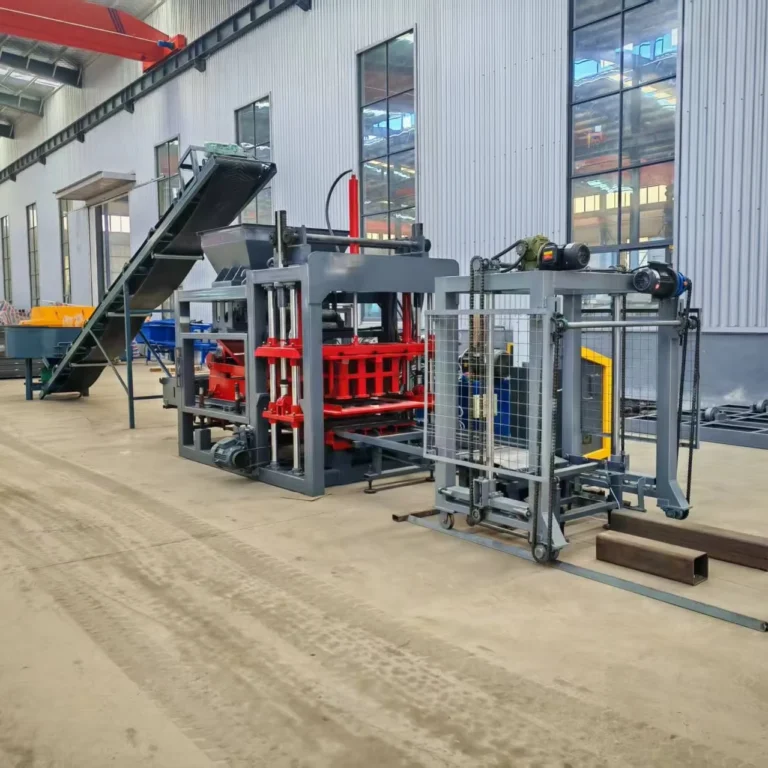


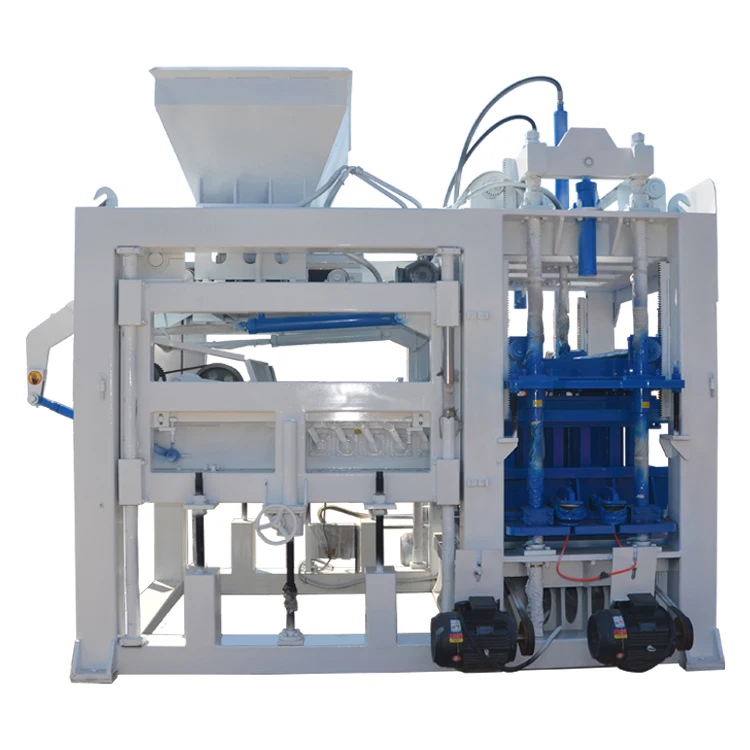


Description
Controlled cycle logic — every pallet feed, vibration burst, and mould release on this QT10-15 is governed by a PLC cabinet rather than left to operator timing, removing the shift-to-shift variation that manual stations produce.
Technical Specifications
| Parameter | Value |
|---|---|
| Model | QT10-15 |
| Product Type | Cement Block Making Machine |
| Control System | PLC control cabinet |
| Hydraulic System | Independent integrated hydraulic station |
| Vibration Mode | Vertical station mode resonance, automatic FM-AM |
| Mould Change | Simple replacement, multi-function with one machine |
| Automation Level | Automatic (pallet feeding, PLC controlled) |
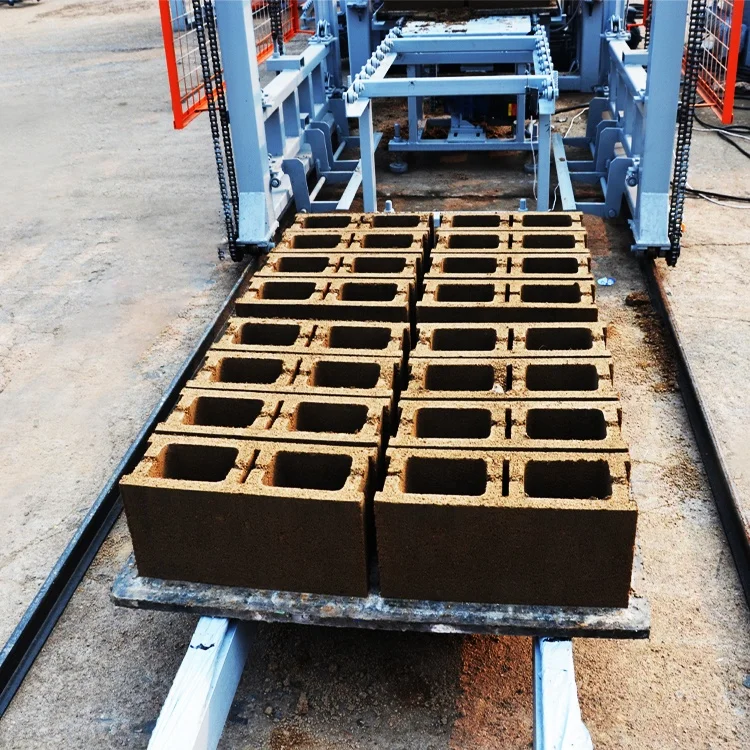
| Output Capacity (400×200×200mm hollow block) | 1800–2400 pcs/hour (10 pcs/mould, 15–20s cycle) |
| Output Capacity (240×115×53mm standard brick) | 8928–11160 pcs/hour (62 pcs/mould, 15–20s cycle) |
| Output Capacity (200×100×60mm paving block) | 5184–6480 pcs/hour (27 pcs/mould, 20–25s cycle) |
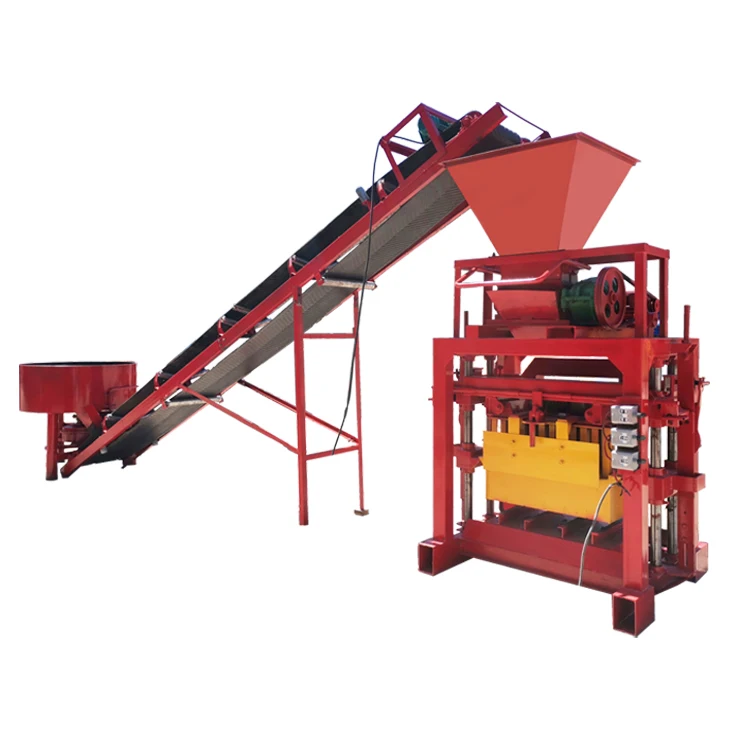
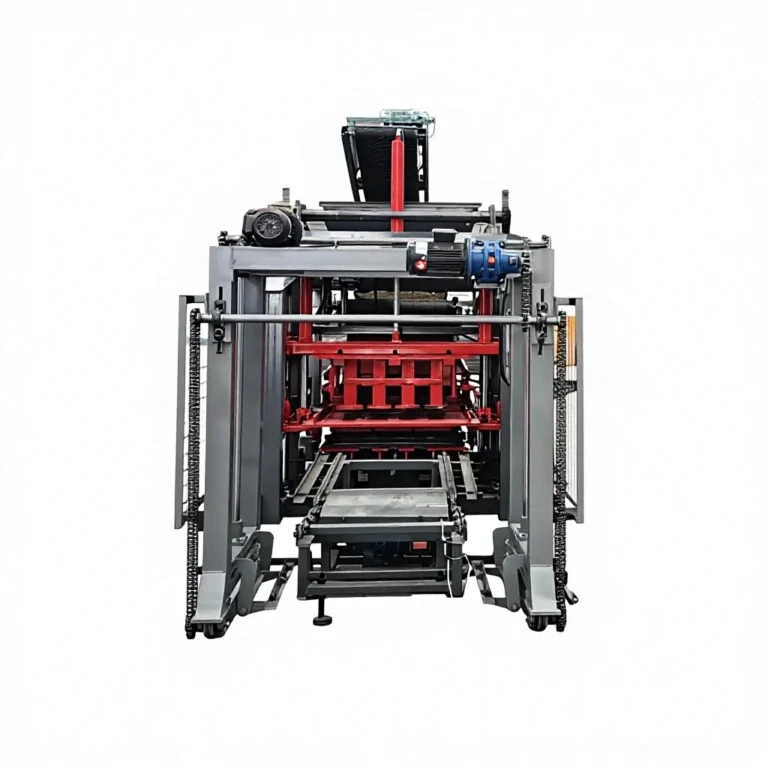
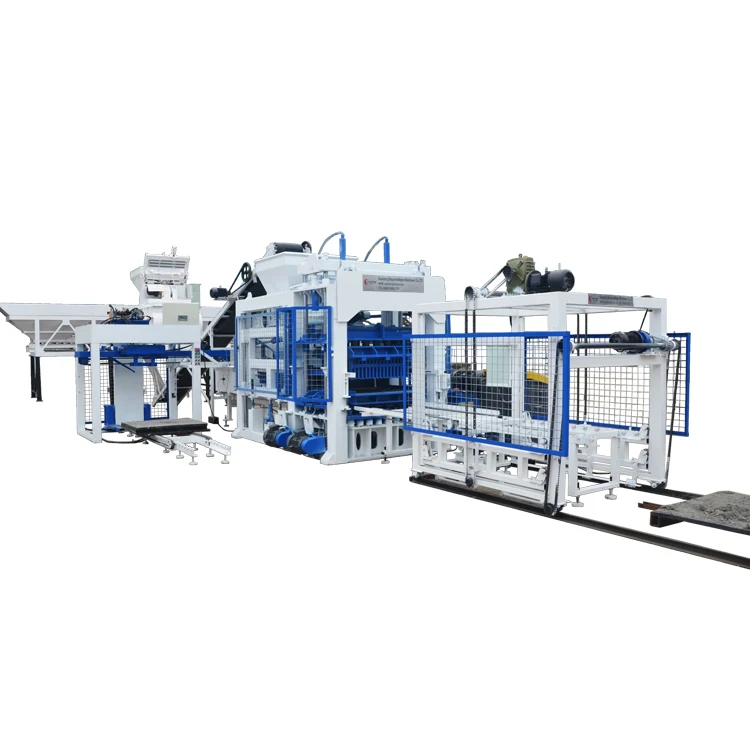
| Components Included | Pallet feed machine, block making machine, storage hopper, conveyor, hydraulic unit, PLC control cabinet |
| Warranty | 1 year for whole machine (excluding spare parts) |
| Voltage & Frequency | (basis to be confirmed) |
| PLC Display Language | (basis to be confirmed) |
| Rated Power (kW) | (basis to be confirmed) |
| Overall Dimensions (L×W×H) | (basis to be confirmed) |
| Net Weight | (basis to be confirmed) |
Application Suitability
| Application | Material or Output |
|---|---|
| Hollow block production for structural walls | Crushed stone, cement, sand, and water mix |
| Multi-cellular brick manufacturing | Lightweight aggregate blends with cement binder |
| Paving block production for walkways and driveways | High-density concrete with fine aggregate grading |
| Standard solid brick for load-bearing construction | Traditional cement-sand ratios with local aggregate |
| On-site block production for housing projects | Locally sourced raw materials matching regional supply |
Why the PLC Language Matters Before the Container Ships
A control interface in the wrong language turns a fully automatic block machine into an expensive manual press.
I once watched a commissioning stall for two full days on an African job site because the PLC display shipped in English when the operators only read French. Every parameter adjustment required a translator on speakerphone while the crew stood around a silent machine. When you invest in an automatic QT10-15 block machine PLC controlled for production consistency, confirming the display language and voltage standard before the unit enters final assembly is the single most cost-effective step in the entire procurement cycle. Skipping it does not cause a mechanical failure — it causes a human one [NEED_CITE: language and voltage confirmation practices in industrial machinery exports].
What the PLC Actually Takes Over From the Operator
On a manual or semi-automatic line, the operator decides when the pallet slides in, how long the vibration runs, and when the mould lifts. Each of those decisions drifts across a shift as fatigue sets in, and the drift shows up as inconsistent block density and uneven curing results. The automatic QT10-15 block machine PLC controlled removes that drift by executing the same timed sequence on every cycle, regardless of who is standing at the panel.
Where Automation Ends and the Operator Still Matters
The PLC governs the press cycle, pallet feeding, and material distribution — but it does not handle raw material batching accuracy upstream or finished block stacking downstream unless those stations are specified as part of the line. A buyer who assumes the PLC covers everything from mixer to curing rack will arrive at commissioning with gaps that require manual labor to fill. Clarifying exactly which stations fall inside the automatic loop and which remain manual is a conversation that belongs in the quotation stage, not on the factory floor [NEED_CITE: scope boundaries in automated block production lines].
Reading the Specifications That Actually Shape Output
The independent integrated hydraulic station sits separate from the main vibration source, which means hydraulic seals and valves are not constantly shaken loose by the press cycle. This isolation extends service intervals and reduces the chance of a mid-shift pressure drop that would produce a batch of under-compressed blocks.
The vertical station mode resonance with automatic FM-AM vibration tuning adjusts the vibration profile based on the mould installed. A hollow block mould and a paving block mould demand different force distributions, and manual tuning introduces the same inconsistency the PLC is there to eliminate.
Mould changeover is described as simple replacement with multi-function capability on one machine. The practical meaning here is that the same press frame can produce hollow blocks at 10 pieces per mould and standard bricks at 62 pieces per mould within a single production day, provided the operator is trained on the swap procedure.
The Cost of Configuring the Line Without the Buyer’s Real Conditions
When a block machine is quoted against a default mix design that the buyer cannot source locally, the vibration settings and hydraulic pressure that produce strong blocks in the factory test will not replicate on arrival. The blocks may look correct coming off the pallet, but compressive strength testing after curing will reveal the gap. Similarly, pallet dimensions chosen without checking the buyer’s existing curing racks and forklifts lead to a situation where fresh blocks cannot be moved to the curing area without being restacked by hand — negating the pallet feed automation entirely [NEED_CITE: material and site condition mismatches in block machinery installations].
Why Buyers Source This Configuration Here
Block machinery is the single production focus, so the press, mould, pallet, and handling stations are specified as one matched system rather than assembled from separate suppliers with incompatible cycle times.
Each configuration is set against the buyer’s actual mix design, local aggregate, and target block format rather than pulled from a catalogue default, which keeps the vibration and hydraulic settings relevant to the material that will actually run.
The automation level is selectable, meaning a buyer can commission the line with PLC-controlled press and pallet feeding now and add automatic stacking or cubing later without replacing the core machine.
Installation includes on-site commissioning and operator training so the crew can run independent production before the technician leaves the site.
Documentation & Verification
- Line layout and capacity calculation stating the block format assumed for each output figure
- Machine specification sheet with hydraulic and electrical schematics matched to confirmed voltage
- PLC display language and voltage confirmation documented before final assembly begins
- Factory test record run on moulds and cycle parameters matching the buyer’s order
- Operation and maintenance manual written for the confirmed control language
- Wear parts and mould list with reorder codes for first replacement planning
Installation, Commissioning & Support
- Foundation plan sized to the QT10-15 footprint with anchor bolt positions marked before machine arrival
- Electrical supply circuit rated for the confirmed power draw with dedicated breaker for the PLC cabinet
- Factory-assembled press shipped with pallet feed and hydraulic unit separated for container loading
- On-site PLC parameter setup matching the buyer’s specific mould set and local aggregate mix
- Operator training covering mould change, cycle adjustment, and fault code reading on the PLC display
- Hydraulic seals and vibration wear parts list provided with first scheduled replacement intervals
What to Prepare Before Requesting a Quotation
Share your target block formats with dimensions, the daily output volume your market requires, and the raw materials available locally with typical grading. Include your site’s voltage, frequency, and preferred PLC display language so the electrical configuration can be locked before production. If you already have curing racks, pallets, or forklifts on site, provide their dimensions so the pallet feed and handling stations are sized to match.
Frequently Asked Questions
Q: How is the quoted output capacity verified, and which block format does each figure assume?
A: Each capacity figure in the specification table is tied to a specific block dimension, mould cavity count, and cycle time range. For example, the hollow block figure assumes a 400×200×200mm format with 10 cavities at 15–20 seconds per cycle. When you request a quotation, the capacity calculation document states the exact format and cycle assumptions so you can compare against your real production target rather than a generic peak number.
Q: What PLC language and voltage configuration is confirmed before shipment?
A: Both the PLC display language and the electrical voltage with frequency and phase are confirmed in writing during the quotation stage and documented in the electrical schematic. The factory test before shipment runs the machine at the confirmed voltage and in the confirmed language so the buyer can verify during video inspection that the interface reads correctly.
Q: Which functions does the QT10-15 handle automatically and which still need an operator?
A: The PLC governs the press cycle, vibration timing, pallet feeding, and material distribution from the storage hopper. Raw material batching upstream and block stacking or cubing downstream remain outside the automatic loop unless those stations are added to the line specification. The quotation clearly separates automatic and manual stations so there are no gaps discovered at commissioning.
Q: How long does a mould change take, and does the PLC store parameters per mould?
A: The mould replacement is designed for simple swap on a single machine frame, allowing production to shift from hollow block to paving block format within a working shift. The PLC stores cycle parameters associated with each installed mould so the operator does not need to manually re-enter vibration duration and pressure settings each time a format change occurs.
Q: What is the upgrade path from this configuration to higher automation?
A: The QT10-15 can be commissioned with PLC-controlled press and pallet feeding first, then expanded with automatic stacking, curing rack handling, and cubing stations as production volume justifies the investment. Because the press and control architecture are designed for modular addition, upgrading later does not require replacing the core machine or rewriting the PLC program from scratch.