


Description
Consistent Cycle Control — PLC parameters tied to each block format rather than one default setting for every run.
Technical Specifications
| Parameter | Value |
|---|---|
| Model | QT10-15 |
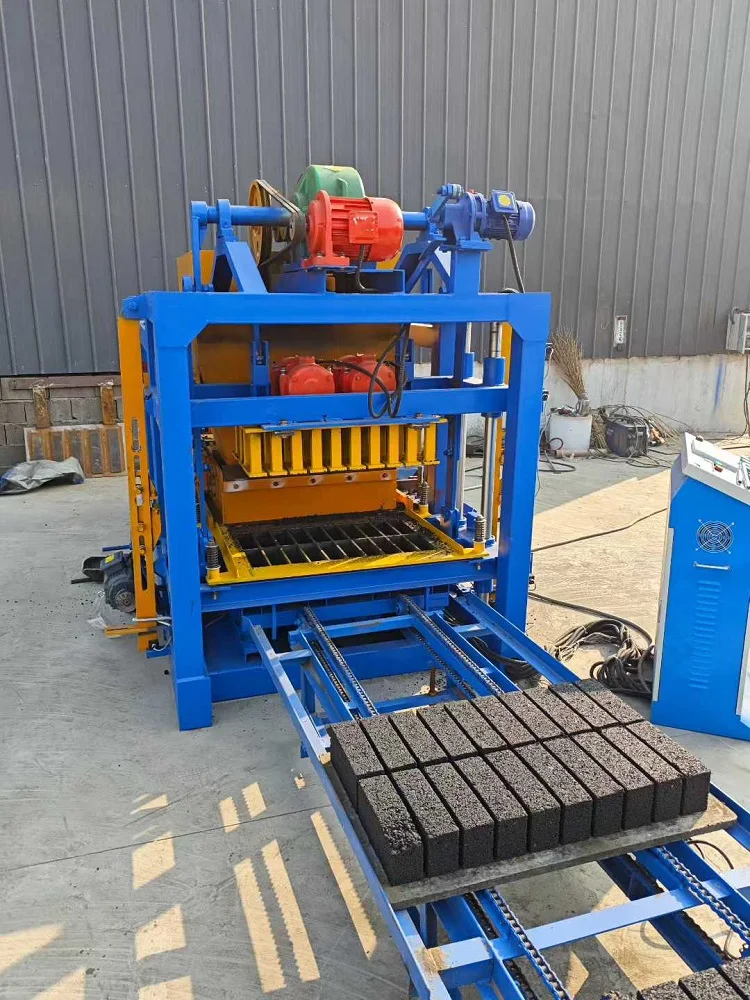
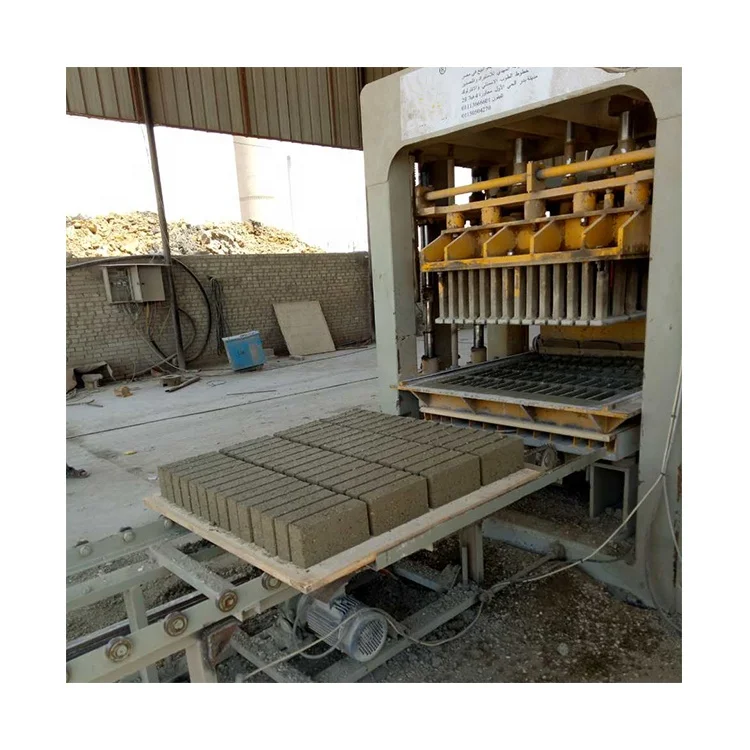
| Product Type | Automatic Hydraulic Concrete Block Making Machine |
| Rated Power | 44 kW |
| Hydraulic Pressure | 16–21 MPa |
| Main Vibration Form | Platform Vibration |
| Molding Cycle | 15–20 seconds |
| Pallet Size | 1100 × 900 mm |
| Overall Dimensions (L×W×H) | 9350 × 2320 × 2950 mm |
| Net Weight | 10000 kg |
| Voltage & Frequency | According to buyer’s local supply (basis to be confirmed) |
| Control System | PLC (display language to be confirmed) |
| Output — Hollow Block | 18000 pcs/day based on 400×200×200 mm, 10 pcs/mould, 16–20 s cycle |
| Output — Porous Block | 67200 pcs/day based on 240×115×90 mm, 28 pcs/mould, 15–20 s cycle |
| Output — Standard Solid Block | 124800 pcs/day based on 240×115×53 mm, 52 pcs/mould, 15–17 s cycle |
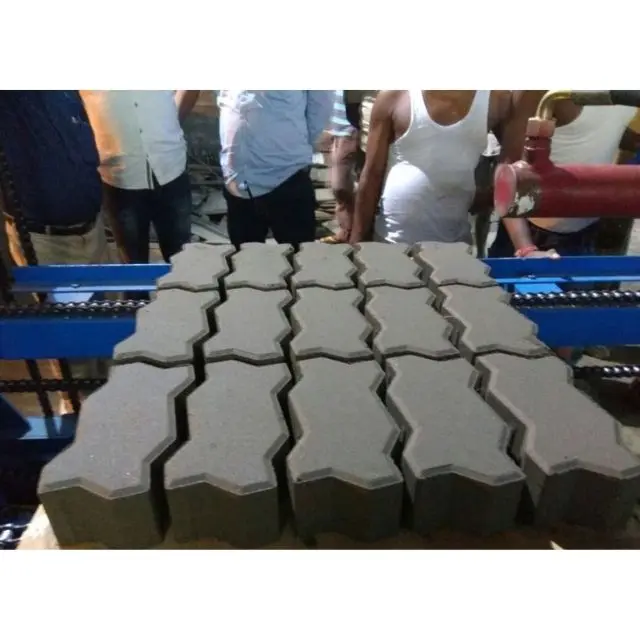
| Supported Mould Formats | Hollow, porous, solid, pavers, interlocking, curbstone, colored pavers |
| Automation Level | Fully automatic |
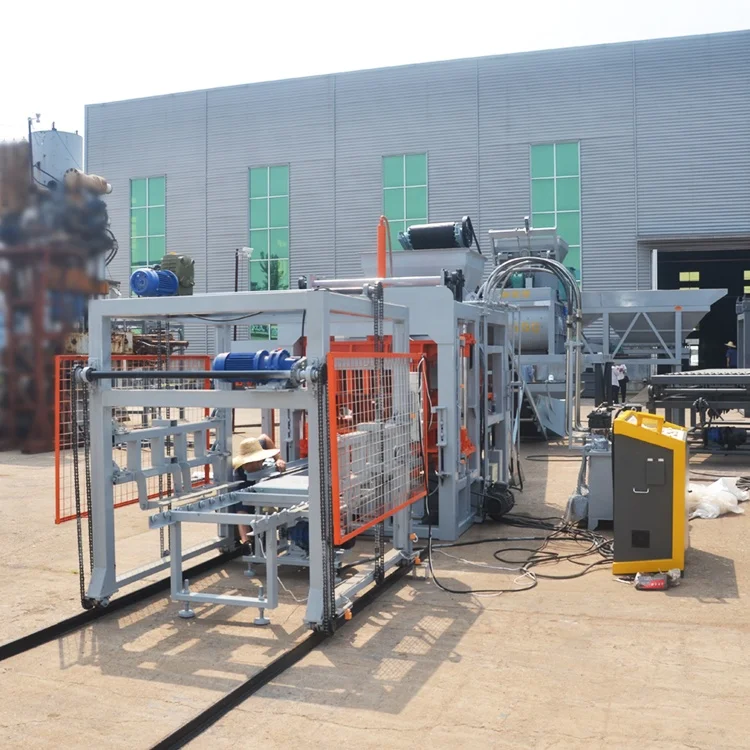
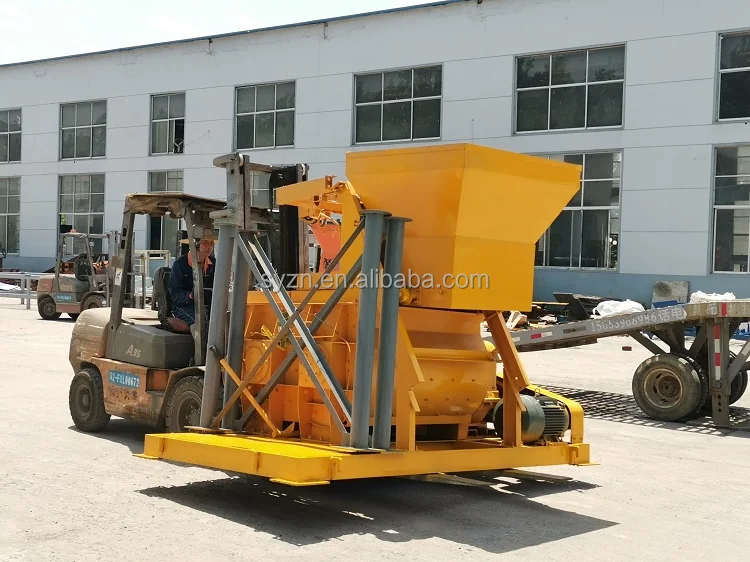
| Line Configuration | PL1200 batching machine, JS750 mixer, 8 m belt conveyor, stacker |
| Color Layering | Available when color feeder is added |
| Warranty | 1 year for whole machine, excluding wear parts |
Application Suitability
| Application | Material or Output |
|---|---|
| Hollow block plant producing structural units | Crushed stone, sand, cement blended for load-bearing walls |
| Porous and permeable block production | Fly ash, slag and graded aggregate for drainage formats |
| Interlocking paver and curbstone runs | Cement, sand and fine gravel with color pigment option |
| On-site production for housing developments | Locally sourced aggregate and cement reducing transport cost |
| Multi-format concrete product manufacturer | Switching between hollow, solid and paver moulds on one line |
Why the PLC Language Must Be Settled Before the Machine Ships
A control panel the operator cannot read turns an automatic block machine PLC controlled line into a manual one.
I watched a Middle East buyer take delivery of a QT10-15 unit where the HMI defaulted to Chinese characters. The local crew spent three days guessing menu labels before commissioning could continue. The hydraulic pressure and vibration timing were correct — the machine was ready — but the interface language mismatch stalled the entire project start. [NEED_CITE: common causes of commissioning delays on exported industrial equipment]
When a plant owner is upgrading from manual or semi-automatic operation, the whole point of investing in an automatic block machine PLC controlled system is to remove guesswork from the operator. If the operator cannot confirm cycle parameters on screen, that investment is wasted. Voltage, frequency, phase and display language must be written into the purchase confirmation the same way mould format and pallet size are.
What the PLC Actually Removes from the Operator
The QT10-15 stores a separate parameter set for every mould the buyer runs. When the operator selects a hollow block programme, the PLC calls up the vibration duration, hydraulic pressure target and feed timing that match that format. Switching to a porous block programme loads a different set — vibration intensity and dwell change because the mix and density requirement are different. The operator is no longer adjusting timers by feel.
Batch-to-batch consistency depends on this. A hollow block that cures to the correct compressive strength on Monday must hit the same number on Friday, and the automatic block machine PLC controlled logic is what holds those variables steady across shifts, operators and ambient temperature changes.
The Automation Sequence From Raw Feed to Stacked Output
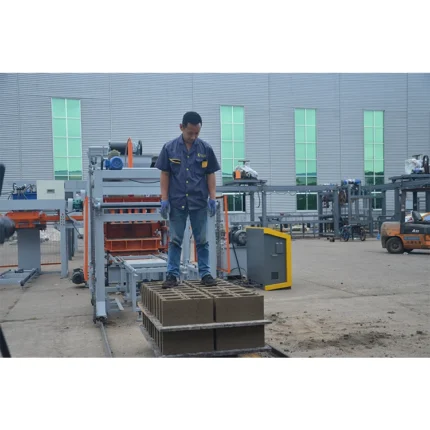
The line starts with the PL1200 batching machine weighing each material fraction before discharge into the JS750 mixer. Mixed material travels on the 8 m belt conveyor to the hopper above the press. The PLC monitors hopper level and triggers the feed cycle, so the mould box receives a measured charge every time. After pressing, the wet block on its pallet moves to the stacker, which lifts and indexes pallets into a curing rack row.
This sequence matters because any station that runs slower than the press creates a bottleneck. The conveyor must deliver before the hopper empties; the stacker must clear before the next pallet exits. [NEED_CITE: block production line synchronization and bottleneck analysis] When every station is timed against the same molding cycle, the press is never left idling.
How Pressure, Vibration and Pallet Size Shape the Block
Hydraulic pressure in the 16–21 MPa range works together with platform vibration to compact the mix inside the mould box. Higher pressure alone does not guarantee stronger blocks — the vibration must fluidise the mix so particles settle densely before the head applies full force. The QT10-15 PLC stores the vibration frequency and amplitude suited to each format, which is why the same machine can produce a lightweight porous block and a dense curbstone without manual recalibration.
The 1100 × 900 mm pallet is not an arbitrary choice. It must fit the curing racks the buyer already has or plans to build, and the forklift tine spacing used to move racked pallets into the yard. Ordering a pallet size without confirming these downstream dimensions means blocks may need to be re-stacked by hand before curing — exactly the labour the automation was meant to eliminate.
Mould change time is the practical test of format flexibility. If swapping from hollow to paver mould takes most of a shift, the buyer is effectively running a single-format plant and paying for capability that never gets used. The QT10-15 mould clamping arrangement is designed so that one trained operator can complete a changeover within a routine maintenance window.
The Cost of Skipping Configuration Details
Buyers who confirm price before voltage often discover at commissioning that the motor winding does not match local supply. Rewinding or replacing a 44 kW motor on site adds weeks, not days, to project start-up. The same applies to PLC display language, control wiring colour codes and safety relay standards required by the destination market. [NEED_CITE: international electrical compliance standards for industrial machinery exports]
Pallet handling is another area where omissions surface late. If the quotation covers the press but not the stacker, the buyer must organise manual pallet removal and stacking — a two-person task every 15–20 seconds. The automation advantage disappears the moment blocks leave the mould.
Why Buyers Choose This Supplier for Automatic Lines
Block machinery is the sole product focus, which means the press, mould, pallet and handling equipment are specified as a single matched system. There is no separate vendor for the stacker and another for the mixer — every station is timed to the same cycle.
Configuration is set against the buyer’s actual mix design and local aggregate, not a catalogue default. The hydraulic pressure and vibration parameters loaded into the PLC reflect the material the buyer will actually feed. [NEED_CITE: effect of local aggregate gradation on block compressive strength]
Automation level is selectable. A buyer can take delivery with semi-automatic pallet handling and add the full stacking and cubing module later, keeping capital expenditure aligned with cash flow.
Mould design covers the formats the buyer’s market sells, including custom profiles drawn to buyer specifications. Moulds and hydraulic wear parts are listed in the documentation package so replacements are available from the first run.
Installation and commissioning include operator training at the buyer’s site, with the PLC language and safety procedures walked through in person.
Documentation & Verification
- Capacity calculation stating the block format behind every daily output figure
- Machine specification sheet confirming PLC language, voltage and frequency before production
- Hydraulic and electrical schematic for local maintenance teams and future upgrades
- Mould drawing pack with format list and changeover procedure per mould set
- Factory test record run on the buyer’s selected block format before crating
- CE declaration documentation where required by destination market regulations
Installation, Commissioning & Support
- Foundation plan sized to the 9350 × 2320 mm footprint and 10000 kg operating weight
- Dedicated 44 kW power circuit with voltage and phase matching the confirmed PLC and motor specification
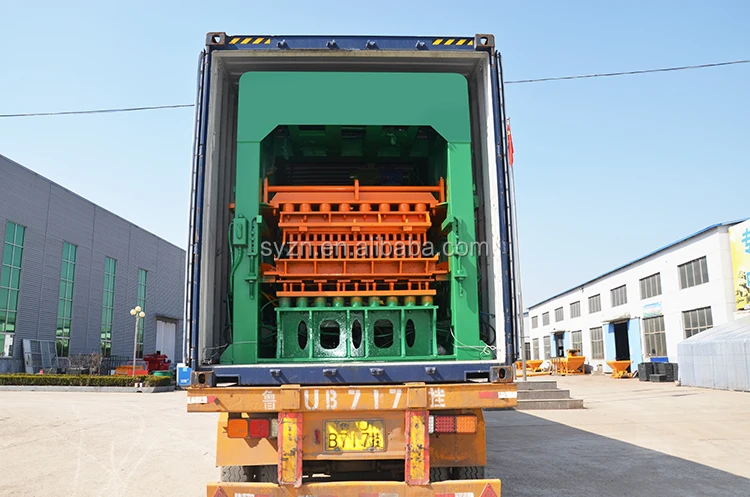
- Machine dismantled into press, mixer and conveyor modules for container loading, reassembled on site
- First-run commissioning with PLC parameters set to the buyer’s block format and mix design
- Operator training covering HMI navigation, mould change and safety interlock checks
- Wear parts list with hydraulic seals and mould liner reorder codes supplied at handover
- Scheduled maintenance intervals tied to vibration motor bearing and hydraulic oil filter replacement
What We Need to Quote Accurately
Send the block formats your market sells, the daily volume you need for each, and a sample or description of your local aggregate. Confirm your site voltage, frequency and phase, plus the language your operators need on the PLC display. If you already have curing racks or forklifts, share the pallet dimensions they accept so the line is configured around them.
Frequently Asked Questions
Q: How is daily output verified per block format, and what cycle time does each format actually run at?
A: Every output figure we quote names the block format, mould cavity count and cycle time behind it — for example, 18000 hollow blocks per day based on a 400×200×200 mm block at 10 per mould with a 16–20 second cycle. We provide a written capacity calculation so buyers can verify against their own shift length and target.
Q: What PLC control language and HMI interface options are available for the operator?
A: The display language is confirmed in writing before production begins. We have seen commissioning stall when the default language did not match the operator team, so this is part of our pre-production checklist alongside voltage and frequency confirmation.
Q: Can the QT10-15 start semi-automatic and upgrade to full stacking and cubing later?
A: Yes. The automation level is selectable at order stage. A buyer can begin with manual pallet handling and add the automatic stacker and cubing module when production volume justifies the investment, without replacing the press or PLC.
Q: How are voltage, frequency and motor configuration confirmed before shipment?
A: We require written confirmation of site voltage, frequency and phase before the motor and control panel are built. This avoids the situation where a 44 kW motor arrives wound for a supply standard that does not exist at the buyer’s site.
Q: What mould change system is included, and how long does a format changeover take?
A: The QT10-15 uses a clamping arrangement that lets one trained operator swap moulds within a standard maintenance window. We supply the changeover procedure in the documentation pack and cover it during on-site training so the crew can practice before the first live production run.