
Description
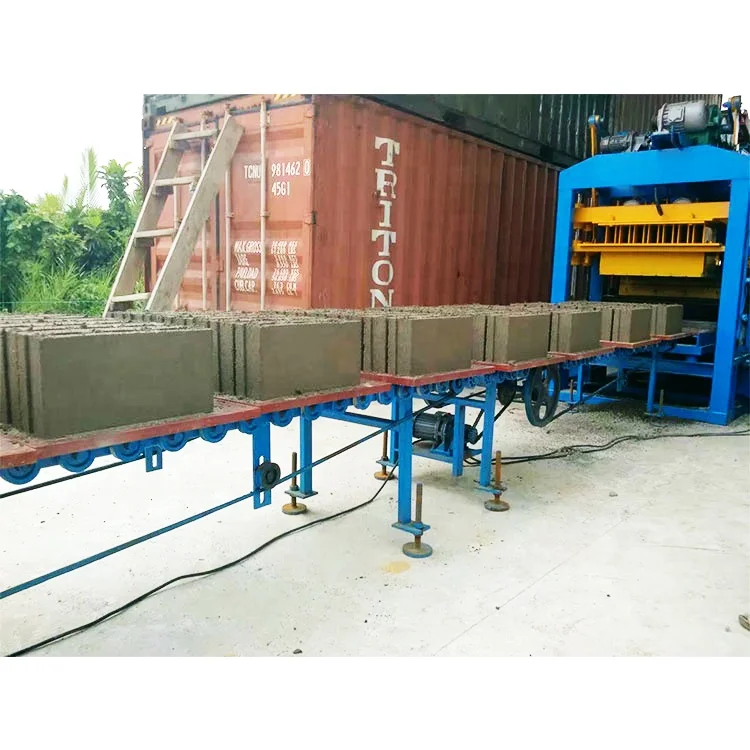
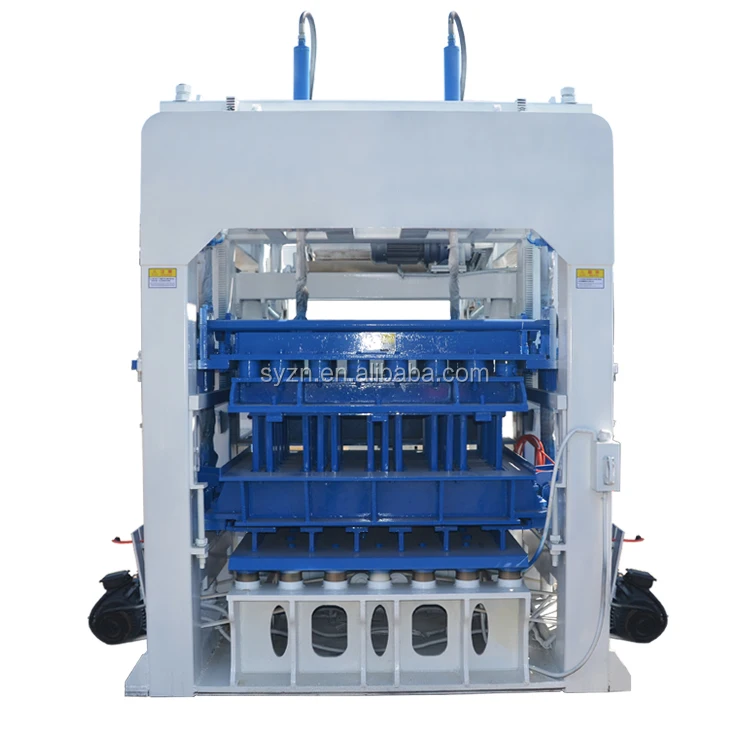
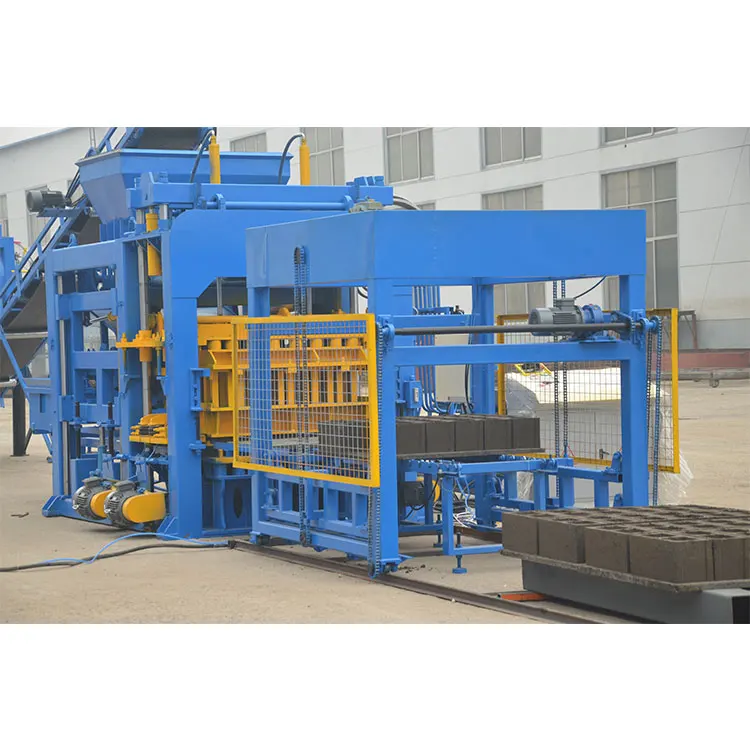
Integrated System Design — the QT12-15 is specified as one matched unit of press, mould, pallet and control logic, so the PLC cycle times align with your downstream stacking rhythm rather than leaving the press waiting.
Technical Specifications
| Parameter | Value |
|---|---|
| Model | QT12-15 |
| Product Type | Automatic Concrete Block Making Machine |
| Overall Dimensions (L×W×H) | 9350 x 2520 x 2950 mm |
| Total Weight | 12000 kgs |
| Total Power | 50.7 kW |
| Rated Pressure | 21 MPa |
| Main Vibration Form | Platform Vibration |
| Vibration Frequency | 2800–4500 r/min |
| Vibration Acceleration | 15–20 g |
| Exciting Force | 120 kN |
| Fixed Brick Height | 50–200 mm |
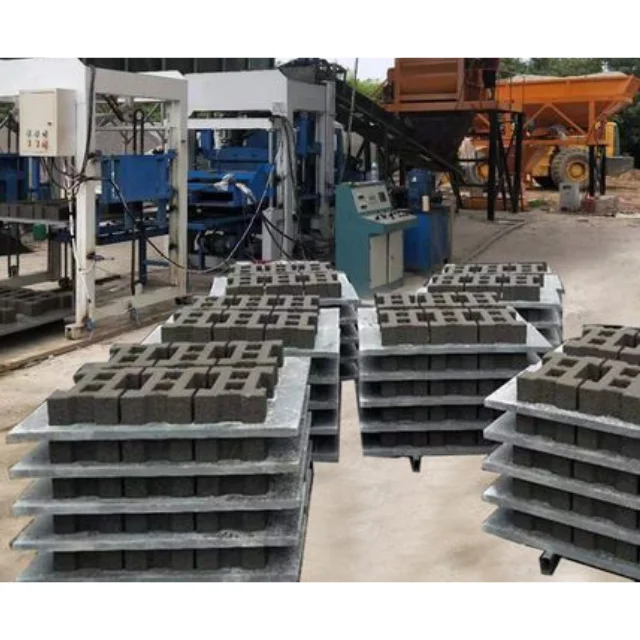
| Pallet Size | 1350 x 850 mm |
| Molding Cycle | 15–25 s |
| Control System | PLC controlled (mechanical hydraulic synthesis) |
| Automation Level | Automatic |
| Frame Structure | Gantry frame type, super steel, shock resistant |
| Material Feeding | Net wave swing type feeding device |
| Mould Type | Cartridge type welding mould, manganese steel, carburizing and quenching |
Application Suitability
| Application | Material or Output |
|---|---|
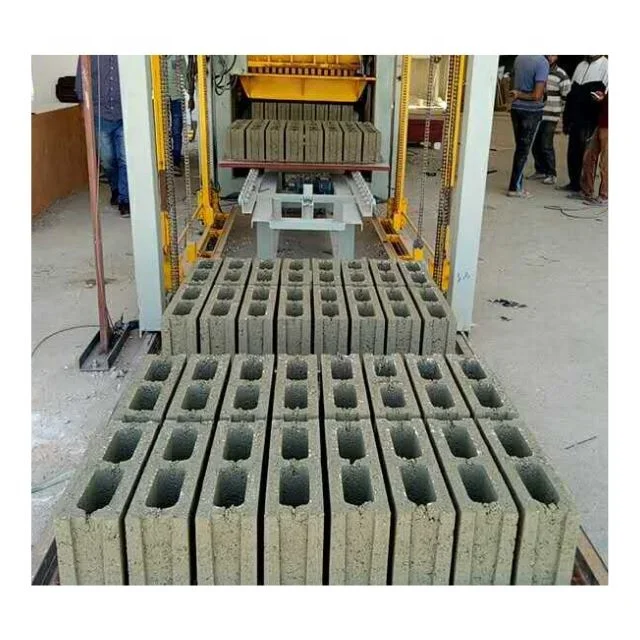
| Hollow Block Production | 390×190×190 mm, 12 pcs/mould, 1720–2160 pcs/h (basis: 15–25 s cycle) |
| Porous Block Production | 240×115×90 mm, 35 pcs/mould, 5040–6300 pcs/h (basis: 15–25 s cycle) |
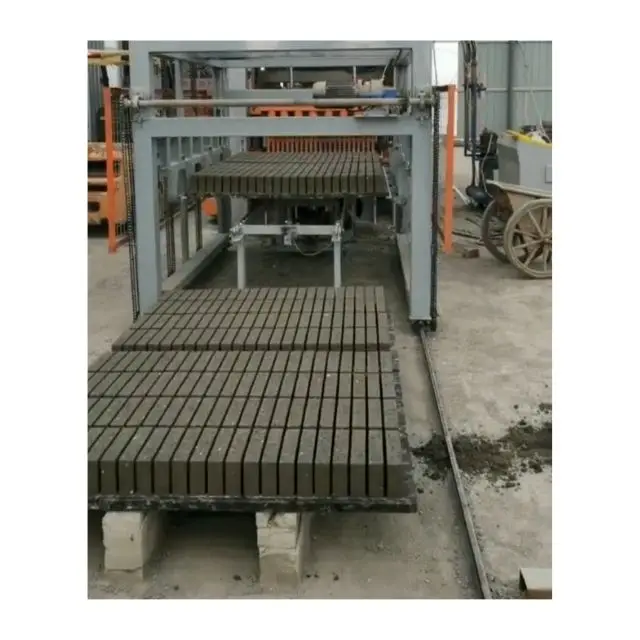
| Standard Solid Block Production | 240×115×53 mm, 62 pcs/mould, 13100–14800 pcs/h (basis: 15–25 s cycle) |
| Interlock and Paving Blocks | Custom cartridge moulds matched to buyer drawings |
| Fly Ash Block Production | Local aggregate and cement mix design verified before configuration |
What the "Automatic" Label Hides From Your Shift
An automatic block machine PLC controlled system only removes labour if the control logic actually matches your pallet cycle and curing flow.
Plant owners often pay for full automation and still find operators manually pulling pallets or waiting for the stacker to clear a fault. The bottleneck simply moves downstream. With this QT12-15 automatic block machine PLC controlled setup, the emphasis is on configuring the PLC sequence so that pallet feeding, press cycle, stacking and cubing run as a single timed loop [NEED_CITE: PLC synchronization standards for block production lines]. When one station slows, the press must hold — not overproduce into a jam.
How PLC Logic Removes Operator Guesswork
The QT12-15 uses a PLC-controlled mechanical hydraulic synthesis that manages the full sequence from material feed through to block ejection. This automatic block machine PLC controlled architecture eliminates the manual timing decisions that cause inconsistent block density across a shift. Operators set parameters once per mould format, and the system repeats the exact vibration duration, pressure application, and feed volume on every cycle.
Automation Levels and the Upgrade Path
A buyer can start with semi-automatic pallet handling and add automatic stacking and cubing later as production volume justifies the investment. The PLC architecture supports this upgrade path without replacing the core control cabinet. Remote diagnostics can be configured so that fault codes and cycle logs are accessible off-site, reducing the response time when something interrupts production [NEED_CITE: remote diagnostic capability in industrial PLC systems].
Reading the Specs That Actually Matter
The 21 MPa rated pressure combined with 120 kN exciting force at 2800–4500 r/min determines whether your blocks reach the compressive strength your market requires — the QT12-15 delivers blocks exceeding 15 MPa when the mix design is matched to the vibration profile. The net wave swing feeding device ensures uniform material distribution across the mould cavity, which prevents weak spots in larger formats like the 390×190×190 mm hollow block. The 1350 × 850 mm pallet size must align with your curing rack dimensions and forklift capacity; specifying this wrong means reshuffling your entire curing area after the machine arrives. The cartridge-type manganese steel mould with carburizing and quenching treatment holds dimensional tolerance over extended production runs, keeping mould change time within a manageable window per shift.
The Cost of Skipping the Voltage Conversation
A machine configured for the wrong voltage or frequency will not commission on arrival — the PLC display language is another frequent oversight that leaves local operators unable to read fault codes or adjust cycle parameters. These delays compound into weeks of idle equipment on site while parts or firmware updates are shipped internationally [NEED_CITE: voltage and frequency standards by export market]. Confirming these details before production starts costs nothing; discovering them at the container costs you an entire project timeline.
Why Source This Configuration Here
Block machinery as a single focus means the QT12-15 press, mould, pallet, and handling equipment are specified as one matched system. The configuration is set against your actual mix design, local aggregate, and target block format rather than a catalogue default. Mould design covers the formats your market actually sells, including custom drawings for interlock or kerbstone profiles. Automation level is selectable so the line can grow with your output. Installation includes operator training so your team understands the PLC interface before the technician leaves site.
Documentation & Verification
- Line layout showing pallet flow and cycle time matching for the QT12-15 press
- Capacity calculation stating molding cycle assumed per block format
- PLC program documentation with control language confirmation before shipment
- Hydraulic and electrical schematic for the 50.7 kW system
- Factory test record on your target block format before dispatch
- Wear parts and cartridge mould list for long-term planning
Installation, Commissioning & Support
- Foundation plan sized to the 9350 mm machine length and 12000 kg static load
- Dedicated power circuit for the 50.7 kW total draw confirmed against local supply
- PLC display language flashed to operator language before container loading
- First-run parameter tuning against your local aggregate and cement mix
- Operator training on mould change procedure and cartridge alignment
- Wear parts schedule for manganese steel mould surfaces and hydraulic seals
Before You Send the Inquiry
Provide your target block formats with daily output expectations, your local aggregate type and cement availability, and your existing pallet dimensions if you plan to reuse curing racks. Confirm the local voltage and frequency at the installation site, and specify the PLC display language your operators will need. If you have upstream batchers or downstream stackers already in place, include their model and cycle times so the line integration can be planned from the first quotation.
Frequently Asked Questions
Q: How is the output capacity verified per block format on the QT12-15?
A: Each capacity figure is calculated from the molding cycle range of 15–25 seconds and the number of cavities per mould. Hollow blocks at 12 pcs/mould yield 1720–2160 pcs/h, while standard blocks at 62 pcs/mould yield 13100–14800 pcs/h. The actual figure depends on your mix design and the cycle time your target strength requires.
Q: What PLC language options are available for the control panel?
A: The PLC display language is confirmed before production and flashed to your required language before shipment. This prevents the common commissioning delay where operators cannot read fault codes or adjust parameters on site. Common options include English, Spanish, French, Arabic, and Russian.
Q: Can the automation level be upgraded after initial installation?
A: Yes. The QT12-15 supports starting with semi-automatic pallet handling and upgrading to fully automatic stacking and cubing later. The PLC architecture accommodates additional I/O modules and sequence logic without replacing the core control cabinet.
Q: How long does a mould change take, and what formats fit the cartridge system?
A: The cartridge-type welding mould is designed for faster changeover than bolt-on alternatives. Available formats include hollow, porous, standard solid, interlock, and paving blocks, with custom moulds built to buyer drawings for specialised profiles.
Q: How does the QT12-15 integrate with upstream and downstream equipment?
A: The recommended line includes a PL1200 batching machine, JS500 or JS750 mixer, and 8 m conveyor belt feeding into the press. The PLC coordinates the feed cycle with the press timing so the hopper refills during the vibration phase, minimising press idle time between cycles.