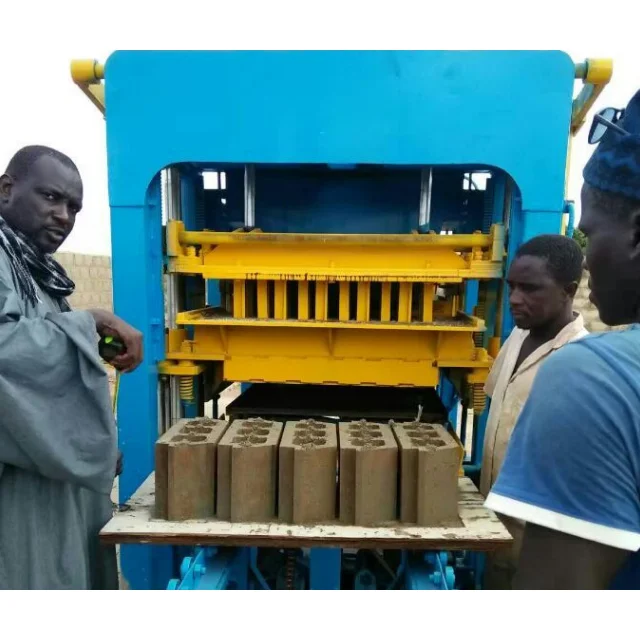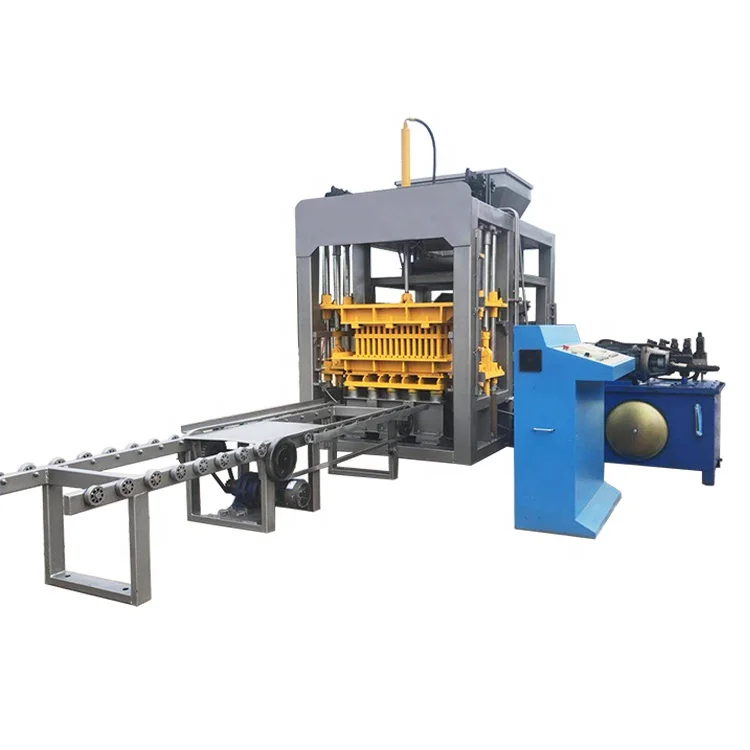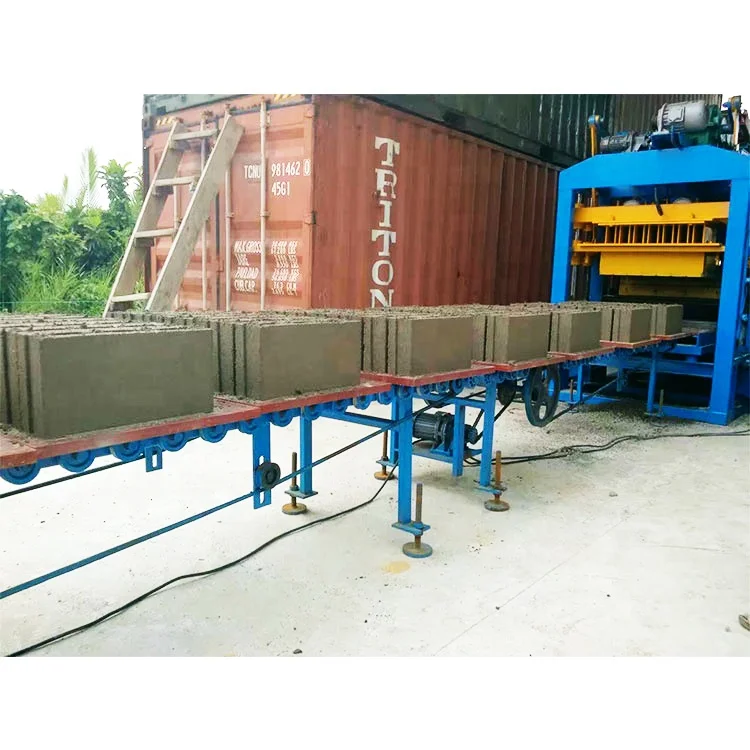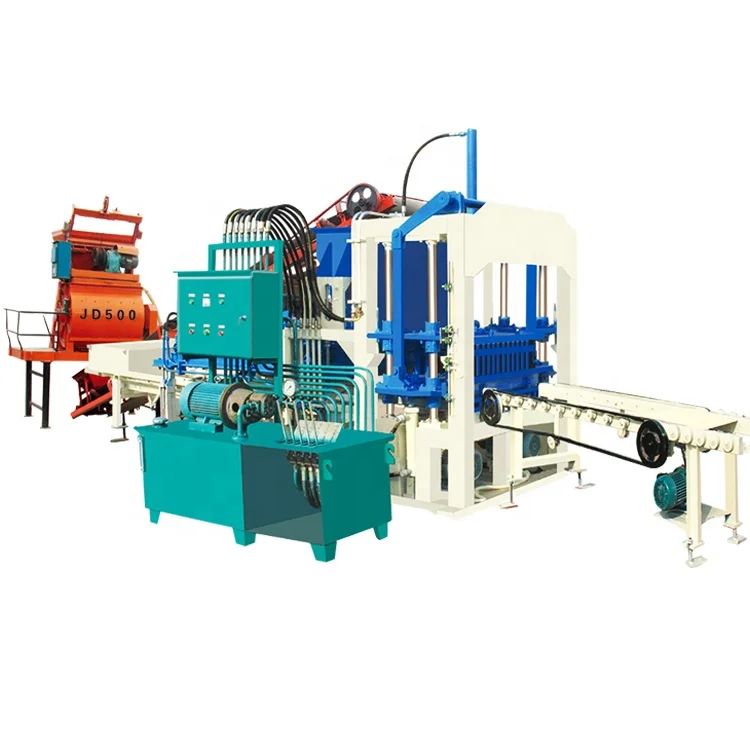

Description
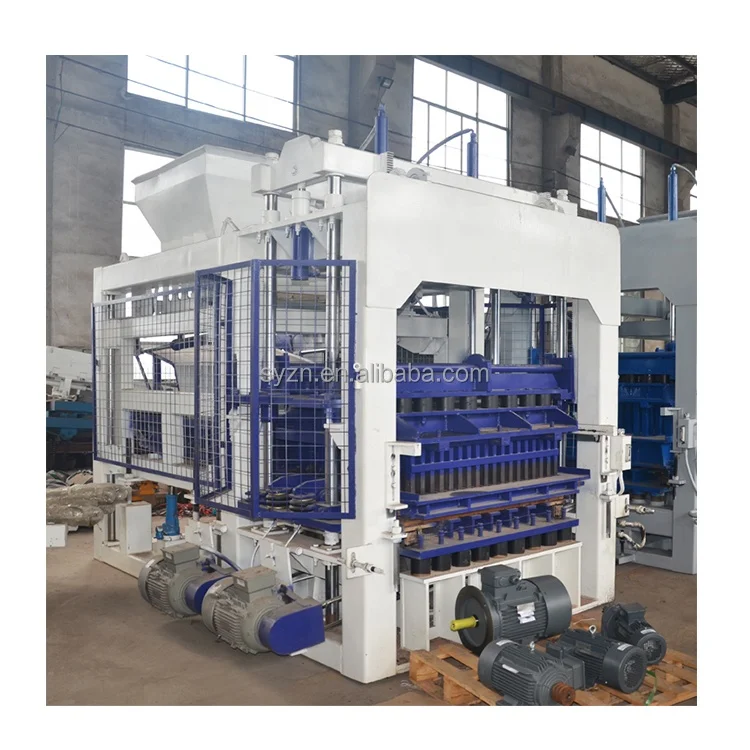
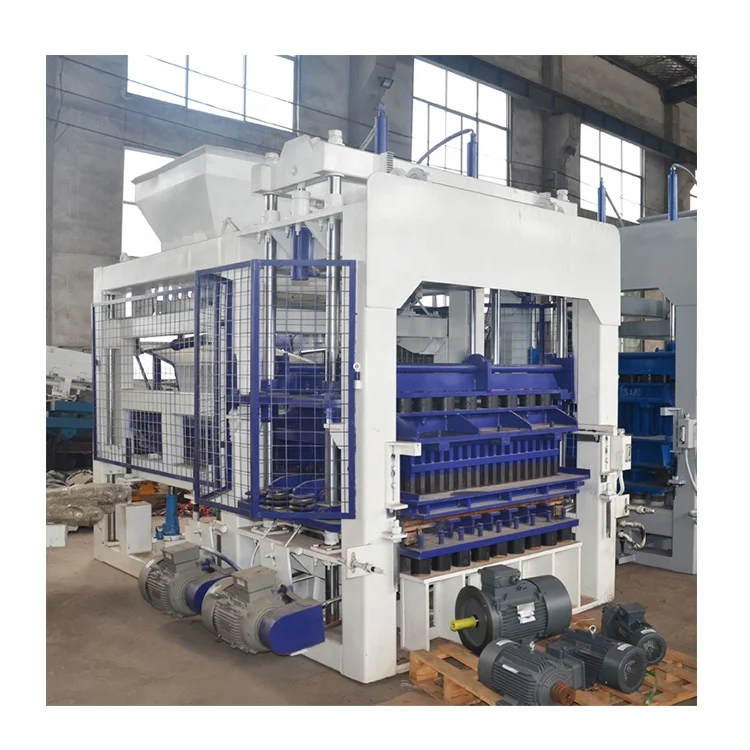
Automation Configuration Locked — the QT12-15 control logic and pallet handling sequence are confirmed against your plant’s existing curing layout before the press leaves the factory, so the automatic line runs as a coordinated system from day one.
Technical Specifications
| Parameter | Value |
|---|---|
| Model | QT12-15 |
| Product Type | Fully Automatic Hydraulic Block Making Machine |
| Rated Power | 45.7 kW |
| Voltage & Frequency | 380V or customized to buyer requirement (frequency to be confirmed with supplier) |
| Control System | PLC (Siemens referenced — brand and model to be verified with supplier) |
| Overall Dimensions (L×W×H) | 9350 × 2520 × 2950 mm |
| Net Weight | 12 T |
| Hydraulic Pressure | 21 MPa |
| Pallet Size | 1350 × 850 × 40 mm |
| Output — Hollow Block 400×200×200 mm | 12 pcs/mould, 2800 pcs/hour, 22400 pcs/day (basis to be confirmed) |
| Output — Hollow Block 400×150×200 mm | 16 pcs/mould, 3840 pcs/hour, 30720 pcs/day (basis to be confirmed) |
| Output — Solid Brick 240×115×53 mm | 62 pcs/mould, 14000 pcs/hour, 112000 pcs/day (basis to be confirmed) |
| Automation Level | Full Automatic |
| Warranty | 1 year |
| Standards | ISO 9001:2008, CE |
Application Suitability
| Application | Material or Output |
|---|---|
| High-capacity hollow block production | Crushed stone, cement, and sand mixes for 400×200×200 mm and 400×150×200 mm formats |
| Solid brick manufacturing for masonry | Cement-bound aggregate for 240×115×53 mm standard bricks |
| Large-scale paver and block plant expansion | Continuous daily output across multiple mould formats on a single press |
| Building material supplier adding format range | Quick mould changeovers between hollow and solid formats within the same shift |
Why the PLC Language Question Must Come Before the Price
A control panel in the wrong language stops the entire line on the first day.
I once stood in front of a QT12-15 automatic block machine PLC controlled unit in a Latin American plant while the local operator stared at Chinese characters on the touchscreen. The commissioning schedule collapsed before the first mould was installed [NEED_CITE: language configuration delays in exported PLC-controlled machinery]. Voltage mismatches cause similar standstalls — a 380V/50Hz machine arriving in a 60Hz market will run the hydraulic pump at the wrong speed, and the vibration timing will drift from the programmed cycle. These are not warranty claims; they are specification failures that happen before the crate is opened. The automatic QT12-15 block machine PLC controlled system must have its display language, voltage, and frequency locked in writing before production begins.
What the PLC Actually Removes from the Operator
The PLC on this press manages the vibration sequence, hydraulic pressure application, and cycle timing across every format loaded into the system. For a plant owner moving from semi-automatic or manual operation, the shift means the operator no longer decides when to apply pressure or how long to vibrate — the program does. Batch-to-batch consistency then depends on whether the program was written against your specific mix design and block format, not a generic default. The automatic QT12-15 block machine PLC controlled logic should be reviewed and tested at the factory using your target block dimensions before dispatch.
Where Automation Stops and the Rest of the Line Begins
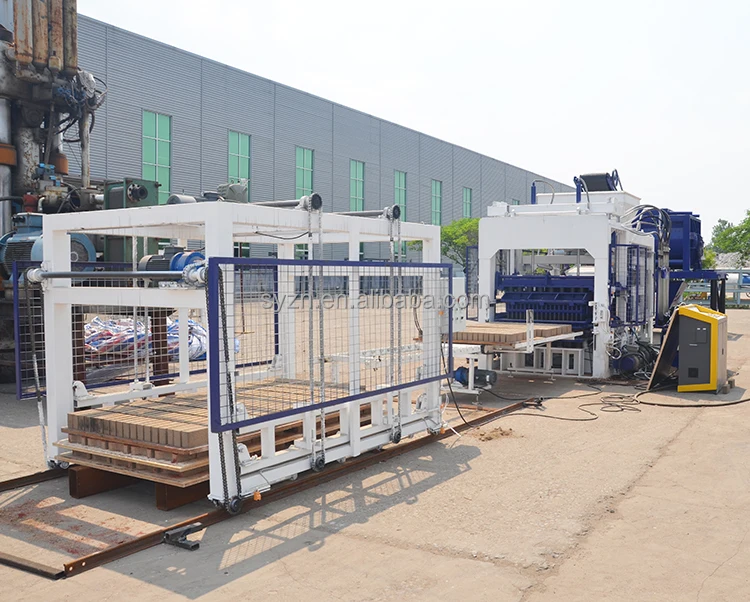
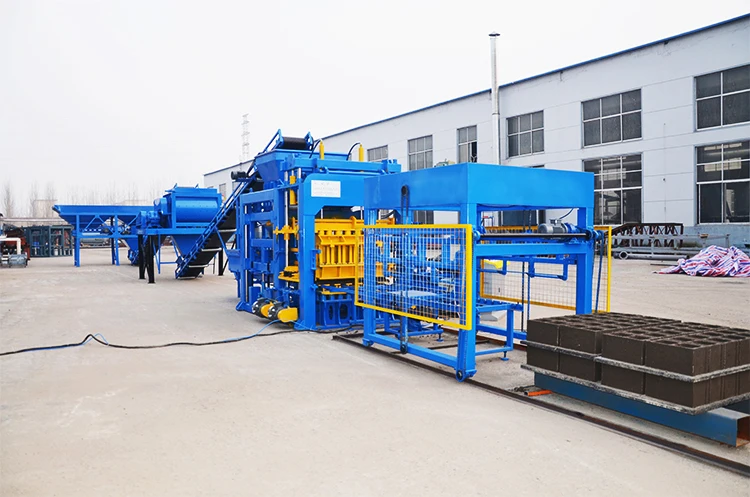
A press running full automatic cycles means nothing if pallets are still being moved by hand from the curing rack back to the feed station. The QT12-15 is configured as a full automatic press, but the surrounding stations — pallet feeding, stacking, cubing, and curing rack handling — must be specified as part of the same line. [NEED_CITE: block production line integration between press cycle time and pallet return speed] If the pallet return conveyor cannot match the press cycle, the press waits, and the quoted hourly output becomes theoretical. Confirm whether automatic stacking and cubing are included in your quotation or listed as separate line items.
Reading the Specifications That Matter on Site
The 21 MPa hydraulic pressure rating determines how tightly the mix is compacted before vibration takes over. Higher pressure combined with matched vibration force produces denser blocks with consistent compressive strength across the pallet. The pallet size of 1350 × 850 × 40 mm defines what your curing area must accommodate — if your existing forklifts and curing racks were built around a different pallet dimension, the entire downstream layout needs adjustment before the press arrives. The 45.7 kW rated power draw requires a dedicated circuit sized for starting current, not just running load. Mould change time and vibration force rating are not listed in the source documentation and must be confirmed directly, because these two values determine whether your format flexibility is real or just a line on the quotation.
The Cost of Skipping the Configuration Conversation
When pallet size is chosen without checking the buyer’s curing area, blocks stack unevenly on racks designed for a different footprint, and forklift operators spend extra time repositioning loads. When voltage is assumed rather than confirmed, the hydraulic pump motor overheats within the first week because it is running outside its rated frequency. [NEED_CITE: motor overheating caused by frequency mismatch in exported hydraulic machinery] These are not rare failures — they are the predictable result of skipping a thirty-minute confirmation call before the machine enters production.
Why This Configuration Approach Works
Block machinery is the single focus here, so the QT12-15 press, mould, pallet, and handling equipment are specified as one matched system rather than assembled from separate suppliers. The configuration is set against your actual mix design, local aggregate, and target block format — not pulled from a catalogue default. Mould design covers the formats your market sells, with custom drawings available when standard formats do not match. The automation level is selectable, so a buyer can start with the semi-automatic pallet handling option and add stacking and cubing later. Installation support includes operator training on your specific PLC configuration.
Documentation & Verification
- Line layout with capacity calculation stating the block format assumed for each output figure
- Hydraulic and electrical schematics matching the confirmed voltage and frequency
- PLC display language confirmation document signed before production begins
- Factory test record run on your specified block format and pallet size
- Wear parts and mould list with part numbers for first replacement orders
- CE declaration and ISO 9001:2008 documentation for customs clearance
Installation, Commissioning & Support
- Foundation must support the 12 T net weight and dynamic vibration loads across the 9350 mm frame length
- Dedicated power circuit sized for 45.7 kW rated power plus hydraulic motor starting current
- PLC panel programmed in confirmed language and tested against your block format before dispatch
- On-site commissioning covers hydraulic pressure calibration to 21 MPa and vibration timing per mould
- Operator training on mould change procedure, PLC fault codes, and daily maintenance checkpoints
- Spare hydraulic seals and wear parts list provided with part numbers for local sourcing
What to Include in Your First Inquiry
Tell us which block formats your market actually sells, your target daily output per format, and the local aggregate available at your site. Include your existing voltage and frequency, the PLC display language your operators need, and whether your curing area and forklifts are already sized for 1350 × 850 mm pallets. If you are replacing an existing press, share the current line layout so the pallet handling and stacking stations can be matched from the start.
Frequently Asked Questions
Q: How is the output capacity of the QT12-15 verified per block format, and what cycle time does each figure assume?
A: Output figures for hollow blocks and solid bricks are based on specific mould sizes, but the cycle time and mix assumptions behind those numbers must be confirmed before the quotation. We provide a capacity calculation document stating the block format, mould configuration, and cycle time assumed for each output row, so you can match the machine to your actual production target.
Q: What PLC brand and display language options are available, and can the control system be configured before shipment?
A: The PLC referenced is Siemens, though the exact model and available display languages must be verified during the specification stage. We confirm the PLC brand, model, and screen language in writing before production starts, and the factory test is run with your confirmed language loaded so operators can train immediately on arrival.
Q: Is automatic stacking and cubing included in the QT12-15 line, or is it a separate upgrade from semi-automatic operation?
A: The QT12-15 is configured as a full automatic press, but pallet feeding, stacking, and cubing stations may be quoted as separate line items. Confirm whether these are included in your specific quotation so the pallet return speed matches the press cycle and the line does not bottleneck at the handling stage.
Q: What voltage and frequency configurations are supported, and how is this confirmed before production?
A: The standard rating is 380V, but voltage and frequency are customized to the buyer’s requirement. We lock these values in a written confirmation document alongside the PLC language before production begins, because running a 50Hz motor on a 60Hz supply changes hydraulic pump speed and vibration timing.
Q: How does the hydraulic pressure of 21 MPa translate to block strength for different mix designs and local aggregates?
A: Hydraulic pressure determines compaction density before vibration locks the mix in place, but the resulting block strength also depends on your cement ratio, aggregate grading, and curing method. We set the pressure and vibration parameters during factory testing using your confirmed mix design so the output meets your local compressive strength standard.