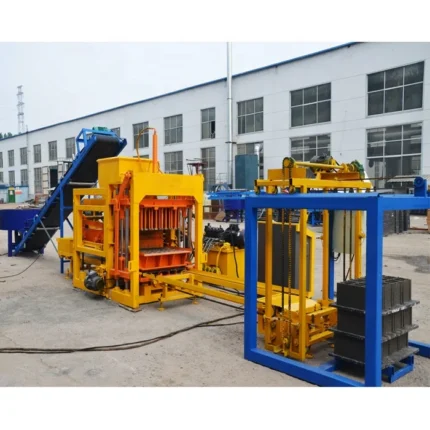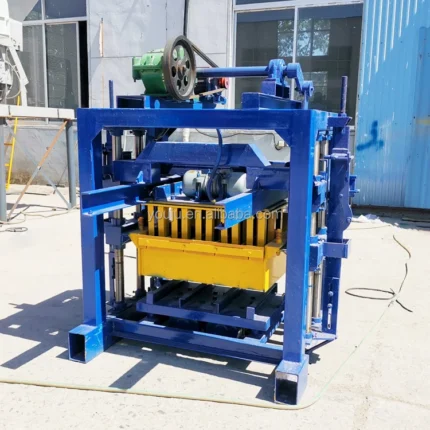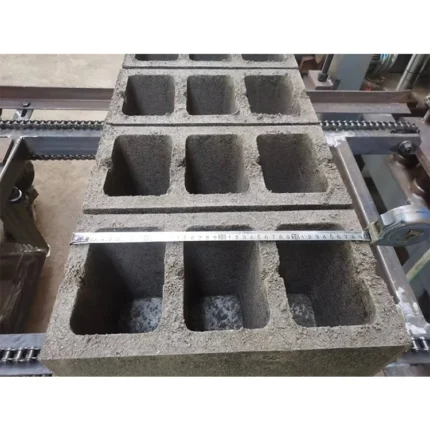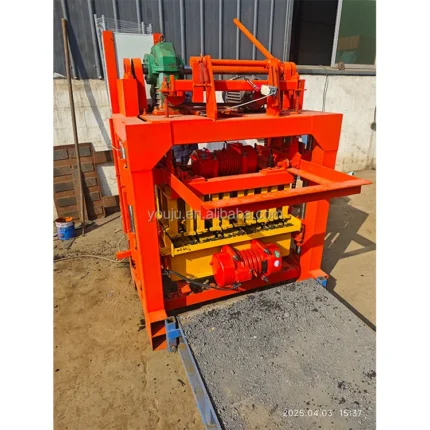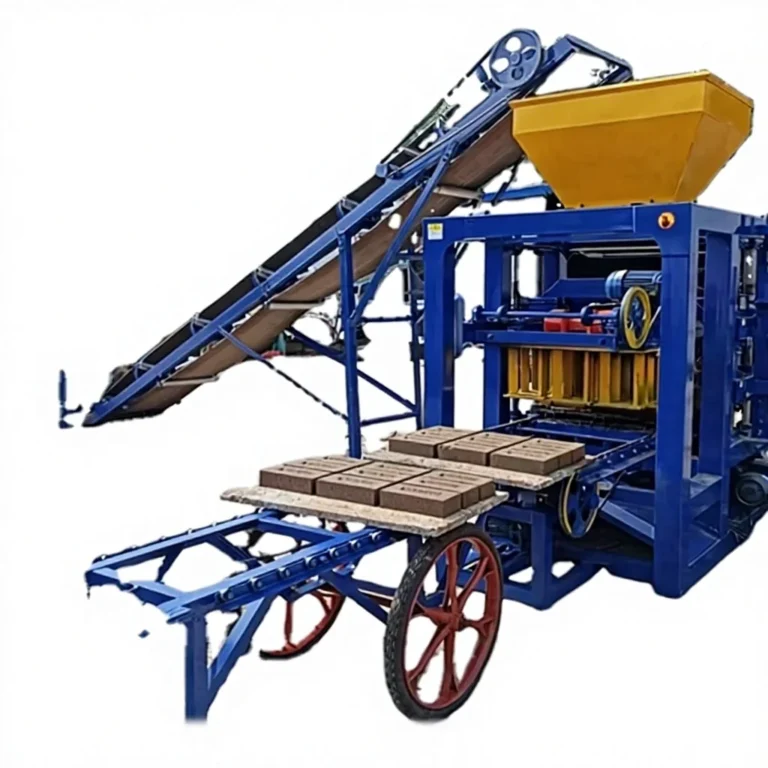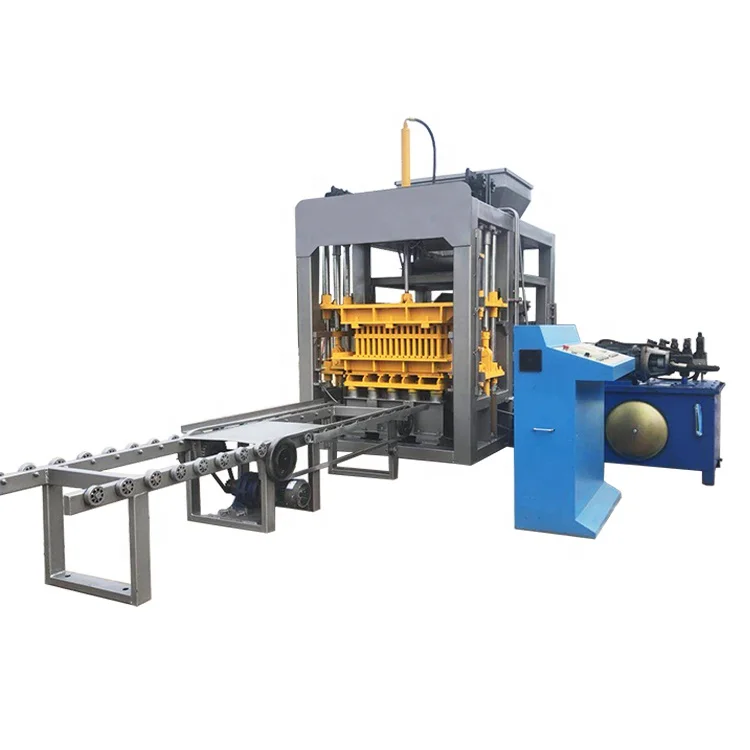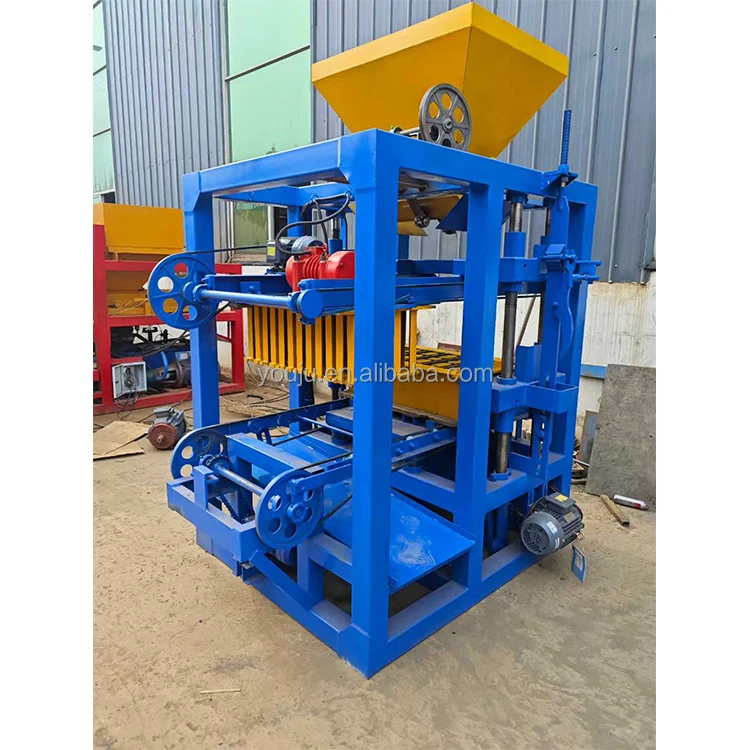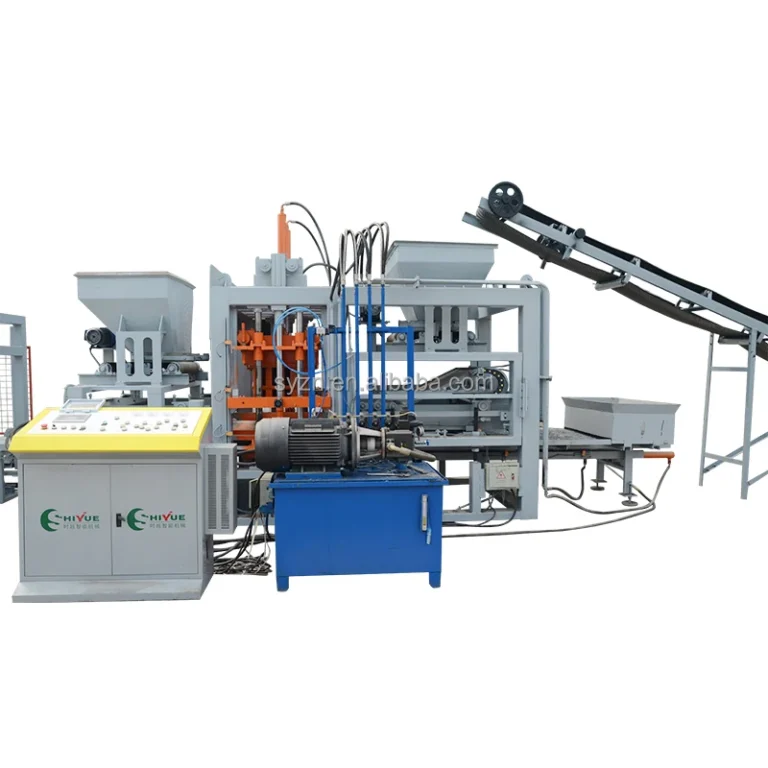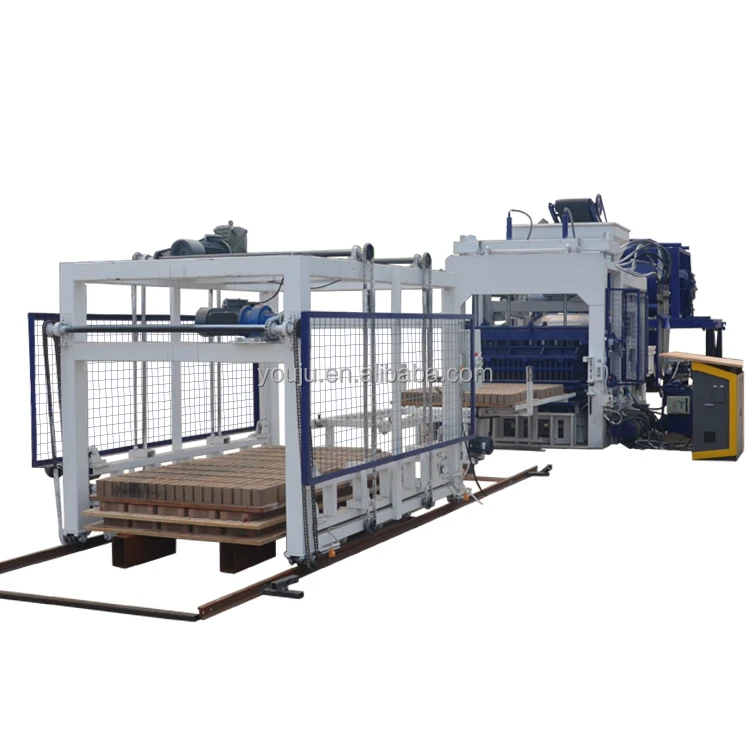




Description
Intelligent Control Integration — The QT12-15 pairs PLC dialogue logic with hydraulic and vibration subsystems so automation decisions are driven by real cycle data, not fixed timers.
Technical Specifications
| Parameter | Value |
|---|---|
| Model | QT12-15 |
| Product Type | Stationary Concrete Block Making Machine |
| Overall Dimension | 7500 × 2500 × 3020 mm |
| Total Mass | 12 T |
| Vibration Form | Platform Vibration |
| Vibration Frequency | 0–60 Hz |
| Vibration Force | 100 kN |
| Moulding Mode | Automatic loading, vibration moulding |
| Demolding Method | Hydraulic |
| Molding Cycle | 15–20 s |
| Pallet Size | 1220 × 900 mm |
| Overall Power | 53 kW |
| Control System | PLC aptitude control with human-machine interface dialogue |
| General Water Consumption | 12 T / Day |
| Factory Area | 1200 m² |
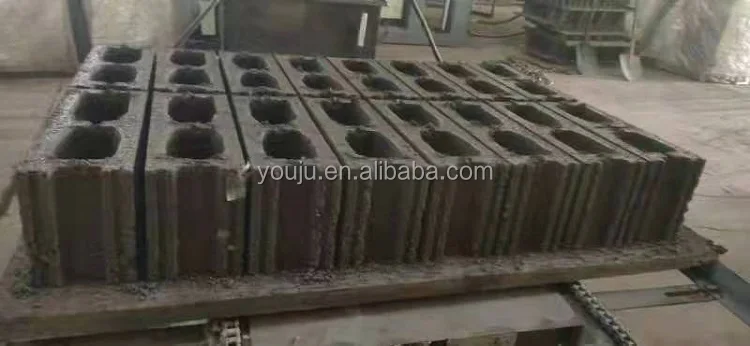
| Output (Hollow 400×200×200 mm) | 12 pcs/mould, 1728–2160 pcs/h (basis: 20–25 s cycle) |
| Output (Porous 240×115×90 mm) | 27 pcs/mould, 4860–6480 pcs/h (basis: 15–20 s cycle) |
| Output (Standard 240×115×53 mm) | 62 pcs/mould, 12700–14400 pcs/h (basis: 15–17 s cycle) |
Application Suitability
| Application | Material or Output |
|---|---|
| High-volume hollow block plants | Crushed stone, sand, cement, fly ash, slag mixes |
| Paver and interlocking brick production | Gravel, dust, cement with colored face mix |
| Solid and porous brick manufacturing | Sand, cement, fly ash, industrial slag |
| On-site housing project block supply | Local aggregate with site-specific mix adjustment |
| Kerbstone and curb production | Coarse aggregate with high hydraulic compaction |
Why PLC Language Confirmation Must Happen Before Crating
The control panel language is set during PLC programming — changing it after arrival means flying a technician out or leaving operators guessing at fault codes.
I was on an African project where the automatic QT12-15 block machine PLC controlled interface arrived in Chinese because nobody ticked the language box on the confirmation sheet. Commissioning stalled for a full day while we sourced a translator who understood hydraulic fault registers. The contractor had a crew standing by, raw material batched, and a curing schedule to meet. That delay cost more than the machine’s sea freight [NEED_CITE: PLC display language configuration practices in exported industrial machinery]. The QT12-15 human-machine interface supports multiple languages, but only if the target language is specified before the PLC program is compiled and burned to the controller.
What the PLC Dialogue System Actually Manages
The automatic QT12-15 block machine PLC controlled system does more than sequence the press cycle. It monitors signal input from proximity sensors on the pallet feeder, hydraulic pressure transducers, and vibration frequency feedback to adjust dwell time per format. When a mould change occurs, the operator selects the new block profile on the HMI, and the system recalls the corresponding vibration frequency, hydraulic pressure setpoint, and feed duration. This removes manual parameter entry and the inconsistency that follows shift changes.
Automation Scope and the Quotation Boundary
A common gap in block machine procurement is the line between what the press does and what still requires manual labour. The QT12-15 configuration can include automatic pallet feeding, wet product stacking, and cubing — or it can ship as a press-only unit with manual pallet handling at the outfeed. The distinction matters because an automatic QT12-15 block machine PLC controlled setup with full stacking eliminates two to three operators per shift from the wet-side handling crew. Confirming whether pallet circulation, stacking, and cubing are inside the quotation scope prevents a situation where the machine produces faster than the crew can move product off the line [NEED_CITE: automation scope definition in concrete block line quotations].
Reading the Specs That Shape Daily Output
The 100 kN vibration force combined with hydraulic demolding determines how densely the mix is compacted before curing begins. Higher compaction means the block reaches handling strength sooner, but only if the vibration frequency (0–60 Hz range) is tuned to the specific aggregate gradation in the mix. A coarse crushed-stone mix responds to a lower frequency with longer dwell, while a fly-ash-heavy mix needs higher frequency to consolidate fines. The 1220 × 900 mm pallet size dictates how many cavities the mould can hold, which directly sets output per cycle. Pallet material — whether bamboo, steel, or composite — must match the curing rack spacing and the forklift tine width already on site. A mismatch here means buying new racks or replacing pallets before the first production run. The 53 kW overall power draw requires a dedicated circuit with sufficient transformer capacity; arriving at a site with only 200 A service when the line needs more causes commissioning stalls that have nothing to do with the press itself [NEED_CITE: electrical supply sizing for stationary block making equipment].
The Cost of Skipping the Configuration Conversation
When vibration force and hydraulic pressure are left at catalogue defaults instead of being matched to the buyer’s actual mix and aggregate, block strength wanders across the production day. Some batches test above the required MPa, others fail, and the inconsistency is blamed on the cement supplier when the real issue sits in the PLC setpoints. I have seen plants replace their entire mould inventory before realizing the press parameters were never adjusted for local river sand with higher fines content. The automatic QT12-15 block machine PLC controlled system stores multiple mix profiles, but those profiles must be built during commissioning with the buyer’s material on hand [NEED_CITE: impact of aggregate variation on concrete block compressive strength].
Why Procurement Here Reduces Integration Risk
The QT12-15 is specified as a press within a matched line, meaning pallet size, feeder cycle time, and stacking speed are calculated together so the press is never left waiting for an empty pallet. Voltage, frequency, and PLC display language are confirmed in writing before the control cabinet is wired, eliminating the most frequent cause of delayed commissioning on export projects. Mould drawings are provided with format-specific cycle times, so capacity planning is based on the blocks the buyer actually sells rather than a best-case catalogue figure. The control system supports a selectable automation level, allowing a buyer to start with semi-automatic pallet handling and add automatic stacking later without replacing the PLC or the main press. Every unit ships with hydraulic and electrical schematics that let the buyer’s maintenance team trace faults without waiting for overseas support.
Documentation & Verification
- Line layout showing QT12-15 station positions and pallet circulation path
- Capacity table listing cycle time and output for each confirmed block format
- Hydraulic and electrical schematics matching the as-built control cabinet
- PLC display language and voltage confirmation record signed before wiring
- Factory test record run on buyer’s specified mould and pallet size
- Mould drawing set with cavity count and format dimensions
Installation, Commissioning & Support
- 7500 × 2500 mm footprint requires a level concrete pad with anchor bolt provisions
- 53 kW total load demands a dedicated breaker panel with confirmed voltage and frequency
- Machine ships partially assembled; main frame, hydraulic unit, and control cabinet are separate
- PLC parameters loaded and vibration frequency tuned to buyer’s mix during on-site commissioning
- Operator training covers HMI navigation, mould change procedure, and fault code response
- Wear parts list identifies hydraulic seals, vibration springs, and mould liner replacement intervals
What to Prepare Before Requesting a Proposal
To size the automatic QT12-15 block machine PLC controlled configuration correctly, we need the block formats your market actually buys, the target daily output for your primary format, and the local aggregate type with any available sieve analysis. Confirm your site voltage, frequency, and the language your operators will need on the HMI. If you have existing pallets, curing racks, or a batching plant, share the pallet dimensions and rack spacing so the line layout integrates without modification.
Frequently Asked Questions
Q: How is the PLC display language configured for my operators?
A: The target language is confirmed in writing before the PLC program is compiled. The human-machine interface supports multiple languages, and the selection is burned to the controller at the factory. Changing language after shipment requires reprogramming, so we lock this detail during the voltage and control confirmation step before production begins.
Q: Does the quotation include automatic pallet feeding and stacking?
A: The automation level is configurable. The quotation specifies whether pallet feeding, wet stacking, and cubing are included or if the scope ends at the press outfeed. We confirm the automation boundary during the proposal stage so there are no manual handling surprises when the line starts running.
Q: How does cycle time change between hollow blocks and pavers?
A: Cycle time depends on the block format and mix. Hollow 400×200×200 mm bricks run on a 20–25 second cycle, while standard 240×115×53 mm bricks cycle in 15–17 seconds. The PLC stores a profile for each confirmed mould, adjusting vibration duration and hydraulic dwell to match the format.
Q: Can the automation level be expanded after initial installation?
A: Yes. The PLC and control architecture support adding automatic pallet feeding, stacking, or cubing at a later stage without replacing the main controller. The upgrade path is defined during the initial quotation so the electrical cabinet is pre-wired for future expansion modules.
Q: How are vibration and pressure set to match my local aggregate?
A: During on-site commissioning, we run the buyer’s actual mix through the press and adjust vibration frequency within the 0–60 Hz range and hydraulic pressure until block density and surface finish meet the target. The resulting parameters are saved as named profiles in the PLC for repeatable production across shifts.