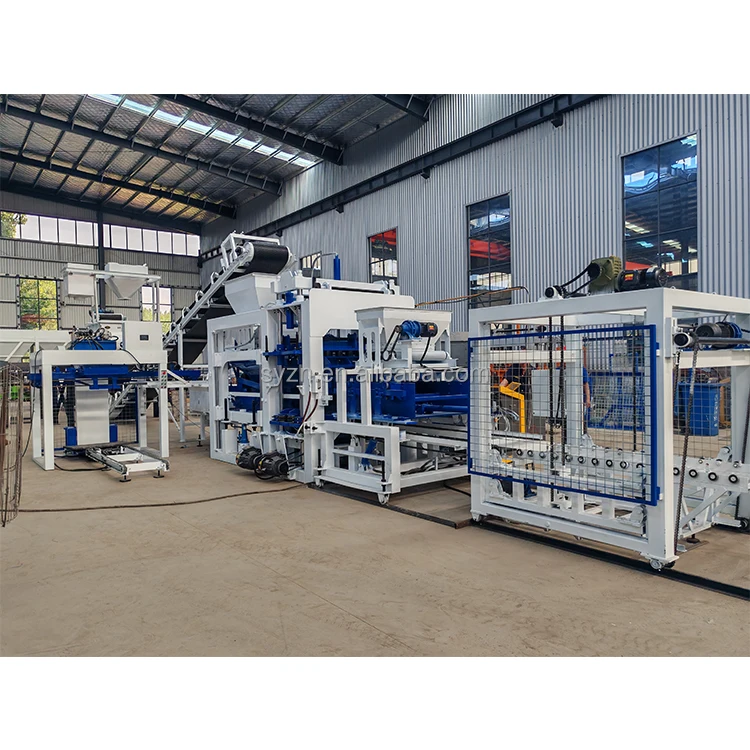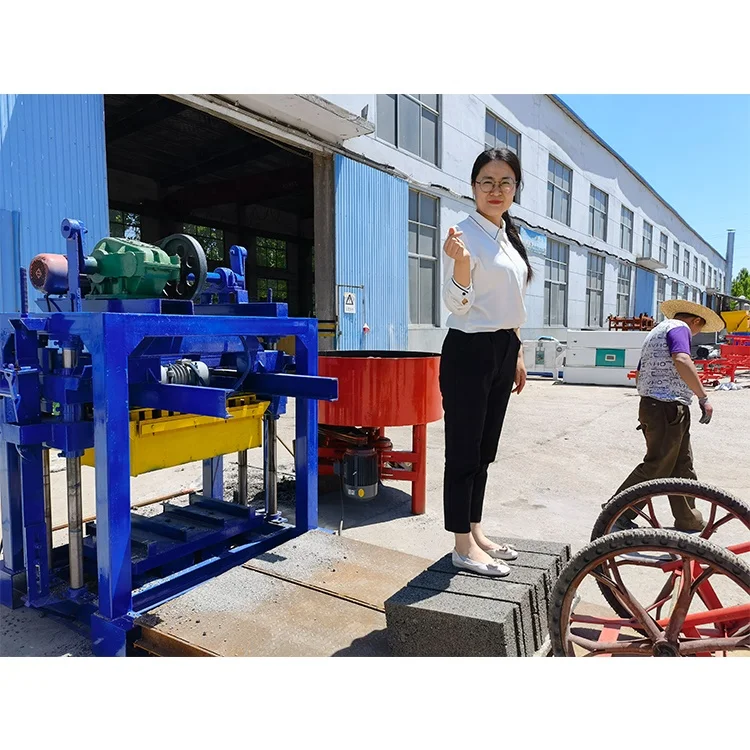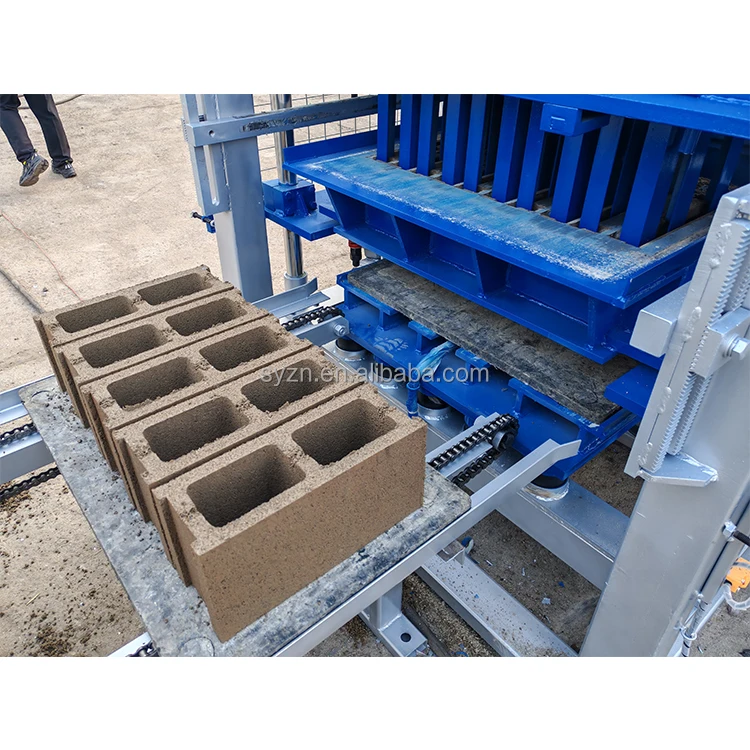
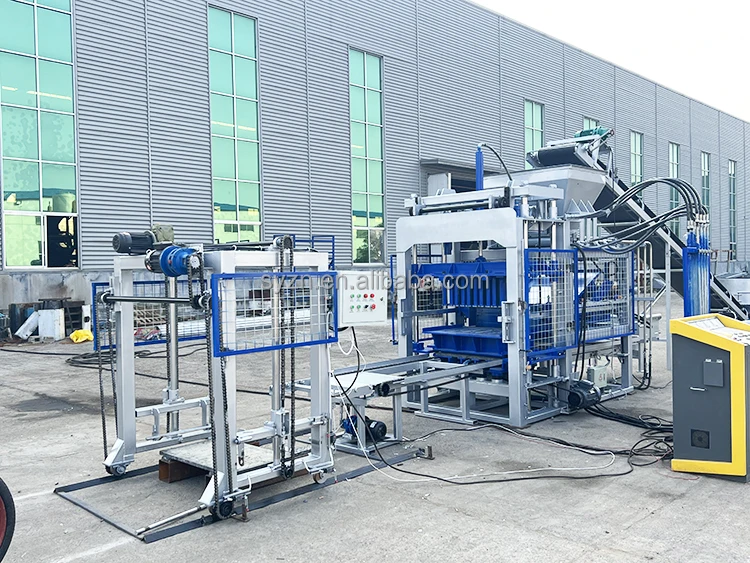
Description
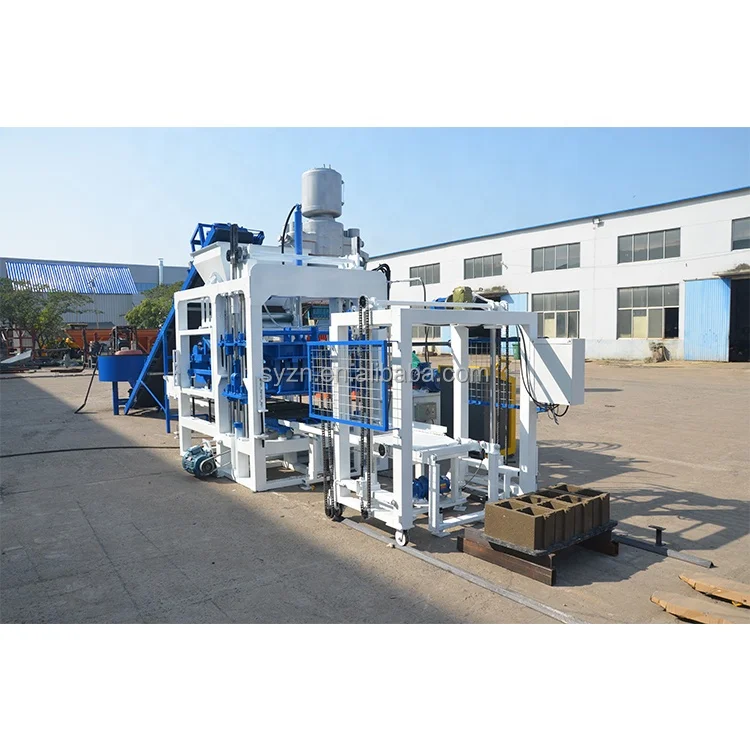
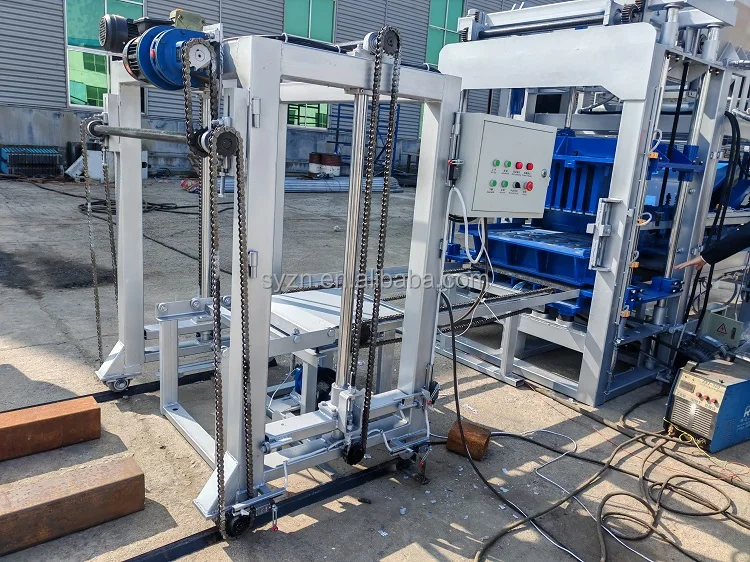
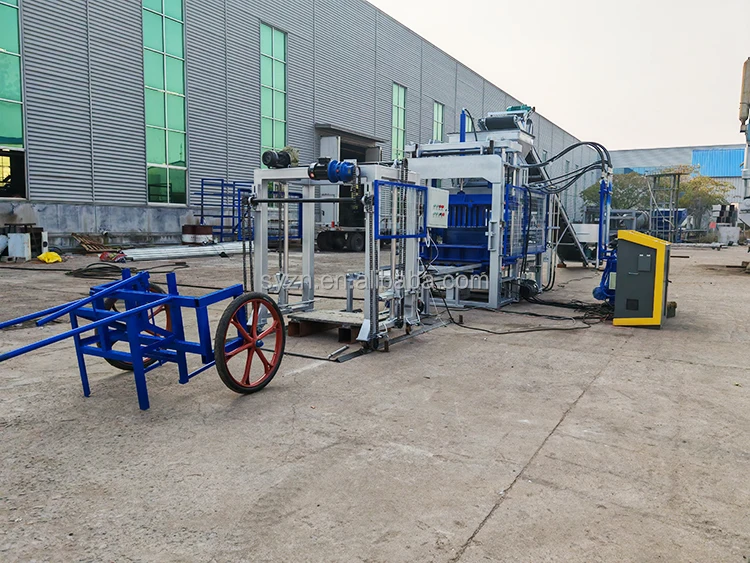
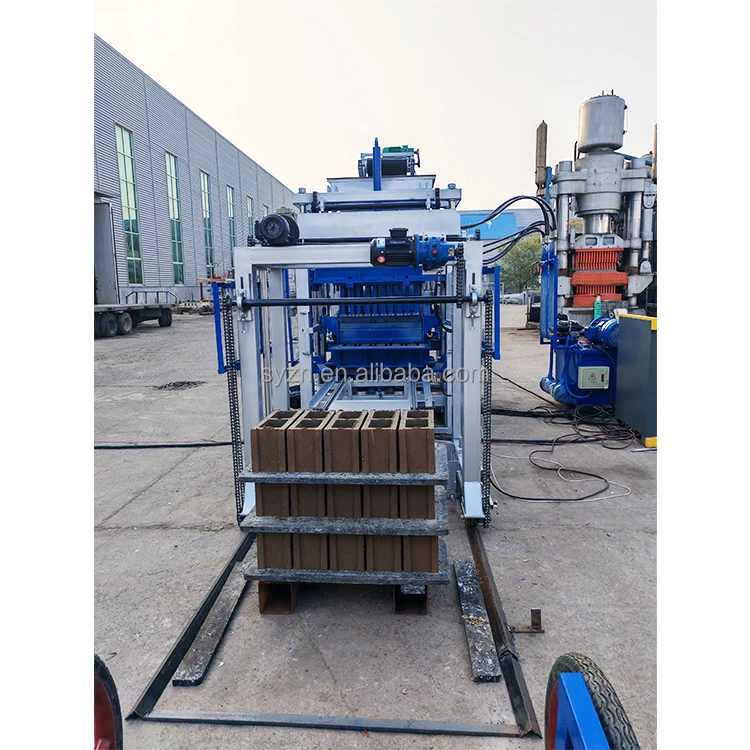
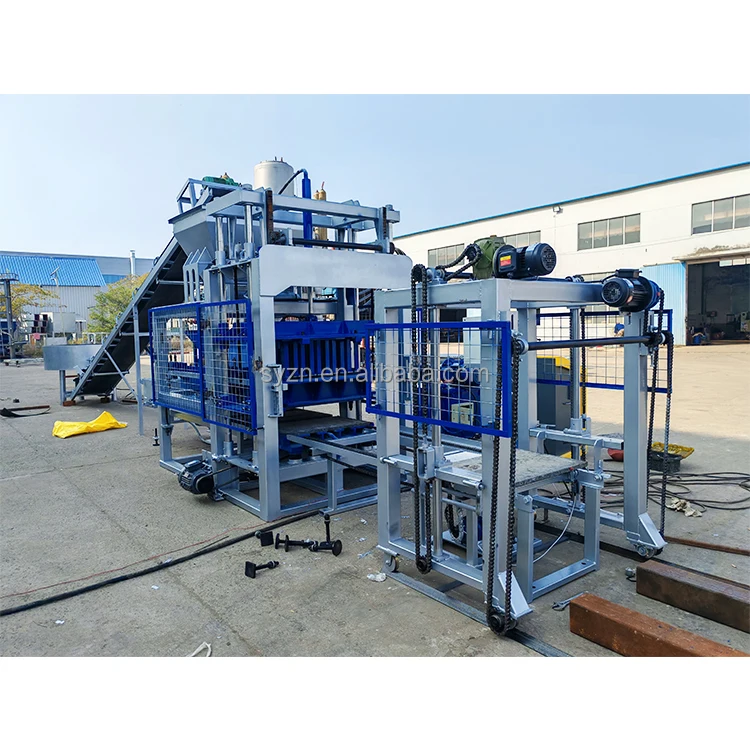
Integrated System Matching — The QT4-15A automatic block making machine PLC controlled configuration ensures vibration force, hydraulic pressure, and cycle timing work as one calibrated unit rather than a collection of separate components.
Technical Specifications
| Parameter | Value |
|---|---|
| Model | QT4-15A |
| Product Type | Fully Automatic Concrete Block Making Machine |
| Overall Dimensions (L×W×H) | 4100×1600×2600 mm |
| Rated Pressure | 16–21 MPa |
| Main Vibration Form | Platform Vibration |
| Vibration Frequency | 4200 r/min |
| Vibration Force | 55 kN |
| Pallet Size | 880×550 mm |
| Molding Cycle | 25–30 s (basis not stated in source — confirm block format / material / thickness) |
| Overall Power | 18.45 kW |
| Total Mass | 4 T |
| Demolding Method | Hydraulic |
| Factory Area Required | 300 m² |
| Control System | PLC |
| Automation Level | Fully Automatic |
| Voltage & Frequency | Configurable (to be confirmed before order) |
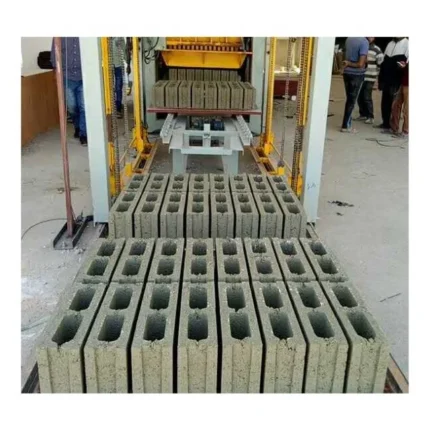
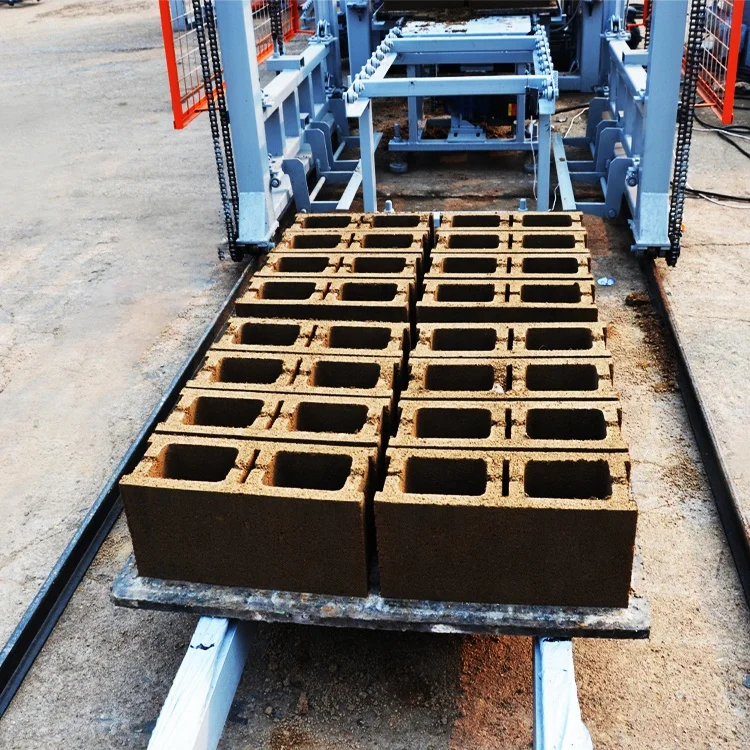
| Applied Products | Hollow blocks, solid blocks, pavers, interlocking blocks, curbstone, colored pavers |
| Raw Materials | Crushed stone, sand, cement, fly ash, gravel, slag |
| Loading | 1×40HQ container (basic equipment) |
| Warranty | 1 year (excluding spare parts) |
Application Suitability
| Application | Material or Output |
|---|---|
| Hollow block production | Crushed stone, sand, cement, fly ash blends |
| Solid block manufacturing | Gravel and cement mixes for load-bearing walls |
| Interlocking brick output | Local aggregate with cement binder for housing projects |
| Paver and curbstone forming | Colored concrete mixes for roadscape and pedestrian areas |
| On-site construction supply | Contractor-grade materials for immediate project use |
What the "25–30 Second Cycle" Claim Often Misses
A cycle time is only meaningful when tied to the exact block format, mix design, and pallet size your plant will actually run.
Sellers frequently quote a single molding cycle number across their entire catalog. In my time servicing block plants across West Africa and South Asia, I have watched operators struggle with cycle times that looked promising on paper but failed to hold up once local sand and aggregate were loaded into the mixer. The vibration frequency and hydraulic pressure that work for a standard hollow block often produce weak edges on a thinner interlocking paver. The QT4-15A automatic block making machine PLC controlled system addresses this by allowing vibration force, pressure, and timing to be adjusted per format, so the 25–30 s figure can be validated against your actual product rather than a factory default. [NEED_CITE: block density and compressive strength testing standards]
How the Control System Removes Operator Guesswork
On a manual or semi-automatic press, the operator controls the feed, vibration duration, and demolding timing by feel. Shift changes, fatigue, and experience gaps mean the first hundred blocks of the morning rarely match the last hundred before closing. The PLC on the QT4-15A stores cycle parameters for each mould format, so once the correct vibration duration and hydraulic pressure sequence is established during commissioning, every subsequent cycle replicates it. This is what separates consistent block strength from batch-to-batch variation.
Where Automation Actually Reduces Labor
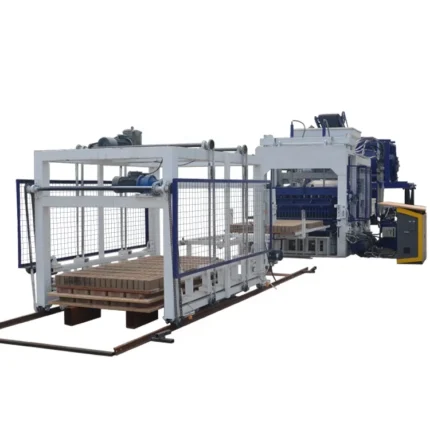
The real labor saving in a fully automatic block line is not at the press itself — it is in the pallet handling and stacking stations that feed and clear the machine. The QT4-15A is designed with an upgrade path: a buyer can begin with manual pallet loading and add automatic pallet feeding, stacking, and cubing modules as production volume justifies the investment. This modular approach means the automatic block making machine PLC controlled architecture is already in place even when peripheral stations are still manual, so the transition does not require a press replacement. [NEED_CITE: labor allocation in small to medium block production plants]
Reading the Pressure and Vibration Numbers Together
The 16–21 MPa hydraulic pressure range and 55 kN vibration force at 4200 r/min are not independent figures — they work as a paired system. Hydraulic pressure compacts the mix vertically while platform vibration settles the aggregate into voids from below. If pressure is high but vibration is insufficient for a coarse gravel mix, blocks emerge with surface cracks and weak cores. If vibration is aggressive but pressure is low, the block holds together in the mould but crumbles on the pallet during transfer. The QT4-15A lets both parameters be adjusted together, matched to whatever crushed stone, fly ash, or slag blend your local suppliers actually deliver.
The Hidden Cost of Skipping Pallet and Voltage Confirmation
I once arrived at a site in Nigeria to find brand-new pallets that did not fit the curing racks the buyer had already welded. The pallet size had been chosen by the machine supplier without asking about the buyer’s existing yard forklift and rack spacing. The same trip revealed that the PLC display language was set to Chinese characters, and the local electrician could not read the fault codes during first startup. A few weeks later, a hydraulic seal failed — a part not included in the spare kit — and the line sat idle for nearly two weeks waiting for air freight. [NEED_CITE: typical downtime costs for unplanned parts shipments to remote sites]
These are not engineering failures. They are communication failures that happen when voltage, pallet size, control language, and spare parts scope are left unconfirmed before production begins.
Why Buyers Source This Machine Here
- Block machinery is the sole product focus, meaning the QT4-15A press, mould, pallet, and handling equipment are specified as one matched system from a single supplier.
- Configuration is set against the buyer’s actual mix design, local aggregate, and target block format rather than pulled from a standard catalog sheet.
- Mould design covers the formats the buyer’s local market demands, with custom drawings accepted for non-standard shapes.
- Automation level is selectable — a buyer can start with semi-automatic pallet handling and add stacking and cubing modules later without replacing the press.
- Installation includes on-site commissioning with operator training, so the team running the line on day one understands cycle adjustments and fault responses.
Documentation & Verification
- Line layout drawing showing QT4-15A footprint within the 300 m² factory area requirement
- Capacity calculation sheet stating block format and mix assumptions behind cycle time
- Mould drawing and format list matching your ordered block and paver profiles
- Voltage, frequency, and PLC display language confirmation signed before production
- Factory test record demonstrating cycle performance with your specified mould installed
- Hydraulic and electrical schematic for local maintenance team reference
Installation, Commissioning & Support
- The 4100×1600×2600 mm machine footprint requires a level concrete pad within the 300 m² factory area.
- Power supply must match confirmed voltage and frequency; a dedicated circuit supports the 18.45 kW overall load.
- Machine ships dismantled in a 40HQ container; reassembly and alignment completed on-site during commissioning.
- First-run parameter setting covers vibration frequency, hydraulic pressure, and cycle timing for each ordered mould.
- Operator training includes PLC navigation, fault code response, and mould change procedures.
- Wear parts and hydraulic seal kit shipped with the machine to cover the first replacement cycle without air freight delays.
Before You Send the Inquiry
To build a configuration that matches your plant rather than a generic quote, share your target block formats with dimensions, the daily output you need per format, and the raw materials available locally including aggregate gradation. Confirm your site voltage, frequency, and preferred PLC display language. If you already have curing racks, forklifts, or pallets on site, send their dimensions so the pallet size and handling equipment can be matched from the start.
Frequently Asked Questions
Q: How is the molding cycle verified for my specific block format?
A: The 25–30 s cycle time must be confirmed against your exact block dimensions, mix design, and pallet size. We run a factory test with your ordered mould installed and document the actual cycle performance before dispatch, so the number you plan your shift around is based on your product, not a generic catalog entry.
Q: Can the PLC display language be set before the machine ships?
A: Yes. The PLC brand and HMI language are confirmed in writing during the order process. This prevents the situation where an operator cannot read fault codes on first startup because the interface arrived in a language the local team does not use.
Q: How do I match vibration and pressure to my local aggregate?
A: The 55 kN vibration force and 16–21 MPa pressure range are both adjustable. During commissioning, we set both parameters based on your available crushed stone, sand, or fly ash blend so that block strength meets your market requirement without forcing a costly material substitution.
Q: Is automatic pallet stacking included in the standard quotation?
A: Stacking method depends on your selected automation level. The QT4-15A supports an upgrade path from semi-automatic pallet handling to fully automatic stacking and cubing. We confirm exactly which peripheral stations are included in your quotation so there are no manual bottlenecks you did not plan for.
Q: What happens if I need to add automation modules later?
A: The PLC architecture is in place from day one. Automatic pallet feeding, stacking, and cubing modules can be added as your production volume grows, without replacing the press. We scope the upgrade path during the initial order so electrical and mechanical interfaces are already prepared.