

Description
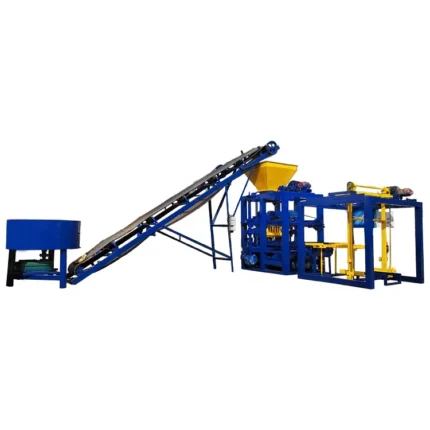
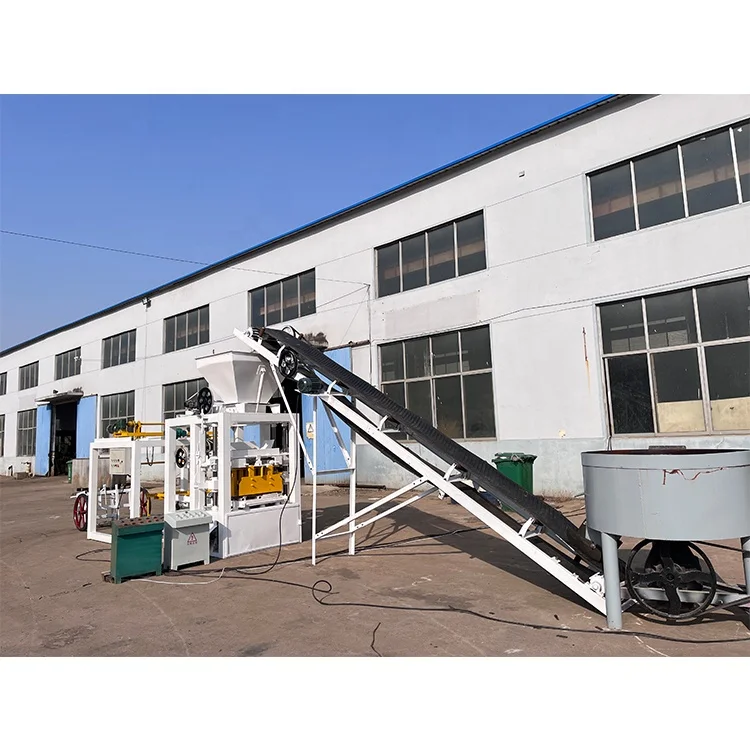
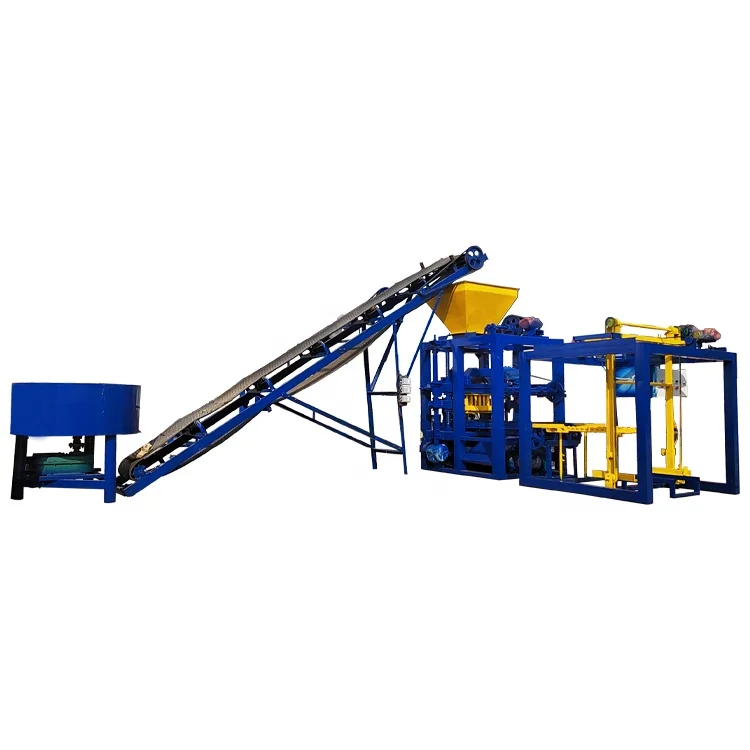
Configured Automation Logic — the QT4-15 is delivered as a matched system where PLC sequences, mould dimensions, pallet handling and curing rack flow are locked to the buyer’s actual block format rather than left as catalogue defaults.
Technical Specifications
| Parameter | Value |
|---|---|
| Model | QT4-15 |
| Product Type | Hydraulic Concrete Block Making Machine |
| Control System | Computer controlled, fully automatic |
| Automation Level | Fully automatic with PLC logic governing feed, press and stacking stations |
| Vibration Mode | Multiaxis synchronizer vibration, vertically downward |
| Hydraulic System | High thermal efficiency, low heat productivity |
| Mixer System | Multiaxis forced mixer |
| Guide Bearing | Long-period over length guide bearing for upper mould and mould box alignment |
| Rack Construction | High strength steel with special welding technique, vibration shock resistant |
| Cycle Time | 15–20 s |
| Output (400×200×200 mm hollow block, 4 pcs/mould) | 900–1,200 pcs/h, 7,200–9,600 pcs/8 hr |
| Output (400×150×200 mm block, 5 pcs/mould) | 1,080–1,440 pcs/h, 8,640–11,520 pcs/8 hr |
| Output (400×100×200 mm block, 8 pcs/mould) | 1,440–1,920 pcs/h, 11,520–15,360 pcs/8 hr |
| Output (200×100×60 mm paving block, 16 pcs/mould) | 2,880–3,840 pcs/h, 23,040–30,720 pcs/8 hr |
| Output (240×115×53 mm standard brick, 28 pcs/mould) | 5,930–6,720 pcs/h, 47,400–53,700 pcs/8 hr |
| Voltage & Frequency | Configurable to buyer’s local grid (basis to be confirmed) |
| PLC Display Language | Configurable (basis to be confirmed) |
| Pallet Size | Matched to curing area and forklift (basis to be confirmed) |
| Warranty | 1 year (excluding spare parts) |
Application Suitability
| Application | Material or Output |
|---|---|
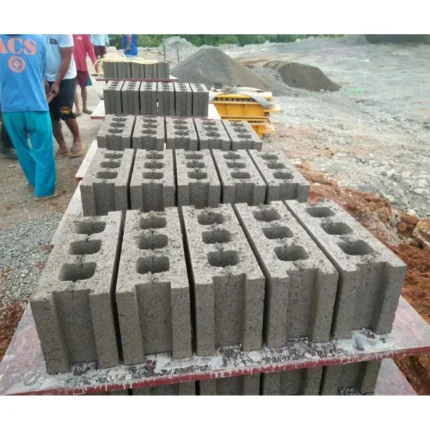
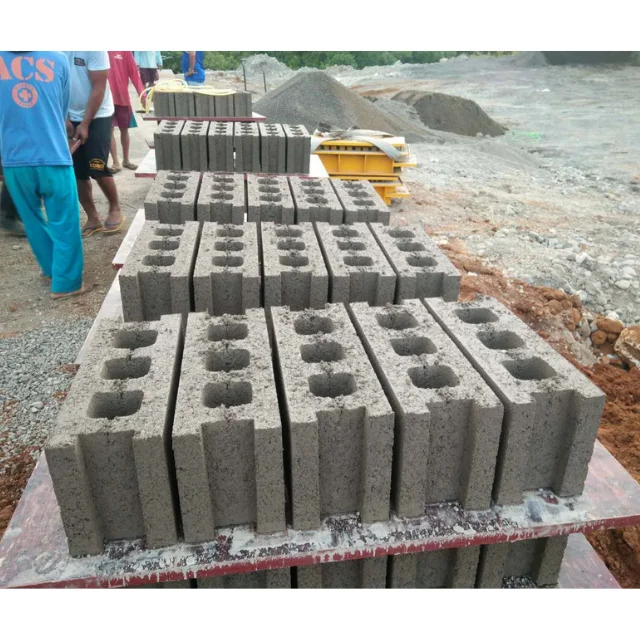
| Hollow block production | Crushed stone, sand, cement, water — multicellular and solid formats |
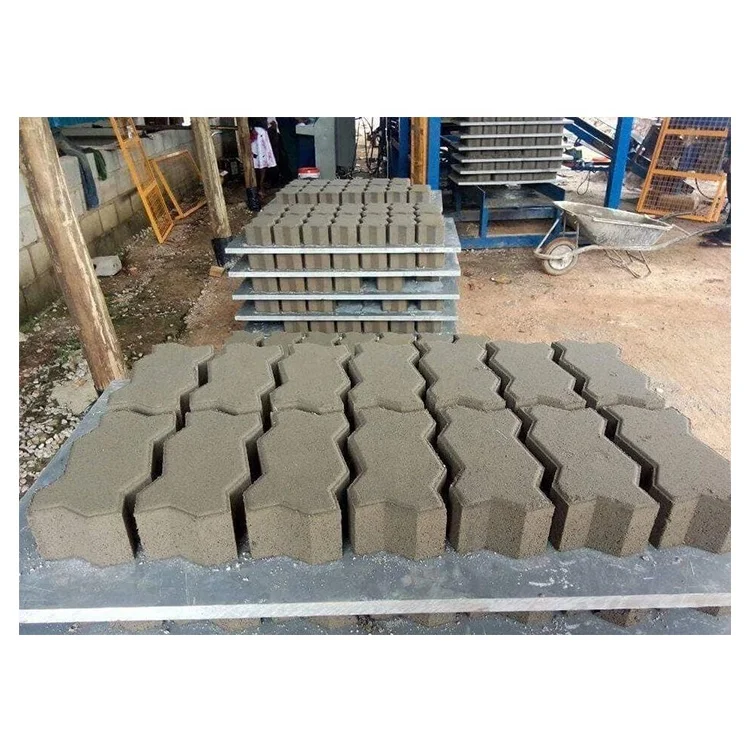
| Paving block production | Fine aggregate and cement mixes for interlocking and rectangular pavers |
| Standard solid brick production | Dense aggregate blends for load-bearing and partition bricks |
| On-site contractor production | Local aggregate and cement for housing project block requirements |
| Format expansion on existing plant | Additional mould sets for kerbstone, porous brick and interlocking formats |
Why the PLC Language Question Should Come Before the Price
An automatic QT4-15 block machine PLC controlled in the wrong language is a manual machine with an expensive screen.
I once spent three days on a commissioning floor in northern Nigeria because the operator panel spoke English and the crew spoke Hausa. Every parameter change required a translator standing between the PLC and the press. By the time we pushed a remote language pack, the production schedule had already slipped. That delay had nothing to do with the press itself and everything to do with a detail that should have been confirmed before the machine left the factory. When buyers compare quotations, the control language and voltage confirmation rarely appear on the checklist, yet they determine whether the machine runs on day one or sits idle while an electrician rewires a panel [NEED_CITE: voltage and frequency standards by export market].
How the Control Sequence Removes the Operator from the Cycle
The QT4-15 places PLC logic at every station from raw material feeding through pallet indexing, pressing, and stacking. Each cycle runs as a timed sequence: the mixer discharges, the feeder traverses, the mould box drops, vibration and hydraulic pressure engage simultaneously, and the stripper head lifts. Because the automatic QT4-15 block machine PLC controlled sequence is programmable, the dwell time under vibration and the pressure ramp can be adjusted for each mould set stored in memory, so switching from hollow block to paving block becomes a recipe recall rather than a mechanical recalibration.
What Changes When You Move from Semi-Automatic to Full PLC Control
On a semi-automatic line the operator triggers each station individually — feeder in, press down, stripper up — and the cycle time stretches or compresses with human reaction speed. On the QT4-15, the PLC locks every station to the same timed sequence regardless of shift or operator, which is where batch-to-batch consistency actually comes from. Plants that start semi-automatic can later add automatic pallet feeding, stacking and cubing modules, but the control architecture on the QT4-15 is designed to accept those additions without replacing the main panel [NEED_CITE: PLC scalability standards for concrete block presses].
Reading the Specs That Actually Shape Your Output
The multiaxis synchronizer vibration delivers force vertically downward across the mould area, which means compaction density stays uniform from the centre to the corners of every block. The long-period over length guide bearing keeps the upper mould aligned with the mould box throughout each stroke, preventing the taper wear that causes blocks to stick after several thousand cycles. Hydraulic pressure and vibration force must both be matched to the buyer’s mix design — a stiff, low-slump mix demands higher pressure, while a wetter mix needs more vibration amplitude to consolidate without segregation. The multiaxis forced mixer handles raw materials of different densities, keeping cement distribution consistent across batches so the press receives a uniform feed every cycle.
What Happens When the Line Around the Press Is Left Unspecified
A buyer who receives a quotation for the press alone will discover on arrival that pallets must be loaded by hand, cured blocks must be stacked manually, and the pallet return loop has no drive. Output drops because the press waits between cycles while the operator fetches the next board. On the QT4-15 line, the pallet feeder, stacker and curing rack handler are specified as matched stations so the press cycle is never the bottleneck. When these stations are omitted from the scope, labour costs rise and the theoretical cycle time becomes irrelevant to daily throughput [NEED_CITE: labour allocation on manual versus automatic block lines].
Why Buyers Source the QT4-15 Through This Configuration Approach
The press, mould, pallet and handling equipment are specified as one system rather than assembled from separate suppliers, so interface dimensions and cycle timing align from first run. Configuration is set against the buyer’s actual mix design, local aggregate and target block format instead of a catalogue default. Mould design covers the formats the buyer’s market sells, including custom drawings for non-standard dimensions. Automation level is selectable, allowing a buyer to commission the QT4-15 semi-automatic and upgrade stations later. Installation and commissioning include operator training on the specific PLC interface and language confirmed before shipment.
Documentation & Verification
- Line layout stating block format assumed for each capacity figure
- Machine specification sheet with hydraulic and vibration ratings
- Mould drawing and format list for all ordered mould sets
- Voltage, frequency and PLC language confirmation record
- Factory test record on buyer’s target block format before dispatch
- Operation manual with wear parts list and mould maintenance schedule
Installation, Commissioning & Support
- Foundation drawing provided for the QT4-15 rack footprint and vibration isolation
- Dedicated power circuit sized to the confirmed rated power and voltage
- Machine arrives factory assembled; on-site alignment of guide bearings and mould box
- PLC parameter setting for each mould recipe during commissioning week
- Operator training on cycle start, fault reset and mould change procedure
- Wear parts list with hydraulic seal and vibration shaft bearing part numbers
What to Include in Your First Enquiry
To size the QT4-15 accurately, share your target block formats with dimensions, the daily output you need per format, and the raw materials available locally including aggregate type and grading. Confirm your site voltage, frequency and the PLC display language your operators require. If you already have pallets, forklifts or a curing yard, provide those dimensions so the pallet size and stacking stations can be matched from the start.
Frequently Asked Questions
Q: How is the capacity of the QT4-15 verified per block format, and what cycle time does each format assume?
A: Every capacity figure is tied to a specific block dimension and mould cavity count. The 15–20 second cycle time applies across formats, but actual output per hour varies with the number of pieces per mould. We provide a line layout that states the exact format assumed for each quoted figure so you can cross-check against your own production targets before ordering.
Q: What PLC control options and display language are available, and can the system be upgraded from semi-automatic later?
A: The QT4-15 ships with a PLC interface configurable to the buyer’s preferred display language, confirmed in writing before production. The control architecture accepts additional automation stations such as automatic pallet feeding, stacking and cubing. A plant that commissions semi-automatic can add these modules later without replacing the main control panel.
Q: How is the machine configured to match my local raw material and mix design rather than a catalogue default?
A: We ask for your aggregate type, grading curve and cement ratio before finalising the vibration force and hydraulic pressure settings. The multiaxis forced mixer is adjusted to handle your specific material density. Mould drawings are then matched to the block strength and surface finish your market requires.
Q: What automation stations are included, and what remains manual at each tier?
A: At the fully automatic tier the QT4-15 includes PLC-governed pallet feeding, stacking and cubing. At the semi-automatic tier the operator handles pallet loading and stacking manually while the press cycle itself remains PLC controlled. The upgrade path adds the missing stations without modifying the press frame or main panel.
Q: How are voltage and frequency confirmed before shipment to avoid commissioning delays on arrival?
A: We request a written confirmation of site voltage, frequency and phase before the electrical panel is wired. The PLC language is confirmed at the same stage. Both are recorded on the pre-shipment checklist so the machine powers up correctly on day one without requiring on-site rewiring or component swaps.