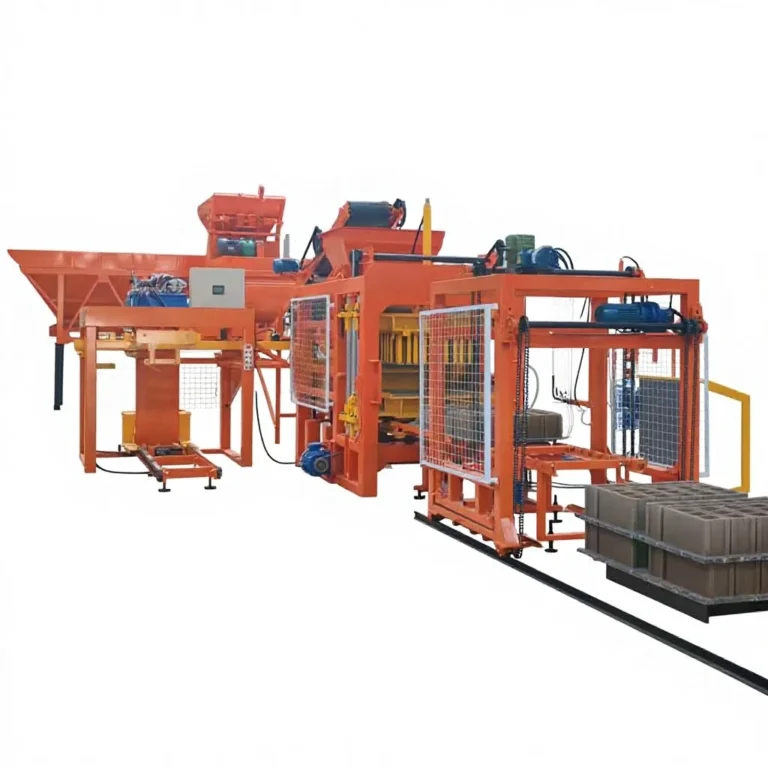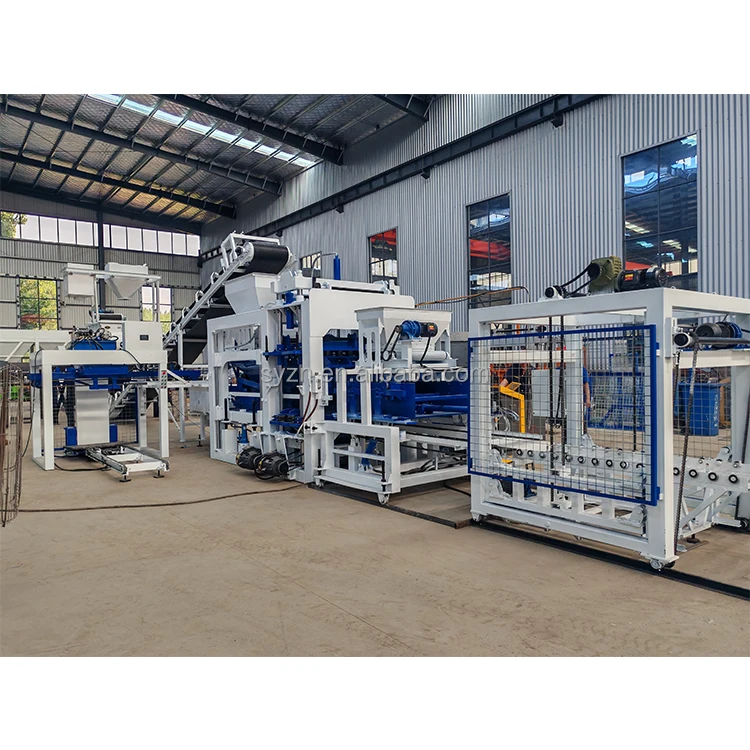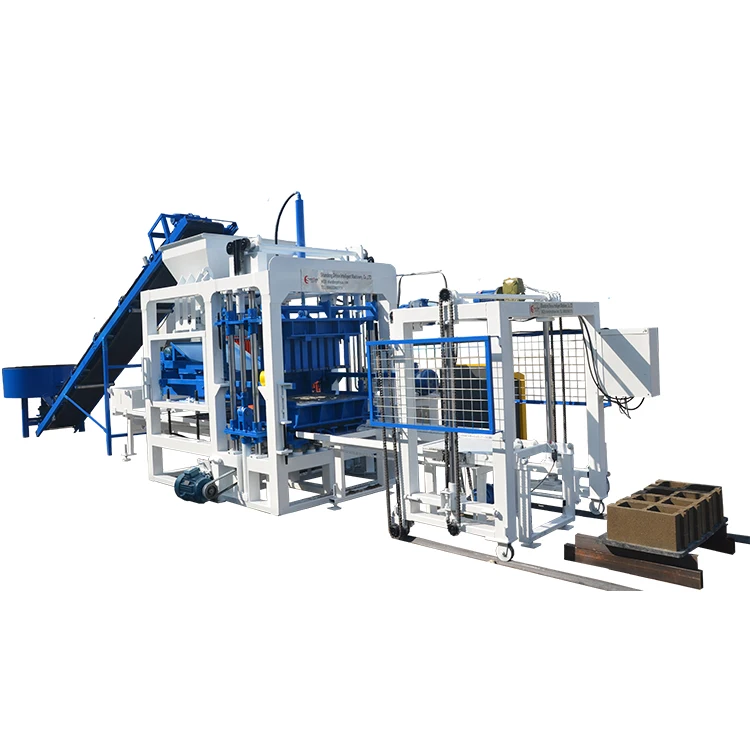
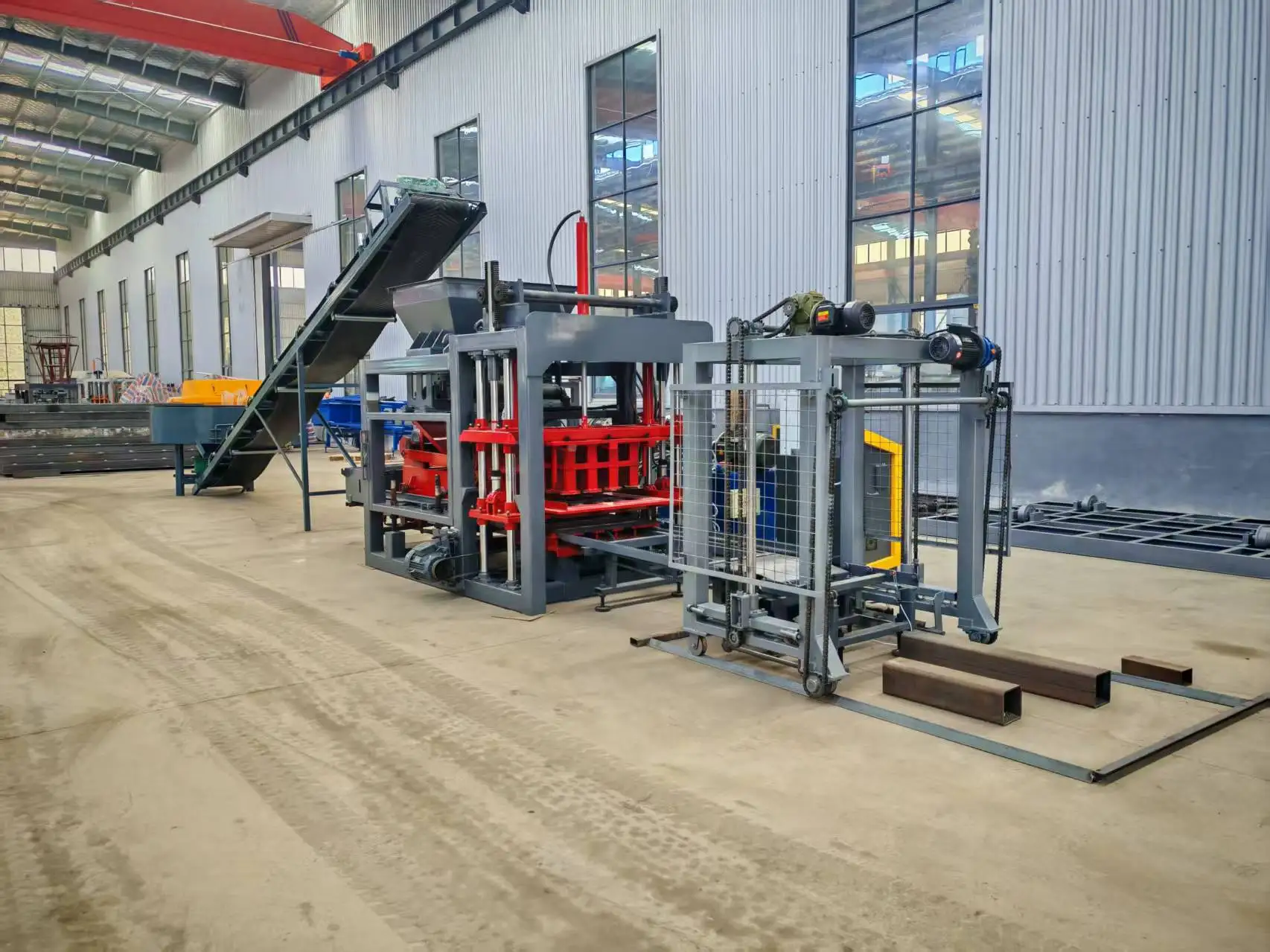
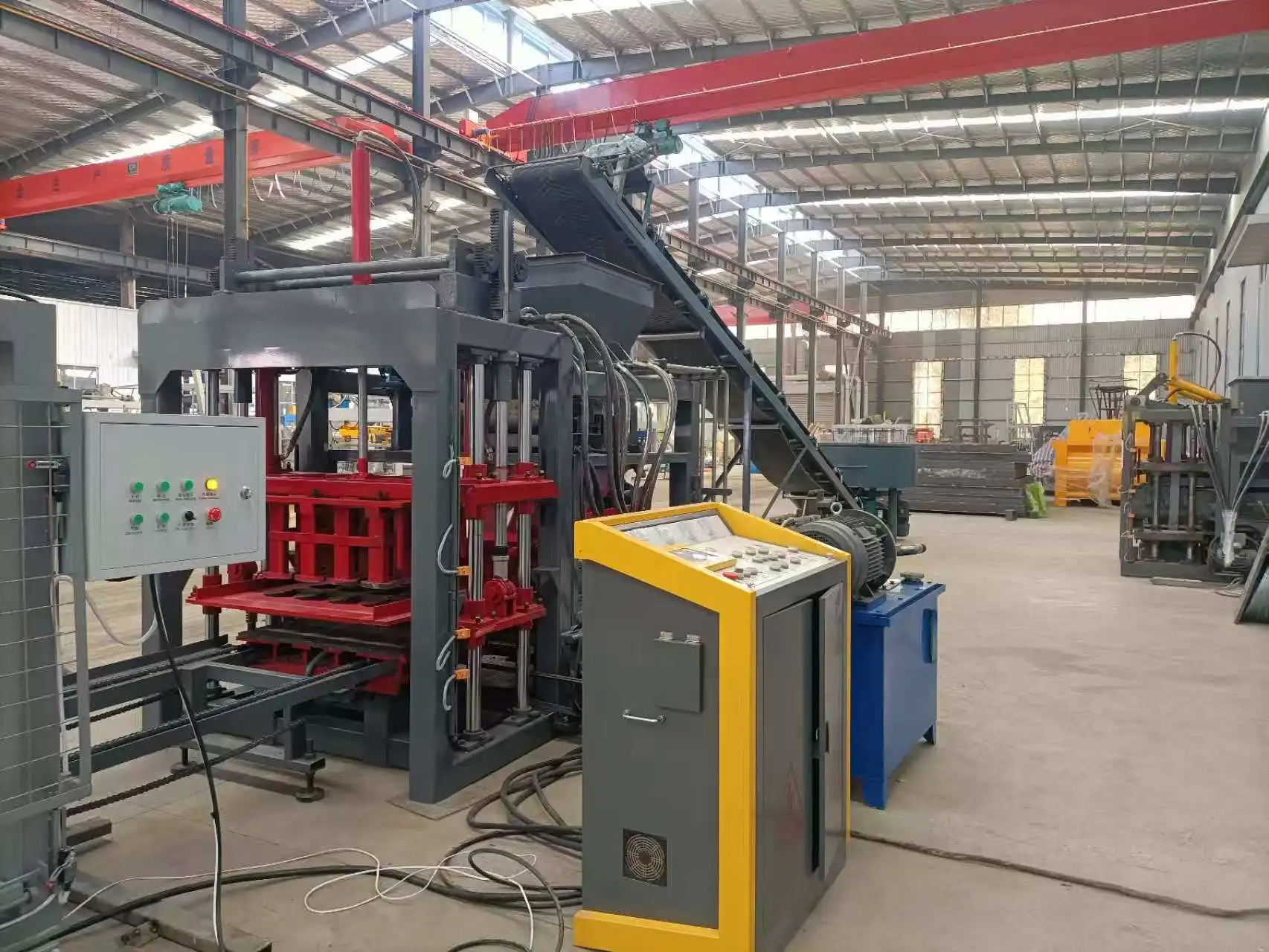
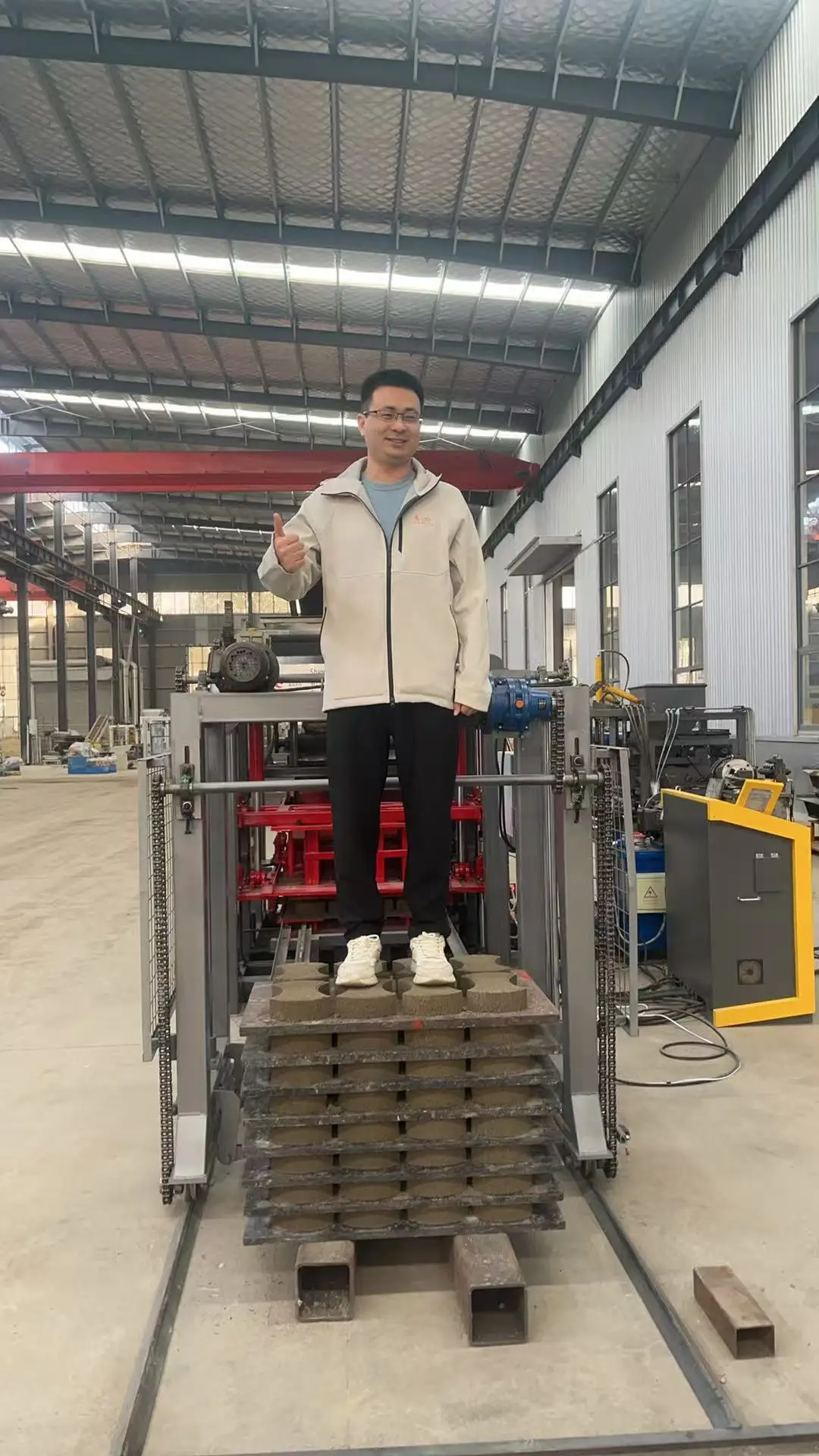
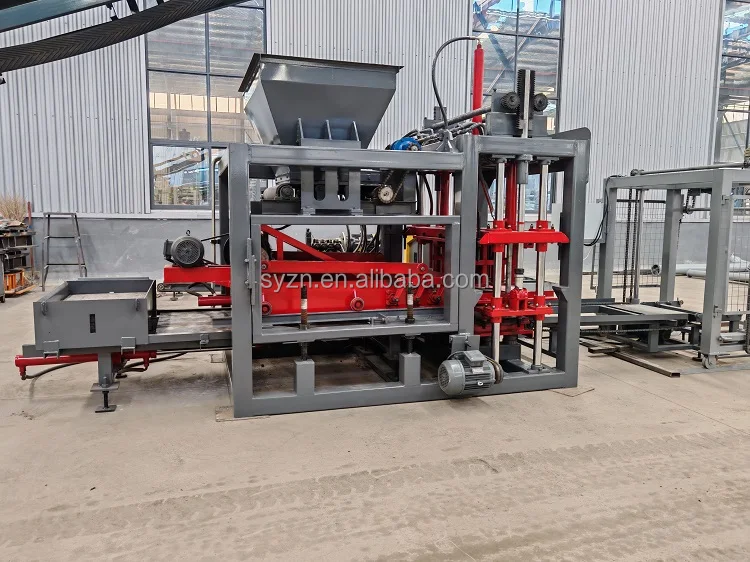
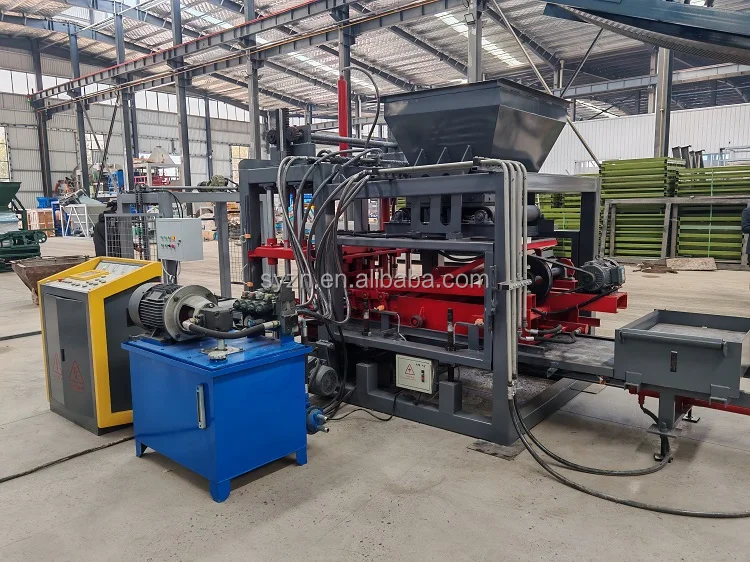
Description
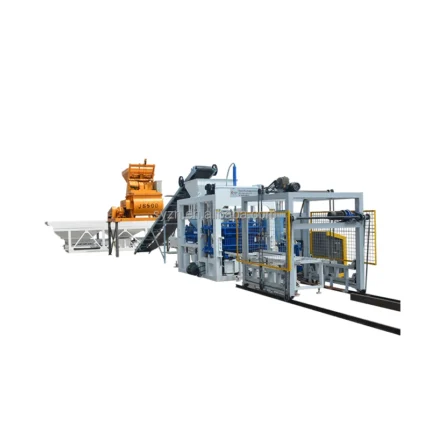
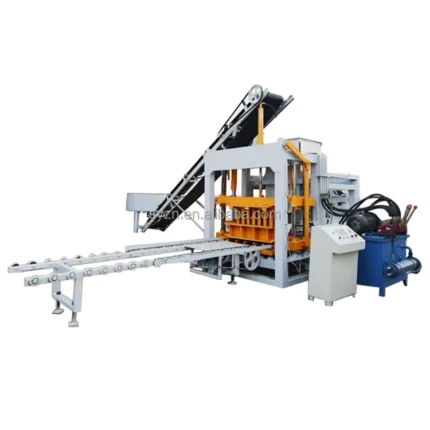
Intelligent Control Integration — PLC-managed batching and vibration logic on the QT4-15 remove operator guesswork, delivering block-to-block density consistency rather than catalogue promises.
Technical Specifications
| Parameter | Value |
|---|---|
| Model | QT4-15 |
| Product Type | Fully Automatic Concrete Block Making Machine |
| Overall Dimensions (L×W×H) | 4100×1600×2600 mm |
| Rated Pressure | 16–21 MPa |
| Main Vibration Form | Platform Vibration |
| Vibration Frequency | 4200 r/min |
| Vibration Force | 55 kN |
| Pallet Size | 880×550 mm |
| Molding Cycle | 25–30 s (basis to be confirmed per block format) |
| Overall Power | 18.45 kW |
| Total Mass | 4 T |
| Demolding Method | Hydraulic |
| Recommended Factory Area | 300 m² |
| Control System | PLC |
| Voltage & Frequency | Configurable (confirm before shipment) |
| PLC Display Language | Configurable (confirm before shipment) |
| Automation Level | Fully automatic |
| Warranty | 1 year (excluding spare parts) |
Application Suitability
| Application | Material or Output |
|---|---|
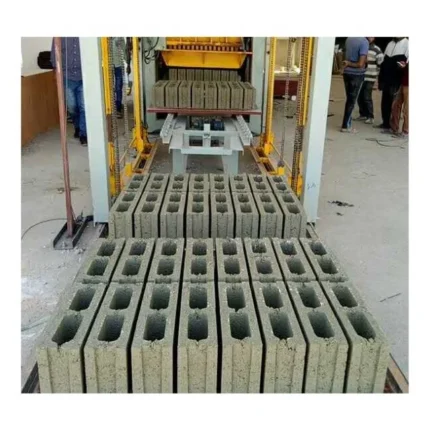
| Hollow block production | Crushed stone, sand, cement, fly ash |
| Solid block manufacturing | Gravel, slag, dust, cement blends |
| Paver and interlocking brick | Colored aggregates, fine sand, cement |
| Curbstone and kerb production | Coarse aggregate with high-cement mixes |
| On-site contractor block making | Locally sourced aggregate with variable gradation |
Why the Cycle Time Question Must Come Before the Order
A 25–30 second cycle only means something when tied to the exact block format you intend to produce.
I once watched a European buyer receive an automatic QT4-15 block machine PLC controlled system and run hollow blocks for the first shift, only to find the daily tally sitting far below the brochure figure. The quoted cycle assumed a solid paver format. Hollow blocks demand longer vibration dwell and slower demolding to avoid corner fracture. When the conversation happens after the machine lands, the only fix is a parameter re-tune over a video call — lost production days while the line sits half-loaded [NEED_CITE: typical commissioning delays from unconfirmed block format assumptions].
What PLC Logic Actually Controls on the Press
The automatic QT4-15 block machine PLC controlled system governs more than a start-stop sequence. It times the raw material feed into the mixer, regulates the vibration duration per mould cavity, and coordinates the hydraulic lift during demolding. When these three actions drift out of sync, blocks leave the press with uneven top surfaces or cracked webs. The PLC holds each step within a programmable window, so batch fifty matches batch one in density and dimension.
Where Automation Removes the Operator Variable
On a manual or semi-automatic line, pallet placement speed and feed timing depend on the operator’s rhythm. Fatigue, shift changes, and simple attention lapses introduce variation that shows up as weight scatter across a curing rack. The fully automatic configuration of the QT4-15 takes pallet feeding, material distribution, and stacking logic out of human hands. What remains for the operator is monitoring the HMI screen and responding to fault alarms — a supervisory role rather than a physical one [NEED_CITE: labour allocation differences between semi-automatic and fully automatic block lines].
Reading the Specs That Determine Block Quality
Hydraulic pressure at 16–21 MPa and vibration force at 55 kN are not independent figures; they work together to compact the mix inside the mould cavity. Insufficient pressure against strong vibration causes the mix to segregate — fines migrate to the surface while coarse aggregate sinks, producing a block that looks smooth but crumbles under load. The platform vibration at 4200 r/min transmits energy through the pallet into the mould base, compacting from below while the hydraulic head presses from above. Pallet size at 880×550 mm dictates how many blocks sit on each board and must align with the curing rack spacing and forklift tine width already in use at the plant. Mismatching pallet dimensions means buying new racks or hand-stacking cured boards — a cost that never appears on the machine invoice. The 18.45 kW total power draw determines the dedicated circuit and breaker rating the electrician must prepare before the container arrives.
The Hidden Cost of Skipping the Configuration Conversation
Buyers who select a machine from a catalogue page without confirming their local aggregate gradation, target block format, and existing pallet inventory often discover the gap during commissioning. A mix designed for river sand behaves differently under vibration than one built on crushed basalt dust. The vibration frequency and dwell time that produce a clean-edged paver with one aggregate will fracture the same paver with another. Remote parameter adjustment is possible through the PLC, but it means days of trial runs, wasted raw material, and a curing yard full of off-spec product that cannot be sold [NEED_CITE: cost of post-delivery mix recalibration on exported block machines].
Why Sourcing the Control Side Matters
Block machinery as a single focus means the press, mould, pallet, and handling equipment are specified as one matched system rather than assembled from unrelated suppliers. The automation level is selectable — a buyer can commission the QT4-15 in a semi-automatic layout and add automatic stacking later without replacing the core press. Configuration is set against the buyer’s actual mix design and local aggregate, not a default catalogue recipe. Mould design covers the formats the buyer’s market actually sells, with custom drawings available for non-standard dimensions. Installation support includes operator training on the PLC interface, so the crew understands fault codes and parameter limits before the service engineer leaves the site.
Documentation & Verification
- Line layout drawing showing QT4-15 station positions and pallet flow path
- Capacity calculation document stating the specific block format assumed for cycle time
- PLC program backup on USB with parameter limits for each confirmed mould
- Hydraulic and electrical schematic matching the as-built QT4-15 configuration
- Factory test record run on buyer-specified aggregate blend before dispatch
- Voltage, frequency, and PLC display language confirmation sheet signed before production
Installation, Commissioning & Support
- Foundation pad must bear the QT4-15’s 4 T mass plus dynamic vibration load across the 4100×1600 mm footprint
- Dedicated circuit rated for 18.45 kW continuous draw with breaker sized to local code
- Machine ships in one 40HQ container; reassembly requires crane access and hydraulic line reconnection
- PLC parameters loaded and vibration dwell tuned against the buyer’s confirmed mix during on-site commissioning
- Operator training covers HMI navigation, mould change sequence, and daily hydraulic check routines
- Wear parts list with mould cavity inserts and hydraulic seal kit identified for first reorder cycle
What to Prepare Before Requesting a Quote
Send the target block formats with dimensions and daily output requirement so the cycle calculation reflects your actual product mix. Confirm your local aggregate type, available cement grade, and any industrial by-products like fly ash you plan to incorporate. State the voltage, frequency, and preferred PLC display language at your site, along with the pallet dimensions and curing rack layout already in use or planned.
Frequently Asked Questions
Q: How is the QT4-15’s output verified, and which block format does the cycle time assume?
A: The 25–30 second molding cycle is a range that shifts depending on whether you run hollow blocks, solid pavers, or interlocking bricks. We provide a capacity calculation document that names the exact format, mould cavity count, and pallet cycle assumption. Without that format-level breakdown, a cycles-per-hour figure is meaningless for daily planning.
Q: What PLC language and electrical options are confirmed before shipment?
A: Voltage, frequency, and PLC display language are confirmed in writing before production starts. The HMI can be set to English, Spanish, French, or other languages depending on the operator crew. Confirming these details upfront avoids a situation where the machine arrives and the electrician discovers the control panel does not match local supply standards.
Q: Can a semi-automatic QT4-15 setup be upgraded to full automation later?
A: The automation level is selectable at order or after installation. A buyer can start with manual pallet handling and add automatic pallet feeding, stacking, and cubing modules later. The PLC architecture supports these additions without replacing the core press or hydraulic system, protecting the initial investment.
Q: How are vibration force and hydraulic pressure matched to my local aggregate?
A: We ask for a sample or gradation report of your local crushed stone, sand, or fly ash before finalizing the PLC parameters. Vibration dwell time and hydraulic head pressure are then set to compact that specific mix without segregation. If the aggregate changes seasonally, the PLC stores multiple recipes the operator can switch between.
Q: What mould change system is included, and how long does a format changeover take?
A: The QT4-15 uses a bolt-on mould mounting system with alignment pins. Changeover time depends on whether you swap a single mould or the entire pallet-mould assembly, and on operator familiarity. We provide a mould drawing and changeover sequence in the manual, and the PLC stores separate vibration profiles for each registered mould.