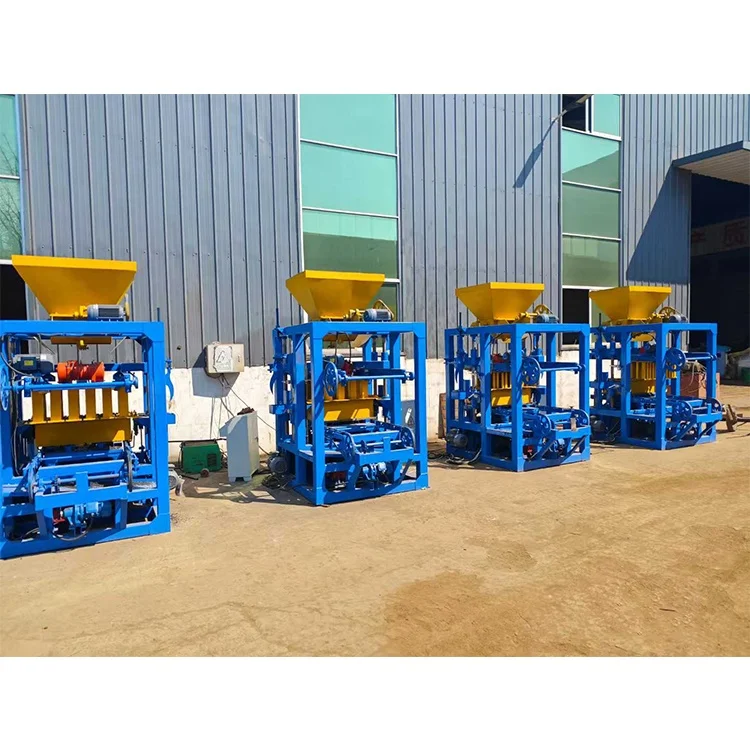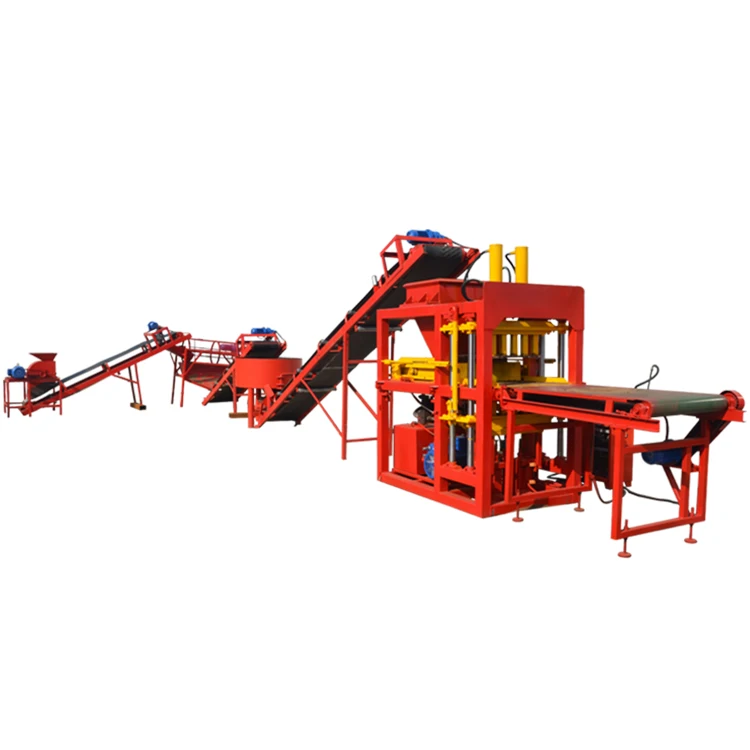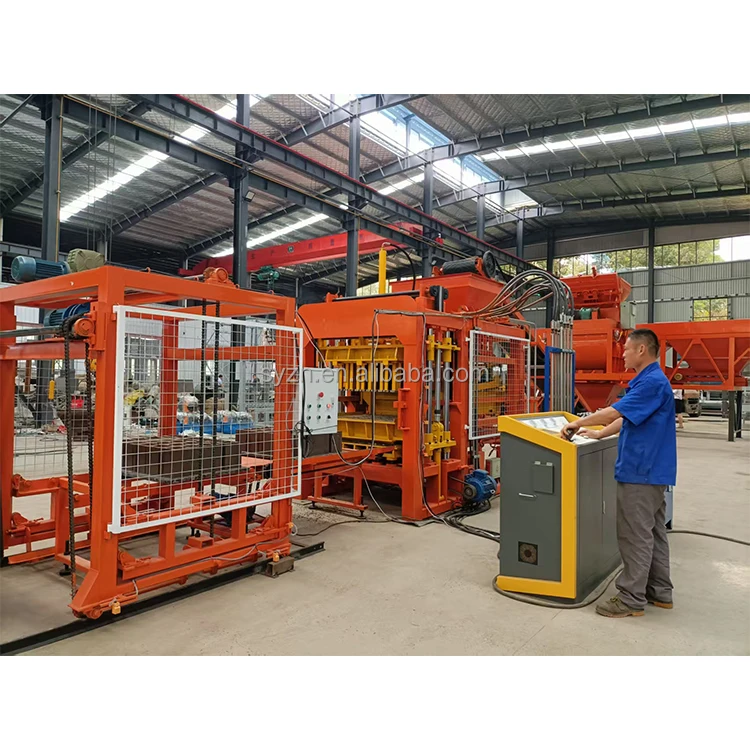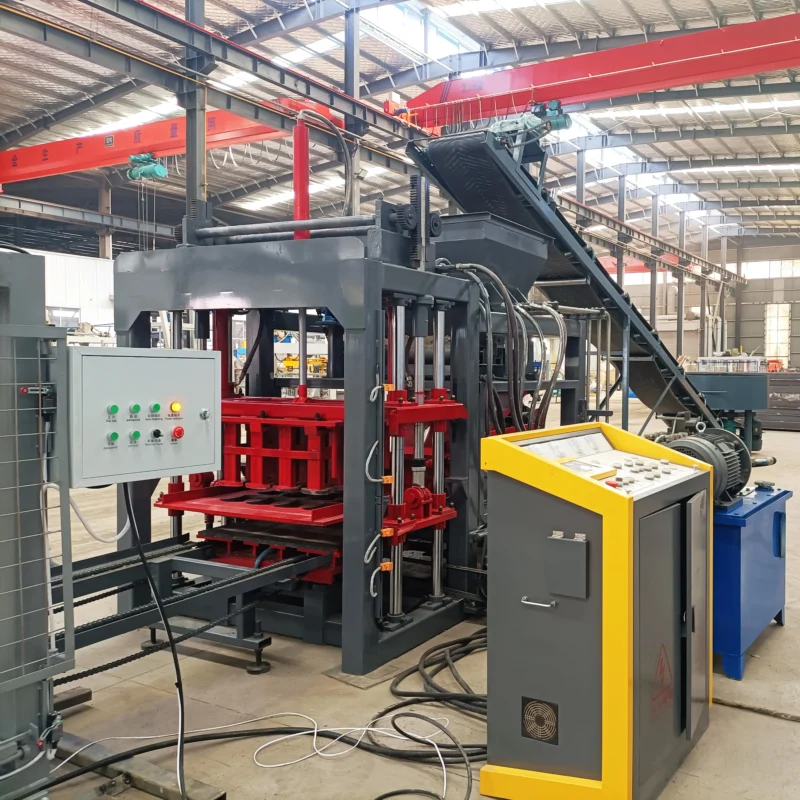
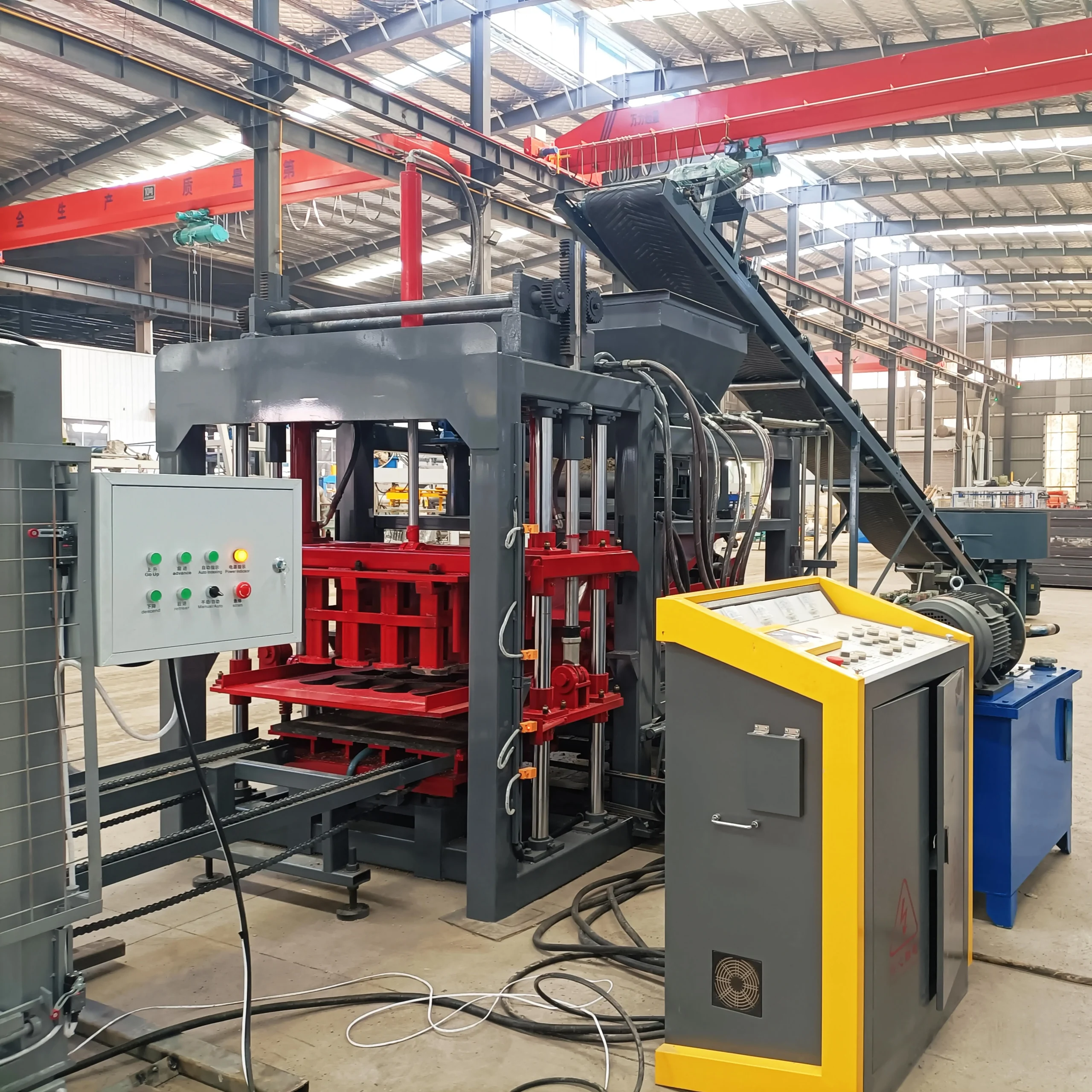
Description
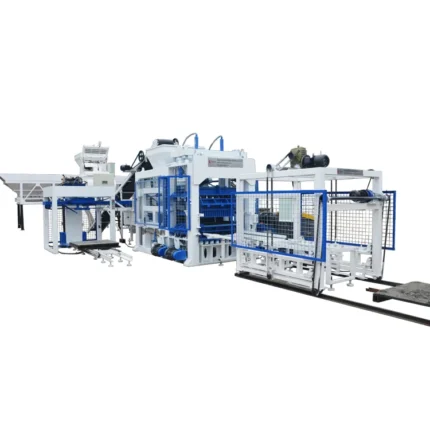
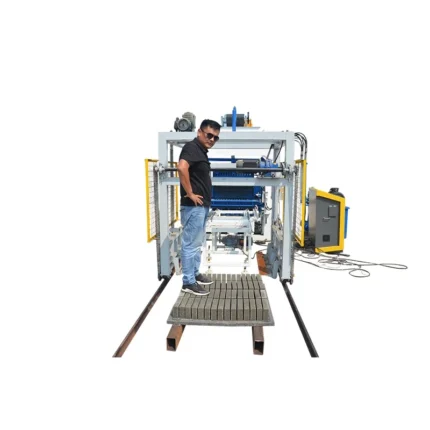
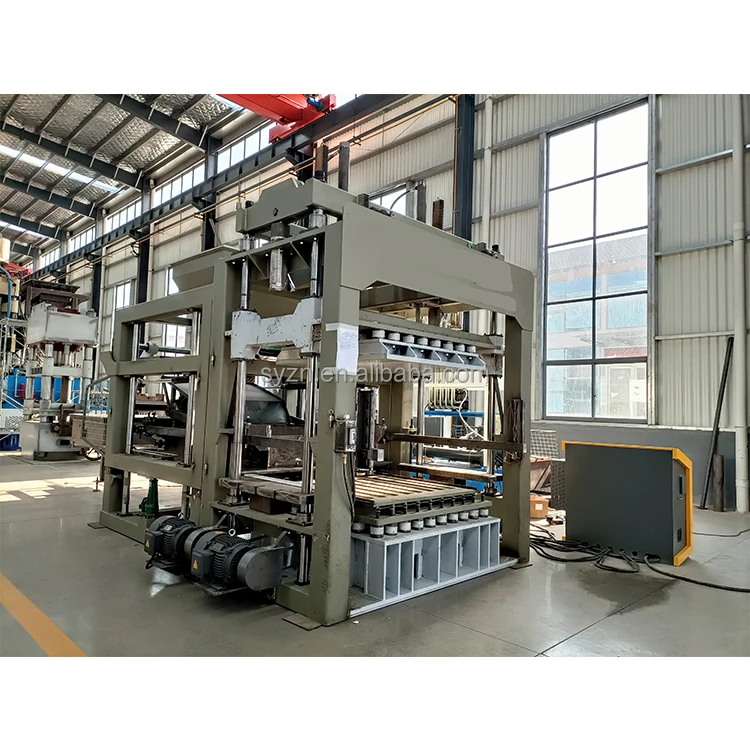
PLC-Controlled Automation — the QT4-15A sequences pallet feeding, pressing, and stacking from one programmable logic controller instead of relying on manual cues between stations.
Technical Specifications
| Parameter | Value |
|---|---|
| Model | QT4-15A |
| Product Type | Fully Automatic Concrete Block Making Machine |
| Overall Dimensions (L×W×H) | 4100×1600×2600 mm |
| Rated Pressure | 16–21 MPa |
| Main Vibration Form | Platform Vibration |
| Vibration Frequency | 4200 r/min |
| Vibration Force | 55 kN |
| Pallet Size | 880×550 mm |
| Molding Cycle | 25–30 s (basis not stated in source — confirm block format / material / thickness) |
| Overall Power | 18.45 kW (source value — verify against manufacturer catalog) |
| Total Mass | 4 T |
| Demolding Method | Hydraulic |
| Control System | PLC, configurable display language |
| Automation Level | Fully Automatic |
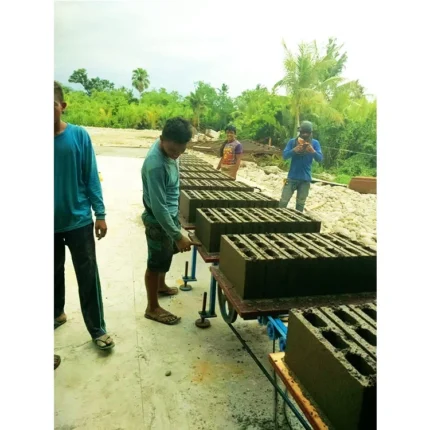
| Applied Products | Hollow blocks, solid blocks, pavers, interlocking blocks, curbstone, colored pavers |
| Loading | 1×40HQ container (basic equipment) |
Application Suitability
| Application | Material or Output |
|---|---|
| Hollow block production for housing projects | Crushed stone, sand, cement, fly ash |
| Solid block manufacturing for load-bearing walls | Gravel, cement, slag blends |
| Interlocking paver runs for driveways and walkways | Colored aggregates, fine sand, cement |
| Curbstone forming for road and infrastructure work | Coarse aggregate, cement, dust |
| On-site block production by contractors | Locally available sand and crushed stone |
Why the PLC Language Question Must Come Before the Price Tag
Confirming the PLC display language in writing before production starts is what keeps commissioning from stalling on the first day.
I once watched a crew in the Middle East stand around an automatic concrete block making machine PLC controlled system because the screen was in English and the manual was in Arabic — neither matched the operator’s working language. The automatic stacking program sat there with parameters nobody felt confident adjusting. Two days of on-site time burned before the interface was sorted and the line ran properly [NEED_CITE: language and voltage confirmation practices for exported industrial machinery]. That delay had nothing to do with the press itself and everything to do with a specification that was left blank on the order sheet. When buyers skip the control-language conversation early, the cost shows up later as idle labor, missed project milestones, and frustrated operators who lose trust in the automation they paid for.
What Full Automation Actually Removes from the Operator
On a semi-automatic line, the operator decides when the pallet feeds, when the stacker lifts, and when the cubed output moves to the curing area. Each decision introduces variation between shifts. The QT4-15A as a fully automatic concrete block making machine PLC controlled unit takes those decisions off the shop floor. Pallet feeding, vibration timing, hydraulic demoulding, and stacking sequence all run from one programmable controller. The operator monitors rather than choreographs, and batch-to-batch consistency follows from that shift in responsibility.
How the PLC Holds Consistency Across Shifts and Formats
Once the molding cycle, vibration duration, and hydraulic pressure are locked into a recipe file, the controller repeats them regardless of who is on shift or what hour it is. When the product mix changes — say from hollow blocks to interlocking pavers — the operator calls up a different recipe rather than resetting parameters from memory. This is where the automatic concrete block making machine PLC controlled architecture earns its keep: less reliance on individual experience, more reliance on stored settings that travel with the machine [NEED_CITE: PLC recipe management in concrete block production]. A plant running three block formats across two shifts sees the benefit most clearly at the curing rack, where block strength readings stay within a narrow band instead of drifting with each crew change.
Reading the Numbers That Actually Matter
The 16–21 MPa rated pressure and 55 kN platform vibration force work as a pair. Pressure compacts the mix while vibration settles fine aggregate into voids; if one is too low relative to the other, blocks come out either crumbly or over-pressed with surface cracking. The 880×550 mm pallet size defines how many blocks press per cycle and must match the curing rack spacing and forklift fork width already in use at the plant. The 25–30 s molding cycle is a range — the exact figure depends on block height, mix moisture, and vibration amplitude. Asking for a per-format cycle time during configuration prevents surprises once the machine is bolted to the floor. Overall power draw sits at approximately 18.45 kW, which determines the dedicated circuit and breaker rating the electrical contractor needs to prepare before delivery.
The Hidden Cost of Skipping the Automation Audit
A buyer who orders a fully automatic press without confirming pallet handling, stacking, and curing rack layout often ends up with an automated press feeding into a manual back end. Pallets stack by hand. Cured blocks cube by hand. The automation investment sits at the front of the line while the bottleneck migrates to the rear [NEED_CITE: bottlenecks in partially automated block production lines]. On a different project, I saw a plant specify a pallet size that did not fit their existing curing racks, forcing a rack replacement that cost more than the pallet system itself. These mismatches are not equipment failures — they are configuration gaps that show up only when the whole line is expected to run together.
Why Sourcing Through This Channel Works
Block machinery is the single focus here, which means the press, mould, pallet, and handling equipment are specified as one matched system rather than assembled from separate suppliers. Configuration is set against the buyer’s actual mix design and local aggregate, not a catalogue default. Mould design covers the formats the buyer’s market sells, including custom drawings when standard options fall short. Automation level is selectable — a buyer can start with semi-automatic operation and add PLC-controlled stacking later without replacing the press. Installation support includes operator training so the crew running the machine on day one understands the recipe system and the maintenance schedule from the start.
Documentation & Verification
- Line layout showing pallet flow from press through curing rack and cubing station
- Capacity calculation sheet stating the block format assumed per molding cycle
- Machine specification sheet with hydraulic and electrical schematic for the QT4-15A
- Voltage, frequency, and PLC display language confirmation signed before production
- Factory test record showing cycle time and block output per format before dispatch
Installation, Commissioning & Support
- Foundation pad sized to the 4100×1600 mm footprint with anchor bolt template provided
- Dedicated circuit rated for the 18.45 kW overall power draw with correct breaker specification
- Machine arrives dismantled for 40HQ container loading; reassembly supervised on site
- First-run commissioning includes PLC parameter setting for the buyer’s target block format
- Operator training covers recipe selection, mould change procedure, and daily maintenance checkpoints
- Wear parts list and mould inventory supplied with recommended reorder intervals
What to Include with Your Inquiry
Send the block formats your market sells along with target daily output so the capacity calculation can be built around real products rather than generic cycle figures. Include your local raw material profile — aggregate type, maximum grain size, cement grade — so the mix design aligns with what you can actually source. Specify the voltage and frequency at your site and the language your operators read on a screen, because the automatic concrete block making machine PLC controlled system must match both before it leaves the factory.
Frequently Asked Questions
Q: What tasks does full automation remove from the operator on the QT4-15A?
A: The PLC takes over pallet feeding, vibration timing, hydraulic demoulding sequence, and stacking coordination. The operator monitors the process and manages recipe changes rather than manually triggering each step, which reduces shift-to-shift variation in block density and surface finish.
Q: How is PLC language and voltage confirmed before the machine ships?
A: Both items are specified in writing during the configuration stage. The buyer signs off on display language, voltage, and frequency before production begins, and the factory test record reflects those confirmed settings so there are no surprises during on-site commissioning.
Q: Can I start semi-automatic and add full PLC automation later?
A: Yes. The automation level is selectable at order, and the QT4-15A platform supports adding PLC-controlled pallet feeding and stacking to an existing semi-automatic setup. Planning the upgrade path during initial specification keeps wiring and mounting points ready.
Q: How does automation level affect mould change time?
A: A PLC-equipped line stores mould-specific recipes, so vibration duration, pressure, and cycle parameters reload automatically when the operator selects a new format. This removes manual trial-and-error from the changeover, though physical mould swap time still depends on the clamping system chosen.
Q: What remote diagnostics and consistency features does the PLC offer?
A: The controller logs cycle data including pressure, vibration time, and output count per recipe. Operators and plant managers review these logs to spot drift in molding parameters before block strength falls out of specification. Remote access capability depends on the PLC model selected during configuration.