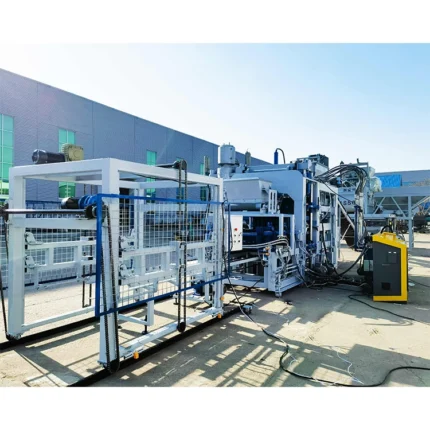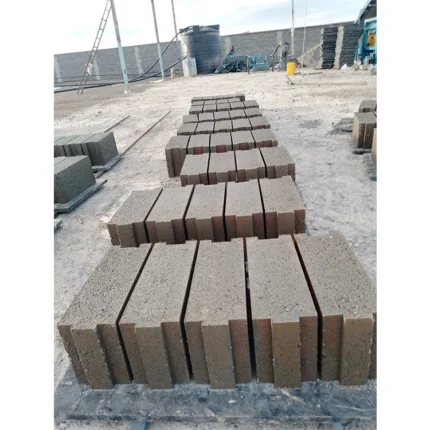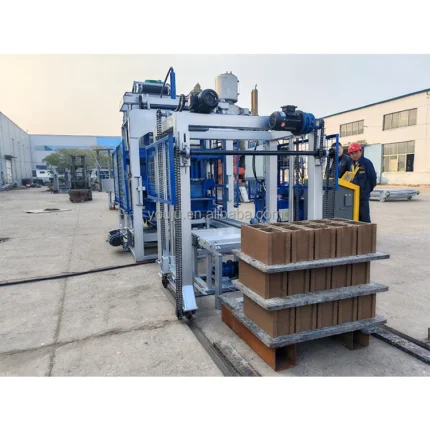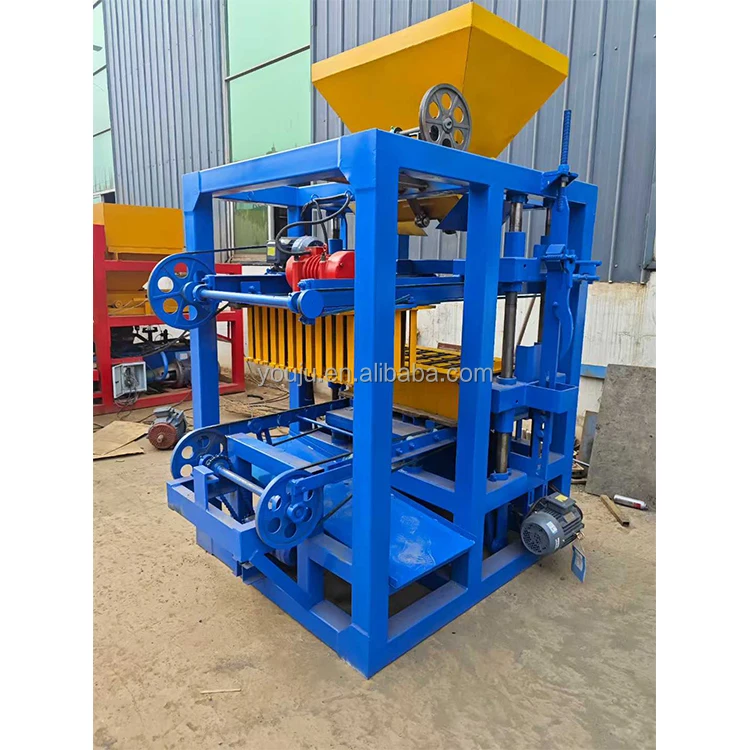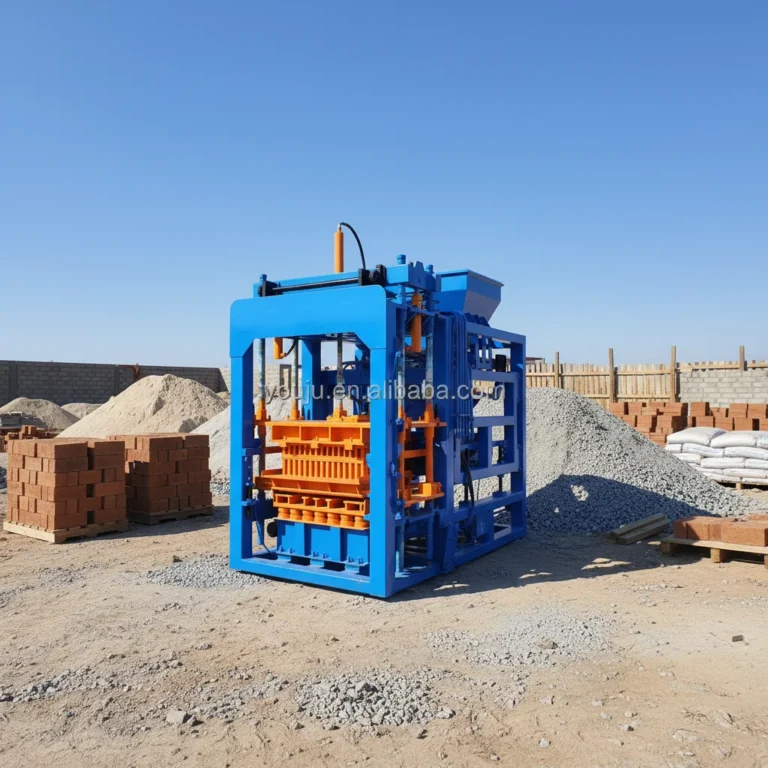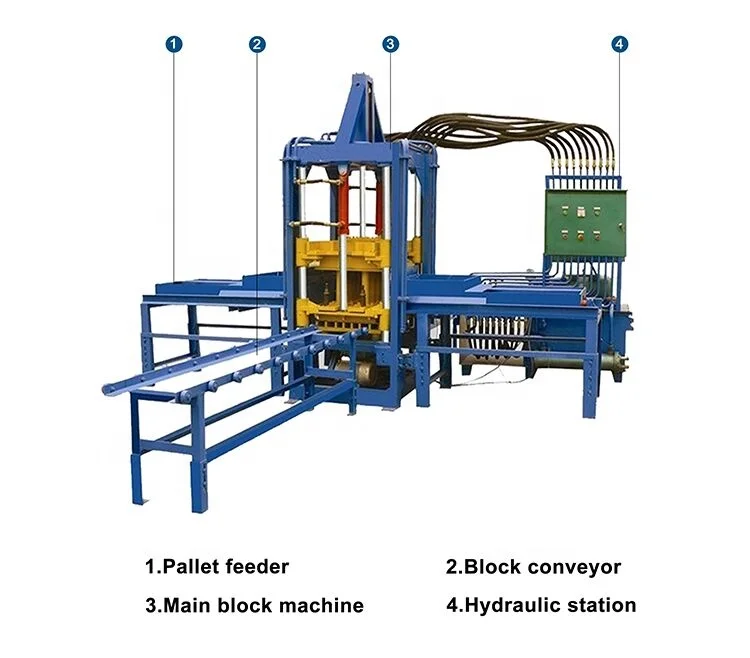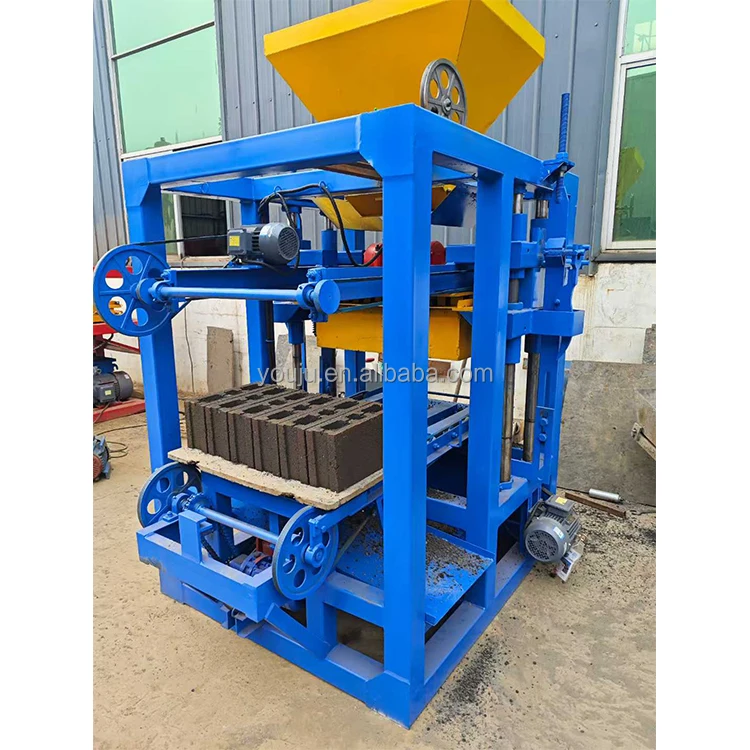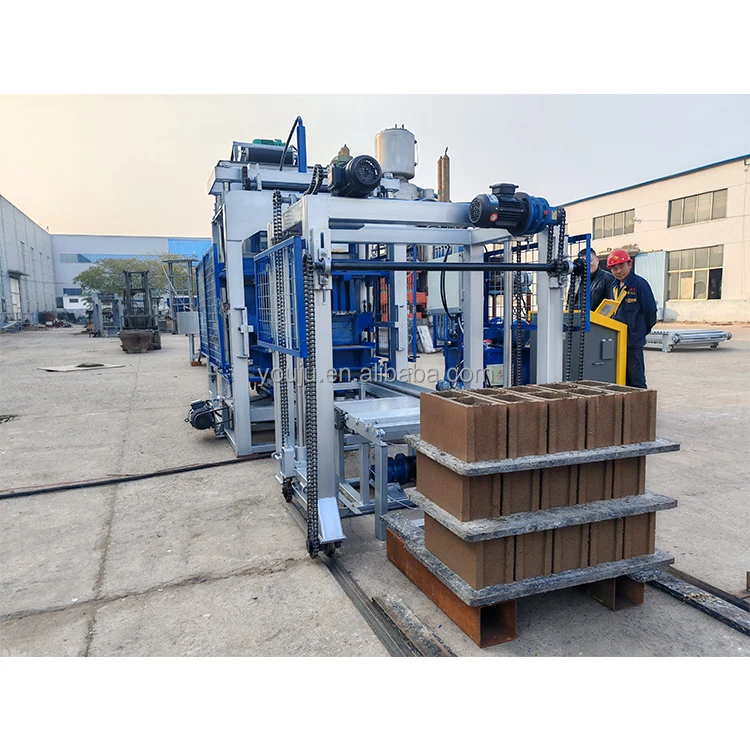


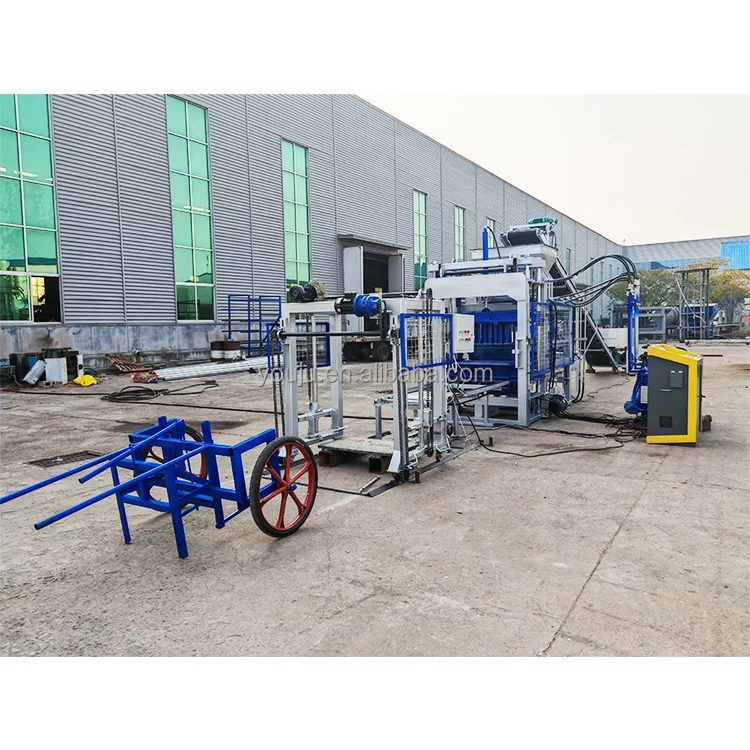

Description
Parameter Lock Before Build — we confirm voltage, frequency, and PLC display language in writing before production starts, so your QT4-15 powers up and runs in the local language on day one.
Technical Specifications
| Parameter | Value |
|---|---|
| Model | QT4-15 |
| Product Type | Hydraulic Block Making Machine |
| Molding Cycle | 15-30s depending on block format |
| Pallet Size | 900 × 500 mm |
| Vibration Type | Platform vibration |
| Vibration Frequency | 50-70 Hz |
| Product Height Range | 50-220 mm |
| Overall Power | 24.5 kW |
| Demolding Method | Hydraulic |
| Control System | PLC |
| Output Capacity (Hollow Block 400×200×200mm) | 900-1,200 pcs/hour |
| Output Capacity (Hollow Block 400×150×200mm) | 1,080-1,440 pcs/hour |
| Output Capacity (Hollow Block 400×100×200mm) | 1,440-1,920 pcs/hour |
| Output Capacity (Paver 200×100×60mm) | 2,880-3,840 pcs/hour |
| Output Capacity (Solid Brick 240×115×53mm) | 5,930-6,720 pcs/hour |
| Mould Format Compatibility | Hollow block, paver, solid brick |
| Automation Level | Automatic — PLC controlled pallet feeding, material feeding, vibrating, demoulding |
| Raw Material Compatibility | Fly ash, slag, gangue, sand, crushed stone, cement, water |
| Block Compressive Strength | >15 MPa |
| Standards | CE (source value — verify against manufacturer catalog) |
Application Suitability
| Application | Material or Output |
|---|---|
| Hollow block production for commercial and residential walls | Crushed stone, sand, cement, fly ash blends on 900×500mm pallets |
| Interlocking paver manufacturing for walkways and yards | Sand and fine aggregate mixes with colour-face options |
| Solid brick runs for load-bearing and partition walls | Fly ash or slag-based mixes with cement binder |
| Medium-scale plant adding formats to an existing hollow block range | Single platform switching between block, paver, and brick moulds |
| First plant setup by entrepreneurs entering the block market | PLC automation compensating for limited operator experience |
What the Control Screen Language Means for Your First Production Day
A PLC screen in the wrong language turns a commissioning day into a commissioning week.
When the automatic PLC controlled QT4-15 block making machine arrives, the operator standing at the control cabinet needs to read every alarm, every parameter label, and every fault code in their own language. I once spent two full nights in the Philippines relabeling an HMI and reloading a language pack because the display defaulted to Chinese characters the local crew could not read. That delay was entirely avoidable. The fix belongs in the order confirmation, not on the factory floor [NEED_CITE: PLC HMI language configuration practices for export machinery].
The Automation Layer That Removes Operator Guesswork
The automatic PLC controlled QT4-15 block making machine coordinates material dosing, pallet feeding, vibration, and hydraulic demoulding through a single programmable sequence. Each step triggers the next based on timed intervals and sensor feedback rather than manual judgment. For a plant owner moving up from semi-automatic operation, the shift is clear: the operator monitors the line instead of driving every station. Batch-to-batch consistency follows directly from this, because the PLC holds vibration duration, pressure dwell, and feed volume constant across every cycle.
Where Intelligent Control Meets the Mould Change
Swapping from hollow block to paver format means more than lifting one mould off and bolting another on. The PLC stores parameter sets for each format — different vibration frequency within the 50-70 Hz range, adjusted hydraulic pressure, and recalibrated cycle timing between 15 and 30 seconds. When the mould change is complete, the operator recalls the matching recipe from the HMI rather than manually resetting each variable. This is where automation earns its place: it shortens the format switch and prevents the wrong settings from running through a full shift of production [NEED_CITE: PLC recipe management in hydraulic block press operation].
Reading the Specs That Actually Shape Your Output
The 900 × 500 mm pallet size defines how many block cavities fit per cycle and must match the curing racks and forklifts already on your site — a mismatch here creates a bottleneck downstream that no press speed can fix. Platform vibration at 50-70 Hz works together with hydraulic pressing to compact the mix; the frequency range allows tuning for lighter fly ash blends versus heavier crushed stone aggregates, and the combination is what pushes compressive strength above 15 MPa. The 24.5 kW overall power rating tells your electrical team what dedicated circuit capacity to prepare, and the 50-220 mm product height range means the same press can produce a 60 mm paver and a 200 mm hollow block without mechanical modification. Understanding these relationships is what separates a machine that runs from a machine that produces sellable inventory from the first week.
The Cost of Skipping the Configuration Conversation
When voltage and frequency are assumed rather than confirmed, the machine may power on but run the motor outside its rated speed — vibration frequency drops, cycle times lengthen, and the PLC throws faults the local electrician cannot trace. A control panel wired for a different frequency standard may overheat contactors within weeks. These are not warranty conversations; they are preventable specification gaps that surface only after the machine is bolted to the floor [NEED_CITE: electrical standards alignment for industrial machinery export].
Why This Sourcing Path Holds Up
Block machinery is the single focus here, which means the QT4-15 press, its mould, pallet, and handling equipment are specified as one matched system rather than assembled from separate suppliers. The configuration is set against your actual mix design, local aggregate, and target block format — not pulled from a catalogue default. Mould design covers the formats your market actually sells, and custom mould drawings are available when standard cavity layouts do not fit. Automation is selectable, so a buyer can start with the QT4-15’s PLC-controlled automatic cycle and later integrate stacking and cubing modules without replacing the press. Installation and commissioning include operator training so the crew understands the PLC interface before the technician leaves the site.
Documentation & Verification
- Line layout and capacity calculation stating the exact block format, cavity count, and cycle time assumed for each output figure
- PLC parameter sheet listing stored recipes per mould format with vibration, pressure, and timing values
- Electrical and hydraulic schematic enabling local technicians to service the control cabinet independently
- Voltage, frequency, and HMI display language confirmation document signed before production begins
- Factory test record showing block dimensions and compressive strength from your specified mix design
Installation, Commissioning & Support
- Foundation pad must accommodate the QT4-15 footprint with level tolerance for the 900 × 500 mm pallet track alignment
- Dedicated 24.5 kW circuit with correct voltage and frequency as confirmed in the pre-production document
- PLC cabinet powered and language verified on arrival before mechanical commissioning begins
- Mould-mounted trial run producing samples from your local aggregate mix for dimensional and strength checks
- Operator training on HMI recipe recall, alarm response, and hydraulic pressure adjustment per format
- Wear parts and mould list provided so first replacement order ships with the machine
What to Include in Your Inquiry
To configure the automatic PLC controlled QT4-15 block making machine correctly, share your target block formats and the daily output you need for each. Tell us the local raw materials you plan to use — whether fly ash, river sand, or crushed stone — and the compressive strength your market requires. Confirm your site voltage, frequency, and the language your operators need on the PLC screen. If you have existing pallets, curing racks, or forklifts, send their dimensions so the pallet and handling spec aligns from the start.
Frequently Asked Questions
Q: How do I verify the quoted output capacity against my specific block format?
A: Request a capacity calculation document that states the exact block dimensions, mould cavity count, and cycle time assumed for each output number. The QT4-15 delivers 900-1,200 pcs/hour for 400×200×200mm hollow blocks, but other formats change that figure. We provide this breakdown per format before order confirmation.
Q: What PLC language options are available before shipment?
A: The HMI display can be set to English, Spanish, or other requested languages before the machine leaves the factory. We confirm the language in writing during the order process so the screen reads correctly from the first power-on. This avoids on-site relabeling and commissioning delays.
Q: How does automation on the QT4-15 compare to semi-automatic machines?
A: The QT4-15 automates pallet feeding, material dosing, vibration, and hydraulic demoulding through PLC control. Semi-automatic machines require manual intervention at several of these steps. The upgrade path from this platform extends to adding automatic stacking and cubing modules later without replacing the press itself.
Q: What voltage configurations does the machine support?
A: The QT4-15 can be configured for various voltage and frequency standards required by your local grid. We lock the exact voltage, frequency, and phase specification in writing before production starts, ensuring the motor, contactors, and PLC power supply all match your site conditions on arrival.
Q: Which electrical and hydraulic components are used, and how does this affect spare parts?
A: Electrical and hydraulic components are sourced from original imports or established brands chosen for availability in export markets. The electrical and hydraulic schematic is supplied with the machine so your local technicians can identify and replace valves, contactors, and sensors independently without waiting for specialist support.