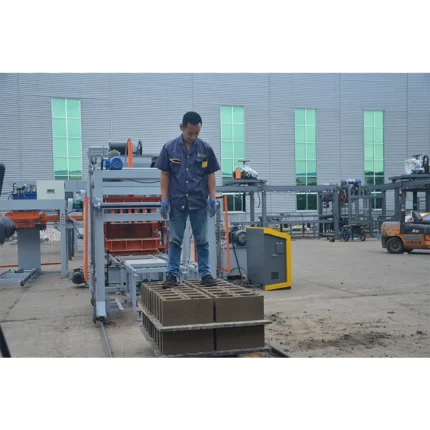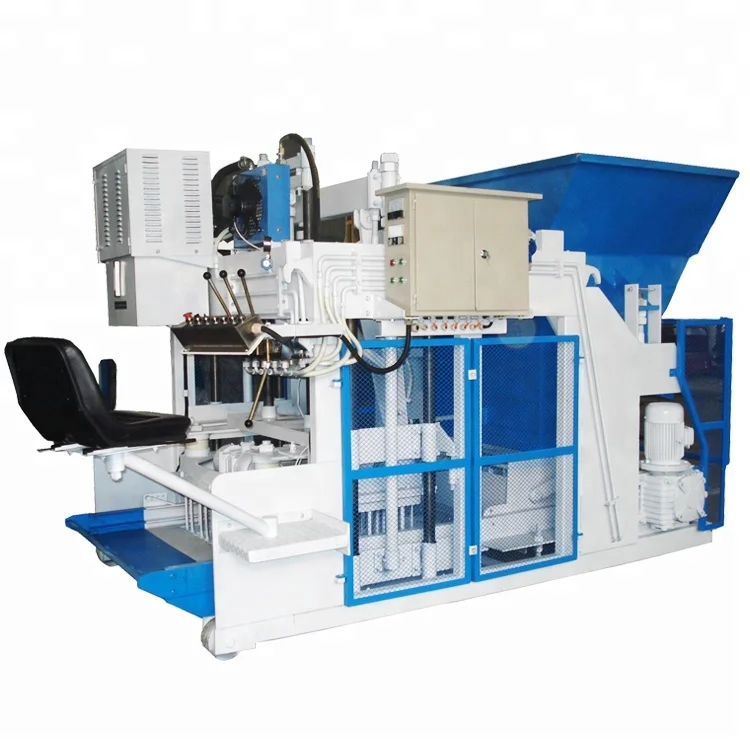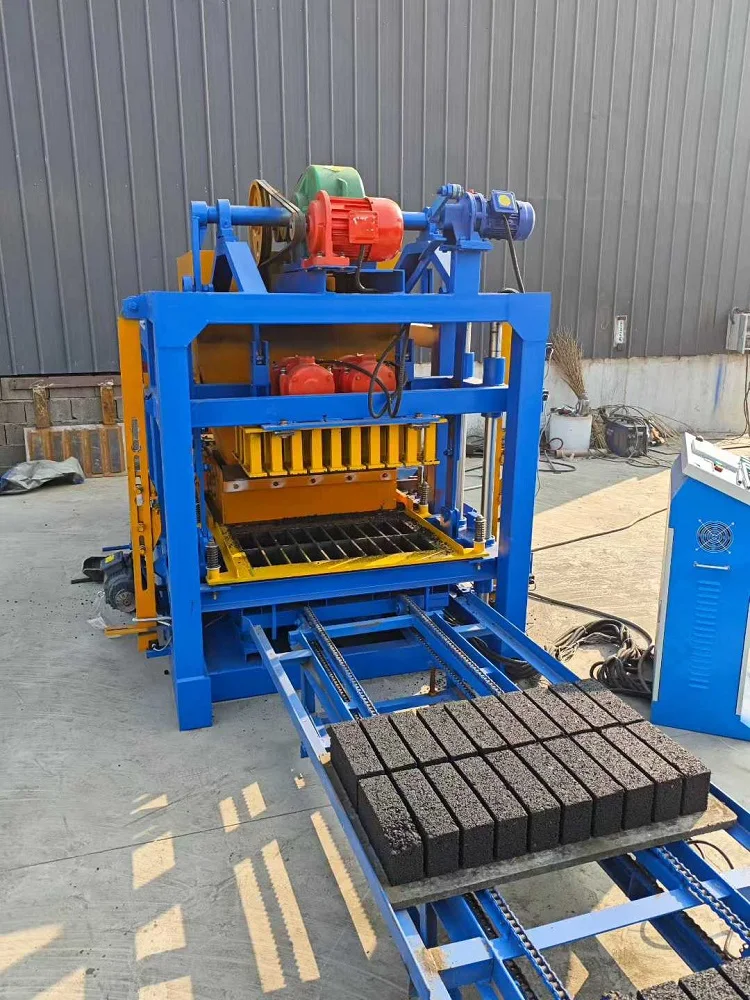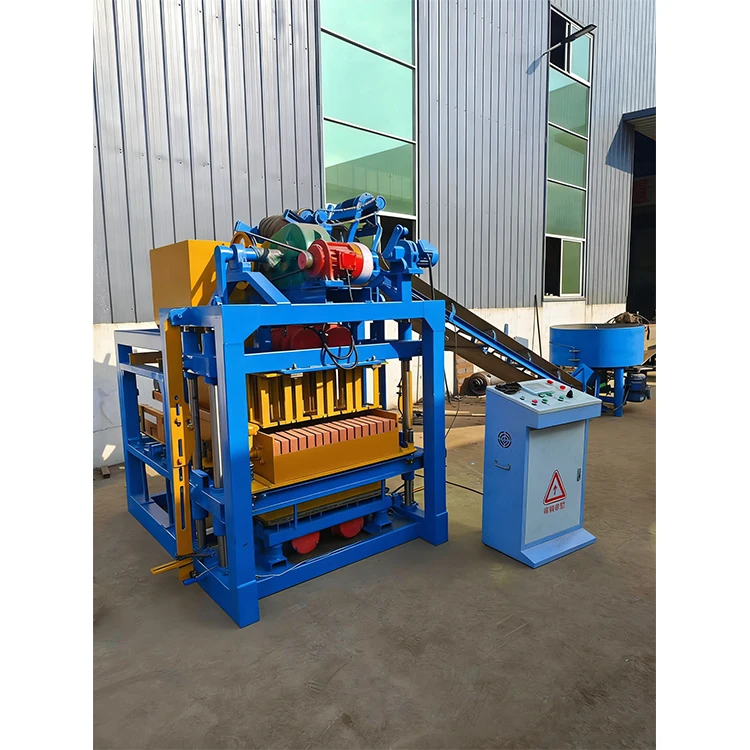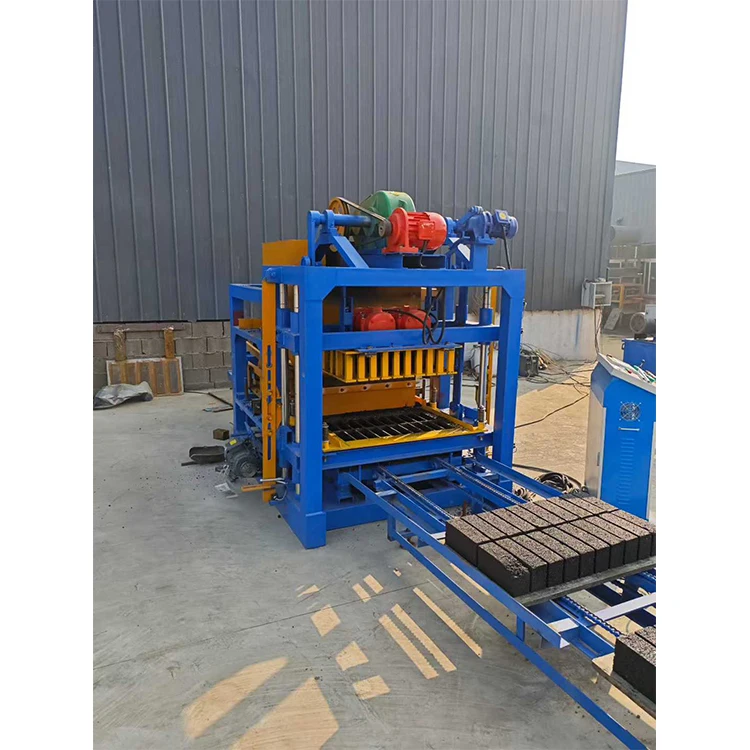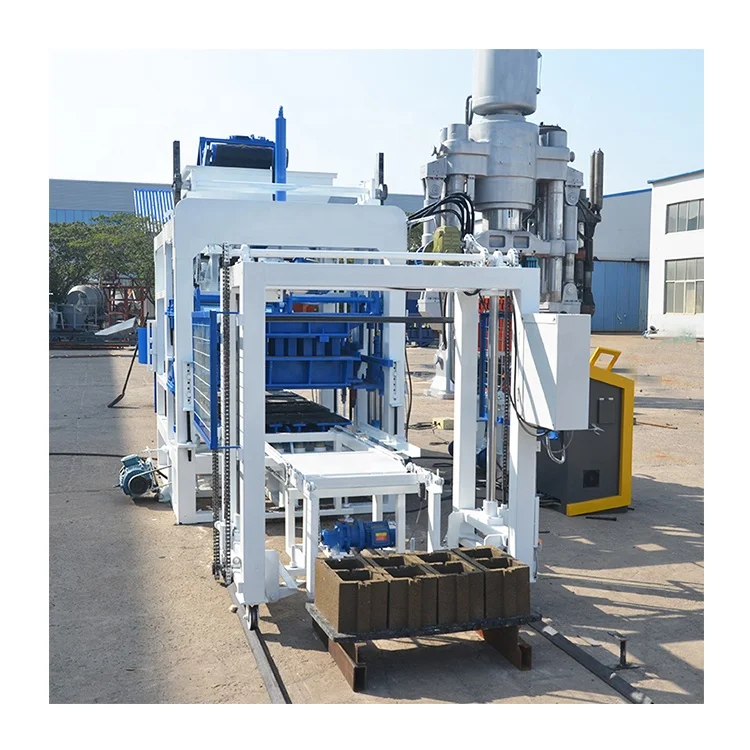
Description
Precision Parameter Matching — Every vibration cycle and hydraulic stroke on the QT4-16 is logged by the PLC, so your mix design gets the exact pressure it needs rather than a catalogue default.
Technical Specifications
| Parameter | Value |
|---|---|
| Model | QT4-16 |
| Product Type | Automatic Hydraulic Concrete Block Making Machine |
| Overall Dimensions (L×W×H) | 7400×1950×2800 mm |
| Rated Pressure | 21 MPa |
| Main Vibration Form | Platform Vibration |
| Vibration Frequency | 2800-4500 r/min |
| Pallet Size | 900×550 mm |
| Molding Cycle | 15-20 s (basis not stated in source — confirm block format, material, and thickness before quoting output) |
| Vibration Force | 40 kN |
| Total Mass | 5 T |
| Demolding Method | Hydraulic |
| Factory Area Required | 600 m² |
| Control System | PLC intelligent control with man-machine interface, logic control, malfunction diagnosis, and remote monitoring |
| Automation Level | Full Automatic |
| Voltage & Frequency | Configurable to target market requirements |
Application Suitability
| Application | Material or Output |
|---|---|
| Hollow block production | Crushed stone, sand, cement, and fly ash mixes |
| Solid block manufacturing | Gravel, cement, and slag blends |
| Paving block and colored paver runs | Fine aggregate with pigment additives |
| Interlocking block and kerbstone forming | Coarse aggregate with cement binder |
Why the Control Language Must Be Decided Before Crating
An automatic concrete block making machine PLC controlled in the wrong language is a very expensive paperweight on day one.
I spent two extra days on a Middle East site watching operators stare at an English-only HMI they could not read. Fault codes sat unread, cycle parameters were guessed at, and the local electrician refused to touch the cabinet until the interface made sense to him. That delay cost the contractor more in idle crew wages than the machine’s sea freight. Since then, every QT4-16 I prepare ships with the PLC display language and voltage confirmed in writing before the crate is nailed shut [NEED_CITE: voltage and frequency standards by export market].
What the PLC Actually Takes Over from the Operator
On a manual or semi-automatic press, the operator decides when to vibrate, how long to hold pressure, and when to demold. Those decisions change shift to shift, which is why block strength wanders. The QT4-16 PLC stores the vibration time, pressure curve, and demold delay as a recipe tied to each mould code, so batch-to-batch consistency no longer depends on who is running the panel.
Remote Diagnostics Across Time Zones
The remote monitoring function lets a technical team pull live cycle logs and fault histories from a site thousands of kilometres away. When a valve sticks or a proximity sensor drifts, the alarm arrives with the exact I/O address, cutting the typical phone-tag troubleshooting sequence down to a single targeted call.
Platform Vibration and Hydraulic Pressure Working Together
Block density comes from the relationship between vibration force and hydraulic clamp pressure, not from either number alone. The QT4-16 pairs a 40 kN platform vibration at up to 4500 r/min with 21 MPa rated hydraulic pressure. If your local aggregate is angular crushed stone, the PLC recipe can extend vibration time while lowering peak pressure to avoid micro-cracking; if you run fine fly ash, the reverse adjustment gives a tighter surface finish [NEED_CITE: CE machinery directive requirements for industrial equipment].
Reading the Specs That Actually Matter
Pallet size dictates your curing rack geometry and forklift pocket spacing. The 900×550 mm pallet on this press fits standard four-way entry racks, but if your existing curing yard uses 1000×600 mm pallets, forcing a mismatch means buying a new fleet of racks or hand-stacking green blocks. Factory footprint is listed at 600 m², which covers the press, mixer, and pallet return loop but not raw material bays or curing area. Molding cycle is given as 15-20 seconds, and that figure is meaningless without stating the block format, wall thickness, and target density — always request the cycle time written against your specific product [NEED_CITE: block cycle time assumptions by format].
The Hidden Cost of Skipping Configuration Details
When voltage and frequency are left as an afterthought, a 60 Hz motor rewound for 50 Hz runs hotter and vibrates at a frequency the original recipe did not anticipate, producing blocks that pass the press but crack in the curing yard. A PLC display in an unread language means the operator ignores fault warnings until a hydraulic hose bursts instead of catching a pressure drop early. These are not manufacturing defects; they are specification gaps that surface only after the machine is bolted to the floor.
Why Source This Press Through Our Automation-Focused Workflow
Block machinery is our single product focus, so the press, mould, pallet, and handling stations are specified as one matched system. Every QT4-16 leaves with a configuration sheet set against your actual mix design and local aggregate, not a catalogue default. Automation level is selectable — you can start with the full PLC suite and add automatic stacking later without rewiring the main cabinet. Mould design covers the formats your market sells, and custom drawings are reviewed before the first pour. Installation support includes on-site operator training in the language the PLC already speaks.
Documentation & Verification
- Factory test record on your block format before crate sealing
- PLC language and voltage confirmation sheet signed prior to dispatch
- Machine specification sheet listing pressure and vibration matched to target product
- Hydraulic and electrical schematic matching as-built wiring
- Operation manual covering recipe setup and fault diagnosis steps
Installation, Commissioning & Support
- Foundation pad leveled within 5 mm across the 7400 mm press length
- Dedicated circuit sized for 21 MPa hydraulic pump inrush current
- PLC display language verified on-site before first production run
- Vibration recipe tuned to your aggregate during commissioning week
- Operator training covers fault diagnosis screen and remote monitoring setup
- Wear parts list matched to your annual production plan
What to Share in Your First Inquiry
Send your target block format with dimensions, the daily output you need, and the local aggregate you plan to use. Include your site voltage, frequency, and the language your operators read. If you already run a mixer or curing racks, list their pallet size and throughput so the line can be balanced around them.
Frequently Asked Questions
Q: How does the PLC remote diagnostics feature work and what connectivity is needed?
A: The PLC exports cycle logs and fault codes over a standard Ethernet port. A site router with internet access lets our technical team read live I/O status and alarm history remotely. No proprietary modem is required, and the connection can be disabled when not in use.
Q: Which PLC display languages and voltage configurations are available?
A: The HMI supports multiple interface languages confirmed during the order stage. Voltage and frequency are set to match your local grid before the motor and transformer are fitted. A signed confirmation sheet is filed before crating.
Q: How are vibration force and hydraulic pressure matched to my mix design?
A: We run sample batches with your aggregate and cement ratio during factory testing. The PLC stores the winning recipe — vibration time, frequency, and clamp pressure — so the same density is reproduced on every cycle at your site.
Q: What automation functions reduce operator intervention on this press?
A: The PLC handles pallet indexing, vibration timing, hydraulic clamp sequence, and demold delay automatically. The fault diagnosis screen flags sensor or valve issues with the exact I/O address, so the operator addresses the real cause instead of restarting blindly.
Q: Can I upgrade from semi-automatic to full automatic later?
A: The main PLC cabinet is wired with spare I/O channels and relay positions for automatic pallet feeding and stacking modules. Upgrading later means adding the field devices and enabling the pre-loaded program block without replacing the controller.