
Description
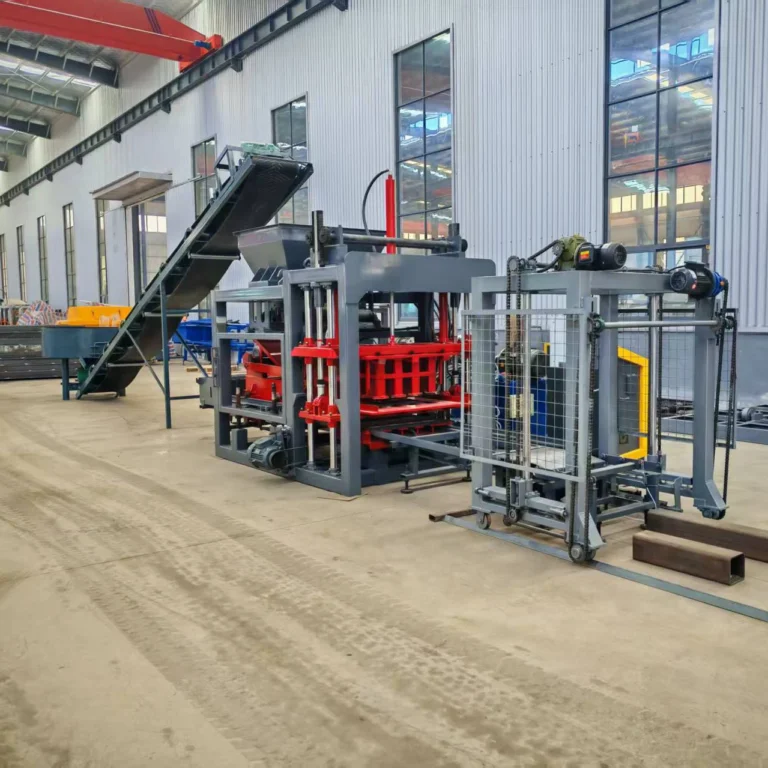
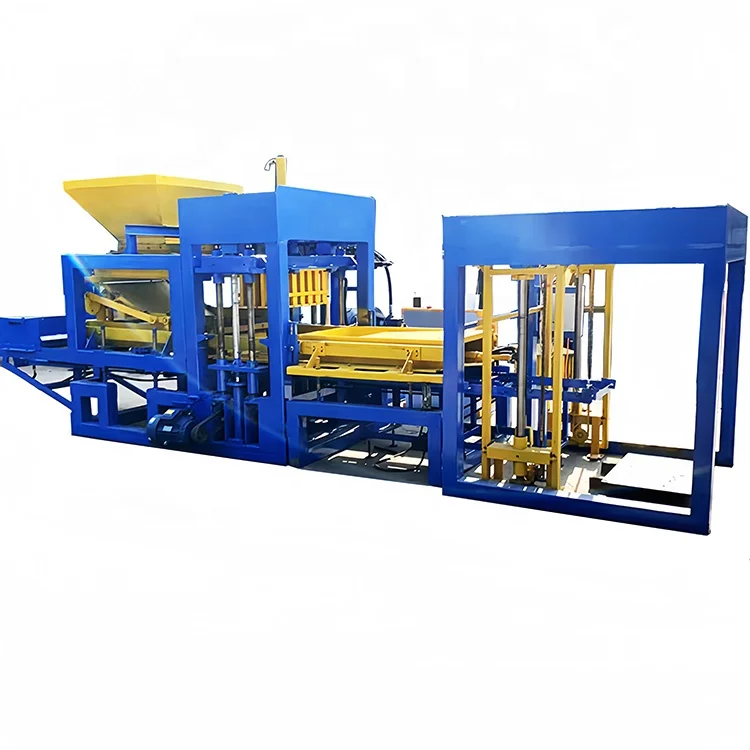
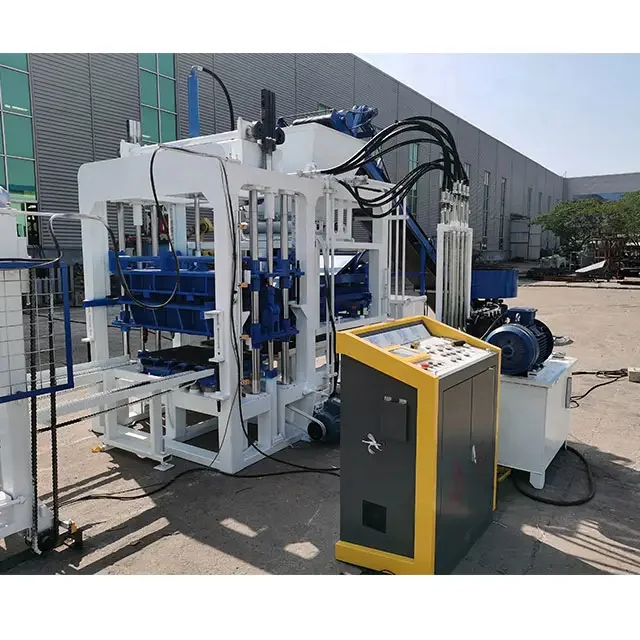
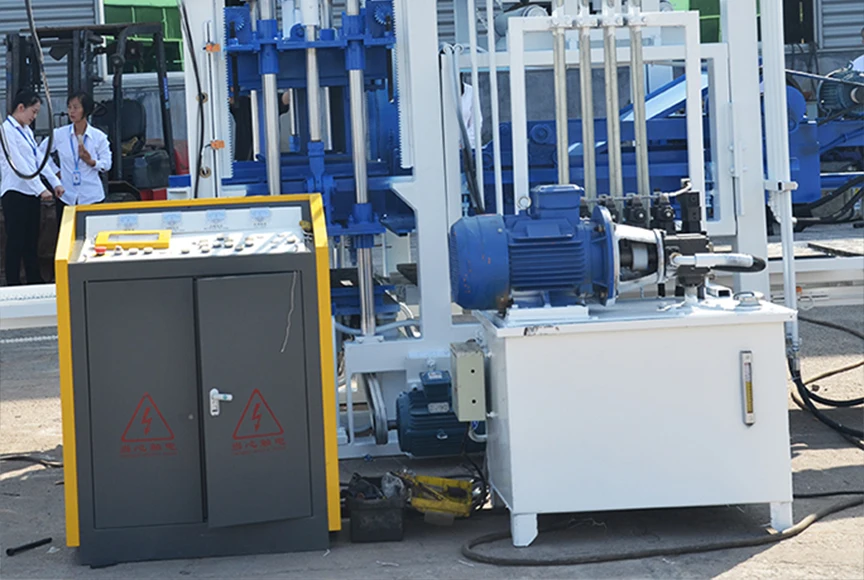
Intelligent control matching — The QT4-18 pairs PLC logic with hydraulic pressure and vibration tuning so the automation layer actually reflects the block format being pressed, not just a fixed cycle timer.
Technical Specifications
| Parameter | Value |
|---|---|
| Model | QT4-18 |
| Product Type | Automatic Hydraulic Block Making Machine |
| Overall Dimensions (L×W×H) | 3900 × 1600 × 2300 mm |
| Molding Cycle | 15–25 s |
| Vibration Force | 40–50 kN |
| Rated Power | 24 kW |
| Mixer Model | JQ350 |
| Pallet Size | 850 × 550 × 25 mm |
| Net Weight | 3 T |
| Control System | PLC control system |
| Hydraulic Station | Included (high pressure, stable operation) |
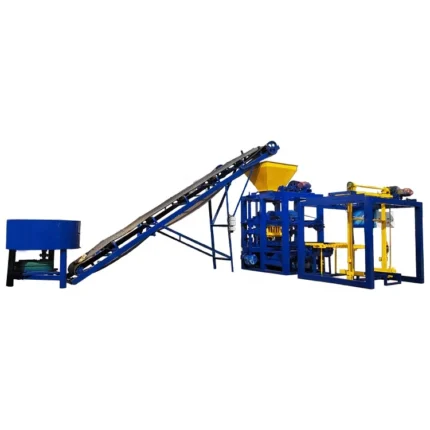
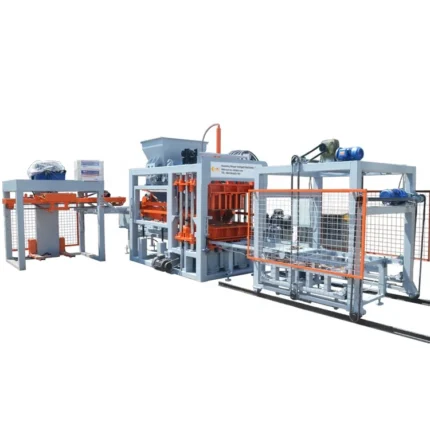
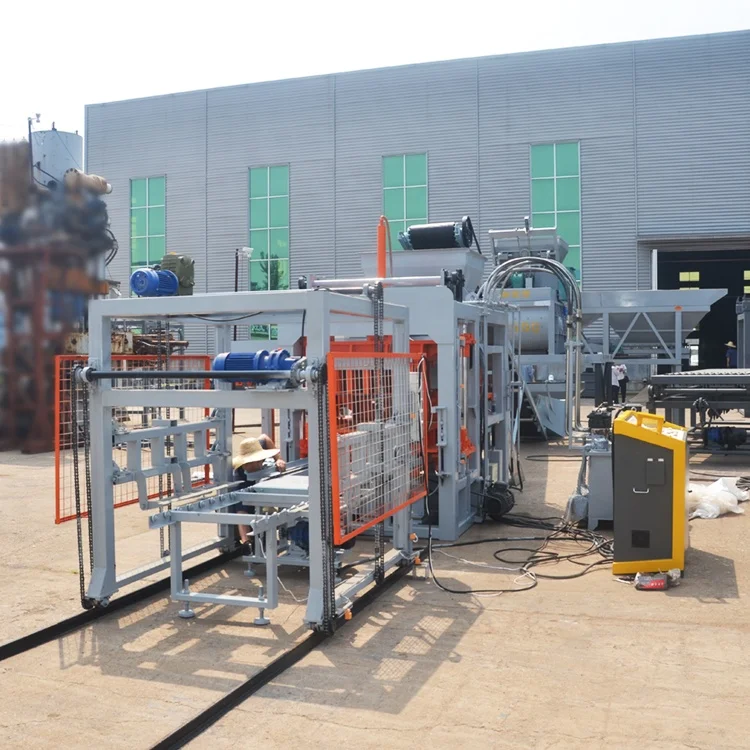
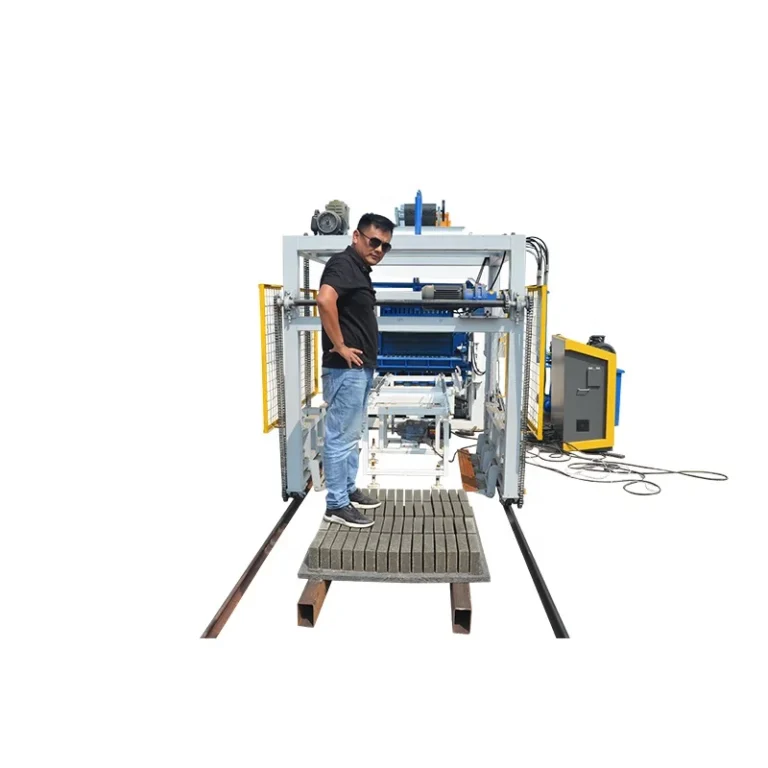
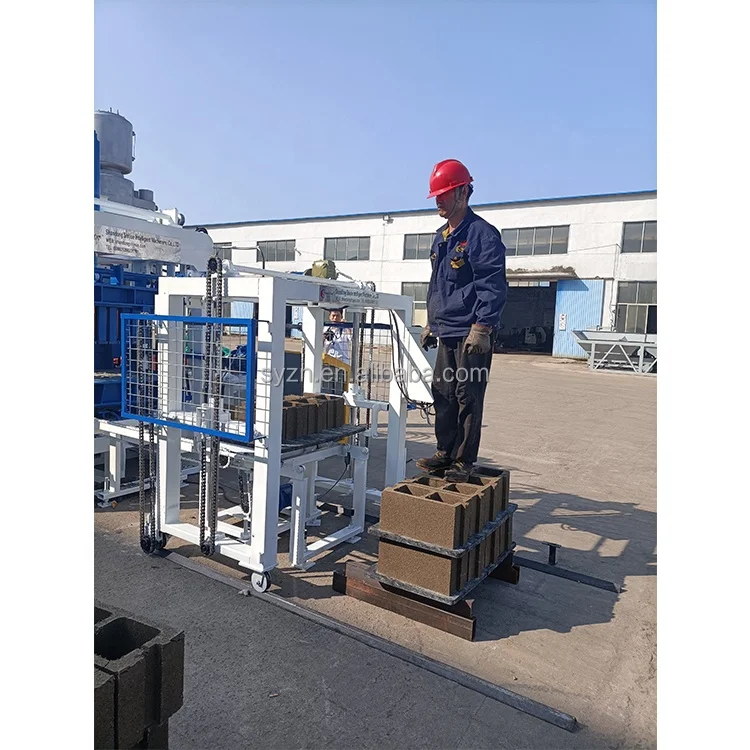
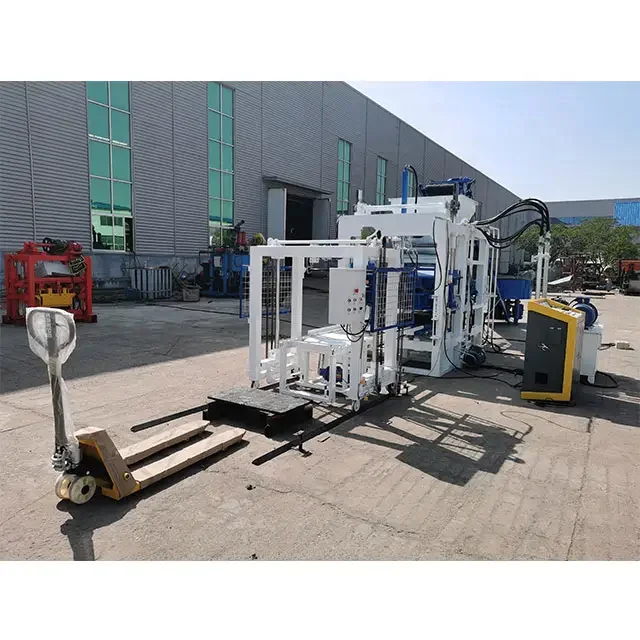
| Included Equipment | Block making machine, hydraulic station, PLC control system, pallet feeder, brick conveyor, block sweeper |
| Free Parts Included | Manual hydraulic trolley, spare parts and tools |
| Output (Hollow block 400×200×200 mm) | 1200–1680 pcs/hr (basis: stated block format) |
| Output (Hollow block 400×150×200 mm) | 1800–2400 pcs/hr (basis: stated block format) |
| Output (Solid brick 240×115×53 mm) | 3240 pcs/hr (basis: stated block format) |
| Applied Products | Paver, solid block, hollow block, curbstone |
| Raw Materials | Crushed stones, sand, cement, dust, fly ash |
Application Suitability
| Application | Material or Output |
|---|---|
| Hollow block production for load-bearing walls | Crushed stone, sand, cement and fly ash blends |
| Solid brick manufacturing for masonry infill | Fine aggregate and cement mixes |
| Paver production for walkways and driveways | Pigmented face mix over base concrete |
| Curbstone forming for road edge profiles | High-cement-content dry-cast concrete |
What the PLC Display Language Means for Your First Week of Production
A machine that speaks the operator’s language is a machine that actually runs on day one.
I was involved with a QT4-18 unit shipped to a West African block plant where the PLC display defaulted to Chinese characters. The local crew could not navigate a single menu. Commissioning stalled, the curing yard sat empty, and the owner lost two full production shifts before remote reconfiguration brought the interface back to English. That kind of delay does not show up in a quotation, but it shows up in the bank account [NEED_CITE: PLC language configuration and export documentation standards]. When sourcing an automatic QT4-18 block making machine PLC controlled, the display language and voltage must be locked in writing before the control cabinet is wired.
How PLC Logic Replaces Operator Guesswork
On a semi-automatic press, cycle timing lives in the operator’s head — when to trigger vibration, how long to hold pressure, when to release the mould. The automatic QT4-18 block making machine PLC controlled setup moves those decisions into programmable logic. Each block format gets its own recipe: vibration duration, hydraulic pressure ramp, feed shoe passes and dwell time. Switch from hollow block to paver and the controller recalls the stored parameters instead of relying on memory.
Batch Consistency Across an Eight-Hour Shift
Manual operation drifts. By hour six, vibration hold times shorten and feed shoe speed creeps up, producing blocks that look identical but compress to different densities. The PLC holds every parameter constant from the first cycle to the last, so block weight and dimensions stay within tolerance whether the press is running a 400×200×200 mm hollow block or a 240×115×53 mm solid brick. That consistency matters when a project engineer pulls random samples for compressive strength testing [NEED_CITE: concrete block compressive strength testing standards].
Reading the Numbers Behind the Press
The vibration force rating of 40–50 kN works together with the hydraulic station to compact the mix. Vibration liquefies the concrete around the aggregate particles while hydraulic pressure squeezes out trapped air; if either force is too low for the mix design, the block comes out crumbly at the edges. The 850×550×25 mm pallet size defines how many blocks fit per cycle and must align with the curing racks and forklift tines already on site — a mismatch means new racks or a pallet change before the machine even arrives. The 24 kW rated power covers the main press motor, hydraulic pump, and conveyor drives, so the site electrician needs to confirm a dedicated circuit at the correct voltage and frequency. Moulding cycles between 15 and 25 seconds reflect the range across formats; thinner solid bricks cycle faster because the mould cavity fills and compacts in less time than a deep hollow block.
When Automation Stops at the Press
A common gap in block machinery quotations is that the press itself is automatic while pallet handling, stacking, and curing remain manual. Workers pull loaded pallets off the conveyor by hand, carry them to the curing yard, and stack them in rows. This is physically exhausting and caps real daily output well below the theoretical press capacity [NEED_CITE: labour allocation in semi-automatic block plants]. The QT4-18 includes a pallet feeder, brick conveyor, and block sweeper as standard items, which removes the most repetitive manual steps directly around the press, but stacking beyond the conveyor endpoint should be clarified before the order is placed.
Why the Control Layer Matters Here
The QT4-18 is built around a single PLC that coordinates the hydraulic station, pallet feeder, and vibration sequence, so every station speaks through one controller rather than separate relays. Configuration is set against the buyer’s actual block format and local aggregate, not pulled from a generic catalogue default. Mould compatibility spans hollow block, solid brick, paver, and curbstone profiles on one pallet size, allowing format diversification without a second press. The documentation package covers PLC language confirmation, hydraulic and electrical schematics, and a factory test record that reflects the buyer’s target block format. Voltage and frequency are confirmed in writing before the control cabinet is assembled, avoiding the two-day stall that a language mismatch can cause.
Documentation & Verification
- Capacity calculation sheet stating block format and cycle time for each output figure
- PLC display language and voltage confirmation signed before cabinet wiring
- Hydraulic and electrical schematic matching the shipped configuration
- Factory test record run on buyer’s specified block format and pallet size
- Mould drawing and format list with changeover procedure documented
Installation, Commissioning & Support
- Foundation pad sized to the 3900×1600 mm footprint with anchor bolt template provided
- Dedicated 24 kW circuit at confirmed voltage and frequency with earth bonding
- Machine shipped as a single main frame with hydraulic station and PLC cabinet separated for container loading
- PLC parameters set to buyer’s block formats during on-site commissioning
- Operator training covers recipe recall, mould change sequence, and daily greasing points
- Spare parts kit and manual hydraulic trolley included for first-year maintenance
What We Need to Size Your Line Correctly
Tell us the block formats your market actually buys and the daily output you need per format. Share your local aggregate type, cement grade, and whether fly ash is available. Confirm site voltage, frequency, and the language your operators will read on the PLC screen.
Frequently Asked Questions
Q: How is the output capacity verified and what block format is each figure based on?
A: Every capacity number in the specification table is tied to a specific block dimension — for example, 1200–1680 pieces per hour is stated for a 400×200×200 mm hollow block. A separate capacity calculation document lists the assumed cycle time for each format so buyers can compare against their own shift schedule.
Q: What PLC control language and voltage configuration are confirmed before shipment?
A: Display language and site voltage are confirmed in writing before the control cabinet is wired. This prevents the situation where operators face an unreadable interface on day one, delaying commissioning and wasting production shifts while remote reconfiguration is arranged.
Q: How does the included automation reduce manual labour compared to semi-automatic operation?
A: The pallet feeder loads empty pallets automatically, the brick conveyor carries filled pallets away from the press, and the block sweeper cleans the mould face between cycles. These three stations remove the most repetitive handling tasks, letting a smaller crew manage the press area.
Q: What is the upgrade path if I later add automatic stacking and cubing?
A: The PLC architecture supports additional I/O modules, so stacking and cubing stations can be wired into the existing controller later. The conveyor endpoint is planned with space for a stacker frame, allowing the upgrade without replacing the press or rewiring the main cabinet.
Q: How are mould change time and format switching handled in the PLC system?
A: Each block format has a stored recipe covering vibration duration, pressure ramp, and feed shoe passes. Switching moulds involves a mechanical change on the press table, then recalling the matching recipe from the PLC menu so cycle parameters align with the new cavity geometry immediately.