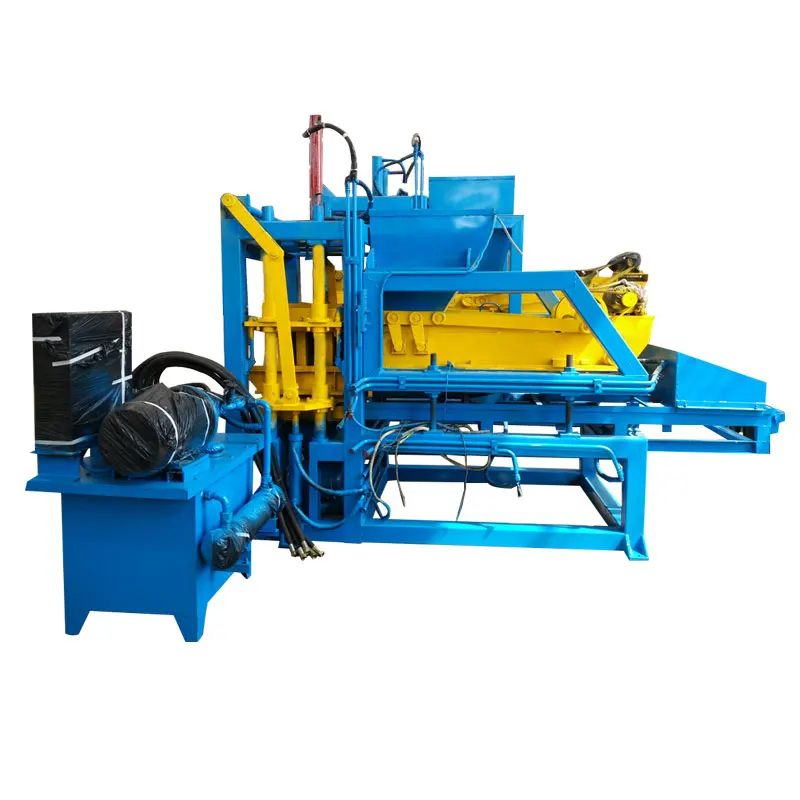
Description
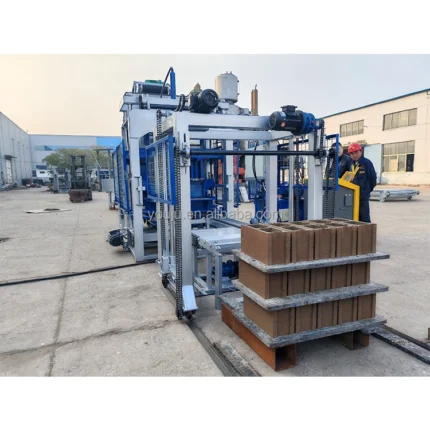
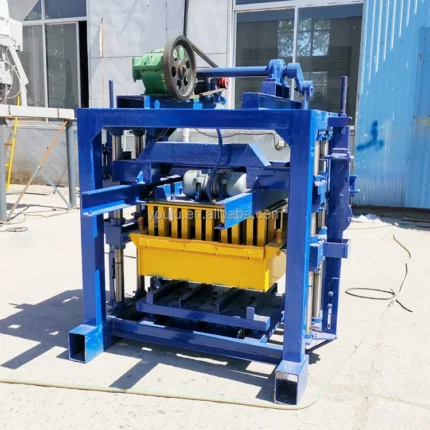
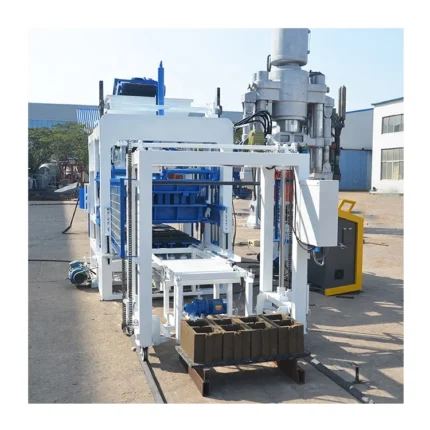
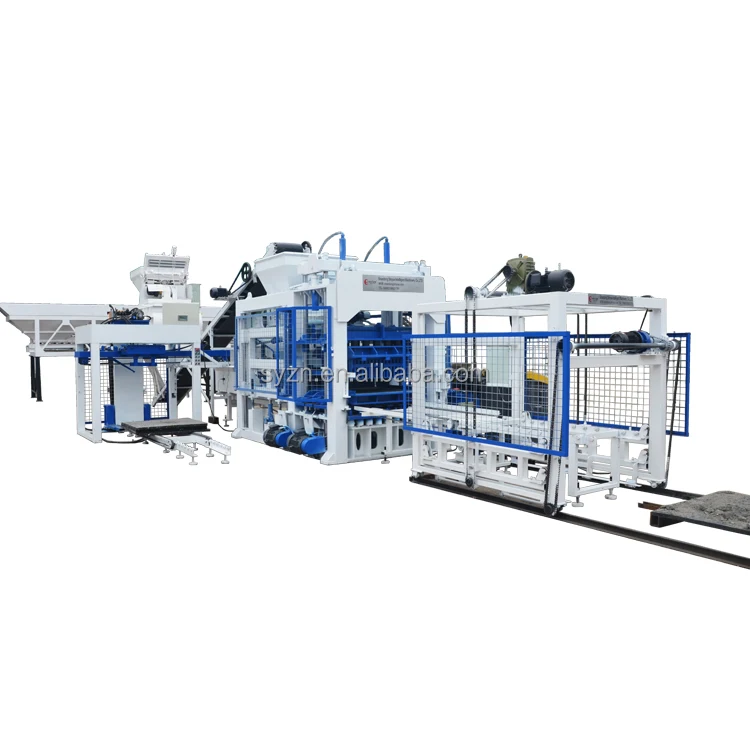
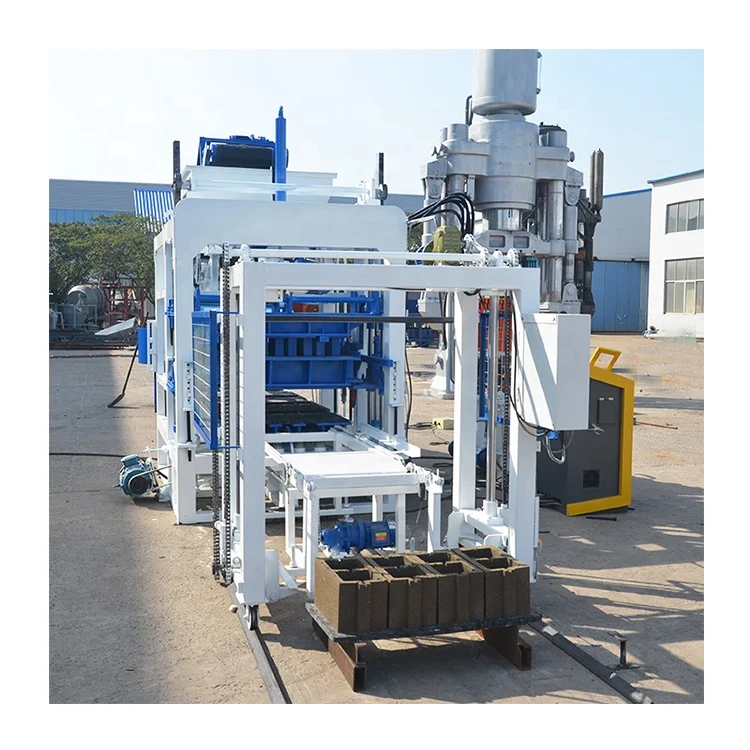
Matched System Integration — every intelligent control loop on the QT4-20 is calibrated against the hydraulic press and vibration platform so operators adjust one recipe, not three separate machines.
Technical Specifications
| Parameter | Value |
|---|---|
| Model | QT4-20 |
| Product Type | Stationary Block Making Machine |
| Overall Dimensions (L×W×H) | 7100 × 1600 × 2610 mm |
| Total Mass | 5 T |
| Overall Power | 27.5 kW |
| Rated Pressure | 16–21 MPa |
| Vibration Force | 40 kN |
| Main Vibration Form | Platform Vibration |
| Vibration Frequency | 4600 r/min |
| Molding Cycle | 15–25 s |
| Demolding Method | Hydraulic |
| Pallet Size | 1020 × 570 mm |
| Molding Area Consumption | 400 × 800 mm |
| Control System | PLC (brand and language to be confirmed per order) |
| Voltage & Frequency | Configurable per destination (basis to be confirmed) |
| Applied Products | Hollow blocks, solid blocks, porous bricks, pavers |
| Raw Materials | Crushed stone, sand, cement, fly ash, gravel, slag, dust |
| Theoretical Productivity (Hollow 400×200×200 mm, 4 pcs/mold, 15–20 s) | 7,200–9,600 pcs/day |
| Theoretical Productivity (Porous 240×115×90 mm, 14 pcs/mold, 15–20 s) | 20,200–26,800 pcs/day |
| Theoretical Productivity (Standard 240×115×53 mm, 28 pcs/mold, 15–17 s) | 47,400–53,700 pcs/day |
| Factory Area | 500 m² |
| Warranty | One year for the whole machine |
| Certification | CE (declaration availability to be confirmed) |
Application Suitability
| Application | Material or Output |
|---|---|
| Hollow block production for load-bearing walls | Crushed stone, sand, and cement at 16–21 MPa rated pressure |
| Porous brick manufacturing for thermal insulation | Fly ash, gravel, and slag blends with high-frequency platform vibration |
| Standard solid brick runs for housing developments | Local aggregate with cement binder, 28 pcs per molding cycle |
| Paving block fabrication for municipal projects | High-density mix requiring matched hydraulic and vibration force |
| On-site block production for remote housing contractors | Raw materials sourced within project proximity, PLC-stored recipes |
What "Intelligent Control" Actually Removes from the Operator
An automatic PLC controlled block making machine only earns the label when the controller manages the variables that cause inconsistency in the first place.
Many stationary presses still ask the operator to manually compensate for aggregate moisture shifts, pallet surface wear, and hydraulic temperature drift across a shift. Each adjustment introduces batch-to-batch density variation that only shows up at the curing rack. I watched a Nigerian plant scrap an entire day of hollow blocks because the operator changed the vibration timer by three seconds and nobody logged it. The QT4-20 groups rated pressure, vibration frequency, and molding cycle under one programmable recipe so the operator selects the block format and the controller handles the sequence. [NEED_CITE: typical causes of block density inconsistency in stationary presses]
Where PLC Logic Meets Hydraulic Reality
The intelligent layer of this automatic PLC controlled block making machine does more than count cycles. It sequences the hydraulic demolding stroke against the platform vibration window so the press releases only when the block has reached target density. If the hydraulic pressure drops below the configured threshold during compaction, the controller holds the mold closed rather than pushing out an under-pressed unit.
Recipe Storage Eliminates Shift-Change Drift
Every block format — hollow, porous, standard brick, paver — gets its own stored recipe covering molding cycle, vibration duration, and pressure ramp. When the morning shift loads the hollow block program, the machine runs the exact 15–20 second cycle it ran yesterday. No one relies on memory or handwritten notes taped to the control panel. [NEED_CITE: PLC recipe management reducing operator-dependent variation]
Reading the Specifications Behind the Cycle Time
The 4600 r/min vibration frequency paired with 40 kN vibration force is the combination that settles fine aggregate into the mold cavity before hydraulic pressure locks it. Lower frequency leaves voids in porous brick; higher force on a thin-wall hollow block cracks the web. The 16–21 MPa rated pressure range exists because different mix designs need different compaction ceilings — fly ash blends typically sit at the lower end while pure crushed stone demands the upper limit. Platform vibration rather than mold vibration keeps the 1020 × 570 mm pallet stable so the block does not shift during the hydraulic stroke. The 27.5 kW total power budget covers the hydraulic pump, vibration motor, and pallet feeder simultaneously so the press never starves one system to feed another.
When the Smart Machine Arrives Dumb
A PLC can only communicate in the language loaded on its display. I have stood next to a fully automatic line in Senegal while the operator stared at Mandarin error codes because the HMI language was never switched to French before packing. The machine sat idle for two days until we shipped a replacement memory card. Voltage mismatches cause slower damage — a 380 V motor running on a 415 V supply overheats the hydraulic pump within weeks, and the failure never traces back to the commissioning sheet. These are not engineering flaws; they are documentation gaps that an automatic PLC controlled block making machine exposes the moment it reaches a job site. [NEED_CITE: export machinery commissioning delays from language and voltage mismatches]
Why Buyers Choose This Configuration
The QT4-20 arrives as a matched system — the PLC, hydraulic circuit, and vibration platform were specified together rather than assembled from separate catalog pages. We configure the controller against your actual mix design and target block format before the machine leaves Shandong, so the first test run on your floor uses real recipes, not factory defaults. The pallet size was chosen to align with standard curing rack spacing and common forklift tine widths, which means you do not have to re-rack your curing area to accommodate the machine. Mould design is handled against the formats your local market actually buys, with custom drawings available when a project specifies a non-standard bond pattern.
Documentation & Verification
- Factory test record showing cycle time and block density for your specified format before dispatch
- Hydraulic and electrical schematic matching the as-built configuration, not a generic catalog drawing
- PLC program backup on USB with your confirmed display language loaded and tested
- Voltage and frequency confirmation sheet signed against your site supply certificate
- CE declaration package where applicable to your import market requirements
- Wear parts and mould inventory list with recommended reorder intervals
Installation, Commissioning & Support
- Foundation pad prepared to 7100 × 1600 mm footprint with embedded anchor bolts per supplied layout
- Dedicated 27.5 kW circuit with correct voltage confirmed before motor rotation test
- Pallet feeder and stacking stations aligned to 1020 × 570 mm pallet during on-site assembly
- First production run supervised with recipe parameters logged for each block format ordered
- Operator training covers PLC recipe selection, hydraulic pressure adjustment, and mold changeover procedure
- Spare mold wear plates and hydraulic seal kits dispatched with initial shipment
Preparing Your Inquiry
Tell us which block formats dominate your local market and the daily volume you need per format, so we can match the molding cycle and cavity count to realistic output. Confirm your site voltage and frequency, the language your operators read, and whether your existing curing racks accept 1020 × 570 mm pallets. If you already run a mixer or batcher upstream, share the model so we can align the raw material feed interface before the machine ships.
Frequently Asked Questions
Q: How is daily output calculated for each block format on the QT4-20?
A: The productivity figures assume a specific mold cavity count and cycle time range. Hollow block at 400×200×200 mm uses 4 cavities with a 15–20 second cycle, porous brick at 240×115×90 mm uses 14 cavities, and standard brick uses 28 cavities at 15–17 seconds. Your actual output depends on raw material feed continuity and pallet handling speed between presses.
Q: What PLC brand and display language can I specify for my operators?
A: The PLC brand and HMI language are confirmed during the order stage based on your target market and operator preference. We have shipped units with French, Spanish, Arabic, and English interfaces. The chosen language is loaded and tested at the factory so the display is readable the moment power is connected on site.
Q: How do I confirm the correct voltage and frequency before shipment?
A: You supply a site electrical certificate or utility specification showing voltage, phase, and frequency. We match the motor windings, transformer taps, and PLC power supply to those values and document the configuration on the pre-shipment test sheet. Mismatches caught at this stage cost nothing; mismatches caught at commissioning cost weeks.
Q: What is the mold change procedure and how long does a format changeover take?
A: The hydraulic demolding system releases the mold box without manual clamps. The operator lifts the current mold, positions the new one on the locating pins, and loads the corresponding PLC recipe for the new block format. Changeover time depends on operator familiarity and whether the new mold is pre-staged beside the press.
Q: Can I add automatic pallet handling if I start with manual operation?
A: The QT4-20 control architecture supports adding automatic pallet feeding and stacking stations after initial installation. The PLC has reserved I/O channels for these peripherals, and the upgrade requires mechanical installation of the stations plus a program update. We supply the upgrade kit and commissioning support when you are ready.