Description
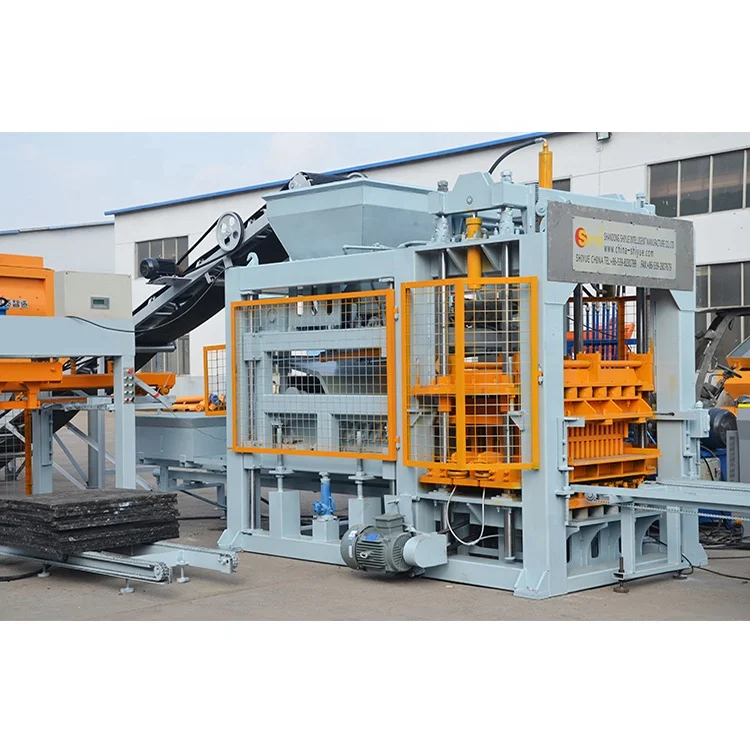
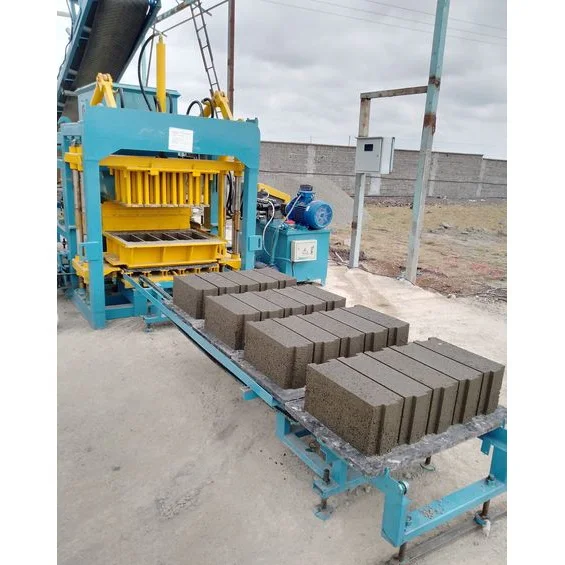
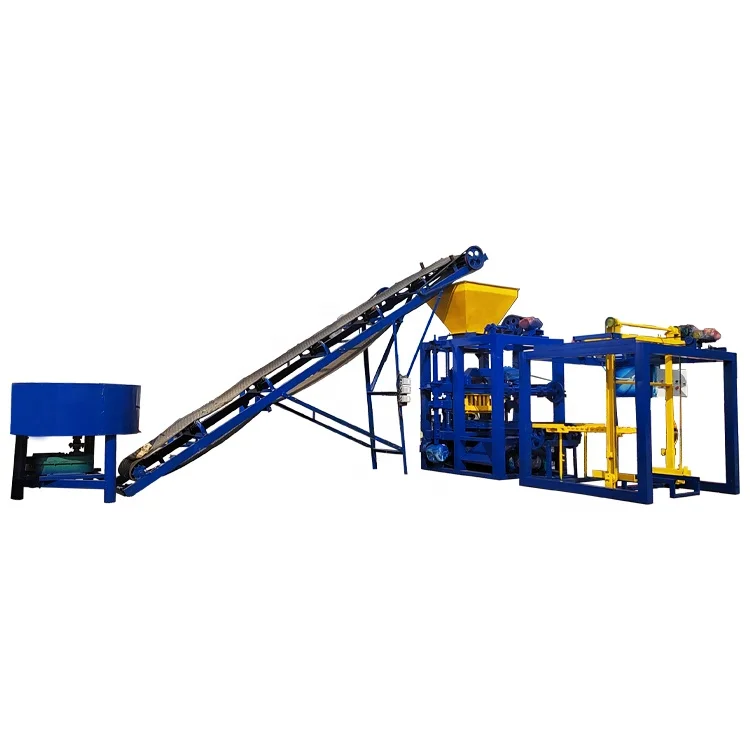
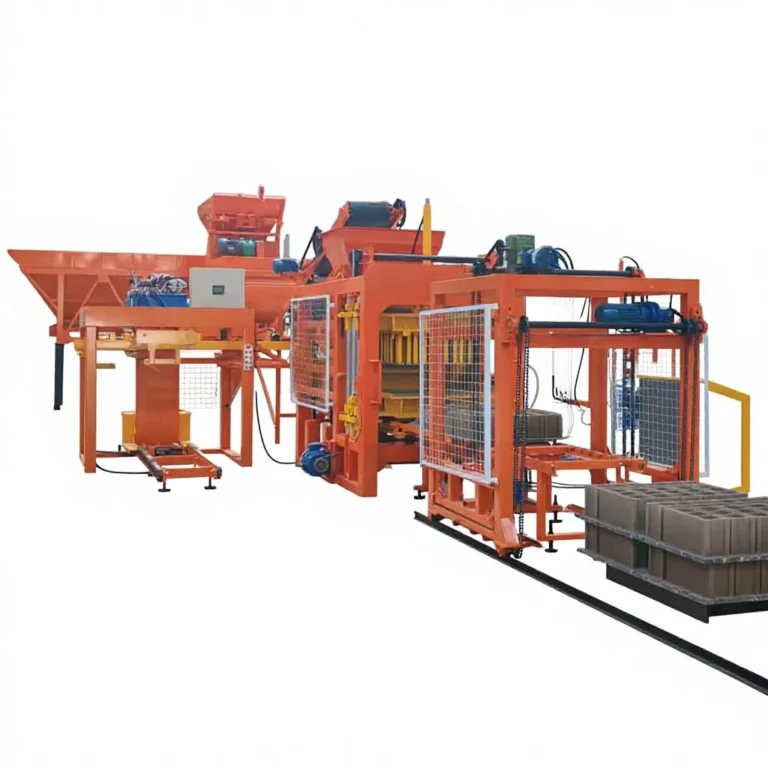
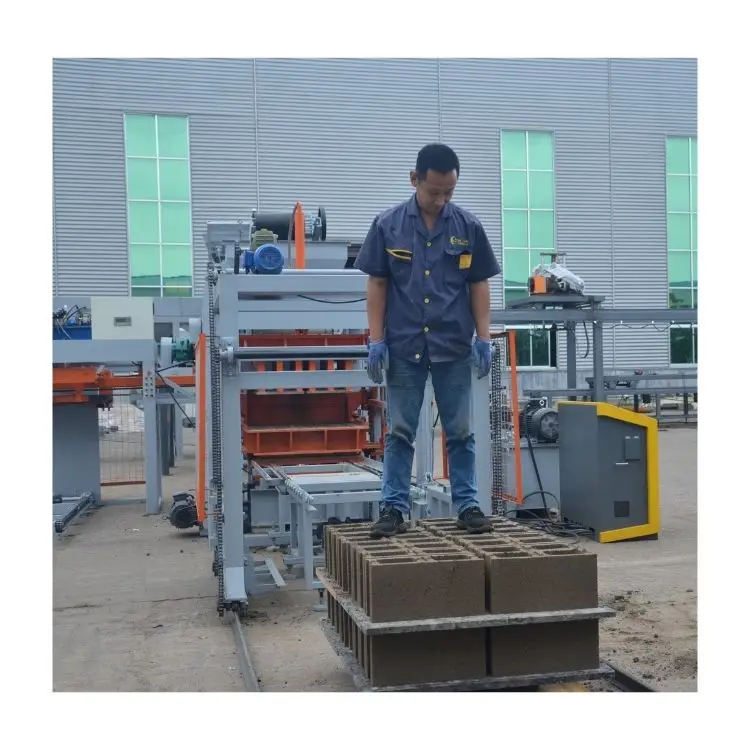
Matched System Design — the QT5-15 is configured around the buyer’s actual block format, local aggregate and automation requirements rather than a catalogue default, with pallet handling and control logic specified as one integrated line.
Technical Specifications
| Parameter | Value |
|---|---|
| Model | QT5-15 |
| Product Type | Fully Automatic Concrete Block Making Machine |
| Overall Dimensions (L×W×H) | 7400×1950×2800 mm |
| Vibration Frequency | 0-60 Hz |
| Vibration Form | Platform Vibration |
| Moulding Mode | Automatic loading with vibration moulding |
| Pallet Size | 1100×550 mm |
| Molding Cycle | 15-20 s (basis to be confirmed per block format and material) |
| Overall Power | 32 kW |
| Vibration Force | 80 kN |
| Total Mass | 5000 kg |
| Demolding Method | Hydraulic |
| Recommended Factory Area | 1000 m² |
| Control System | PLC with touch screen interface |
| Hydraulic System | Independent integrated hydraulic station |
| Automation Level | Fully automatic (pallet feeding, material feeding, vibrating, demoulding) |
| Block Compressive Strength | >15 MPa |
| Mould Change System | Quick mould replacement for multi-format production |
| Raw Material Compatibility | Fly ash (up to 70%), slag, gangue, sand, crushed stone, cement, water |
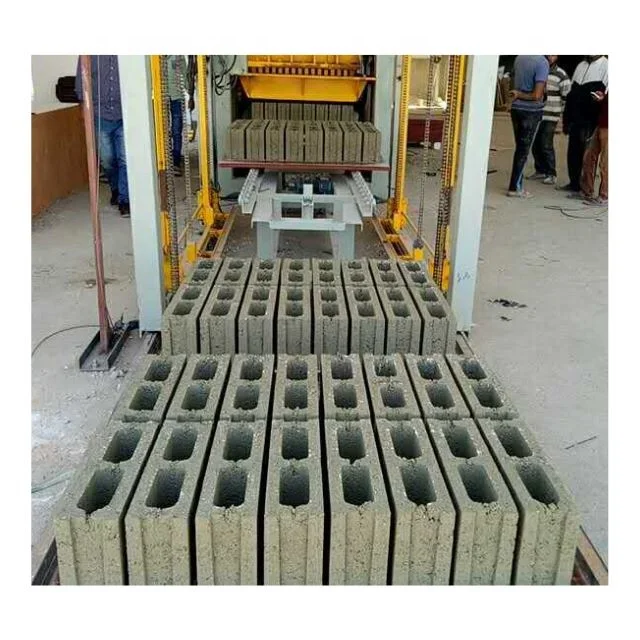
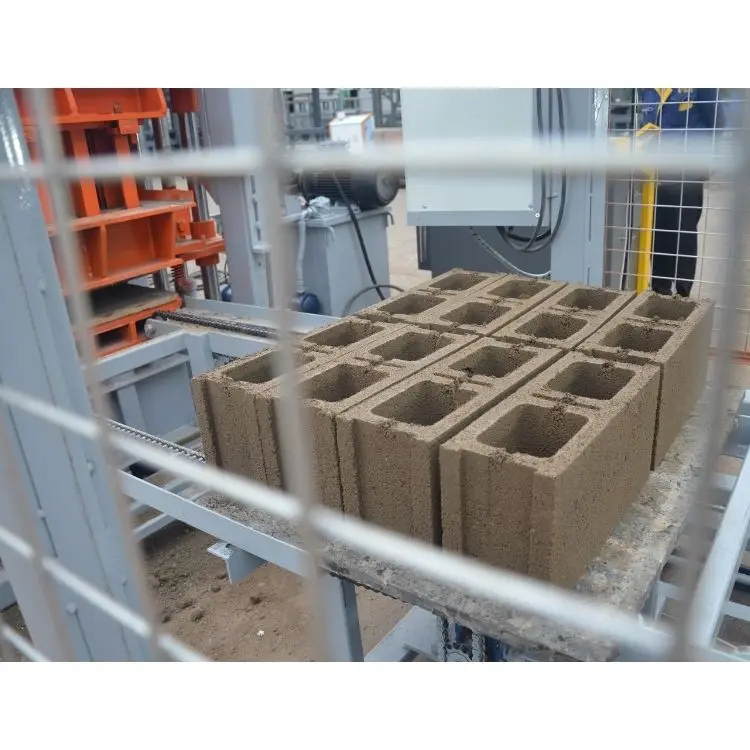
| Output — Hollow Block 400×200×200 mm | 900-1200 pcs/h, 7200-9600 pcs/8hr (based on 5 pcs/mould, 15-20s cycle) |
| Output — Hollow Block 400×150×200 mm | 1080-1440 pcs/h, 8640-11520 pcs/8hr (based on 6 pcs/mould, 15-20s cycle) |
| Output — Solid Brick 240×115×53 mm | 5760-7680 pcs/h, 46080-61440 pcs/8hr (based on 32 pcs/mould, 15-20s cycle) |
| Output — Rectangular Paver 200×100×60 mm | 3600-4500 pcs/h, 28800-36000 pcs/8hr (based on 25 pcs/mould, 20-25s cycle) |
| Output — Zigzag Paver 225×112.5×60 mm | 2304-2880 pcs/h, 18432-23040 pcs/8hr (based on 16 pcs/mould, 20-25s cycle) |
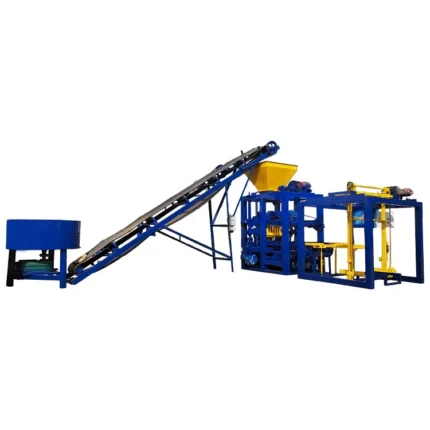
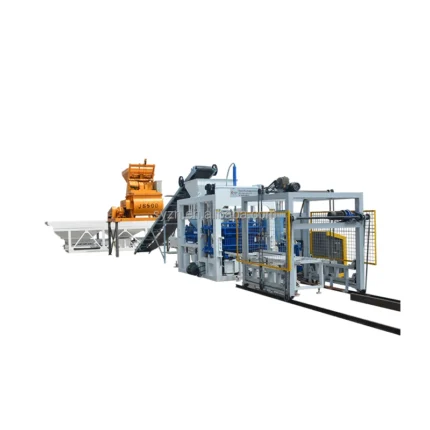
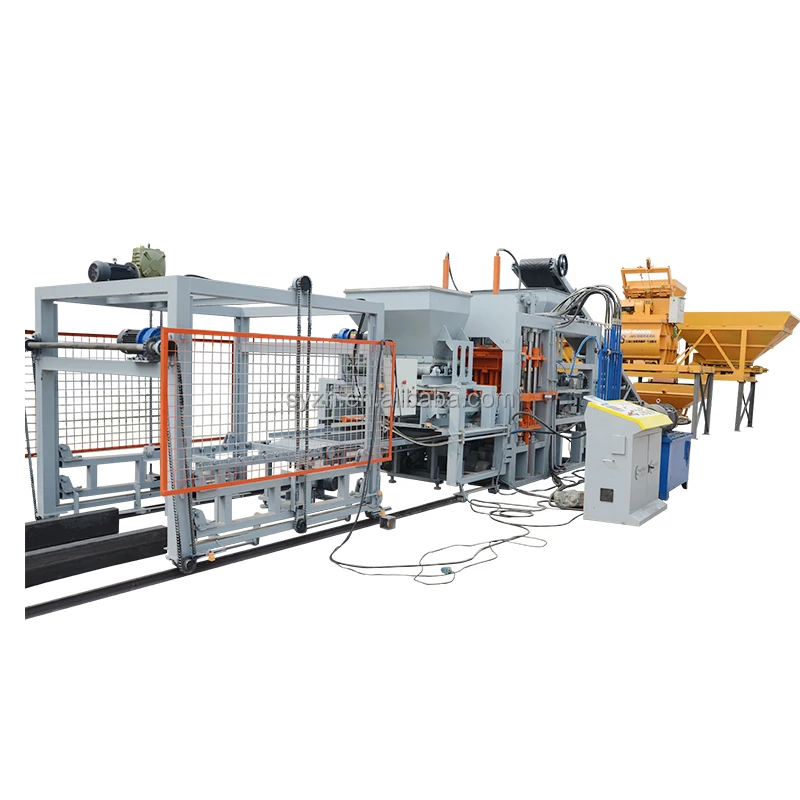
| Assembly State | Assembled main press with separate pallet feeder, storage hopper, conveyor, hydraulic unit, PLC cabinet |
| Warranty | 1 year for whole machine (excluding spare parts) |
| Standards | CE (declaration where applicable) |
Application Suitability
| Application | Material or Output |
|---|---|
| Hollow block production | Fly ash, sand, crushed stone and cement mixes for load-bearing and non-load-bearing walls |
| Solid brick production | High-density compaction of slag, gangue and cement for standard masonry units |
| Paving brick production | Interlocking and rectangular pavers from crushed stone and cement for driveways and walkways |
| On-site contractor production | Mobile-compatible output for housing projects requiring consistent block supply without a fixed batching plant |
Why "Fully Automatic" Can Still Mean Manual Stacking
The QT5-15 covers pallet feeding, material dosing, vibration and hydraulic demoulding automatically — but stacking and cubing downstream remain configurable, not assumed. An automatic concrete block making machine PLC controlled at the press stage still depends on what happens after the wet blocks leave the machine.
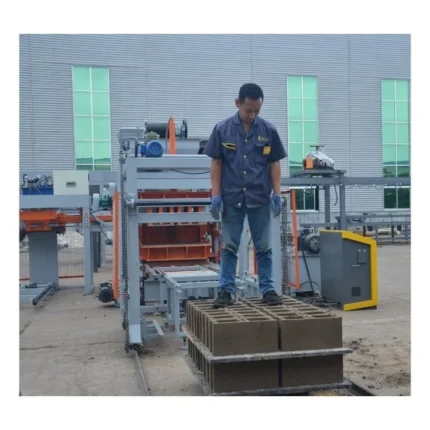
Plant owners often read "fully automatic" and assume the line ends with neatly cubed pallets ready for the forklift. In practice, if stacking and cubing stations are not included in the quotation, blocks come off the press and sit on pallets that someone has to move by hand to the curing area. The press itself runs unattended; the bottleneck shifts to the curing yard [NEED_CITE: block line automation levels and station coverage definitions]. This matters because labour planning for the shift depends on knowing exactly which stations are automated and which still need an operator.
What the PLC Actually Removes from the Operator
The touch screen interface on the QT5-15 stores process parameters for each block format, so switching from hollow block to paver production does not require the operator to manually reset vibration frequency, cycle duration or feed volume from memory. The PLC logs fault conditions and triggers alarms before a minor misfeed becomes a line stoppage. For plants upgrading from semi-automatic operation, this means the operator’s role shifts from driving every cycle to monitoring overall line flow and responding to diagnostics.
Where Batch Consistency Comes From
Consistency across a production run depends on the hydraulic station maintaining stable pressure through thousands of cycles. The QT5-15 uses an independent integrated hydraulic station isolated from the main press vibration and dust ingress. When hydraulic pressure fluctuates, demoulding force varies and block edges chip or crack — a problem that compounds across a shift [NEED_CITE: hydraulic system isolation standards in concrete block presses]. The isolation design keeps the hydraulic fluid cleaner and the pressure curve repeatable from the first block to the last.
Reading the Specs Against Your Block Format
The 80 kN vibration force and 0-60 Hz frequency range work together with hydraulic pressure to compact the mix into the mould. Higher frequency suits finer aggregates like fly ash-dominant mixes; lower frequency with sustained amplitude moves coarser crushed stone into the mould corners. The 1100×550 mm pallet size defines how many blocks fit per cycle — five 400×200×200 mm hollow blocks or thirty-two 240×115×53 mm solid bricks — and must match the pallet inventory and curing rack spacing the buyer already has on site. The 32 kW overall power draw also determines the dedicated circuit and transformer sizing needed before installation.
When the Wrong Configuration Costs More Than the Machine
A QT5-15 configured for a sand-cement mix the buyer cannot source locally forces a material change after arrival — or worse, the machine runs on the available aggregate but produces blocks below the required compressive strength. Similarly, if the PLC display language and voltage are not confirmed before production, commissioning stalls while a technician re-flashes the interface or sources a step-down transformer [NEED_CITE: common commissioning delays in exported concrete machinery]. These are not warranty issues; they are configuration gaps that fall on the buyer.
Why Source This Machine Through a Single-Focus Supplier
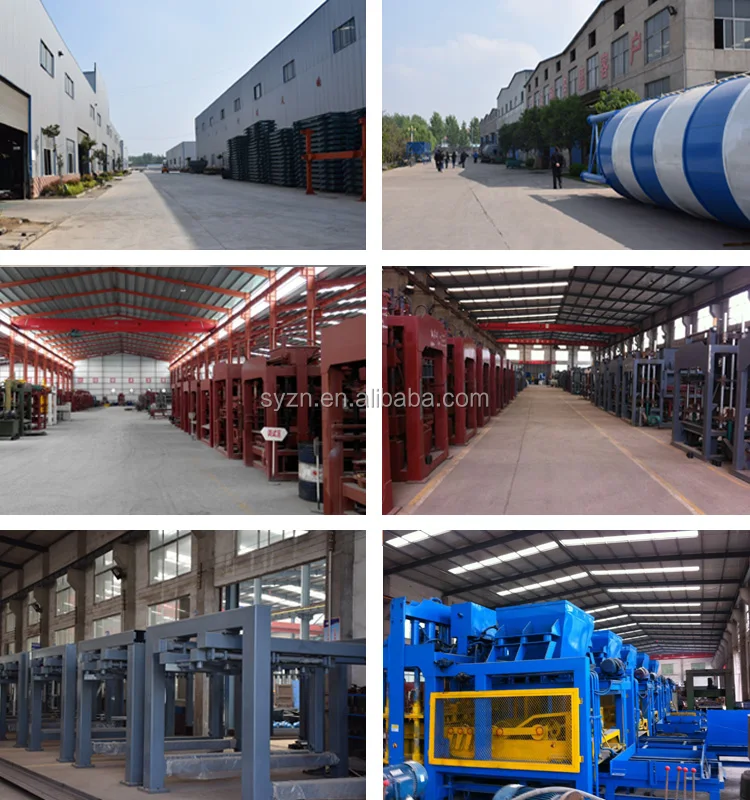
Block machinery as a single product focus means the QT5-15 press, moulds, pallets and handling equipment are specified as a matched set rather than assembled from separate vendors. Configuration is set against the buyer’s actual mix design and target block format, not a catalogue default. Mould drawings are supplied for the formats the buyer’s market sells, including custom profiles. The automation level is selectable — a buyer can start with the automatic press and add stacking or cubing stations later as volume grows. Installation support includes operator training and a wear parts list specific to the configuration shipped.
Documentation & Verification
- Line layout and capacity calculation stating the block format assumed for each output figure
- Mould drawing and format list with mould change procedure supplied alongside the quotation
- Voltage, frequency and PLC display language confirmed in writing before production starts
- Factory test record and hydraulic/electrical schematic provided before container loading
- Operation and maintenance manual with wear parts list matched to the shipped configuration
Installation, Commissioning & Support
- Foundation must support the 5000 kg total mass and 80 kN vibration force without resonance transfer
- Dedicated 32 kW circuit with voltage and frequency confirmed to match the PLC cabinet rating
- Main press ships assembled; pallet feeder, hopper, conveyor and hydraulic unit bolt on at site
- First-run commissioning includes vibration frequency tuning to the buyer’s specific aggregate sample
- Operator training covers PLC touch screen navigation, fault response and quick mould change procedure
- Hydraulic wear parts and mould replacement schedule documented in the maintenance manual
What We Need to Quote Accurately
Send the target block formats and daily output requirement so the capacity calculation can be stated per mould rather than as a generic figure. Confirm the local aggregate type and any available mix test data, because the vibration and hydraulic parameters are adjusted to the material, not the other way around. Provide the site voltage, frequency and preferred PLC display language so these are locked in before production.
Frequently Asked Questions
Q: How is the output capacity verified per block format, and what cycle time applies to each mould?
A: Output is calculated from the number of blocks per mould multiplied by cycles per hour. The QT5-15 cycle time is 15-20 seconds for hollow blocks and solid bricks, and 20-25 seconds for pavers, but the exact figure depends on mix design, block height and target density. The capacity document supplied with each quotation states the assumed format, mould count and cycle time for every output line.
Q: What PLC language options are available, and can the interface be set before commissioning?
A: The touch screen interface supports multiple language options configurable at the factory. The buyer confirms the preferred display language during the quotation stage so the PLC is loaded and tested before shipment. This avoids on-site reprogramming and allows the operator to navigate menus from day one of production.
Q: What automation level does the QT5-15 cover, and which stations are optional?
A: The QT5-15 automates pallet feeding, material dosing, vibration moulding and hydraulic demoulding as standard. Automatic stacking and cubing stations are available as additions to the line. Buyers planning a phased setup can start with the automatic press and manual pallet handling, then add downstream automation when daily volume justifies the investment.
Q: How does the hydraulic system maintain consistency across long production runs?
A: The independent integrated hydraulic station is physically isolated from the press vibration and dust environment. This keeps the hydraulic fluid cleaner and the pressure output stable across thousands of cycles, reducing demoulding faults. Maintenance intervals for hydraulic filters and seals are documented in the operation manual and aligned with standard production shift schedules.
Q: What is the upgrade path if I want to add automatic stacking or cubing later?
A: The QT5-15 line layout reserves interface points for downstream stacking and cubing stations. Adding these later requires mechanical integration at the pallet exit and PLC program extension to coordinate pallet flow. The supplier provides the upgrade specification and integration support so the existing press and control system remain unchanged.