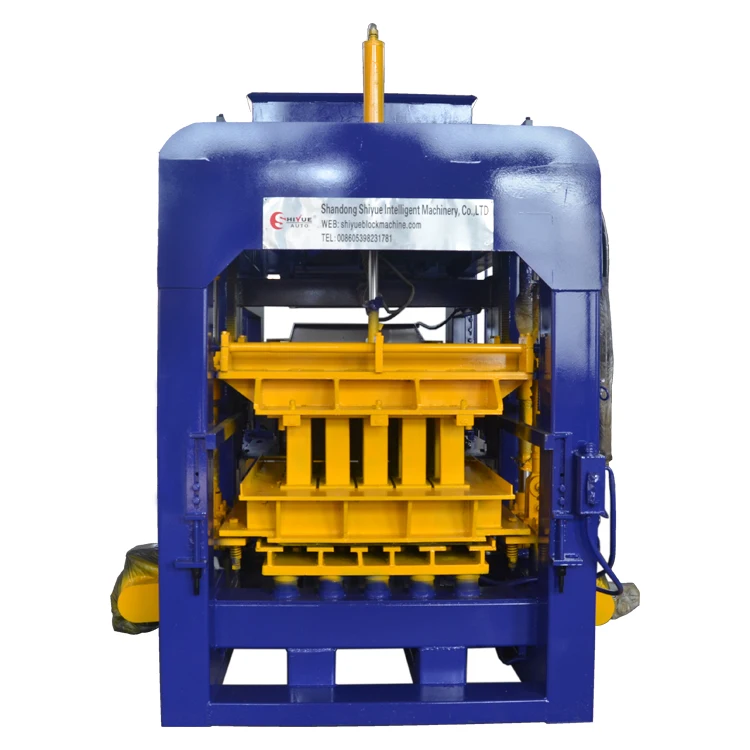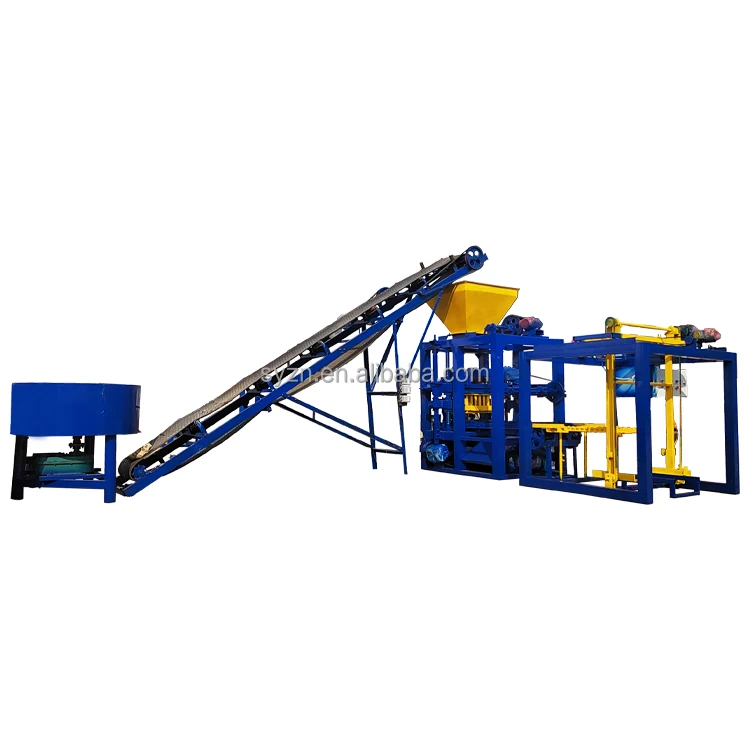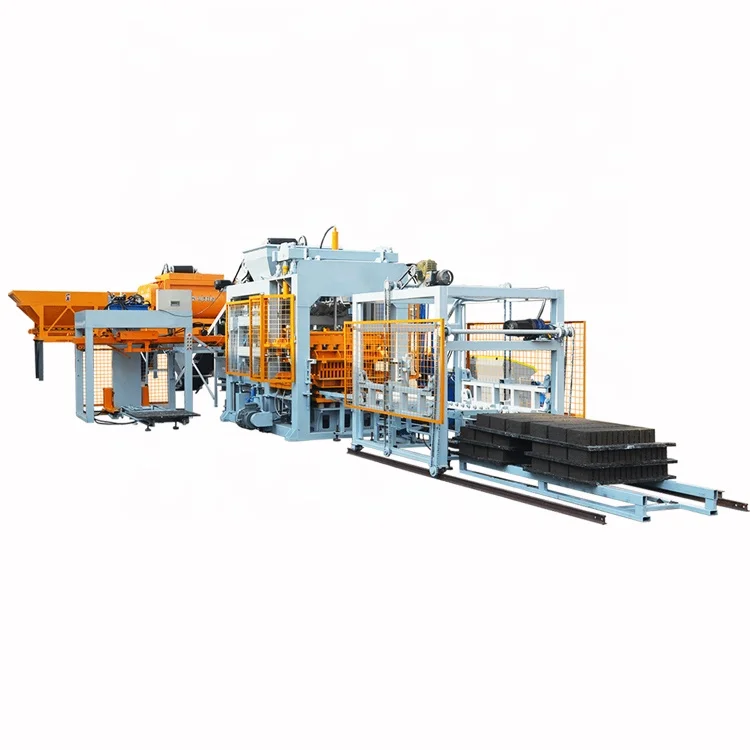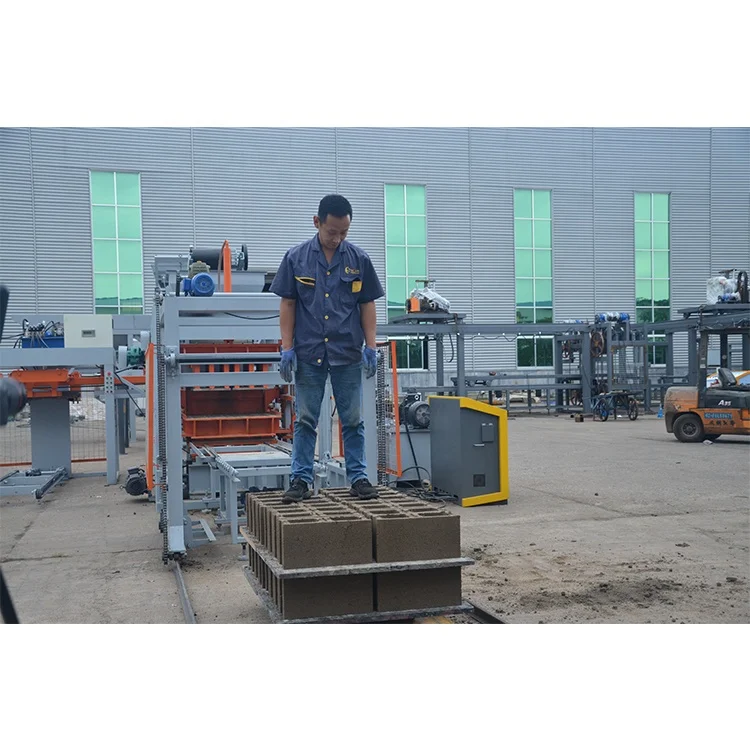
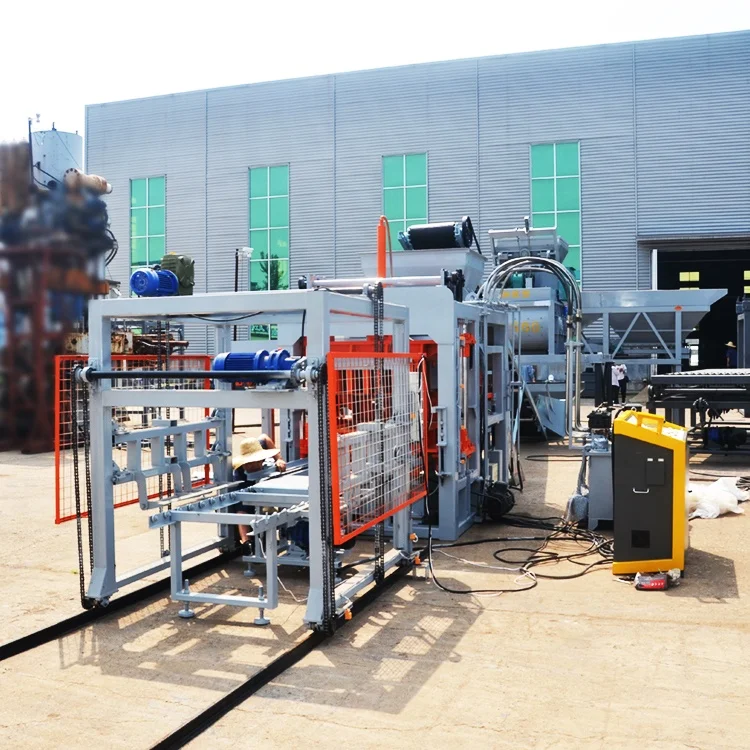
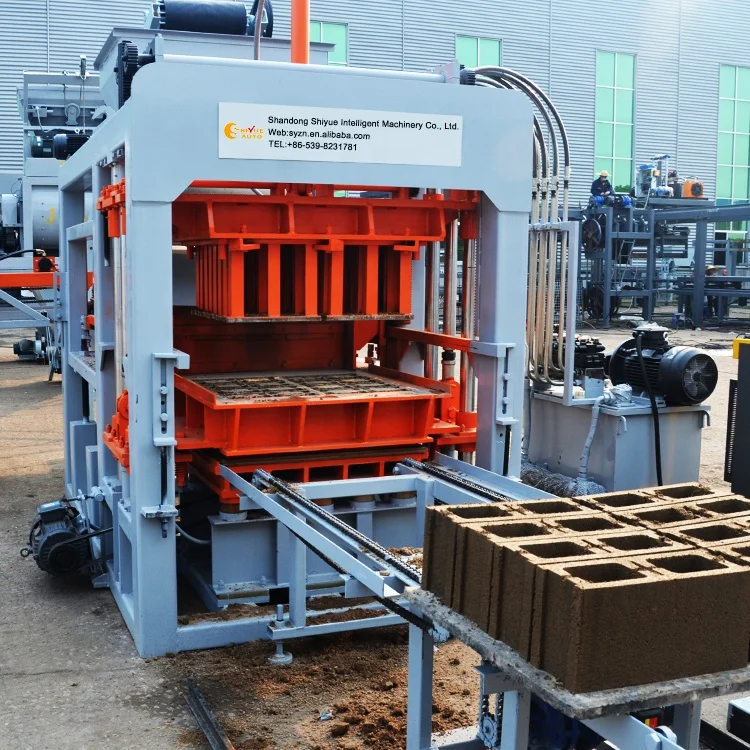
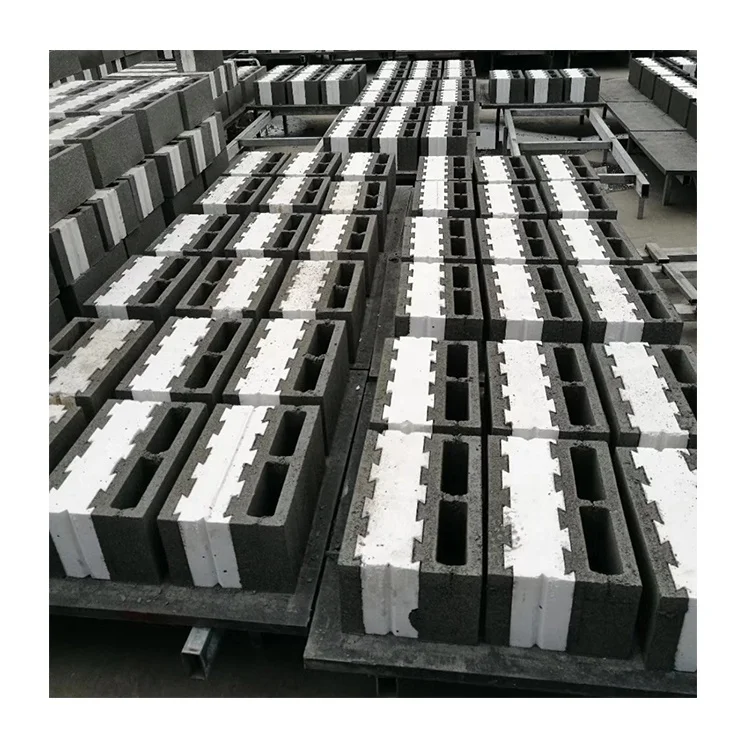

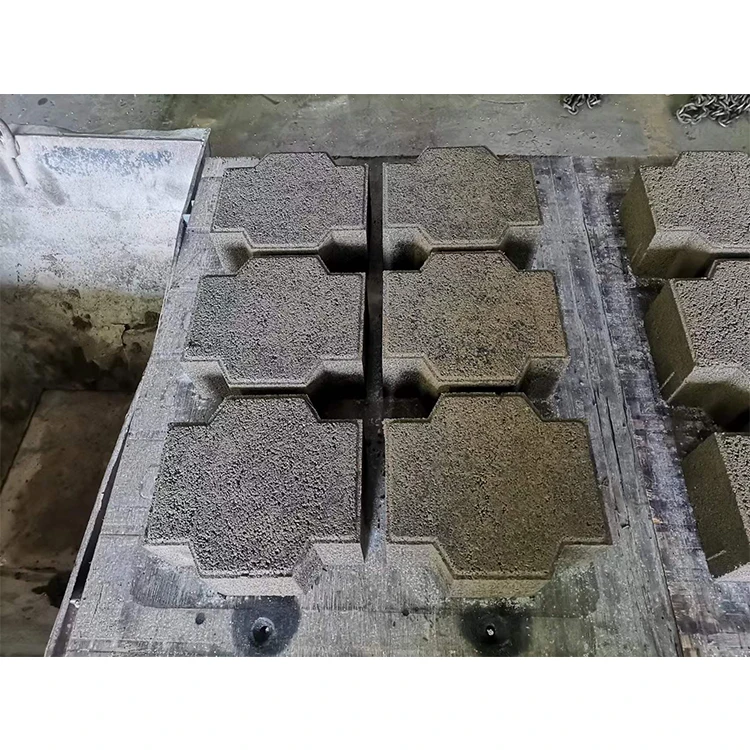
Description
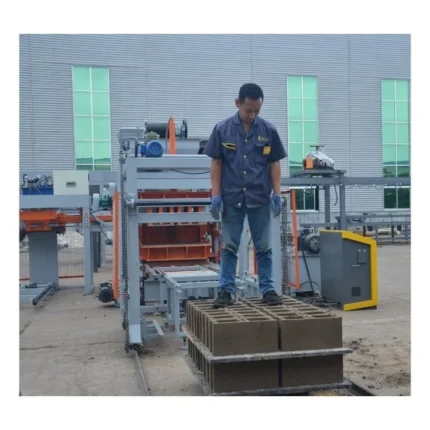
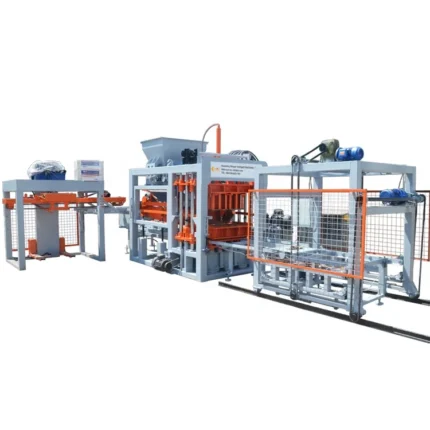
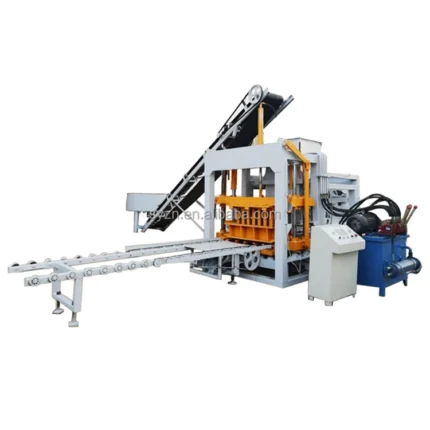
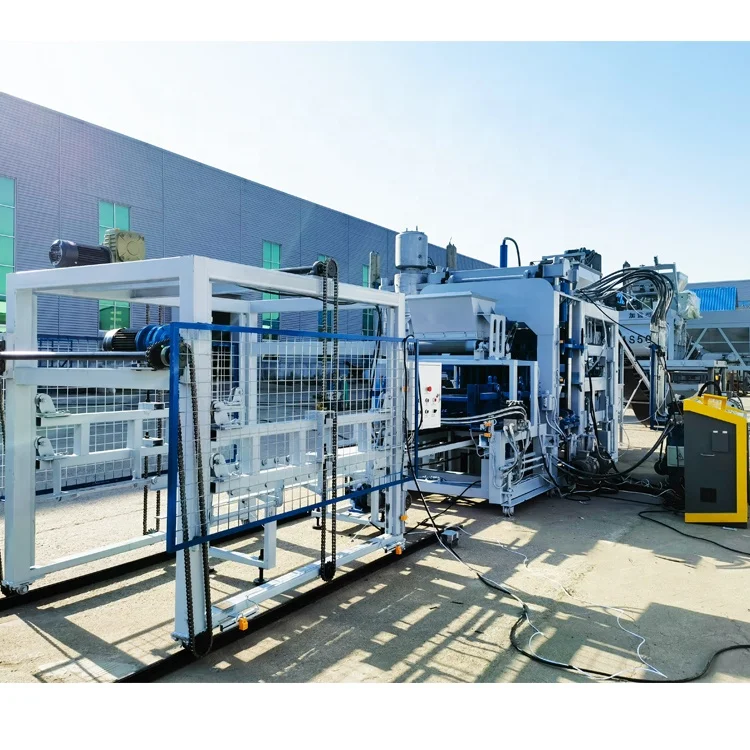
Matched Automation Tier — we specify PLC language, control logic, and stacking integration against your actual operator skill level before cutting steel for the QT6-15.
Technical Specifications
| Parameter | Value |
|---|---|
| Model | QT6-15 |
| Product Type | Hydraulic PLC Controlled Block Making Machine |
| Overall Dimensions | 8200 × 1700 × 2950 mm |
| Total Mass | 7 T |
| Vibration Frequency | 0–60 Hz |
| Vibration Form | Platform Vibration |
| Vibration Force | 45 kN |
| Moulding Mode | Automatic loading, vibration moulding |
| Demolding Method | Hydraulic |
| Pallet Size | 880 × 850 mm |
| Molding Cycle | 15–20 s (hollow blocks, solid bricks); 20–25 s (pavers) |
| Overall Power | 37 kW |
| Control System | PLC with touch screen HMI |
| Fault Diagnosis | Built-in PLC fault diagnosis system |
| Safety Logic | Interlock control circuit |
| Output Capacity (Hollow Block 400×200×200 mm) | 1080–1440 pcs/h; 8640–11520 pcs/8hr |
| Output Capacity (Hollow Block 400×150×200 mm) | 1440–1920 pcs/h; 11520–15360 pcs/8hr |
| Output Capacity (Solid Brick 240×115×53 mm) | 5760–7680 pcs/h; 46080–61440 pcs/8hr |
| Output Capacity (Rectangular Paver 200×100×60 mm) | 2160–2880 pcs/h; 17280–23040 pcs/8hr (basis: 20–25 s cycle) |
| Output Capacity (Zigzag Paver 225×112.5×60 mm) | 2160–2880 pcs/h; 17280–23040 pcs/8hr (basis: 20–25 s cycle) |
| Block Compressive Strength | >15 MPa |
| Hydraulic System | Independent integrated hydraulic station |
| Factory Area Required | 1200 m² |
| Voltage & Frequency | Configurable to buyer’s site requirement (to be confirmed) |
| PLC Display Language | Configurable (to be confirmed before commissioning) |
| Stacking Method | To be confirmed (manual or automatic) |
| Warranty | 1 year (excluding spare parts) |
Application Suitability
| Application | Material or Output |
|---|---|
| Hollow block production for building walls | Waste ash, slag, crushed stone, cement with reduced cement dosage |
| Solid brick production for masonry | Local aggregates blended with fly ash or slag |
| Rectangular and zigzag paving block production for roads and walkways | Fine aggregate and cement with platform vibration compaction |
| Multi-cellular brick production | Lightweight aggregates compatible with 45 kN vibration force |
Why the Language on the HMI Screen Should Be Settled Before the Steel Is Cut
An automatic QT6-15 block making machine PLC controlled system only reduces operator dependency when the operator can read the menus.
I once wired a cabinet for a QT6-15 heading to the Philippines. The HMI left our factory with Chinese-only labels. The buyer’s operators stared at blank screens, unable to acknowledge fault codes or switch recipes. We burned three days on video calls walking them through button positions before a single cycle ran. That delay had nothing to do with the press itself — it was a specification gap that no amount of automation could fix on-site. [NEED_CITE: HMI localization requirements for exported industrial machinery]
How PLC Control Removes Guesswork from Each Cycle
The QT6-15 relies on a programmable controller paired with a touch screen HMI to manage loading, vibration timing, and hydraulic demolding. Every cycle follows a stored recipe, so block dimensions and density remain consistent whether you are running hollow blocks at a 15-second press or pavers at 25 seconds. The interlock control circuit prevents out-of-sequence operations, which means a pallet cannot enter the press zone until the mould has fully lifted.
What Built-In Fault Diagnosis Actually Catches
The PLC monitors sensor feedback across the hydraulic station, vibration motor, and pallet feeder in real time. When a value falls outside the programmed range, the HMI displays a specific alarm code rather than a generic stop signal. This lets the operator distinguish between a blocked proximity sensor and a hydraulic pressure drop without calling the maintenance team to trace wiring. On a line running multiple shifts, that distinction keeps small issues from becoming full shutdowns. [NEED_CITE: PLC diagnostic standards for hydraulic block presses]
Reading the Specs That Determine Your Real Daily Output
The vibration force of 45 kN combined with an independent integrated hydraulic station delivers compressive strength above 15 MPa — but only when the mix design matches the force profile. The platform vibration runs from 0 to 60 Hz, and the cycle time shifts depending on format: 15–20 seconds for hollow blocks and solid bricks, 20–25 seconds for pavers. The 880 × 850 mm pallet size must align with your curing rack dimensions and the forklift you already have on the floor; mismatched pallets force manual re-stacking that erases any cycle time advantage.
The Cost of Leaving Automation Decisions Until After Delivery
Buyers who skip the automation conversation before production often discover that the automatic loading and hydraulic demolding work perfectly, but output piles up at the press exit because no stacking system was included. Operators then spend each cycle carrying wet blocks by hand to curing racks, which cancels the labor reduction the PLC was supposed to deliver. Voltage and frequency mismatches compound the problem: a 37 kW machine wired for the wrong supply trips breakers on startup, delaying commissioning by weeks while transformers are sourced locally. [NEED_CITE: electrical supply compatibility issues in cross-border machinery procurement]
Why Specifying Automation Here Is Different
Block machinery is our single focus, so the QT6-15 is treated as one matched system — press, mould, pallet, and handling — rather than assembled from separate suppliers. We confirm PLC display language and control labels before fabrication begins, drawing from lessons learned on earlier shipments where unlabeled screens stalled production. The automation level is selectable: a buyer can start with semi-automatic pallet handling and add automatic stacking or cubing later as the plant scales. Mould design covers the formats your market actually sells, with changeover procedures documented for your operators.
Documentation & Verification
- Line layout and capacity calculation stating the block format assumed for each output figure
- Voltage, frequency, and PLC display language confirmation document signed before production
- Mould drawing and format list covering every block type your market sells
- Hydraulic and electrical schematic with sensor locations marked
- Factory test record on your specified block format before dispatch
- Operation and maintenance manual with fault code reference table
Installation, Commissioning & Support
- Foundation plan sized for 8200 × 1700 mm footprint and 7 T operating mass
- Dedicated power circuit rated for 37 kW at confirmed voltage and frequency
- PLC display language and HMI labels verified before cabinet leaves factory
- First-cycle parameter tuning on your local aggregate and mix design
- Operator training covering recipe switching, mould change, and fault code response
- Wear parts list with reorder intervals for hydraulic seals and vibration motor brushes
What to Include in Your First Inquiry
To size the automation tier correctly, share your target block formats, daily output goal, and the raw materials available locally — including aggregate type and any waste ash or slag you plan to incorporate. Specify your site voltage, frequency, and the language your operators read on a screen. If you already have curing racks or forklifts on site, send their dimensions so the 880 × 850 mm pallet and stacking method can be matched before quotation.
Frequently Asked Questions
Q: How is the output capacity verified, and which block format is each figure based on?
A: Every capacity figure on this page is tied to a specific block format and molding cycle. The hollow block 400×200×200 mm figure assumes a 15–20 second cycle; paver figures assume 20–25 seconds. We provide a written capacity calculation with your quotation showing the exact format and cycle time used, so daily output projections match your actual product mix.
Q: What PLC language options are available, and can the HMI display match my operators?
A: The touch screen HMI language is configurable and must be confirmed before we build the control cabinet. We lock down display labels, alarm text, and recipe names in your chosen language during the specification stage. This prevents the situation where operators cannot read menus on arrival and production stalls while translations are retrofitted.
Q: How is voltage and frequency configured, and what happens if it is not confirmed early?
A: The QT6-15 draws 37 kW and must match your site supply exactly. We require written confirmation of voltage and frequency before production. If this step is skipped, the machine may trip local breakers or require an on-site transformer, delaying commissioning. The confirmation document becomes part of your build file.
Q: Can the machine start semi-automatic and add stacking or cubing later?
A: Yes. The automation level is selectable at order and can be extended afterward. The PLC architecture supports adding automatic pallet feeding, stacking, and cubing modules as your plant grows. We design the control cabinet with spare I/O capacity so upgrades connect without replacing the main controller or rewriting the base program.
Q: What is the mould change time, and what does it require on-site?
A: Mould change time depends on the format switch and the tools available at your plant. We document the changeover procedure for each mould in your operator manual, including bolt locations, alignment pins, and any PLC recipe adjustments needed. Confirm your target formats early so the mould list and changeover plan ship with the machine.