Description
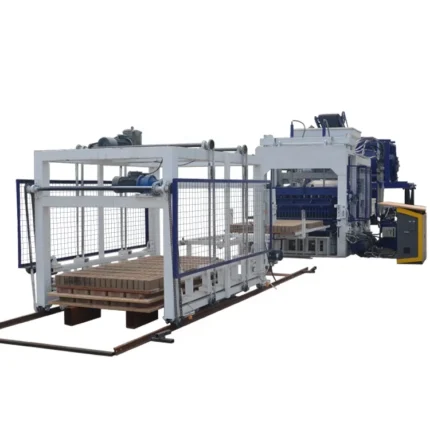
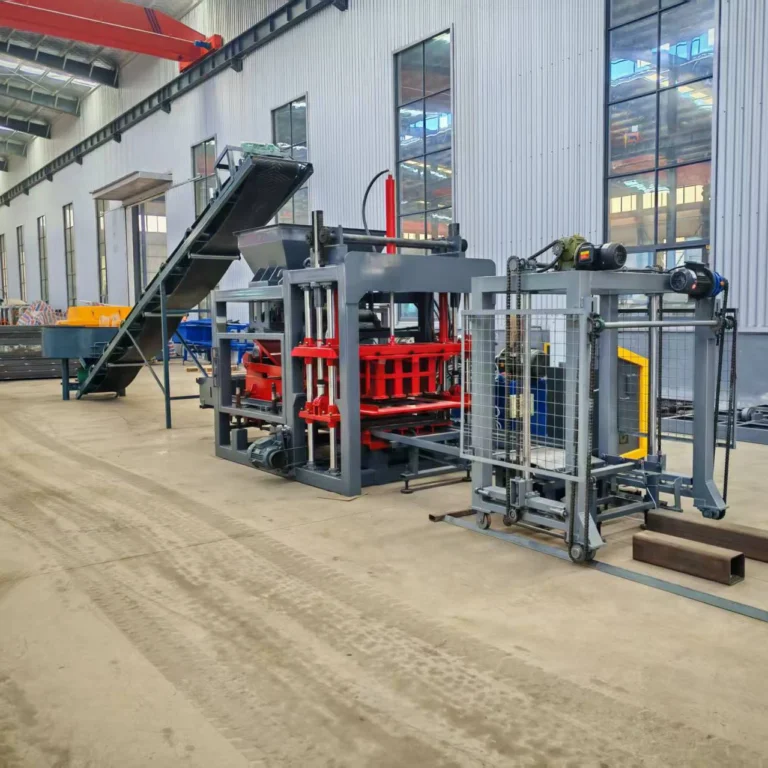
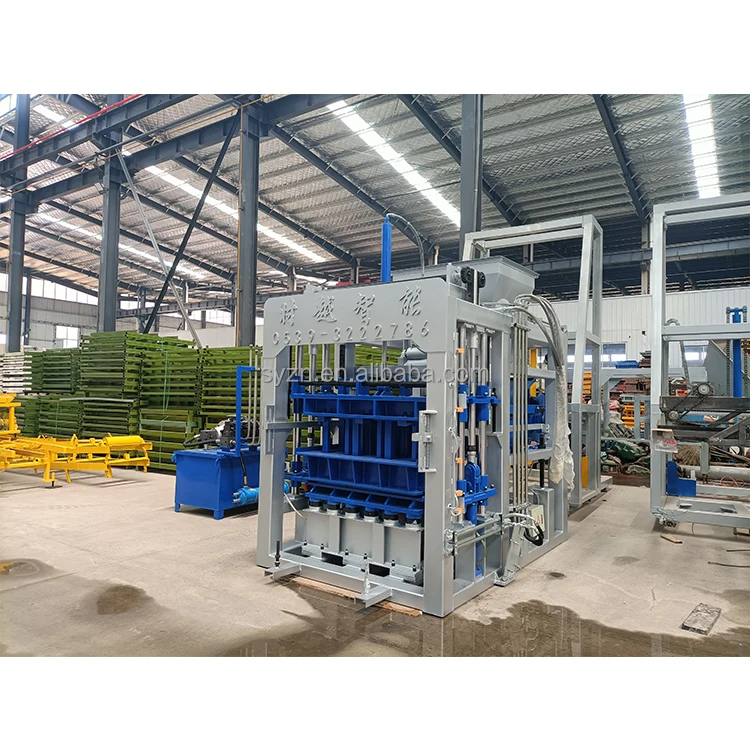
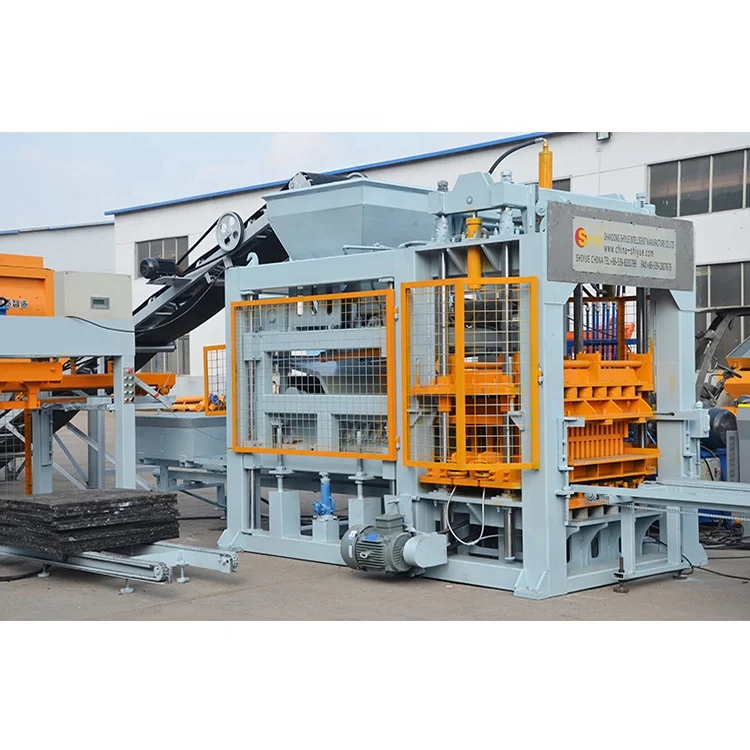
Consistent Batch Output — The QT6-15 integrates PLC-controlled cycles with hydraulic pressure and vibration force so every block leaves the press within tolerance, removing operator guesswork from the production floor.
Technical Specifications
| Parameter | Value |
|---|---|
| Model | QT6-15 |
| Product Type | Automatic Hydraulic Concrete Block Making Machine |
| Control System | PLC control system |
| Mould Capacity | 6 pcs/mould (basis not stated in source) |
| Molding Cycle | 15–20 s (basis not stated in source) |
| Vibration Force | 55 kN |
| Rated Power | 37.2 kW |
| Overall Dimensions (L×W×H) | 8300 × 1860 × 3000 mm |
| Total Weight | 8 T |
| Pallet Size | 1020 × 900 mm |
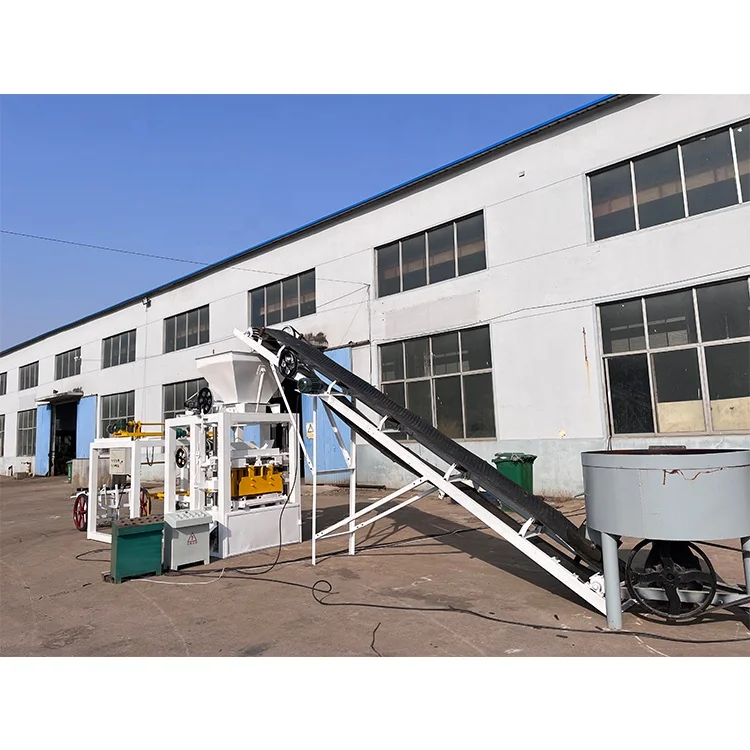
| Mixer Model | JS750 |
| Hydraulic Station | Included |
| Pallet Feeder | Included |
| Material Feeder | Included |
| Block Sweeper | Included |
| Brick Conveyor | Included |
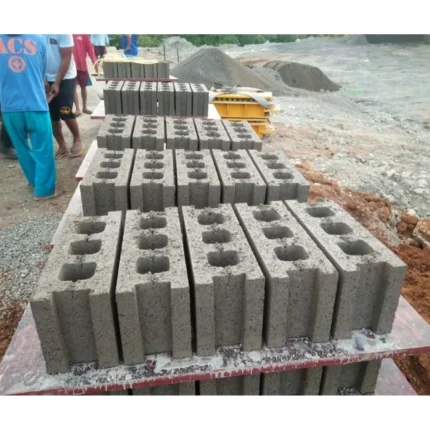
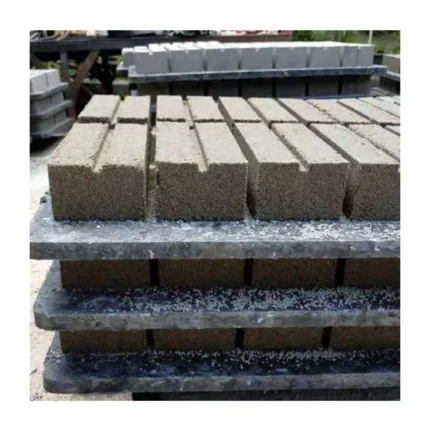
| Applied Products | Hollow block, solid block, paver, curbstone |
| Raw Materials | Crushed stone, sand, cement, fly ash, dust |
| CE Declaration | Available where applicable |
Application Suitability
| Application | Material or Output |
|---|---|
| Hollow block production for wall construction | Crushed stone, sand, cement, fly ash blends |
| Solid block manufacturing for load-bearing structures | Dense aggregate and cement mix designs |
| Paving block production for walkways and yards | High-strength cement and fine aggregate blends |
| Kerbstone forming for road and curb projects | Coarse aggregate with cement binder |
Why "Cycles per Hour" Does Not Tell You Daily Output
Real output depends on block format, not a single cycle-time headline.
Many buyers receive a quoted cycle count without the block format it assumes, then discover on site that daily pallets fall far short of the projection. When a QT6-15 automatic PLC controlled block making machine runs a 15-second cycle on a thin paver, the count looks impressive — switch to a 200 mm hollow block and the same machine needs longer vibration and pressure dwell, cutting that number down. [NEED_CITE: block format influence on realistic daily output]
How PLC Automation Removes Operator Variability
A semi-automatic line leaves cycle timing in the hands of whoever is at the panel that shift. The QT6-15 places every dwell, feed, and press stroke under PLC control, so the automatic PLC controlled block making machine repeats the same sequence whether it is the first pallet of the morning or the five-hundredth. Operators monitor rather than intervene, which matters when a plant runs two shifts with different crews.
Batch-to-Batch Consistency Under Changing Conditions
Aggregate moisture shifts between morning and afternoon, and local sand gradation varies by delivery. The PLC records parameter sets for each block format, letting the operator recall the exact vibration duration, hydraulic pressure hold, and feed time that produced acceptable blocks during commissioning. This recall function is what keeps block strength within tolerance across seasons. [NEED_CITE: PLC parameter logging for batch repeatability]
Reading the Specs That Actually Matter on Site
The 55 kN vibration force must work together with hydraulic pressure to compact the mix into the mould cavity — vibration alone leaves voids, pressure alone cannot move stiff aggregate into corners. The 1020 × 900 mm pallet size dictates how many blocks sit on each board, which in turn determines the footprint of the curing area and the forklift capacity needed to move stacked pallets. The JS750 mixer feeds material at a rate that must match the press cycle; if mixing falls behind, the press waits and cycle time stretches. Rated power of 37.2 kW covers the full press and feeder load, so the electrical supply must sustain that draw continuously, not just at startup.
What Happens When Configuration Is Skipped
A machine wired for 380 V arrives in a region running 440 V and the hydraulic pump motor overheats within the first week. The PLC display ships in a language the local operator cannot read, so parameters stay at factory defaults that ignore the buyer’s aggregate. Pallet size was never checked against the curing racks already on site, forcing the plant to rebuild the entire curing zone before the first block is sold. [NEED_CITE: voltage mismatch consequences in industrial machinery]
Why Sourcing This Automatic PLC Controlled Block Making Machine Here
Block machinery is the single production focus, so the press, mould, pallet, and handling equipment are specified as one matched system rather than assembled from unrelated suppliers. Configuration is set against the buyer’s actual mix design and target block format, not pulled from a catalogue default. Moulds are designed for the formats the local market sells, and custom drawings are accepted when standard options do not cover a regional requirement. The automation level is selectable, allowing a buyer to begin with semi-automatic pallet handling and add full stacking later. Installation support includes on-site commissioning and operator training so the PLC parameter sets are built around the buyer’s own raw materials.
Documentation & Verification
- Machine specification sheet listing confirmed pallet size and power rating
- Mould drawing and format list matched to buyer’s block portfolio
- Voltage, frequency, and PLC display language confirmation before production
- Factory test record run on buyer’s target block format
- Hydraulic and electrical schematic for on-site maintenance reference
- Operation and maintenance manual with wear parts catalogue
Installation, Commissioning & Support
- Foundation pad must sustain 8 T static load plus dynamic vibration from the 55 kN exciter
- Dedicated 37.2 kW circuit with voltage and frequency confirmed before wiring
- Machine arrives in modular sections; reassembly requires overhead clearance above 3000 mm
- First-run commissioning sets PLC parameters to buyer’s local aggregate and mix design
- Operator training covers format change procedure and PLC recall functions
- Wear parts list and hydraulic seal kit supplied for initial maintenance intervals
Before You Send an Inquiry
To size the QT6-15 correctly, share the block formats you sell, your target daily output per format, and the raw materials available locally including aggregate type and gradation. Confirm your site voltage, frequency, and preferred PLC display language so these are locked before production begins.
Frequently Asked Questions
Q: How is daily output determined for each block format on the QT6-15?
A: The molding cycle of 15–20 seconds varies by block thickness and material density. We calculate per-format daily output by stating the exact block dimensions assumed, the pallet count per cycle, and realistic shift hours. Ask for a capacity table listing each format you plan to produce rather than a single headline figure.
Q: What PLC display languages are available, and can parameters be adjusted on site?
A: The PLC supports multiple display languages confirmed before production. Operators can adjust vibration duration, pressure hold time, and feed cycles directly at the panel. Parameter sets are saved per mould, so switching formats recalls the correct profile automatically without manual re-entry.
Q: How does the QT6-15 reduce labour compared to a semi-automatic line?
A: The automatic pallet feeder, material feeder, and block sweeper handle tasks that otherwise require manual operators at each station. Labour shifts from physical handling to monitoring the PLC panel. Buyers currently running semi-automatic lines can discuss a staged upgrade path for stacking and cubing.
Q: What voltage and frequency configurations does the machine support?
A: The electrical system is built to the buyer’s confirmed voltage and frequency before assembly. This includes motor winding, hydraulic pump rating, and PLC power supply. We request a written confirmation of site electrical standards and lock it into the production order to prevent commissioning delays.
Q: How are vibration force and hydraulic pressure matched to a specific mix design?
A: During commissioning, test blocks are pressed using the buyer’s local aggregate and cement ratio. Vibration duration and hydraulic pressure are then tuned on the PLC until block strength meets the target. These settings are stored as the baseline parameter set for that mix and format combination.