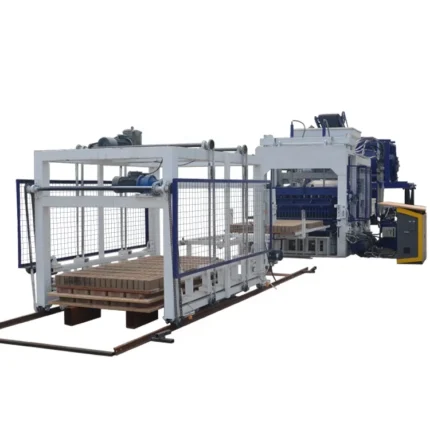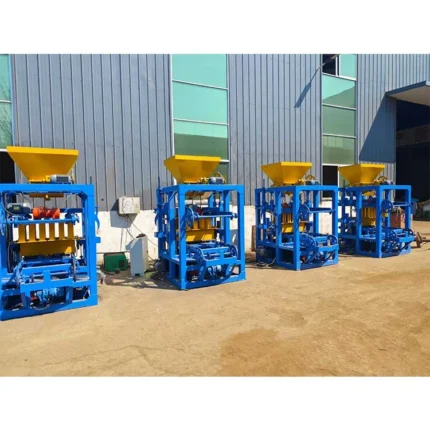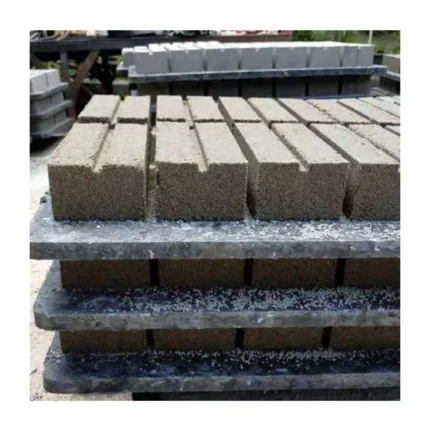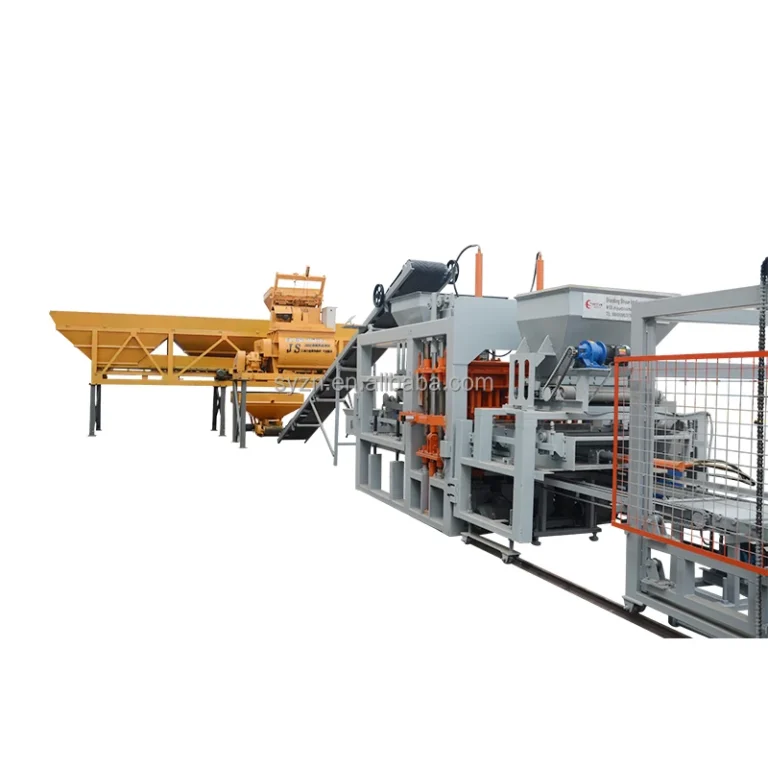
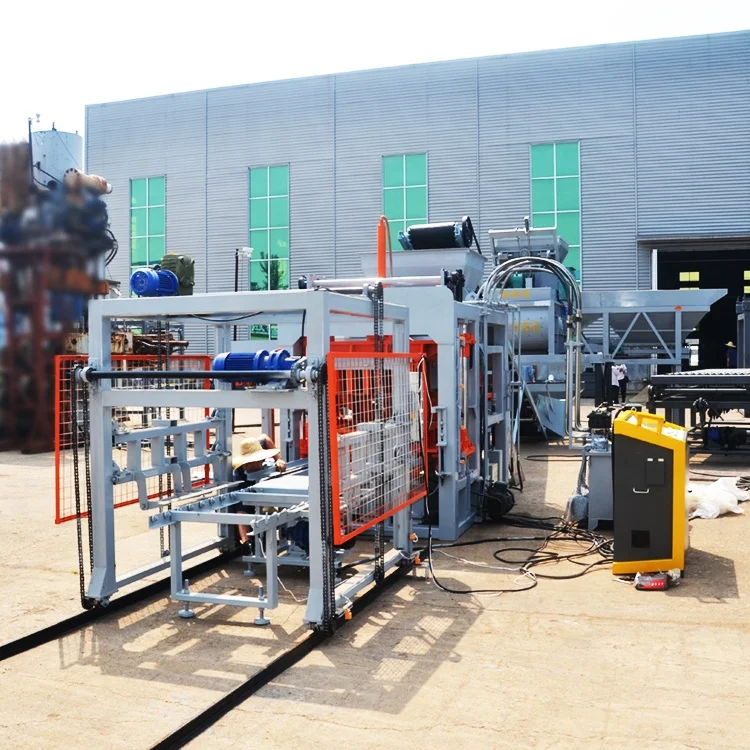
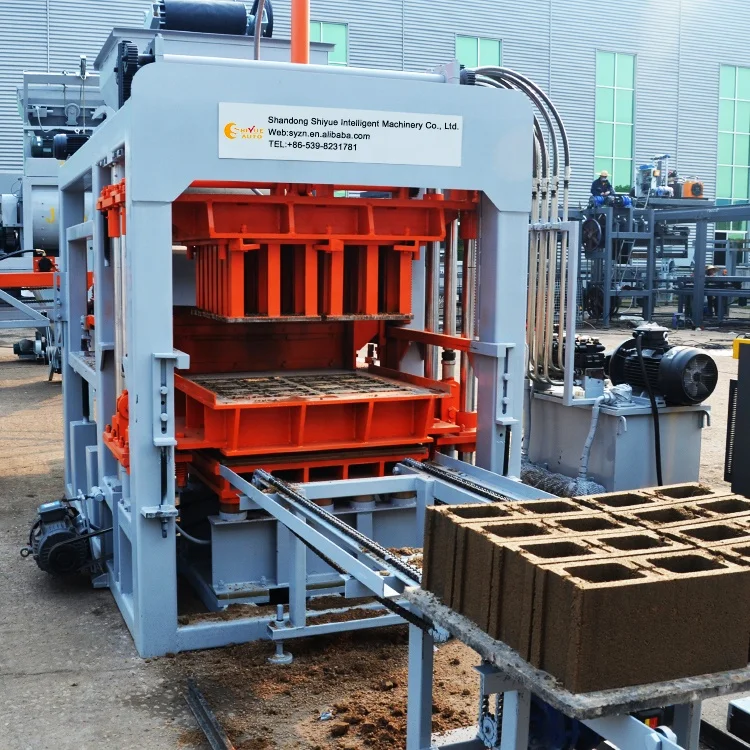
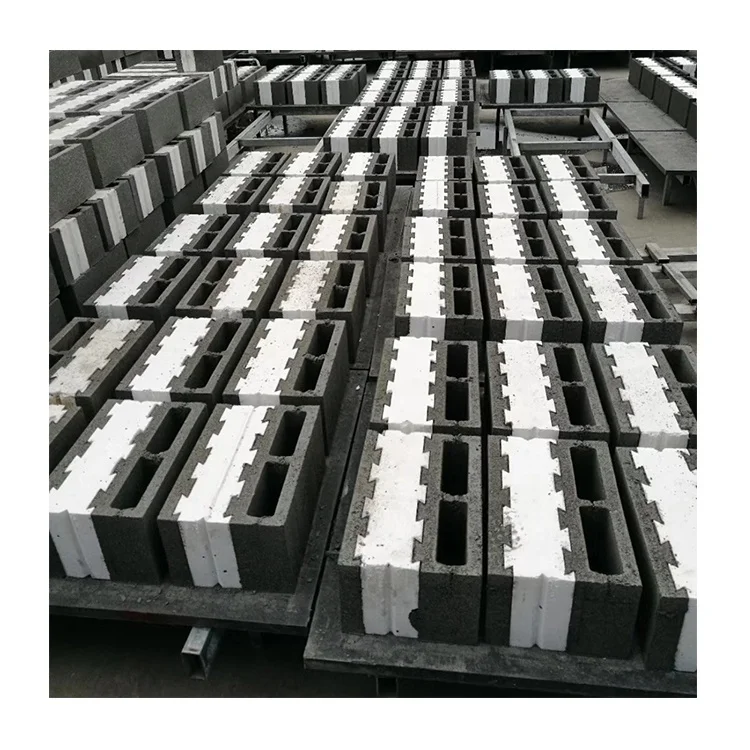

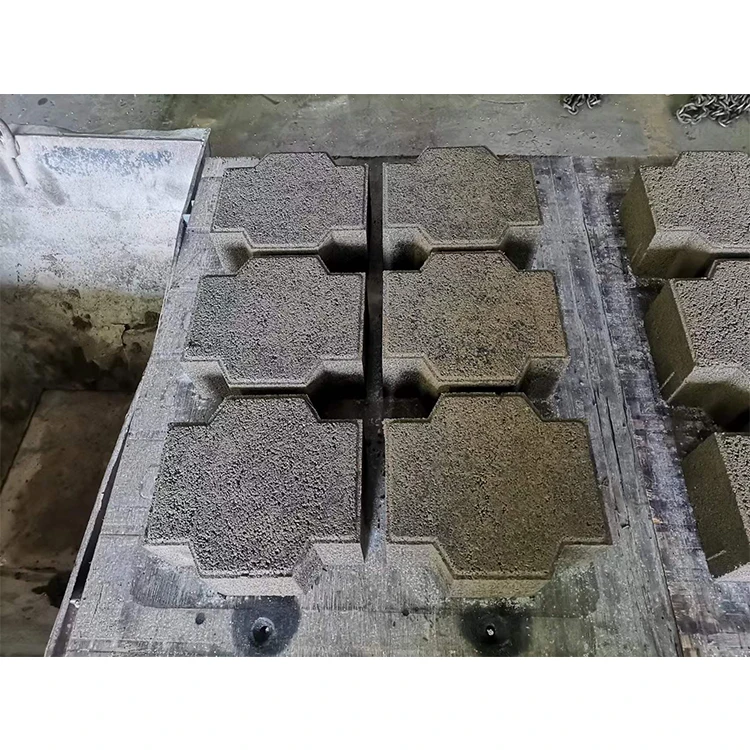
Description
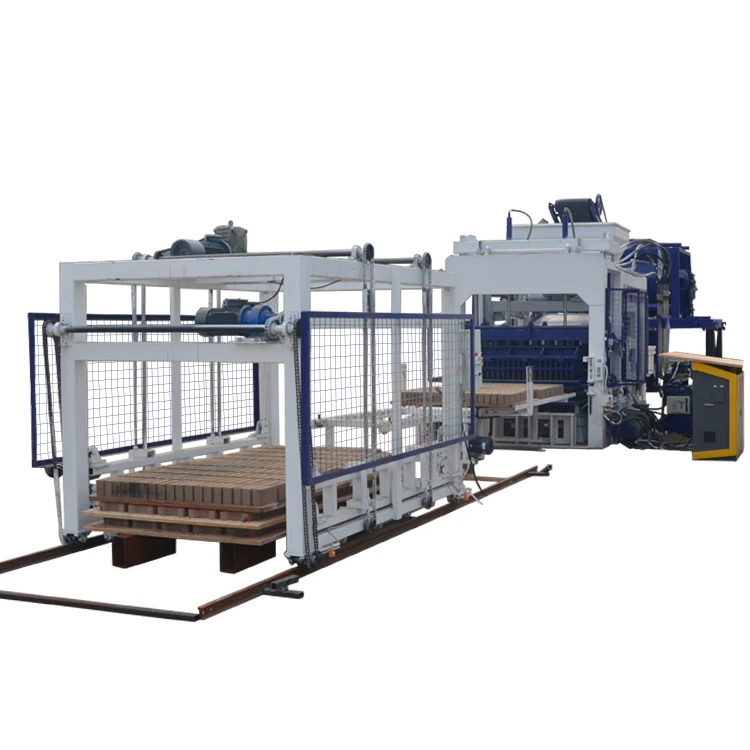
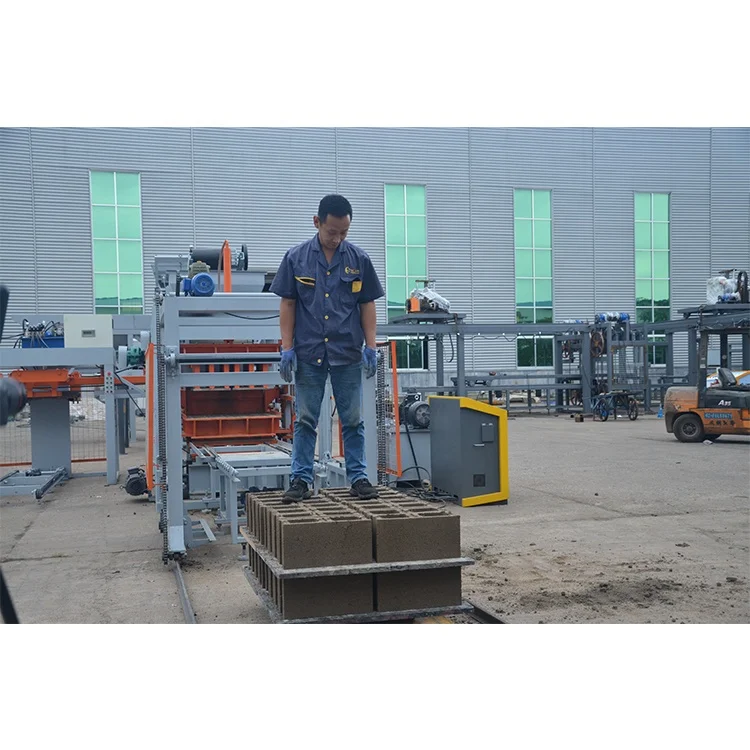
Intelligent cycle control — every vibration and hydraulic parameter stored per block format so the QT6-15 repeats the same cycle whether the operator changes or the shift changes.
Technical Specifications
| Parameter | Value |
|---|---|
| Model | QT6-15 |
| Product Type | Hydraulic Hollow Block Making Machine |
| Overall Dimensions (L×W×H) | 8200 × 1700 × 2950 mm |
| Vibration Form | Platform Vibration |
| Vibration Frequency Range | 0–60 Hz |
| Vibration Force | 45 kN |
| Moulding Mode | Automatic loading with vibration moulding |
| Demolding Method | Hydraulic |
| Pallet Size | 880 × 850 mm |
| Molding Cycle | 15–20 s |
| Overall Power | 37 kW |
| Total Mass | 7 T |
| Required Factory Area | 1200 m² |
| Control System | PLC (Programmable Controller) with touch screen |
| Hydraulic System | Independent integrated hydraulic station |
| Block Compressive Strength | More than 15 MPa |
| Fault Diagnosis System | Included |
| Safety Logic Circuit | Action interlock control |
| Output – Hollow Block 400×200×200 mm | 1080–1440 pcs/hour; 8640–11520 pcs/8 hr |
| Output – Hollow Block 400×150×200 mm | 1440–1920 pcs/hour; 11520–15360 pcs/8 hr |
| Output – Solid Brick 240×115×53 mm | 5760–7680 pcs/hour; 46080–61440 pcs/8 hr |
| Output – Rectangular Paver 200×100×60 mm | 2160–2880 pcs/hour (basis not stated in source — confirm block format / material / thickness) |
| Output – Zigzag Paver 225×112.5×60 mm | 2160–2880 pcs/hour (basis not stated in source — confirm block format / material / thickness) |
Application Suitability
| Application | Material or Output |
|---|---|
| Hollow block production | Cement, crushed stone, sand, waste ash, slag |
| Solid brick production | Cement, fine aggregate, slag blends |
| Paving brick production | Cement, coarse aggregate, pigment for colored pavers |
| Rectangular interlocking brick | Cement, graded aggregate, sand |
| Zigzag interlocking brick | Cement, crushed stone, sand |
| On-site contractor production | Local aggregate and cement adapted to project mix |
Why PLC Programming Decides Your Real Daily Output
The automatic QT6-15 block making machine stores process parameters per block format, so switching from hollow blocks to pavers does not mean starting the tuning process from scratch.
I remember a project where a buyer ran hollow blocks in the morning and paving bricks after lunch. Without parameter recall, the operator had to adjust vibration frequency and hydraulic pressure manually each time. By the third format change that week, the settings drifted and block strength dropped below the required threshold. A PLC controlled hollow block machine eliminates that drift by locking every variable — vibration time, pressure dwell, feed volume — into a named recipe that loads in seconds [NEED_CITE: PLC parameter storage standards for concrete forming equipment].
How the Touch Screen Interface Manages Recipe Consistency
The PLC touch screen on this automatic QT6-15 block making machine displays each recipe as a named profile tied to a specific block format. Operators select the profile before a run, and the system loads vibration frequency, hydraulic pressure timing, and feed cycle values without manual dial adjustment. This matters most when a plant runs three or four block formats across a single week, because the gap between a good batch and a rejected batch often comes down to a two-second difference in vibration dwell.
What the Fault Diagnosis System Catches Before It Becomes Downtime
The integrated fault diagnosis system monitors the hydraulic station, vibration motor, and sensor feedback in real time. When a parameter drifts outside the stored tolerance band, the PLC flags the specific component on screen rather than shutting down the entire line without explanation. The action interlock control prevents the machine from executing a moulding cycle if a safety condition is not met, protecting both the operator and the mould [NEED_CITE: safety interlock requirements for hydraulic press machinery].
Reading the Numbers That Actually Matter for Your Plant
The 45 kN vibration force works together with the independent hydraulic station to compact the mix during the 15–20 second moulding cycle. Higher vibration force alone does not guarantee denser blocks — the hydraulic pressure must arrive at the right moment to lock the aggregate into position. The 0–60 Hz frequency range lets the PLC dial in the exact resonance point for your specific mix design, whether you are running lightweight ash blends or dense crushed-stone aggregates. The 880 × 850 mm pallet size determines how many blocks form per cycle, and that pallet must match the racking system and forklift dimensions already in your curing area. Overall power consumption at 37 kW means you need a dedicated circuit with adequate headroom, especially during the vibration peak at startup.
The Cost of Overlooking Control Language and Voltage Before Shipment
A PLC controlled hollow block machine arrives with its display language and voltage set to whatever was confirmed during the order. If that confirmation step was skipped or assumed, the operator stares at a screen they cannot read and the motor runs hot on a mismatched frequency. I have walked onto sites where commissioning stalled for weeks because the control panel displayed in a language the local electricians could not interpret. Every voltage, frequency, and display language must be documented and confirmed before the machine leaves the factory [NEED_CITE: voltage and frequency standards by export market].
Why the Automation Discussion Should Start With Your Current Crew
This machine is built around the idea that the intelligent side of block production removes guesswork from the operator, not the operator from the line. The automatic QT6-15 block making machine handles material feeding, vibration timing, and hydraulic demolding through programmed sequences, while the operator monitors the touch screen and manages pallet flow. For a plant moving up from semi-automatic operation, the jump means batch-to-batch consistency no longer depends on one experienced operator remembering every adjustment. The upgrade path is equally important — starting with this configuration leaves room to add automatic stacking or cubing modules later as production volume grows.
Why Buyers Source This Configuration Here
Every machine is specified against the buyer’s actual mix design and target block format rather than pulled from a catalogue default. The PLC program is configured with recipes for the exact formats the buyer’s market demands, including custom mould profiles. Pallet size, automation level, and handling equipment are confirmed as one matched system so the press is never left waiting for the next station. Voltage, frequency, and control language are verified before production begins, not discovered at uncrating. Factory testing runs the machine through full cycles on the buyer’s specified block format before dispatch.
Documentation & Verification
- Line layout showing capacity per block format for the QT6-15
- PLC program parameter sheet listing each stored recipe and tolerance band
- Hydraulic and electrical schematic matching the shipped configuration
- Voltage, frequency, and control language confirmation record
- Factory test record on your specified block format before dispatch
- Operation and maintenance manual with fault diagnosis code index
Installation, Commissioning & Support
- Foundation pad sized to the 8200 × 1700 mm footprint with vibration isolation
- Dedicated 37 kW power circuit matching confirmed voltage and frequency
- PLC touch screen calibrated and recipe profiles loaded during commissioning
- Operator training on recipe selection, fault diagnosis, and mould change procedure
- Wear parts list covering hydraulic seals and vibration motor components
- Scheduled maintenance intervals based on actual production cycle counts
What to Share With Your Inquiry
Tell me the block formats your market actually buys, the daily volume you need per format, and the raw materials available locally — including aggregate type and cement grade. Share your site voltage and frequency along with your preferred control display language. If you already have pallets, racking, or a forklift in place, send the dimensions so the pallet size and curing layout are matched before the automatic QT6-15 block making machine ships.
Frequently Asked Questions
Q: How does the PLC system store and recall parameters for different block formats?
A: Each block format is saved as a named recipe on the touch screen. When you select a recipe, the PLC loads vibration frequency, hydraulic pressure timing, feed volume, and cycle duration automatically. This means switching from hollow blocks to pavers takes seconds instead of requiring manual tuning, and every batch runs with the same parameters regardless of who is operating the machine.
Q: What automation features reduce operator intervention compared to semi-automatic machines?
A: The automatic QT6-15 block making machine handles material loading, vibration moulding, and hydraulic demolding through programmed sequences. The operator monitors the touch screen and manages pallet supply rather than adjusting cycle parameters manually. This shifts the operator’s role from process control to supervision, which improves consistency across long production shifts.
Q: How do I confirm voltage, frequency, and PLC display language for my market?
A: These three items are confirmed during the order stage before production starts. You provide your local electrical standard and preferred display language, and we document them in the specification sheet. The machine ships with the motor wound for your voltage and the PLC interface set to your language, avoiding commissioning delays on site.
Q: What is the upgrade path if I start with this model and need higher automation later?
A: The QT6-15 platform supports adding automatic pallet feeding, stacking, and cubing modules as separate stations. Starting with the current PLC configuration means the control system can integrate additional modules without replacing the main controller. We plan the line layout so future stations connect without relocating the press.
Q: How does the fault diagnosis system help minimize unplanned downtime?
A: The system monitors hydraulic pressure, vibration motor status, and sensor feedback continuously. When a value moves outside the stored tolerance, the PLC identifies the specific component on the touch screen instead of issuing a generic alarm. This lets your maintenance team address the exact issue rather than troubleshooting the entire line.