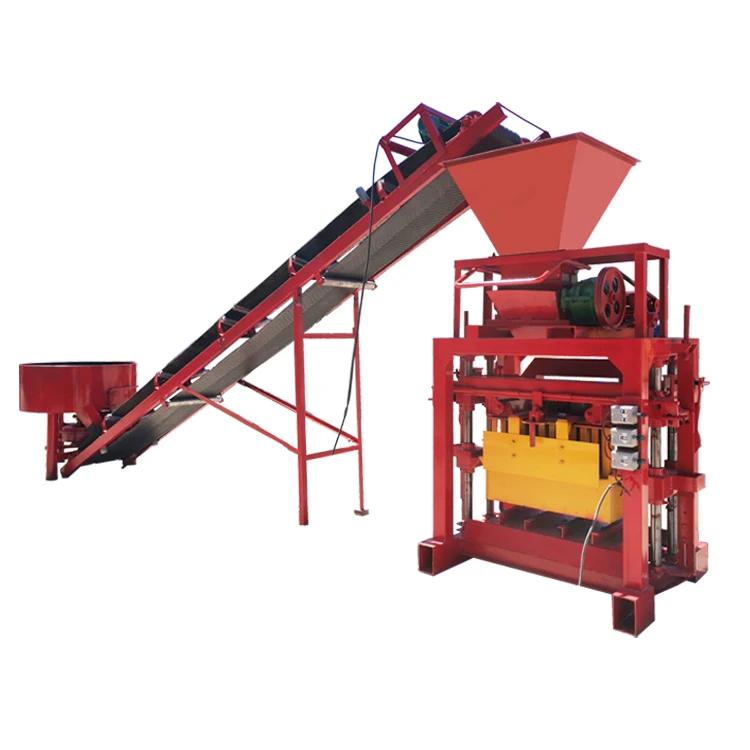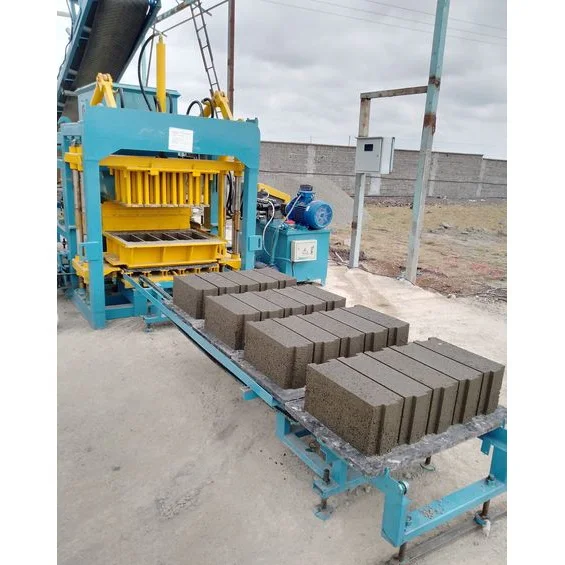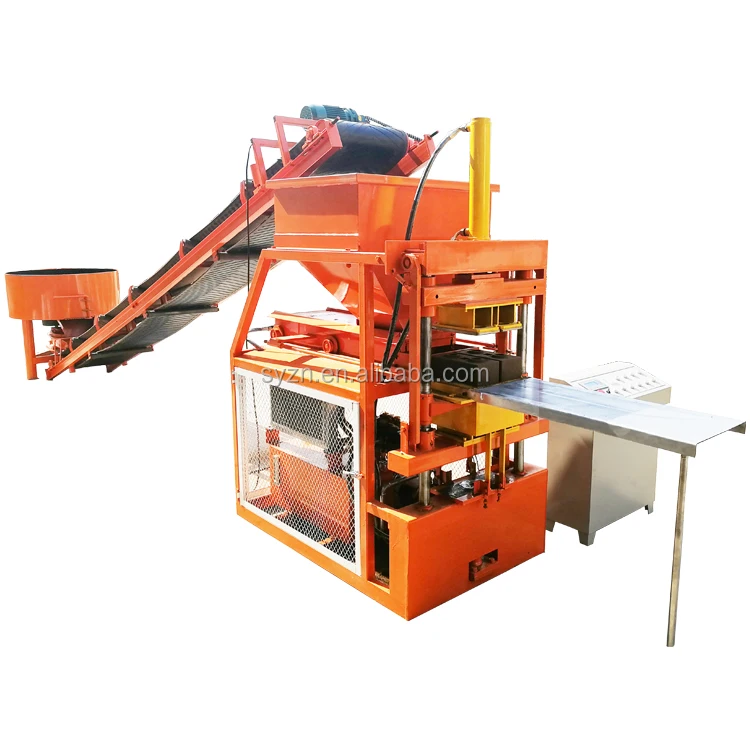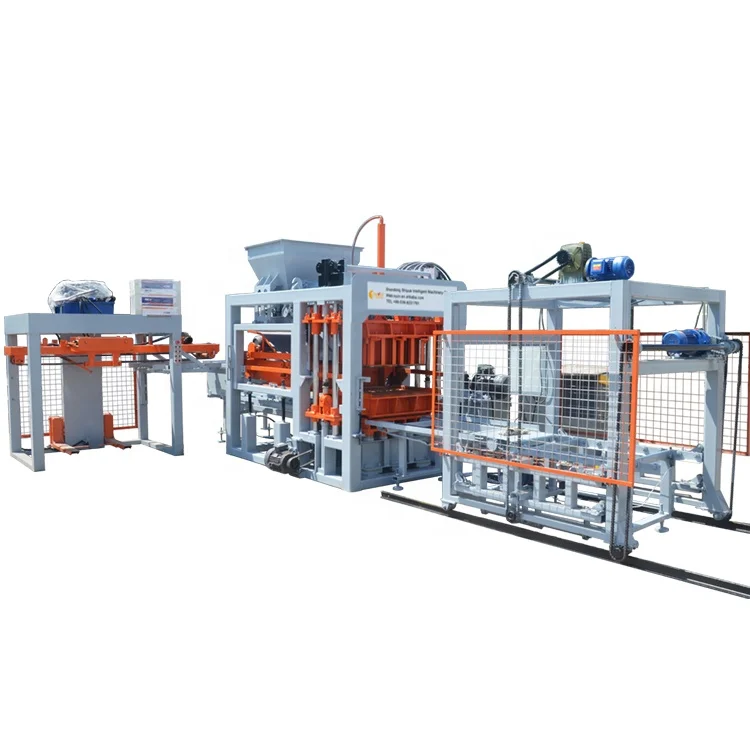


Description
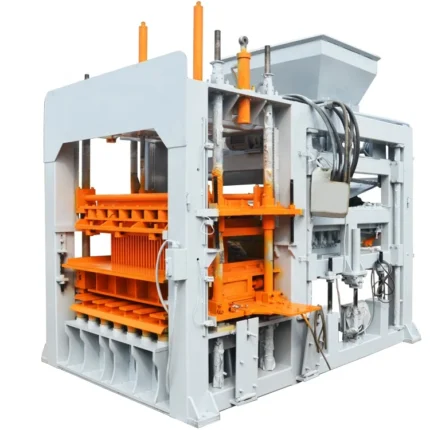
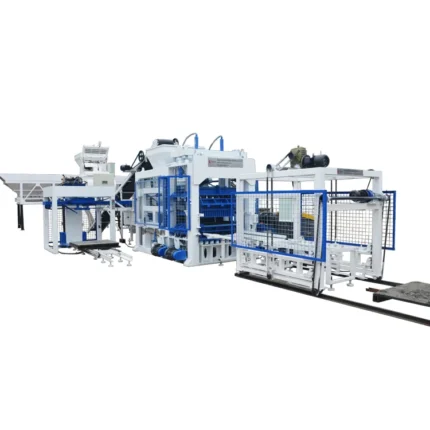
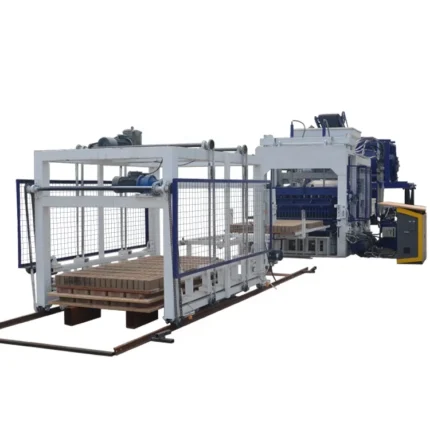
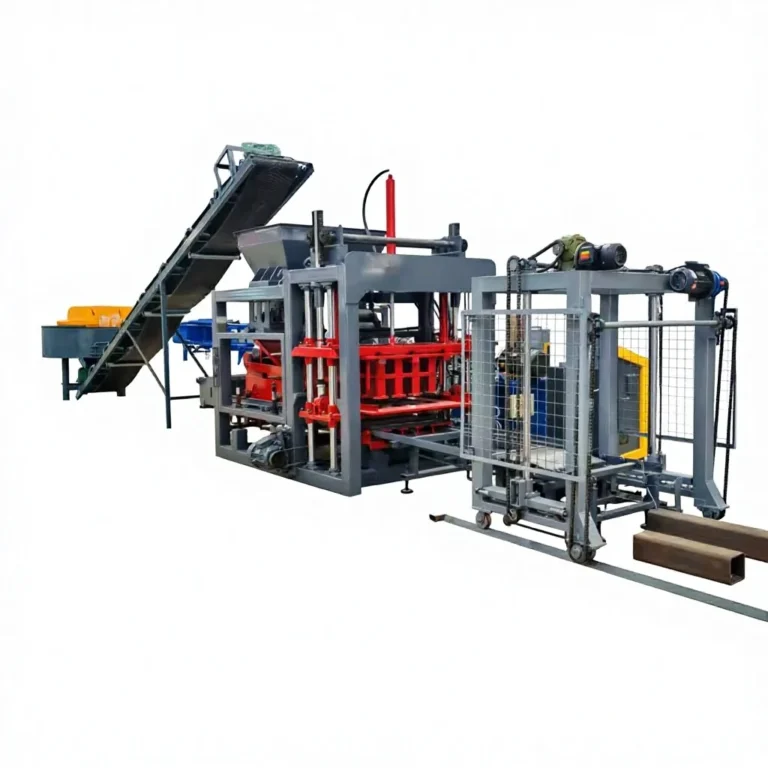
Automation Level Matched to Plant — The QT6-15 is specified as a single integrated system where PLC logic, hydraulic station, and pallet handling are configured together rather than sourced separately, removing the interface gaps that delay commissioning on assembled lines.
Technical Specifications
| Parameter | Value |
|---|---|
| Model | QT6-15 |
| Product Type | Hydraulic Block Making Machine |
| Overall Dimension | 8200 × 1700 × 2950 mm |
| Total Mass | 7 T |
| Overall Power | 37 kW |
| Vibration Force | 45 kN |
| Vibration Frequency | 0–60 Hz |
| Vibration Form | Platform Vibration |
| Moulding Mode | Load automatically, vibration moulding |
| Demolding Method | Hydraulic |
| Pallet Size | 880 × 850 mm |
| Molding Cycle | 15–20 s (basis not stated in source — confirm block format / material / thickness) |
| Control System | PLC (Programmable Controller) with touch screen |
| Hydraulic System | Independent integrated type hydraulic station |
| Compressive Strength of Blocks | More than 15 MPa |
| Output — Hollow Block 400×200×200 mm | 1,080–1,440 pcs/hour; 8,640–11,520 pcs/8 hr |
| Output — Hollow Block 400×150×200 mm | 1,440–1,920 pcs/hour; 11,520–15,360 pcs/8 hr |
| Output — Solid Brick 240×115×53 mm | 5,760–7,680 pcs/hour; 46,080–61,440 pcs/8 hr |
| Output — Rectangular Brick 200×100×60 mm | 2,160–2,880 pcs/hour at 20–25 s cycle; 17,280–23,040 pcs/8 hr |
| Output — Zigzag Brick 225×112.5×60 mm | 2,160–2,880 pcs/hour at 20–25 s cycle; 17,280–23,040 pcs/8 hr |
| Safety Features | Advanced safe logic circuit for action interlock, fault diagnosis system |
| Raw Material Adaptability | Waste ash, slag, various aggregates |
| Factory Area | 1,200 m² |
Application Suitability
| Application | Material or Output |
|---|---|
| Hollow block production | Crushed stone, cement, and waste ash blends for structural and partition walls |
| Solid brick production | Fine aggregate and cement mixes for load-bearing masonry |
| Paving brick production | Dense aggregate blends for rectangular and zigzag interlocking pavers |
| Block production from industrial waste | Fly ash, slag, and recycled aggregate formulations |
| On-site contractor production | Mobile plant setups for housing and infrastructure projects |
What the PLC Screen Language Means for Your First Week of Production
An automatic block making machine PLC controlled system only delivers its promised consistency when the operator can actually read the interface.
I once watched a commissioning stall for an entire day because the touch screen on a newly arrived block machine defaulted to a language the plant crew could not read. The hydraulics were fine, the vibration system was calibrated, but the operator could not navigate the fault diagnosis menu. That single oversight turned a planned start-up into a troubleshooting session conducted through translated voice messages. When buyers evaluate an automatic block making machine PLC controlled configuration, the display language and the voltage specification deserve as much attention as the vibration force rating [NEED_CITE: voltage and frequency standards by export market].
How PLC Logic Replaces Operator Guesswork
The QT6-15 places its PLC at the center of every production cycle, governing the sequence from raw material loading through vibration moulding to hydraulic demolding. The touch screen interface presents a human conversation layout, meaning parameter adjustments for cycle time, vibration frequency, and pressure are made through structured menus rather than manual dial settings. This removes the variable timing that occurs when different operators run the same machine by feel, giving batch-to-batch consistency that manual controls cannot sustain across a full shift.
Fault Diagnosis That Runs Before the Operator Notices
The built-in safe logic circuit monitors action interlocks across the hydraulic station, vibration platform, and pallet feed in real time. When a sensor reading falls outside its expected range, the fault diagnosis system identifies the specific station and component rather than triggering a generic alarm. For a plant owner moving from semi-automatic operation, this means the automatic block making machine PLC controlled system catches a misaligned pallet or a pressure drop before it produces a full rack of out-of-spec blocks [NEED_CITE: PLC fault diagnosis standards in hydraulic block forming equipment].
Reading the Specifications That Matter for Automation
The independent integrated hydraulic station sits isolated from the main machine vibration and dust, which preserves valve response accuracy over extended production runs. The platform vibration system adjusts across the full 0–60 Hz range, allowing the PLC to store different frequency profiles for hollow blocks, solid bricks, and pavers so that a format change does not require the operator to re-tune from scratch. The 45 kN vibration force, combined with the hydraulic demolding method, produces blocks rated above 15 MPa compressive strength when the mix design matches the machine’s pressure and vibration settings. The 880 × 850 mm pallet size must align with the buyer’s existing curing racks and forklift capacity, because a mismatch here creates a bottleneck that no amount of automation can solve.
When Automation Cannot Compensate for a Wrong Configuration
A PLC can control every action in the production cycle precisely, but it cannot correct a pallet size that does not fit the curing area or a voltage supply that differs from the machine’s rated input. Plants that skip the confirmation step before shipment regularly discover that the automation they paid for is locked behind an unreadable menu or a tripped breaker on day one [NEED_CITE: CE machinery directive requirements for industrial equipment]. The cost is not the machine itself but the idle production days while the correct transformer arrives or the control language gets reconfigured remotely.
Why the QT6-15 Is Specified as a Matched System
The PLC, hydraulic station, vibration system, and pallet handling are configured together against the buyer’s target block format and local aggregate, not pulled from separate supplier catalogs. Mould design is included for the formats the buyer’s market actually sells, with custom drawings available. The automation level is selectable, meaning a buyer running a semi-automatic line today can plan a future upgrade path without replacing the entire press. Installation support includes operator training on the PLC interface and fault diagnosis procedures, so the crew understands the system before the first production run. Voltage, frequency, and control language are confirmed and documented before the machine leaves the factory.
Documentation & Verification
- PLC program backup with parameter sets for each confirmed block format
- Voltage and control language confirmation record signed before dispatch
- Factory test record showing cycle times on buyer’s specified block dimensions
- Hydraulic and electrical schematic matching the as-built configuration
- Operation and maintenance manual in the confirmed display language
- Wear parts and mould list with replacement intervals
Installation, Commissioning & Support
- 1,200 m² factory area required with level foundation to support 7 T total mass
- 37 kW power supply on a dedicated circuit matching confirmed voltage and frequency
- Machine shipped in dismantled state with reassembly supervised on site
- First-run commissioning includes PLC parameter loading for each block format
- Operator training covers touch screen navigation, fault diagnosis, and mould change
- Wear parts supply and mould replacement support from initial installation onward
What We Need to Configure Your QT6-15 Correctly
To prepare a configuration proposal, share the block formats your market requires, your target daily output per format, and the raw materials available locally including aggregate type and source. Confirm your site voltage, frequency, and preferred PLC display language. If you are upgrading from a semi-automatic line, describe your current pallet size and handling equipment so the automation level can be matched to what is already in place.
Frequently Asked Questions
Q: What automation features does the PLC control system include and how do they reduce operator workload?
A: The PLC governs the full cycle from material loading through vibration moulding to hydraulic demolding, with stored parameter profiles for each block format. The touch screen replaces manual dial adjustments, and the fault diagnosis system pinpoints issues by station. This removes the timing variability that occurs when operators run cycles by feel, keeping output consistent across shifts.
Q: Can the PLC display language be configured to a local language before delivery?
A: Yes. The control language is confirmed during the specification stage alongside voltage and frequency. The PLC program and touch screen labels are set to the agreed language before factory testing, so the operator interface is readable from the first power-on at your site. This avoids the commissioning delays caused by an unreadable default language.
Q: How does the fault diagnosis system work and what remote troubleshooting support is available?
A: The safe logic circuit continuously monitors interlocks across the hydraulic station, vibration platform, and pallet feed. When a reading falls outside range, the system identifies the specific component rather than issuing a generic alarm. Remote diagnostics allow our engineers to review fault logs and guide your crew through resolution without waiting for an on-site visit.
Q: What is the upgrade path if I start with a semi-automatic configuration?
A: The QT6-15 platform supports staged automation. A buyer can begin with manual pallet handling and add automatic pallet feeding, stacking, or cubing later without replacing the press. The PLC architecture accommodates these additions, and the upgrade is planned during initial configuration so the control system is ready to accept future modules.
Q: How does automatic pallet feeding integrate with the PLC control system?
A: The pallet feeder operates under the same PLC logic that controls the press cycle, ensuring a pallet is positioned before each moulding sequence begins. The system adjusts feed timing to match the molding cycle of each block format, preventing the press from waiting idle. Pallet size and material are confirmed during configuration to match your curing racks and handling equipment.