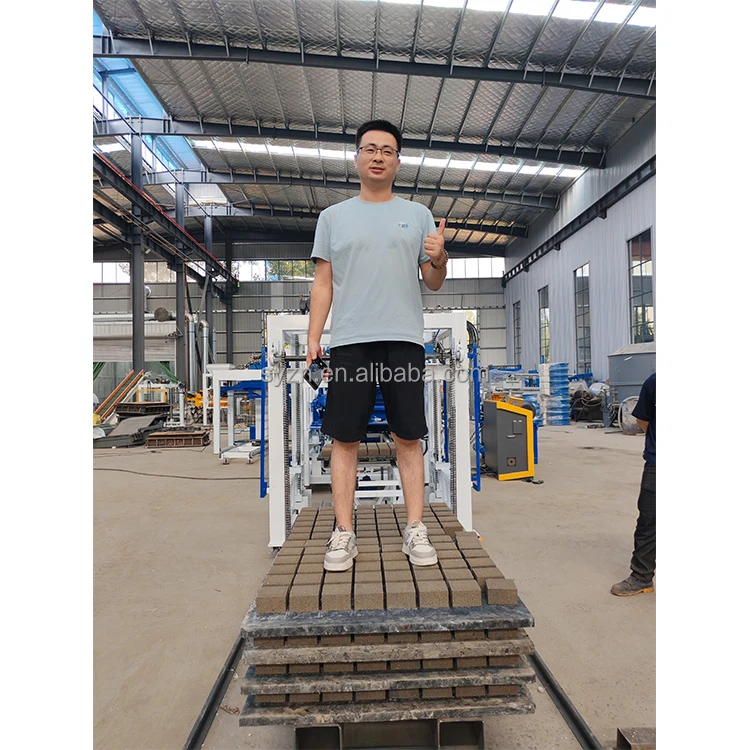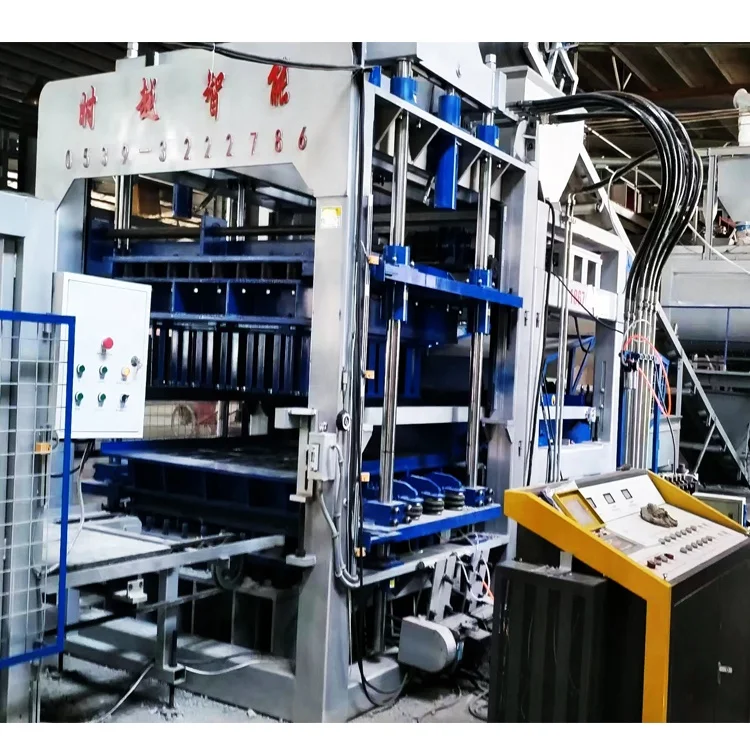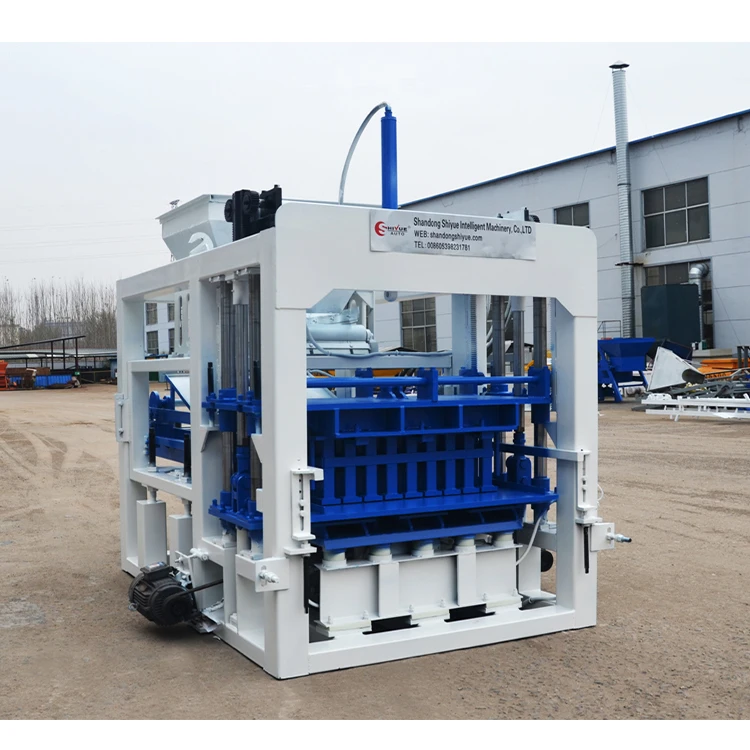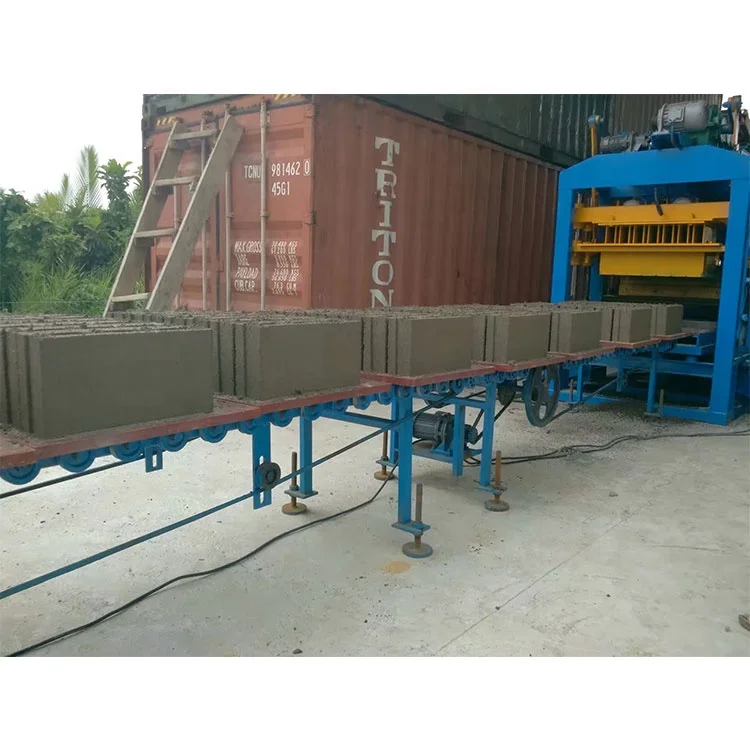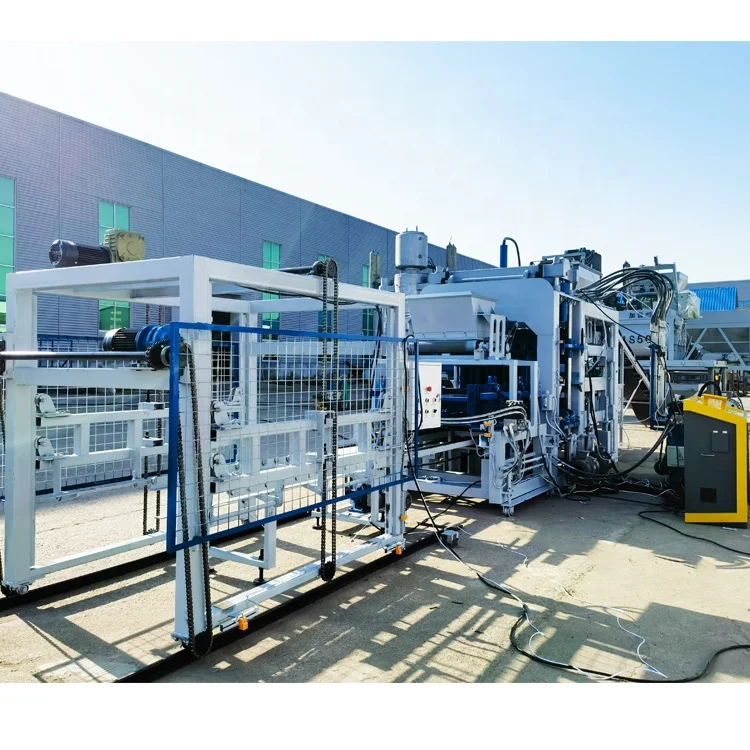
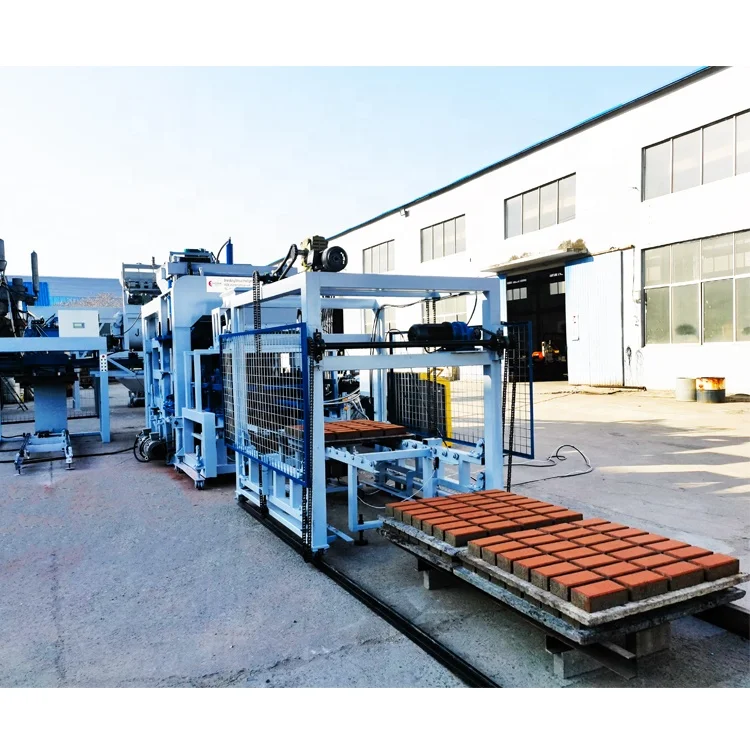
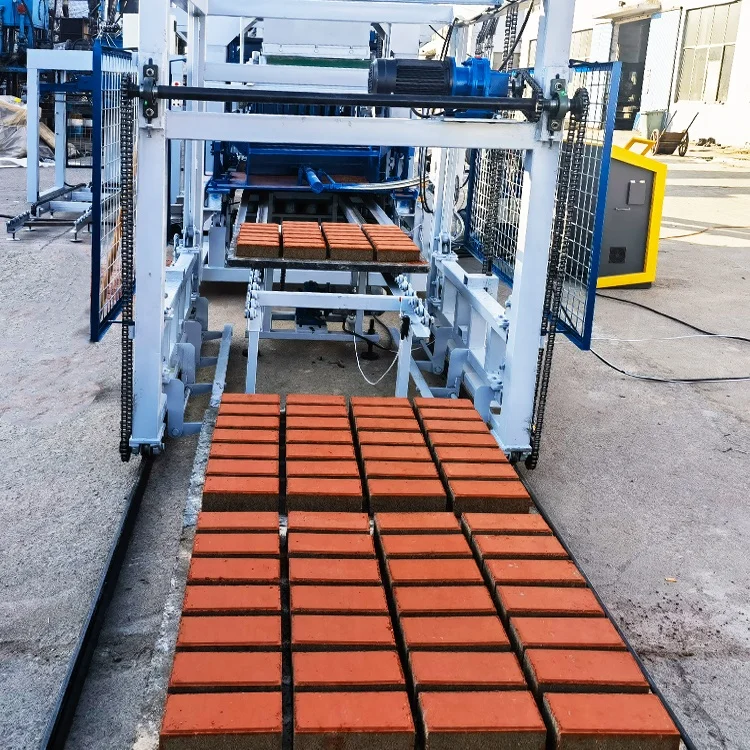

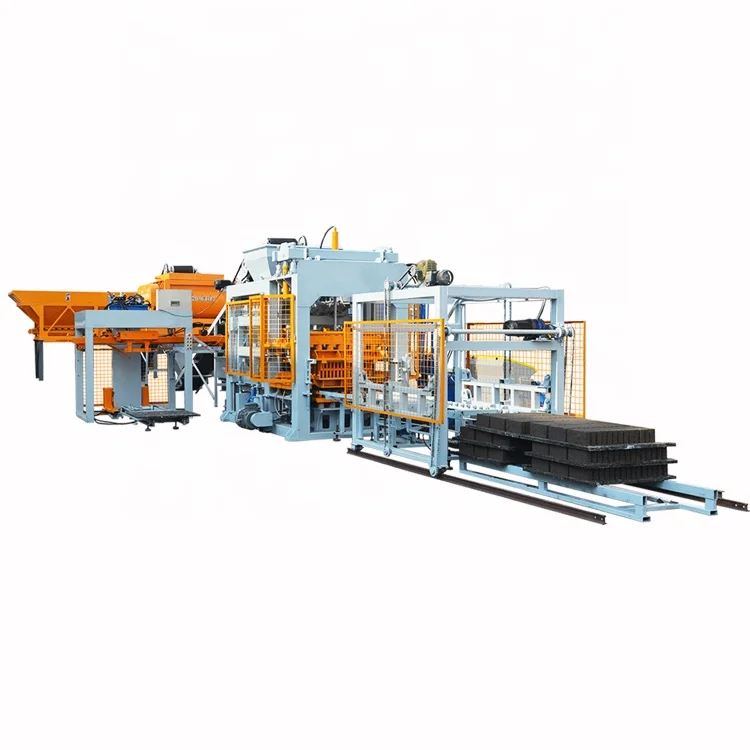

Description
Matched control logic — every hydraulic and vibration parameter on the QT8-15 is governed by a single PLC sequence, eliminating operator timing variance across shifts.
Technical Specifications
| Parameter | Value |
|---|---|
| Model | QT8-15 |
| Product Type | Hydraulic Concrete Block Making Machine |
| Overall Dimensions (L×W×H) | 8300 × 1860 × 3000 mm |
| Rated Pressure | 21 MPa |
| Main Vibration Form | Platform Vibration |
| Vibration Frequency | 2800–4500 r/min |
| Vibration Force | 45 kN |
| Pallet Size | 950 × 900 mm |
| Molding Cycle | 15–20 s (basis to be confirmed per block format) |
| Overall Power | 55.5 kW |
| Total Mass | 8 T |
| Demolding Method | Hydraulic |
| Control System | PLC (brand and language options configurable) |
| Voltage & Frequency | Configurable to target market (basis to be confirmed) |
| Factory Area | 300 m² |
| Warranty | 1 year |
Application Suitability
| Application | Material or Output |
|---|---|
| Hollow and solid block production | Crushed stone, sand, cement, fly ash |
| Paving block and colored paver runs | Gravel, slag, dust, cement blends |
| Interlocking brick manufacturing | Sand, cement, crushed stone aggregates |
| Kerbstone and curb production | Coarse aggregate and cement mixes |
Why "15–20 Seconds per Cycle" Means Nothing Without Context
Cycle time only matters when tied to a specific block format and mix design.
Many quotations list a single molding cycle as if it applies universally across every product the press can make. In practice, a 15-second cycle might hold for a thin paver but extend well beyond 20 seconds for a tall hollow block requiring deeper vibration penetration. When the automatic QT8-15 block machine is configured, the PLC sequence must be tuned to the actual block geometry and the local aggregate’s compaction behavior [NEED_CITE: relationship between aggregate gradation and vibration dwell time]. Without that tuning, the quoted cycle becomes an optimistic ceiling rather than a daily reality.
What the PLC Actually Controls on This Line
The programmable logic controller on this automatic QT8-15 block machine governs the entire pressing sequence from pallet indexing through vibration onset, hydraulic pressure ramp, and demolding. Rather than relying on an operator to judge when compaction is complete, the PLC holds each stage to a repeatable timer. The vibration frequency range of 2800–4500 r/min is selectable per recipe, meaning the same press can run a high-frequency short burst for pavers and a lower-frequency sustained cycle for hollow blocks without manual dial adjustments.
How Automation Removes the Operator from the Equation
On a semi-automatic line, pallet feeding, press cycling, and product stacking each depend on human timing. Miss one beat and the press idles or the fresh block gets damaged during extraction. The hydraulic demolding method on the QT8-15 eliminates the physical yank that cracks green blocks, and the PLC ensures the extraction stroke only fires once pressure has fully released. For a plant owner moving away from manual operation, this is where batch-to-batch consistency originates — not from better raw materials, but from removing the variable of human reflex [NEED_CITE: impact of operator variability on block compressive strength].
Reading the Specs That Determine Daily Output
The rated pressure of 21 MPa and vibration force of 45 kN together define the compaction envelope. Higher vibration force drives aggregate particles into tighter arrangement, while hydraulic pressure locks that arrangement before demolding. If your local aggregate is angular crushed stone, the platform vibration must penetrate a stiffer mix than rounded river gravel would require. The 950 × 900 mm pallet size sets the maximum mold footprint; every block format must nest within that boundary. At 55.5 kW overall power, the electrical supply must sustain simultaneous vibration motor and hydraulic pump draw without voltage sag — a condition that shortens contactor life and corrupts PLC memory if unaddressed.
The Hidden Cost of Skipping the Control Language Confirmation
Arriving at a jobsite to find the PLC display is in a language the local operators cannot read is more than an inconvenience. When alarm messages are unreadable, workers default to resetting faults they do not understand, sometimes clearing safety interlocks in the process. A misconfigured voltage setting compounds the problem: the machine may power on but run hydraulic solenoids at reduced force, producing blocks that pass visual inspection but fail compression testing days later [NEED_CITE: electrical supply mismatch effects on hydraulic block presses]. These issues surface only after installation, when the cost of a return visit has already been incurred.
Why Sourcing This Machine Through a Single-System Approach Matters
Block machinery is the sole product focus here, which means the QT8-15 press, its molds, pallets, and handling equipment are specified as one matched set rather than assembled from disconnected suppliers. The configuration is built around your actual mix design and target block format, not a default catalog entry. Automation level is selectable, so a buyer running semi-automatic today can plan the upgrade path to full stacking and cubing without replacing the press itself. Molds are designed for the formats your market actually sells, including custom drawings when standard options do not cover your product range.
Documentation & Verification
- Line layout showing station spacing for the 8300 mm press footprint
- Capacity calculation stating the exact block format and cycle time assumed
- PLC display language and voltage confirmation signed before production
- Factory test record demonstrating cycle consistency with your mix design
- Hydraulic and electrical schematic matching your site’s supply configuration
Installation, Commissioning & Support
- Foundation plan sized for the 8-tonne mass and 8300 × 1860 mm footprint
- Dedicated circuit rated for 55.5 kW continuous draw plus startup surge
- PLC parameter set loaded with your confirmed voltage and frequency values
- Operator training covering alarm response in your chosen display language
- Wear parts list covering hydraulic seals and vibration motor bearings
- Commissioning run validating the 15–20 second cycle on your target format
What to Prepare Before Requesting a Quotation
To configure the automatic QT8-15 block machine correctly, provide the specific block formats you intend to produce, including dimensions and target daily volume per format. Confirm your local voltage and frequency, along with the preferred PLC display language for your operators. Detail the raw materials available at your site — aggregate type, cement source, and any supplementary materials like fly ash or slag — so the vibration and pressure settings can be matched before the machine leaves the factory.
Frequently Asked Questions
Q: How is the PLC configured for my local voltage and preferred display language?
A: Voltage, frequency, and display language are confirmed in writing before production begins. The control system is then programmed and tested at the factory under those exact electrical conditions. This prevents the common situation where a machine arrives with default settings that do not match the site supply, which would otherwise delay commissioning by days or weeks.
Q: What automation stations are included and what remains manual?
A: The automation level is configurable from basic PLC-controlled pressing with manual pallet handling through to fully automatic pallet feeding, stacking, and cubing. Each station added or omitted is specified in the quotation so there are no surprises at installation. The upgrade path allows adding stations later without replacing the core press.
Q: How do I verify the real daily output before committing?
A: The capacity calculation provided with the quotation states the exact block format, molding cycle, and pallet configuration assumed. A factory test record is generated using those parameters before dispatch. This ensures the quoted output reflects your specific product rather than a generic best-case figure disconnected from actual production conditions.
Q: How is vibration and pressure matched to my local aggregate?
A: The vibration frequency range and rated hydraulic pressure are adjusted during commissioning based on your mix design and aggregate characteristics. Angular crushed stone requires different compaction energy than rounded gravel, and the PLC recipe system stores separate profiles for each block format so operators can switch without retuning manually.