Description
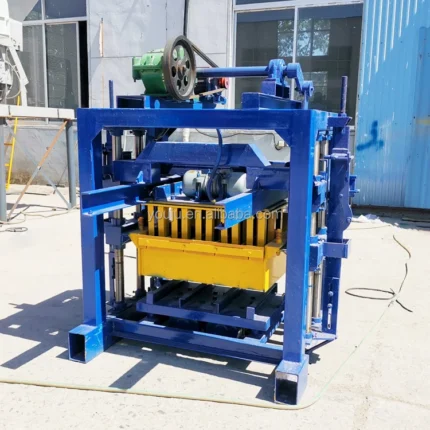
Matched System Configuration — the QTJ4-24 semi-automatic block machine, its JQ350 mixer, and 850mm × 450mm pallets are specified as one coordinated line so the press never waits on upstream or downstream stations.
Technical Specifications
| Parameter | Value |
|---|---|
| Model | QTJ4-24 |
| Product Type | Semi-Automatic Concrete Block Making Machine |
| Molding Type | Platform Vibration |
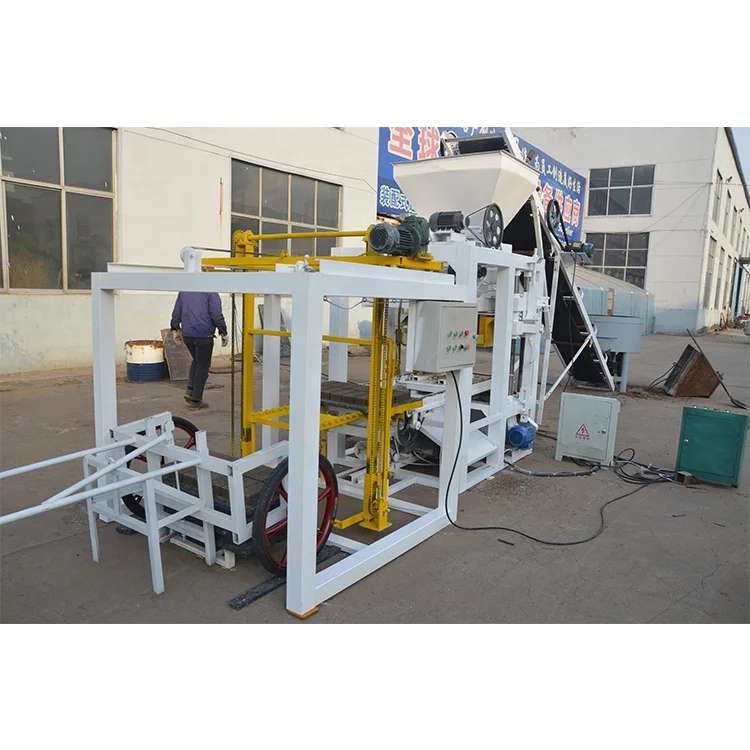
| Overall Dimensions (L×W×H) | 3600mm × 1700mm × 2560mm (working state) |
| Net Weight | 1750 kgs |
| Overall Power | 14.25 kW |
| Vibration System | Lower platform vibration (2 × 3 kW motors) + Upper vibration (1.5 kW attached device) |
| Elevating System | Cone-shape motor with JZQ250 speed reducer, V-shape triangle belt drive |
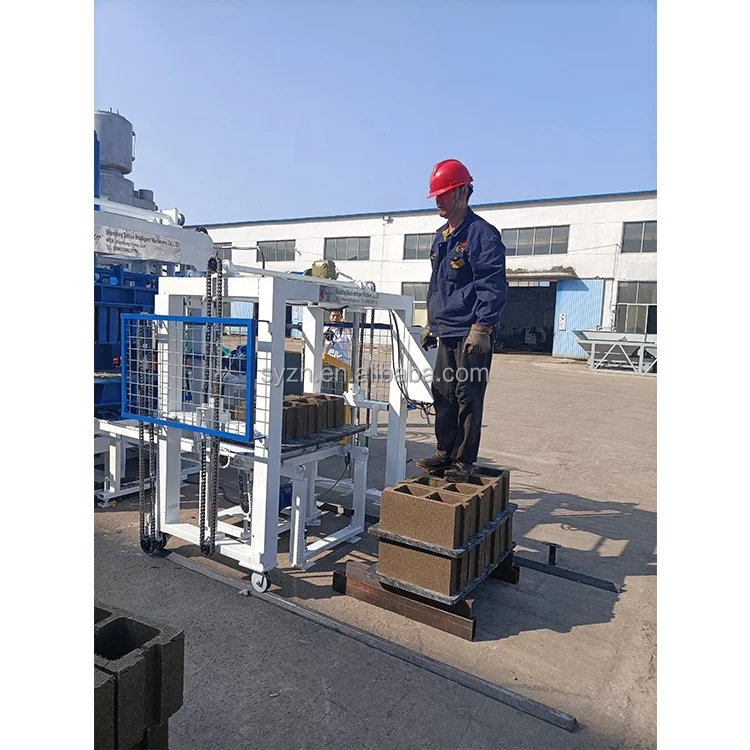
| Delivery Device | Cycloidal pin wheel speed reducer with chains and V-belt |
| Pallet Size | 850mm × 450mm |
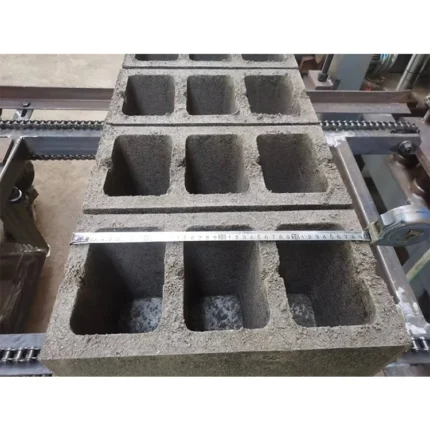
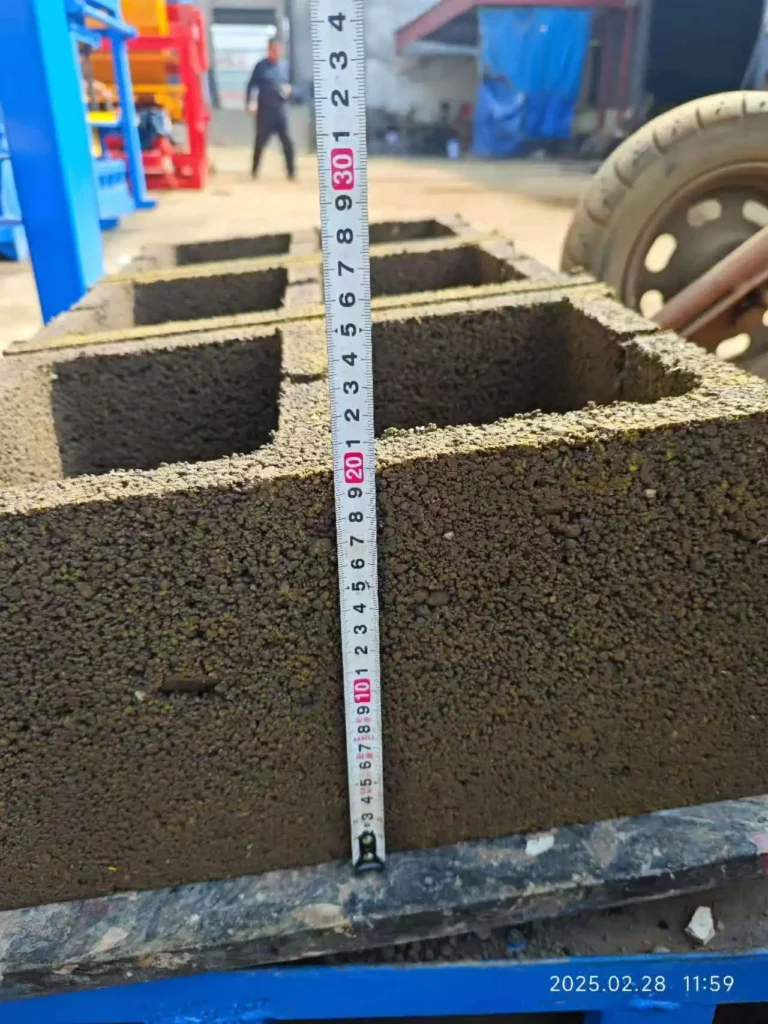
| Mould Format (standard) | 390×190×190mm (4 pcs/mould); 240×115×53mm (21 pcs/mould) |
| Cycle Time | 24 seconds (basis not stated in source) |
| Control System | Electronic controlling part (PLC available as option) |
| Frame Construction | Dragon gate style, super steel, four wear-resisting vertical shafts |
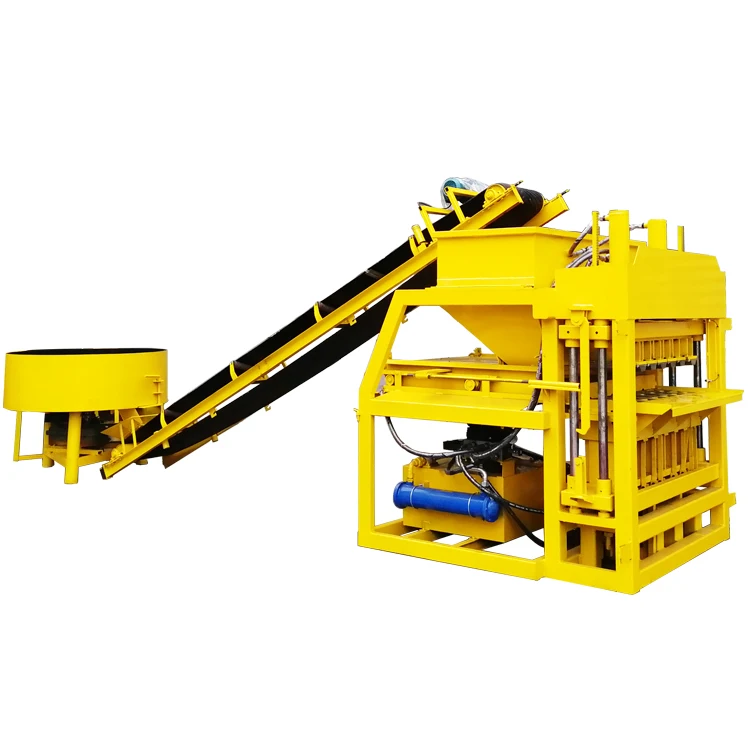
| Supporting Equipment (basic) | JQ350 pan mixer, 6m belt conveyor, trolley |
| Assembly State | Stationary, fixed platform installation required |
Application Suitability
| Application | Material or Output |
|---|---|
| Hollow block production for load-bearing walls | Crushed stone, cement, sand, and water |
| Solid brick production for partition walls | Cement, fly ash, and fine aggregate |
| On-site production for housing projects | Locally sourced aggregate and cement |
| Small-scale workshop block manufacturing | Various concrete mix designs compatible with platform vibration |
What "PLC Controlled" Means for a Semi-Automatic Machine
The PLC controlled semi-automatic block machine is not a fully automatic line — it is a mechanical press with electronic logic governing the vibration cycle and material feed.
Buyers often see the term PLC controlled semi-automatic block machine on a quotation and assume the system includes automatic pallet feeding, stacking, and cubing. In reality, the QTJ4-24 uses electronic control to manage the vibration timing and hopper release, while pallets are still fed manually or via a basic trolley. This distinction matters because commissioning delays frequently trace back to unconfirmed voltage, frequency, and display language specifications [NEED_CITE: voltage and frequency standards by export market]. When these details are left to assumption, the control panel may arrive with settings incompatible with the site’s power supply or operator language.
The Role of the Control System in Semi-Automatic Operation
The electronic control architecture on this machine sequences the vibration motors, hopper release, and elevating cycle so the operator does not have to time each step manually. A PLC controlled semi-automatic block machine at this tier removes the guesswork from the moulding cycle while keeping the investment within reach for a first-time block producer. The system can later be extended to include automatic pallet feeding and stacking as the plant scales.
Where Automation Ends and Manual Work Begins
On the QTJ4-24, the press completes its vibration and compaction cycle under electronic control, but pallets must be positioned and removed by the operator or a basic trolley system. This configuration suits a plant that wants consistent block density without the capital outlay for a full stacking and cubing line. The upgrade path toward automatic pallet handling and stacking is defined, so the machine does not become obsolete as production volume grows [NEED_CITE: CE machinery directive requirements for industrial equipment].
Reading the Specs That Actually Matter
The dual-layer vibration system — two 3 kW motors on the lower platform plus a 1.5 kW attached vibration device on the upper mould — works together to compact concrete across the full mould cavity. Lower vibration settles the mix into the mould while upper vibration forces material into corners and around reinforcement webs. The dragon gate frame with four wear-resisting vertical shafts maintains mould alignment over extended runs, preventing uneven block dimensions. The 850mm × 450mm pallet size must match the buyer’s curing area and forklift specification; a pallet that does not stack correctly in the curing rack will bottle-neck the entire line regardless of press speed.
The Cost of Skipping Voltage Confirmation
When voltage and frequency are assumed rather than confirmed in writing, a machine may arrive with a control panel wired for 380V/50Hz while the site runs on 440V/60Hz. The result is a commissioning delay while transformers or replacement components are sourced, with production workers standing idle. This is one of the most common causes of delayed start-up on semi-automatic block presses shipped to West Africa and South Asia [NEED_CITE: common commissioning delays in concrete block machinery exports].
Why Buyers Source This Machine Here
Block machinery is a single focus for the supplier, so the QTJ4-24, its moulds, pallets, and supporting mixer are specified as one matched system rather than assembled from separate vendors. Machine configuration is set against the buyer’s actual mix design and local aggregate, not a catalogue default. Mould design covers the formats the buyer’s market sells, including custom drawings. Automation level is selectable — a buyer can start semi-automatic and add stacking later. Installation and commissioning support includes operator training on the specific control system delivered.
Documentation & Verification
- Line layout showing the QTJ4-24 with JQ350 mixer and 6m conveyor placement
- Capacity calculation stating the block format and cycle time assumption
- Mould drawing and format list for each block type ordered
- Voltage and control display language confirmation before production
- Factory test record on the buyer’s specified block format before dispatch
Installation, Commissioning & Support
- Fixed platform foundation required for the 1750 kg frame and vibration load
- Dedicated power circuit sized for the 14.25 kW overall draw at confirmed voltage
- Machine arrives as a stationary unit requiring on-site assembly and levelling
- First-run commissioning includes vibration timing and hopper release calibration
- Operator training covers electronic control sequences and manual pallet handling
- Spare wear parts list provided for the vertical shafts and vibration box bearings
What to Include in Your Inquiry
Provide your target block format, daily output requirement, and local aggregate type so the vibration force and mould configuration can be matched to your actual material. Confirm your site voltage, frequency, and preferred control display language. Specify your curing area dimensions and existing forklift capacity so the 850mm × 450mm pallet can be verified against your handling equipment.
Frequently Asked Questions
Q: How is the 24-second cycle time verified, and which block format does it assume?
A: The 24-second cycle time is a reference value; the actual time depends on the block format, material thickness, and mix design. A hollow block at 390×190×190mm may require a different vibration duration than a solid brick. Request a capacity calculation that states the specific format assumed before comparing daily output figures.
Q: What voltage and frequency configurations are available, and how is the control language set?
A: Voltage and frequency must be confirmed in writing before production, as the electronic control system is wired to the buyer’s specification. The PLC controlled semi-automatic block machine can be configured for various regional standards. Display language is set before shipment based on the operator’s preference.
Q: Can the QTJ4-24 be upgraded from semi-automatic to full automatic stacking?
A: Yes. The machine’s control architecture supports a defined upgrade path toward automatic pallet feeding, stacking, and cubing. A plant can start with manual pallet handling and add automation modules as production volume justifies the investment, without replacing the press itself.
Q: How does the dual-vibration system affect block density consistency?
A: The lower platform vibration settles the concrete mix into the mould cavity while the upper attached vibration compacts material into corners and around reinforcement webs. This dual action produces more uniform density across different block formats compared to single-source vibration.
Q: What supporting equipment must be cycle-matched to avoid the press waiting?
A: The JQ350 pan mixer and 6m belt conveyor must deliver material at a rate that matches the press cycle. If the mixer batch size or conveyor speed is too slow, the press sits idle between cycles, reducing actual daily output below the theoretical figure.