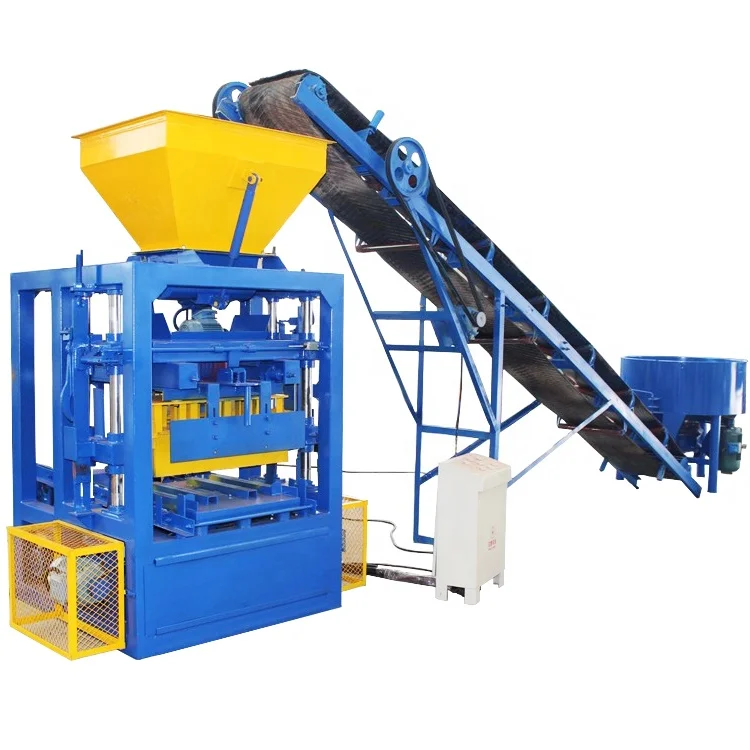


Description
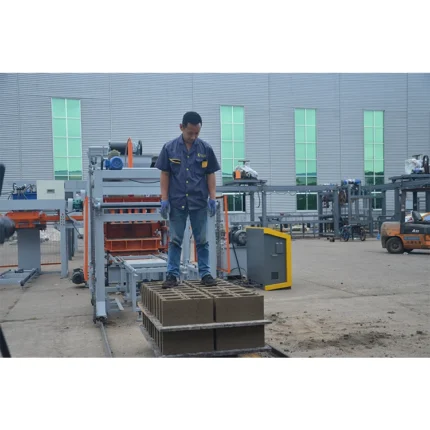
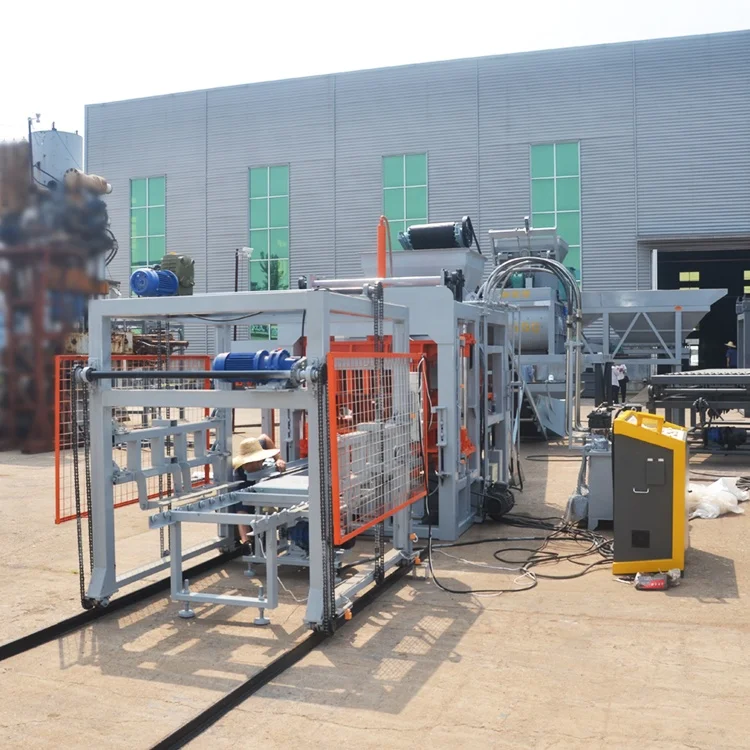
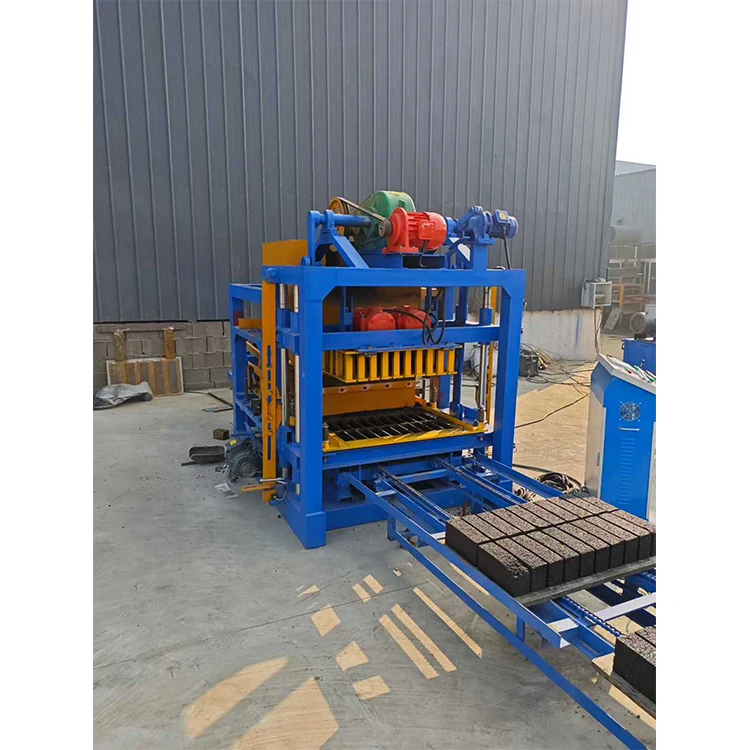
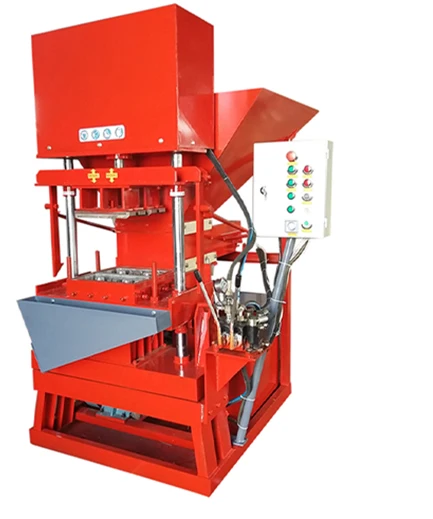
Configurable Automation — The QTJ4-24 semi-automatic block machine is specified as an integrated system with selectable automation elements, so operators can plan the exact labor split between machine-controlled and manual stations before the line is built.
Technical Specifications
| Parameter | Value |
|---|---|
| Model | QTJ4-24 |
| Product Type | Semi-Automatic Concrete Block Making Machine |
| Overall Dimensions (L×W×H) | 2060 × 1730 × 2580 mm |
| Main Vibration Form | Platform vibration |
| Vibration Frequency | 4200 r/min |
| Pallet Size | 880 × 480 × 38 mm |
| Molding Cycle | 26s (basis not stated in source — confirm block format / material / thickness) |
| Rated Power | 14.25 kW |
| Exciting Force | 35.5 kN |
| Rated Pressure | 15 MPa |
| Control Technology | Frequency Converting Control |
| Vibration System | Dynamic table and static vibrating table structure; low frequency standby, high frequency operation |
| Mould | Exchangeable moulds |
| Voltage | 380V, 3-phase, 50Hz (customizable to local voltage) |
| Automation Level | Semi-automatic (electro-mechanical integration) |
| Warranty | 1 year (excluding wearing parts) |
Application Suitability
| Application | Material or Output |
|---|---|
| Hollow block production | Crushed stone, sand, cement, and lightweight aggregate mixes |
| Interlocking paver production | Fine aggregate, cement, and pigment blends for surface color layers |
| Solid cement block production | Dense aggregate and cement mixes for load-bearing masonry |
| Small-scale home business block production | Locally sourced sand and gravel with standard Portland cement |
| On-site construction block production | Contractor-grade mixes prepared at project locations |
Why Voltage Confirmation Must Precede Every Other Decision
A machine wired for the wrong grid will sit idle until a local electrician rewinds or replaces every motor and transformer on the line.
The QTJ4-24 defaults to 380V, 3-phase, 50Hz, but many export markets run on 415V, 440V, or 60Hz grids. When a frequency converting control panel and vibration motors arrive rated for a voltage the site cannot supply, commissioning stalls. I watched a QTJ4-24 interlocking paver making machine sit for three weeks in a West African block yard because the 380V motors could not be matched to the local 415V supply, and the plant owner lost an entire production window while the electrical contractor sourced step-down transformers. Confirming local voltage, frequency, and phase configuration before the machine enters production eliminates this category of delay entirely [NEED_CITE: voltage and frequency standards by export market].
What the PLC Controlled Block Machine Upgrade Actually Covers
The frequency converting control system on the automatic QTJ4-24 block machine governs all motor starts, ramp-ups, and vibration frequency tuning from a single panel. This eliminates the hard mechanical shock that fixed-speed contactors deliver when a vibration table snaps to full speed, extending bearing and spring life while reducing peak current draw during each cycle start.
Matching Vibration Force to Your Mix Design
Every aggregate has a resonant compaction point. The 35.5 kN exciting force at 4200 r/min can be tuned through the frequency converter to find the amplitude and frequency that lock your specific sand-to-cement ratio into a dense matrix. When vibration force and frequency are mismatched to the local aggregate, blocks leave the press weak at the edges or crumble during handling [NEED_CITE: block compressive strength testing standards by region].
Reading the Specs That Determine Block Density
The 15 MPa rated pressure and 35.5 kN exciting force work together during the 26-second molding cycle to compact material against the 880 × 480 mm pallet. The dynamic and static vibrating table structure distributes vibration energy across the full pallet area rather than concentrating it at the center, which means blocks at the edges receive the same compaction as blocks in the middle. This uniformity matters most when running interlocking pavers, where dimensional tolerance determines whether courses align without cutting. The exchangeable mould system allows format changes, but the method of mould retention — bolts versus quick-release clamps — determines whether a format swap takes twenty minutes or two hours.
The Hidden Cost of Assuming Automation Covers Everything
A semi-automatic label means different things to different suppliers. On the QTJ4-24, electro-mechanical integration covers vibration timing, pressure application, and frequency control, but pallet feeding, block stripping, and stacking may still require manual labor. Buyers who assume the machine handles pallet movement and output stacking discover on commissioning day that they need two or three additional operators per shift. Clarifying which stations are automated and which remain manual before the purchase order is signed prevents staffing shortfalls once production begins [NEED_CITE: labor planning for semi-automatic block production lines].
Why Sourcing the Press as Part of a Matched Line Matters
Block machinery as a single focus means the QTJ4-24 vibration table, pallet dimensions, mould mounting pattern, and control panel are engineered against each other rather than assembled from separate vendors. The frequency converting control system is calibrated to the rated power of the specific motors on this frame, not a generic VFD setting. Moulds are designed to the 880 × 480 mm pallet footprint so that block edges align with pallet support during curing. Voltage and control language are confirmed during the order process so that the PLC display reads in the operator’s language at first power-on. Factory test records document actual cycle timing on the buyer’s chosen block format before the machine is crated.
Documentation & Verification
- Factory test record documenting cycle time on your specified block format before dispatch
- Machine specification sheet listing confirmed voltage, frequency, and control panel language
- Mould drawing and format list for every mould included in the shipment
- Hydraulic and electrical schematic matching the as-built configuration
- Operation and maintenance manual with wear parts and mould replacement schedule
- Voltage and control language confirmation document signed at order stage
Installation, Commissioning & Support
- Foundation pad must accommodate 2060 × 1730 mm footprint with clearance for pallet loading and operator access
- Dedicated 3-phase circuit rated for 14.25 kW with confirmed voltage and frequency at the main breaker
- Frequency converting control panel configured on-site to match local grid parameters before first motor start
- Vibration frequency tuned to buyer’s aggregate during commissioning to achieve target block density
- Operator training covers mould change procedure, pallet loading sequence, and daily vibration table inspection
- Wear parts list and first replacement schedule provided at handover to prevent unplanned downtime
What to Include in Your Inquiry
Provide your target block format, pallet dimensions if you already have curing racks, local aggregate type and cement ratio, site voltage and frequency, preferred control panel language, and whether pallet feeding and stacking will be manual or require upgrade to automatic stations. This information allows the quotation to reflect the actual automation scope your plant needs rather than a default configuration.
Frequently Asked Questions
Q: Does the 26-second cycle time apply to every block format the QTJ4-24 can produce?
A: The 26-second cycle is stated without specifying which block format, material, or thickness it assumes. Hollow blocks, solid blocks, and interlocking pavers each require different vibration durations and pressure hold times. Request a capacity calculation that states the cycle time and realistic daily output for each specific mould you intend to run, based on your local mix design.
Q: What does the semi-automatic designation actually cover on this machine?
A: The QTJ4-24 provides electro-mechanical integration for vibration timing, pressure application, and frequency converting control of all motors. Pallet feeding, block stripping, and output stacking are typically manual operations unless specified otherwise. Confirm exactly which stations are automated and which require operators so you can plan labor per shift accurately.
Q: Can the frequency converting control be upgraded to full PLC with remote diagnostics?
A: The standard control uses frequency converting technology for motor speed and vibration tuning. Upgrading to a full PLC with recipe storage, remote diagnostics, and automated batching integration is available as a configuration option. Specify this requirement during the inquiry stage so the control panel is built with the correct hardware and communication ports from the start.
Q: Is the control panel language configurable, and what voltage options are available?
A: The default configuration is 380V, 3-phase, 50Hz with customizable voltage for local grids including 415V, 440V, and 60Hz markets. The control panel display language is confirmed during the order process. Both parameters must be locked in before production begins to avoid commissioning delays when the machine arrives at your site.
Q: How should the vibration system be adjusted for different local aggregates?
A: The 4200 r/min vibration frequency can be tuned through the frequency converter to match the compaction characteristics of your specific sand, gravel, or crushed stone. During commissioning, the vibration amplitude and frequency are adjusted while running your actual mix until target block density and strength are achieved consistently across the full pallet area.