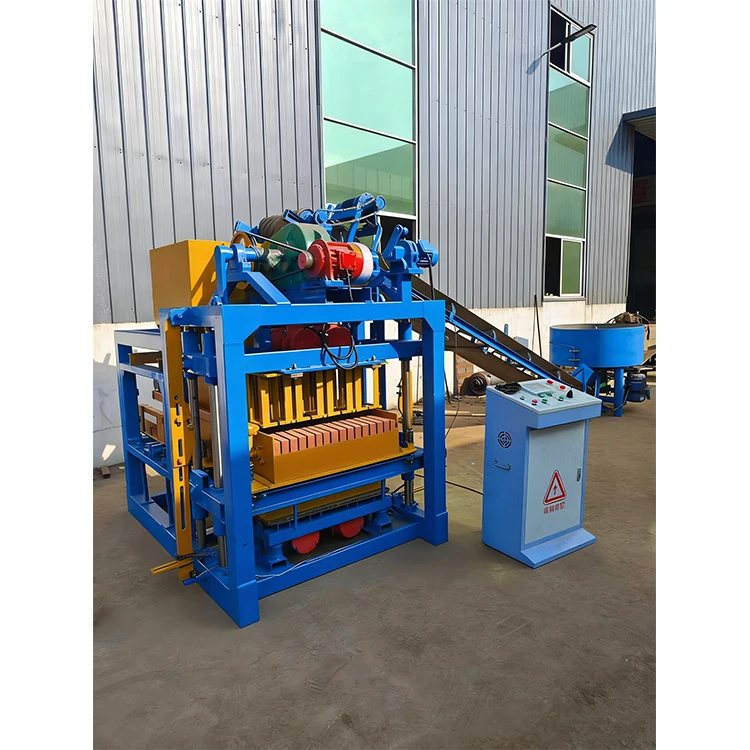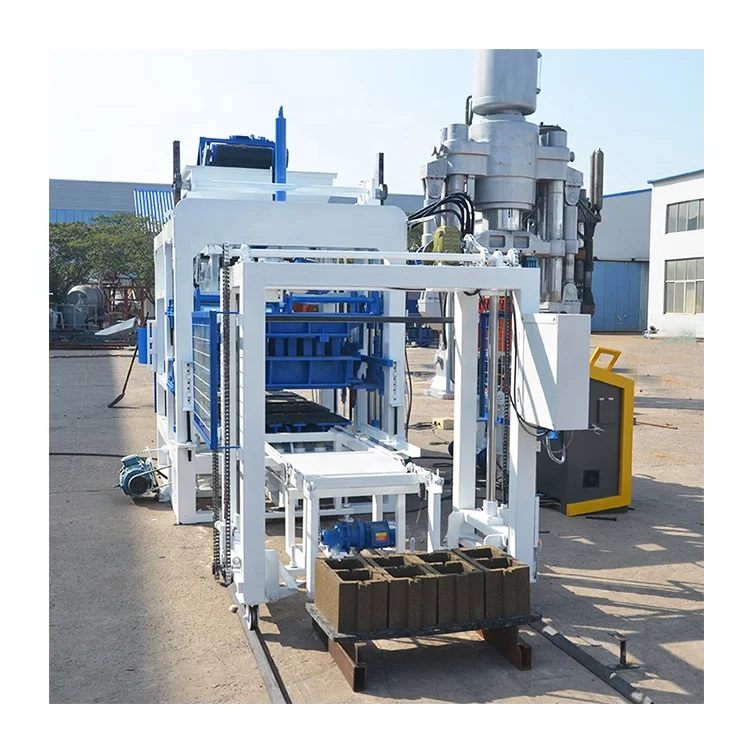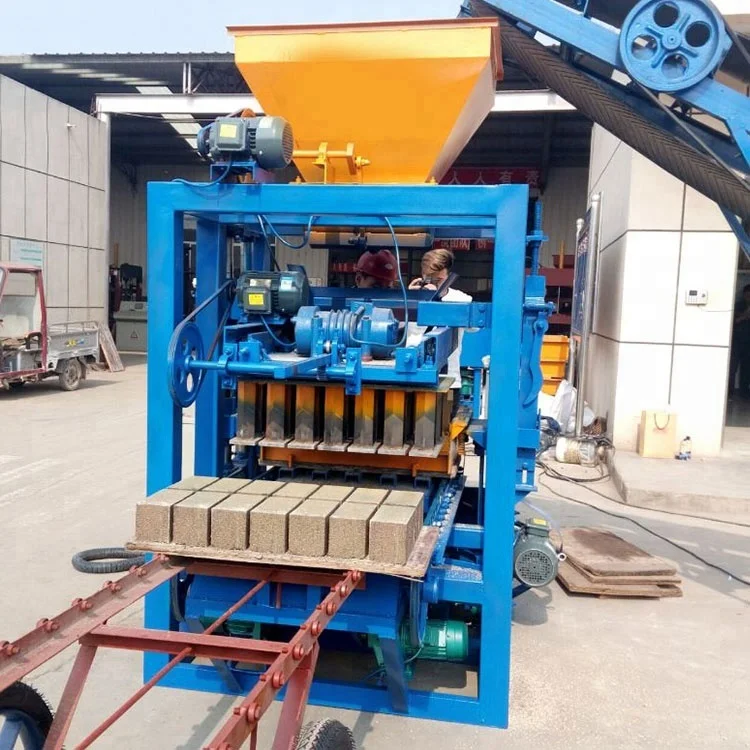


Description
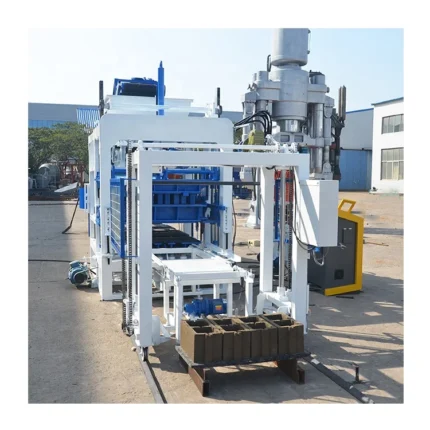
Controlled Consistency — frequency-converting motors paired with platform vibration hold the same block density from the first pallet to the last, removing operator guesswork from the QTJ4-24 production run.
Technical Specifications
| Parameter | Value |
|---|---|
| Model | QTJ4-24 |
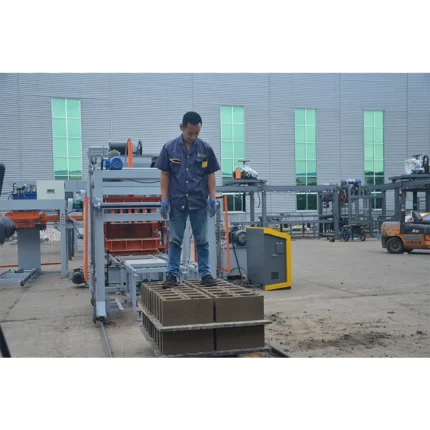
| Product Type | Semi-Automatic Concrete Block Making Machine |
| Overall Dimensions (L×W×H) | 2060×1730×2580 mm |
| Main Vibration Form | Platform vibration |
| Vibration Frequency | 4200 r/min |
| Exciting Force | 35.5 kN |
| Rated Pressure | 15 MPa |
| Molding Cycle | 26 s |
| Pallet Size | 880×480×38 mm |
| Total Power | 14.25 kW |
| Voltage & Frequency | 380V / 3-phase / 50Hz (configurable) |
| Control System | Electro-mechanical integration |
| Automation Level | Semi-automatic |
| Mould Type | Exchangeable moulds |
| Motor Technology | Frequency-converting |
| Warranty | 1 year (excluding wearing parts) |
| Output Capacity | (basis to be confirmed — depends on block format and mix) |
Application Suitability
| Application | Material or Output |
|---|---|
| Hollow block production | Cement, crushed stone, sand, water |
| Solid concrete block production | Aggregate-cement mix, local sand |
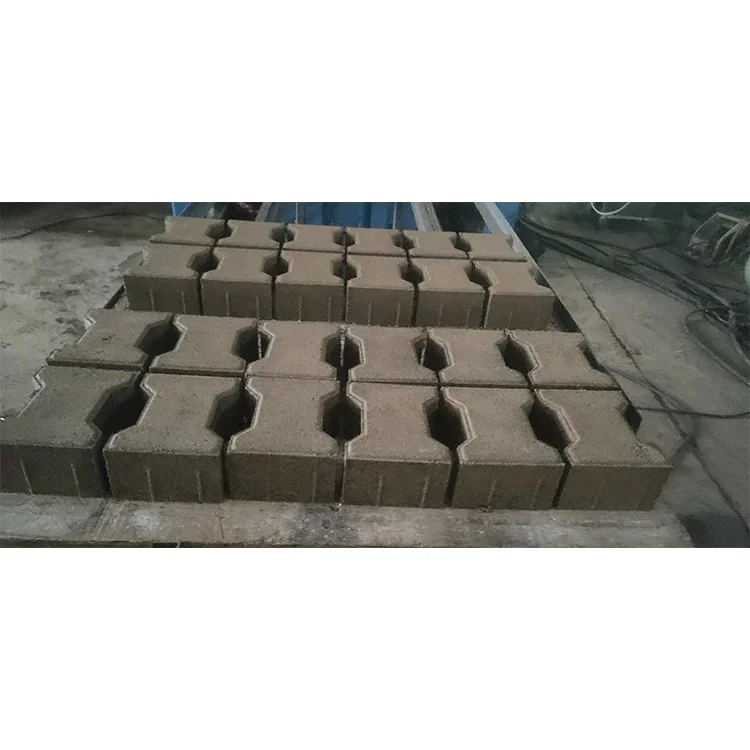
| Road block and paver forming | Coarse aggregate with cement binder |
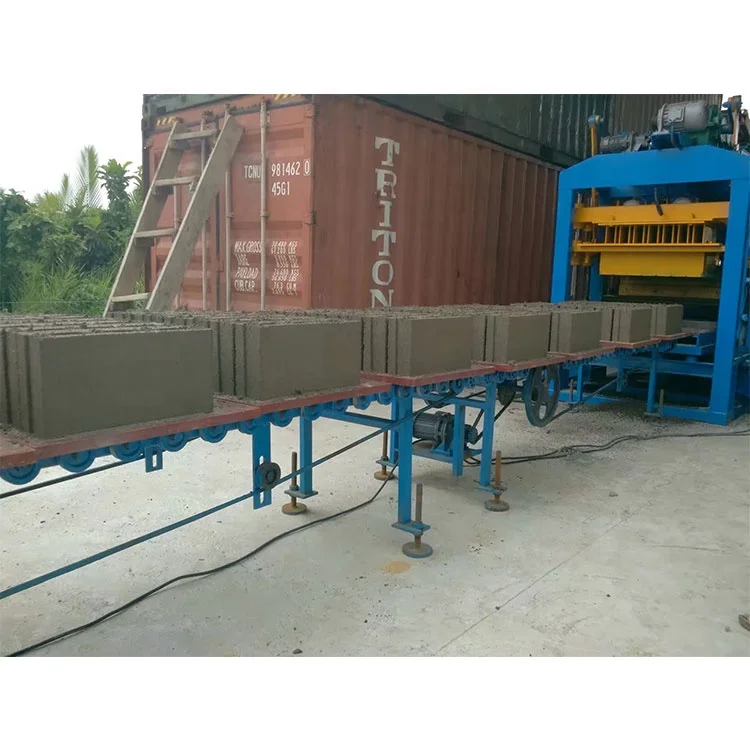
| Small to medium plant setup | Semi-automatic operation with manual pallet handling |
| On-site construction block manufacturing | Fixed or temporary plant environment |
What "Semi-Automatic" Really Means for Your Control Panel
The automatic QTJ4-24 block machine PLC controlled interface replaces manual relay switching with electro-mechanical integration, keeping the operator in the loop while standardizing every cycle.
I once stood in a Middle Eastern block yard watching a crew produce solid bricks on a relay-switched machine. Every time the sand moisture drifted, the pressman hand-adjusted the timer. By noon the blocks made at 08:00 crumbled under a fingernail while the midday batch passed the drop test. The inconsistency came from the control system not holding vibration duration steady across the shift. The QTJ4-24 addresses this by locking cycle parameters into its electro-mechanical integration, so the press operator loads raw material and clears finished pallets while the machine holds the molding sequence constant. [NEED_CITE: common causes of block strength variation in semi-automatic plants]
Frequency Converting Motors and Batch Repeatability
Fixed-speed vibration motors draw full current from the moment they spin up, and their amplitude shifts as the voltage dips under workshop load. The automatic QTJ4-24 block machine PLC controlled motor setup uses frequency-converting drives on the vibration motors, which soft-start the unit and hold the 4200 r/min frequency regardless of grid fluctuation. For a semi-automatic line running multiple mould formats in one shift, this means the hollow block cycle and the solid block cycle both receive the same vibration amplitude without the operator manually adjusting a damper.
Platform Vibration and Pallet Uniformity
Platform vibration transmits force through the mold table rather than through the mould walls alone. The QTJ4-24 uses a dynamic and static table structure beneath the 880×480 mm pallet, so the 35.5 kN exciting force reaches the concrete at the pallet center with the same amplitude as at the edges. This matters most when producing taller hollow blocks, where uneven vibration leaves the block corners under-compacted. [NEED_CITE: platform vibration versus mould-wall vibration in block density studies]
Reading the Specs That Actually Matter
The 15 MPa rated pressure and 35.5 kN exciting force work together — hydraulic pressure squeezes the mix while platform vibration reorients aggregate particles into a denser packing. A high pressure reading alone does not guarantee block strength if the vibration frequency is too low to settle the fines. The QTJ4-24 pairs these two parameters so that at the 26-second molding cycle, the cement paste has time to flow around aggregate before pressure locks it in place. Total power draw sits at 14.25 kW, which is within the capacity of a standard 40 A three-phase workshop breaker, reducing the need for a dedicated transformer on first installation.
The Hidden Cost of Skipping Voltage Confirmation
I have seen a semi-automatic block press sit in a container yard for three weeks because the buyer ordered 380V/50Hz and the destination country runs 415V/60Hz. The motor contactors chattered on startup, the PLC display scrambled, and the vibration motors overheated within the first hour. The QTJ4-24 voltage and frequency are configurable, but only if the buyer states the local grid standard before production begins. Skipping this conversation means the machine arrives correct for the seller’s workshop and wrong for yours. [NEED_CITE: voltage and frequency standards by export market]
Why Buyers Choose This Route to Automation
Block machinery is our single focus, which means the machine, mould, pallet, and handling equipment are specified as one matched system rather than assembled from unrelated suppliers. The QTJ4-24 configuration is set against the buyer’s actual mix design, local aggregate, and target block format — not a catalogue default. Mould design covers the formats the buyer’s market actually sells, including custom drawings when standard moulds do not match. The semi-automatic level lets a buyer start with manual pallet handling and add automatic stacking later, so the investment curve matches the plant’s cash flow. Installation support includes operator training on the specific moulds ordered, so the first week of production is not spent decoding an unfamiliar control sequence.
Documentation & Verification
- Factory test record showing cycle time per mould format before dispatch
- Line layout drawing confirming QTJ4-24 footprint and pallet flow path
- Mould drawing and format list tied to the quotation block types
- Hydraulic and electrical schematic matching the confirmed voltage
- Control display language confirmation sheet signed before production
- Wear parts and mould component list for first-year sourcing
Installation, Commissioning & Support
- 14.25 kW total power requires a dedicated 40 A three-phase circuit at the confirmed voltage
- 2060×1730 mm footprint needs a level concrete pad with drainage for wash-down water
- Electro-mechanical integration calibrated on-site to match local aggregate density
- 880×480 mm pallet size verified against existing curing racks and forklift tine spacing
- Exchangeable mould change procedure demonstrated during commissioning with the ordered formats
- One-year warranty on mechanical and electrical components, excluding wearing parts
Before You Request a Quote
Send the block formats your market sells — dimensions, wall thickness, and target compressive strength. Include the raw materials available locally and any lab test results on aggregate grading. State the local voltage, frequency, and the language your operators read on a screen. If you already have pallets or curing racks, share the dimensions so the machine is matched to what is on your floor.
Frequently Asked Questions
Q: What automation level does the QTJ4-24 provide, and can it be expanded later?
A: The QTJ4-24 runs at semi-automatic level with electro-mechanical integration handling the molding cycle while operators manage pallet loading and unloading. Frequency-converting motors standardize vibration output across the shift. When production volume justifies the investment, automatic pallet feeding and stacking stations can be added to the line without replacing the press itself.
Q: How is daily output verified per block format rather than quoted as a single number?
A: Each mould format has its own cycle time and pallet layout, so output varies between hollow blocks and solid blocks. The quotation includes a capacity calculation that states the assumed block format, mould cavity count, and cycle time. Factory test records before dispatch document actual cycles per hour on the ordered formats.
Q: Is the control system PLC-based, and can the display language be changed?
A: The QTJ4-24 uses electro-mechanical integration for cycle control. Display language is confirmed with the buyer before production begins, so operators read instructions and alarms in their working language. This confirmation is documented in writing and included in the shipment paperwork.
Q: What voltage and frequency must be confirmed before shipment?
A: The QTJ4-24 is built to the buyer’s local grid standard. Voltage, frequency, and phase are confirmed in writing before the machine enters production. Confirming these values upfront avoids motor rewinding or contactor replacement after the machine arrives at destination.
Q: Which wearing parts and mould components should be stocked from day one?
A: The quotation includes a wear parts and mould component list specific to the ordered formats. Vibration motor bearings, hydraulic seals, and mould liner plates are the most commonly replaced items during the first year. Sourcing these with the initial order avoids production stops while waiting for international shipping on a single component.