Description
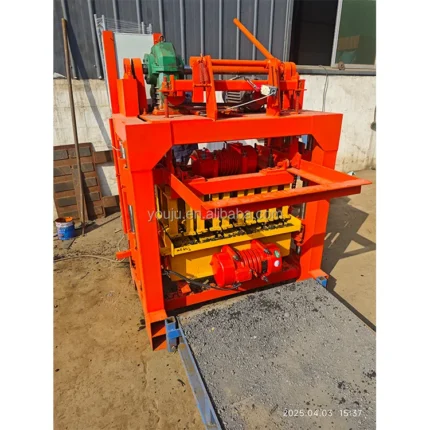
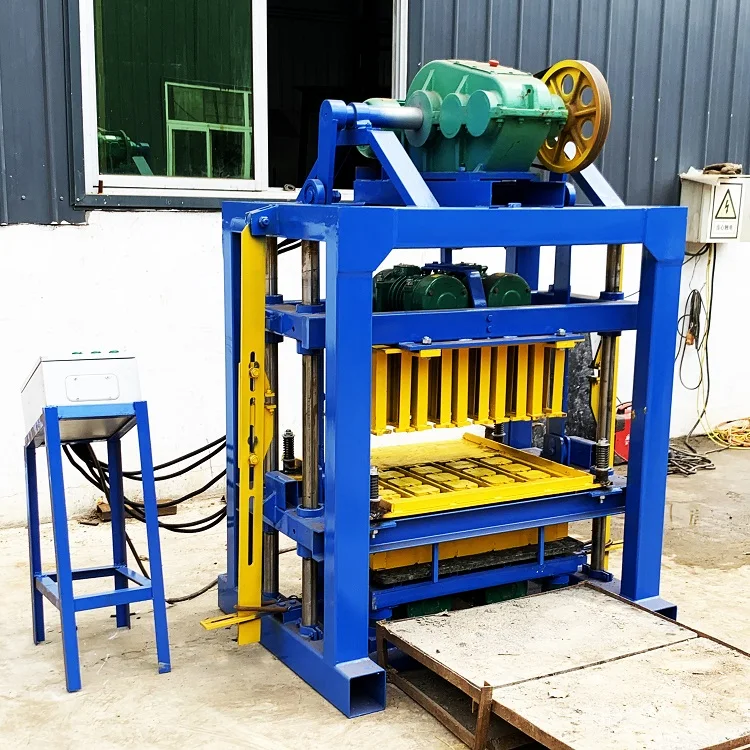
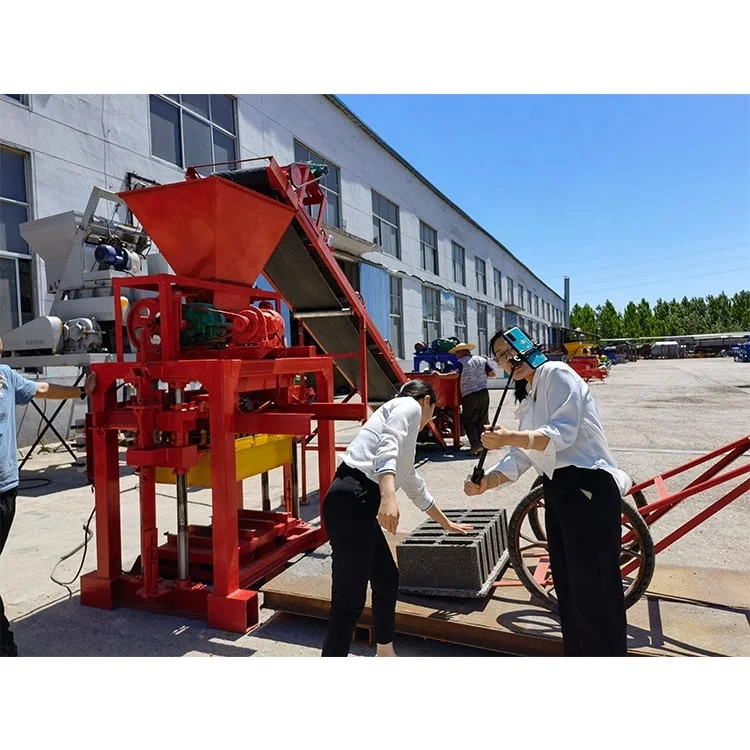
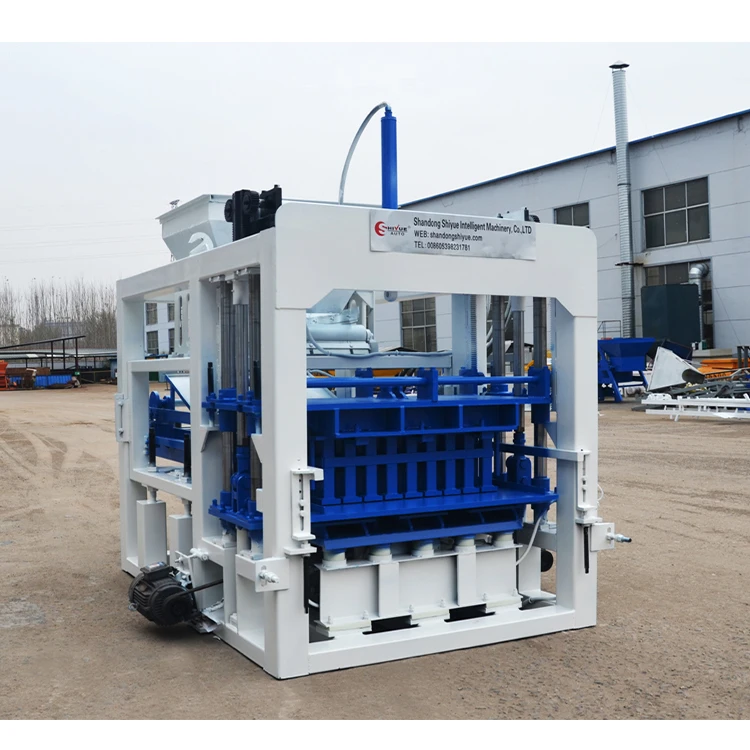
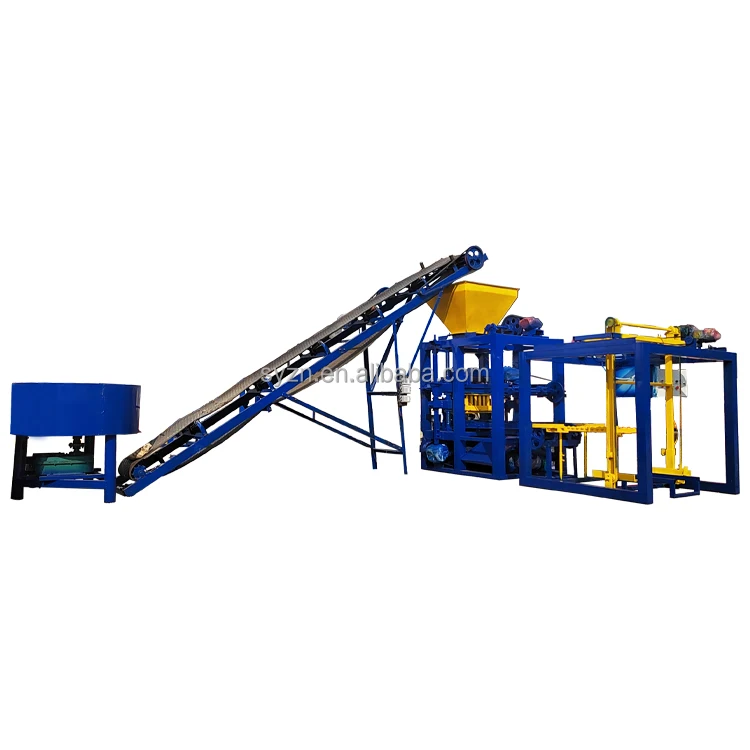
Integrated automation design — the QTJ4-24 block machine combines dual-level vibration and automatic material distribution as a single coordinated system, reducing the inconsistency that often appears when operators manually feed and control the press cycle.
Technical Specifications
| Parameter | Value |
|---|---|
| Model | QTJ4-24 |
| Product Type | Semi-Automatic Concrete Block Making Machine |
| Overall Dimensions (L×W×H) | 3600 × 1700 × 2560 mm |
| Pallet Size | 850 × 450 mm |
| Molding Cycle | 24–26 s (basis not stated in source — confirm block format, material, thickness) |
| Overall Power | 11.95 kW |
| Vibration Force | 45 kN |
| Vibration Configuration | 2 × 3 kW lower vibrators + 2 × 1.5 kW upper vibrators |
| Total Mass | 2 T |
| Molding Method | Mechanical |
| Reducer for Mold Lifting | 350-type |
| Material Distribution | Full-automatic spiral |
| Raw Materials | Cement, sand, stone |
| Automation Level | Semi-automatic |
| Control System | Not specified in source |
| Voltage & Frequency | Configurable to site requirements |
| Stacking Method | Manual |
| Warranty | 1 year for whole machine (excluding spare parts) |
Application Suitability
| Application | Material or Output |
|---|---|
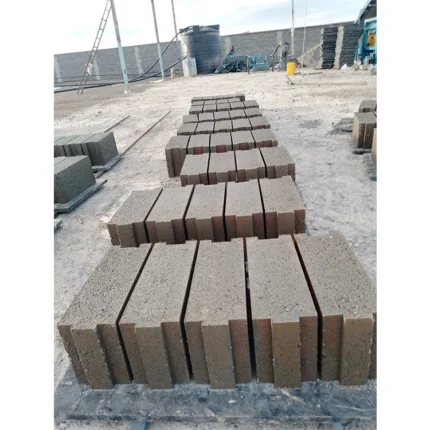
| Hollow block production | Cement, sand, crushed stone |
| Solid block production | Cement, sand, stone aggregate |
| Interlocking brick production | Cement, sand, fine stone |
| Paving block production | Cement, sand, graded stone |
| Small to medium block plant startup | Semi-automatic press with manual pallet handling |
| On-site construction block making | Portable stationary setup at project locations |
What "24-26 Seconds Per Cycle" Actually Means for Your Daily Output
A molding cycle number only matters when the block format, mix design, and pallet handling are all stated alongside it.
Buyers often see a cycle time quoted without the format it assumes, then discover on-site that a 24-26 s cycle producing 400×200×200 mm hollow blocks delivers very different daily output than the same cycle producing thinner paving blocks. The real bottleneck is rarely the press itself — it is the pallet return speed, the operator’s feeding rhythm, and whether the local aggregate slows down demolding. When the vibration force and material distribution are not matched to what you are actually running, the cycle stretches and block strength drops. I once spent nearly two weeks in West Africa re-tuning vibration and pressure settings because the local sand had a high clay content that the standard configuration could not handle [NEED_CITE: aggregate variability effects on block density].
How Dual-Level Vibration Addresses Density Variation
The QTJ4-24 uses two 3 kW lower vibrators and two 1.5 kW upper vibrators working simultaneously. This arrangement compacts the mix from both the bottom and top of the mould cavity, which matters especially for taller formats like hollow blocks where single-direction vibration leaves the upper section less dense. The 45 kN total vibration force is distributed across the mould area, and the automatic QTJ4-24 block machine configuration ensures that the spiral feeder delivers material evenly before vibration begins. Without even feeding, even strong vibration cannot correct density differences from uneven fill.
The Role of the Spiral Feeder in Batch Consistency
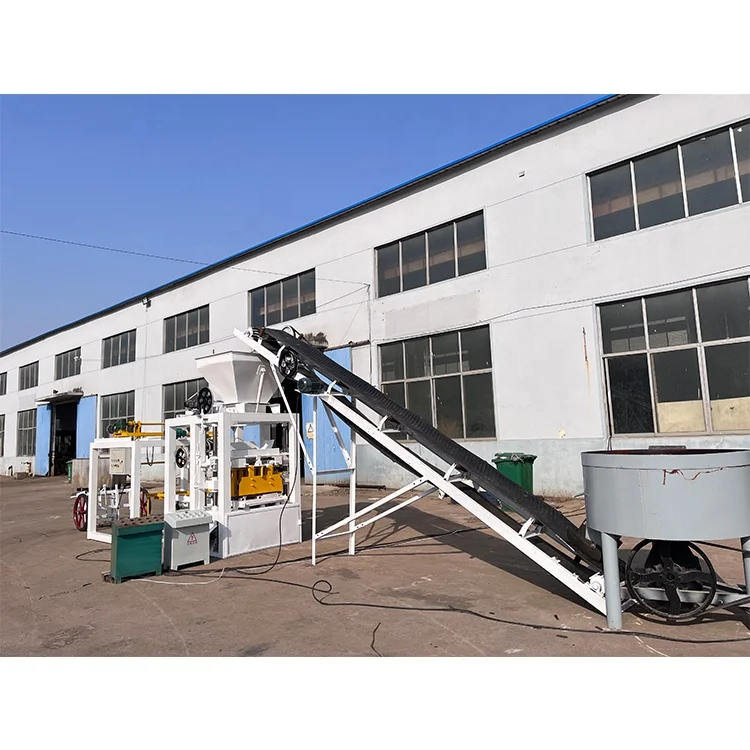
Full-automatic spiral material distribution removes the most variable part of a semi-automatic line: the operator’s judgment on when the mould is full enough. The spiral distributes the cement-sand-stone mix across the mould cavity at a controlled rate, which means block-to-block weight variation is reduced compared to manual shoveling. This is where the PLC controlled block machine upgrade path becomes relevant — once the feeding stage is automated, adding PLC logic for cycle timing and fault alarms is a logical next step rather than a complete system overhaul [NEED_CITE: automation upgrade paths for semi-automatic block presses].
Reading the Specifications Beyond the Numbers
The 3600 × 1700 × 2560 mm footprint means the QTJ4-24 fits inside a standard workshop bay, but the 850 × 450 mm pallet size must be checked against your curing racks and forklift tines before ordering. The 11.95 kW total power draw requires a dedicated circuit — running it on a shared line with a mixer often causes voltage sag that trips the vibration motors mid-cycle. The 350-type reducer for mold lifting is sized for continuous cycling; a smaller reducer would overheat during an eight-hour shift. The mechanical molding method keeps maintenance straightforward, with fewer hydraulic seals to replace, though it also means mould change requires manual alignment rather than hydraulic clamping.
When the Wrong Configuration Costs More Than the Machine
Sending a QTJ4-24 to a site without confirming the local voltage and frequency is the most common avoidable delay I see. A machine wired for 380V/50Hz arriving at a 440V/60Hz site will not simply run slower — the vibration motors can overheat and fail within the first week. Similarly, specifying pallets that do not match the buyer’s existing curing racks forces the entire post-press handling workflow to be rebuilt [NEED_CITE: electrical commissioning failures in exported machinery]. The semi-automatic classification also means stacking is manual; if your labor plan assumed automatic cubing, the daily output gap becomes a scheduling problem, not a machine problem.
Why Sourcing the QTJ4-24 From a Block-Line Specialist Matters
Block machinery is the only product category here, so the QTJ4-24 is specified as part of a matched system — press, mould, pallet, and handling — rather than assembled from unrelated suppliers. The vibration force and mechanical pressure are configured against your actual mix design and local aggregate, not set to a catalogue default. Mould options cover the formats your market actually sells, and custom mould drawings are available when standard formats do not match. The automation level is selectable, so starting with semi-automatic operation and adding PLC control and automatic stacking later is a planned upgrade path, not a retrofit. Installation support includes operator training on the specific block formats you will produce.
Documentation & Verification
- Line layout showing the QTJ4-24 press position and pallet flow direction
- Capacity calculation stated per block format with assumed cycle time
- Mould drawing and format list for the 850 × 450 mm pallet
- Voltage, frequency, and control language confirmation sheet before production
- Factory test record on your specified block format before dispatch
- Hydraulic and electrical schematic with 11.95 kW power distribution detail
Installation, Commissioning & Support
- Foundation pad sized for 3600 × 1700 mm footprint with anchor bolt template
- Dedicated power circuit rated for 11.95 kW with correct voltage and frequency
- Machine arrives partially assembled; vibration unit and spiral feeder mounted on-site
- First-run parameter tuning for vibration force matched to your local aggregate
- Operator training on mould change procedure using the 350-type reducer
- Wear parts list covering vibrator bearings and spiral flighting at order confirmation
What to Prepare Before Requesting a Quote
Share your target block formats with dimensions, the daily output you need per format, and a sample or lab report of your local sand and stone. Confirm your site voltage, frequency, and preferred PLC display language. If you already have curing racks and a forklift, provide the pallet dimensions they accept so the 850 × 450 mm pallet can be verified or adjusted before the QTJ4-24 enters production.
Frequently Asked Questions
Q: How is the 24-26 s molding cycle verified, and which block format does it assume?
A: The cycle time is measured under specific conditions that include block format, mix moisture, and vibration settings. The source does not state which format the 24-26 s figure assumes, so we verify it during factory testing using your chosen mould and a mix sample you provide. This way the cycle time on your documentation reflects your actual production, not a generic catalogue value.
Q: What PLC control and language options are available, and can the system be upgraded later?
A: The QTJ4-24 ships as a semi-automatic press with configurable control options. PLC language and interface can be specified before production to match your operator’s language. The mechanical molding platform is designed to accept automatic stacking and cubing modules as a future PLC controlled block machine upgrade, so you can start manual and add automation without replacing the press.
Q: How should voltage and frequency be confirmed before shipment?
A: Provide your site’s supply voltage, phase configuration, and frequency at the inquiry stage. We confirm these values in writing before the QTJ4-24 enters production and match the motor wiring and vibration system accordingly. This prevents the most common commissioning delay for exported block machines and avoids motor damage on first startup.
Q: What mould formats fit the 850 × 450 mm pallet, and how long does a change take?
A: The pallet accepts hollow block, solid block, interlocking brick, and paving block moulds in various cavity layouts. Mould change time depends on the format and whether quick-release fixtures are specified. We provide a mould change procedure during commissioning and can supply custom mould designs when standard formats do not match your market requirements.
Q: How does the dual-level vibration maintain consistency across different mix designs?
A: The two lower and two upper vibrators compact the mix from both directions, which is critical when aggregate size or moisture content varies between batches. During commissioning, we adjust the vibration duration and force settings against your specific mix so that block density remains consistent even when raw material conditions shift slightly across the production day.