Description
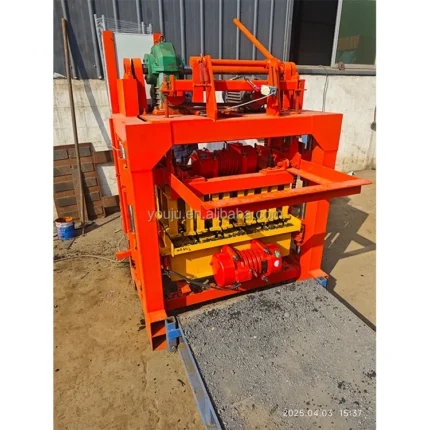
Vibration-First Control Logic — The QTJ4-24 stationary block machine’s dual-level vibration system is configured against your local aggregate sieve analysis, not a generic factory preset, ensuring compaction density matches your mix design from the first production cycle.
Technical Specifications
| Parameter | Value |
|---|---|
| Model | QTJ4-24 |
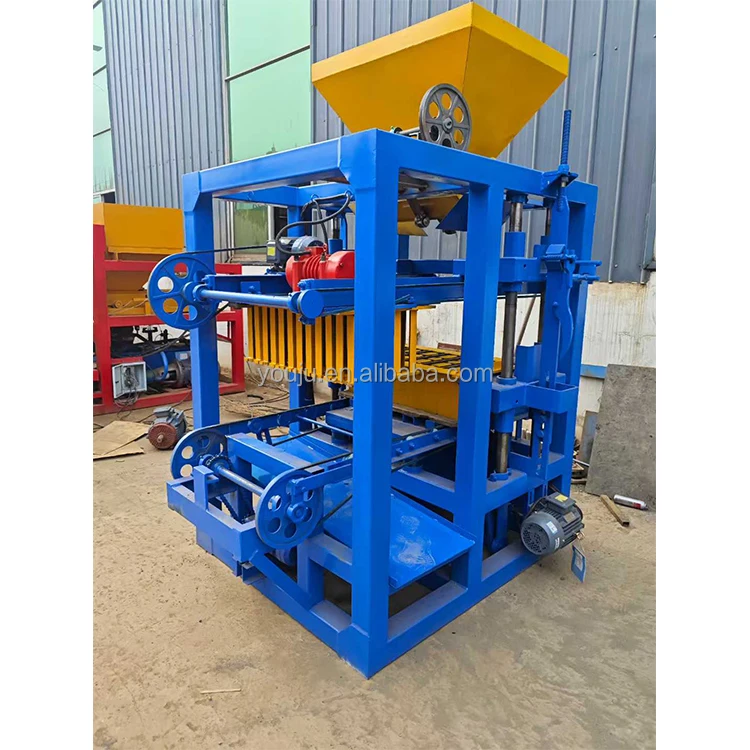
| Product Type | Semi-Automatic Stationary Concrete Block Making Machine |
| Molding Type | Platform Vibration |
| Overall Dimensions (L×W×H) | 3600 mm × 1700 mm × 2560 mm (working state) |
| Total Mass | 1750 kg |
| Pallet Size | 850 mm × 450 mm |
| Overall Power | 14.25 kW |
| Standard Mould Formats | 390×190×190 mm (4 pcs/mould); 240×115×53 mm (21 pcs/mould) |
| Vibration System | Lower platform vibration (2 × 3 kW motors); Upper vibration (1.5 kW attached vibrator) |
| Elevating System | Cone-shape motor with JZQ250 speed reducer |
| Delivery Device | Cycloidal pin wheel speed reducer with chain and V-belt drive |
| Machine Frame | Dragon gate style, super steel construction, four vertical wear-resisting guide shafts |
| Material System | Material releasing hopper + material storing hopper |
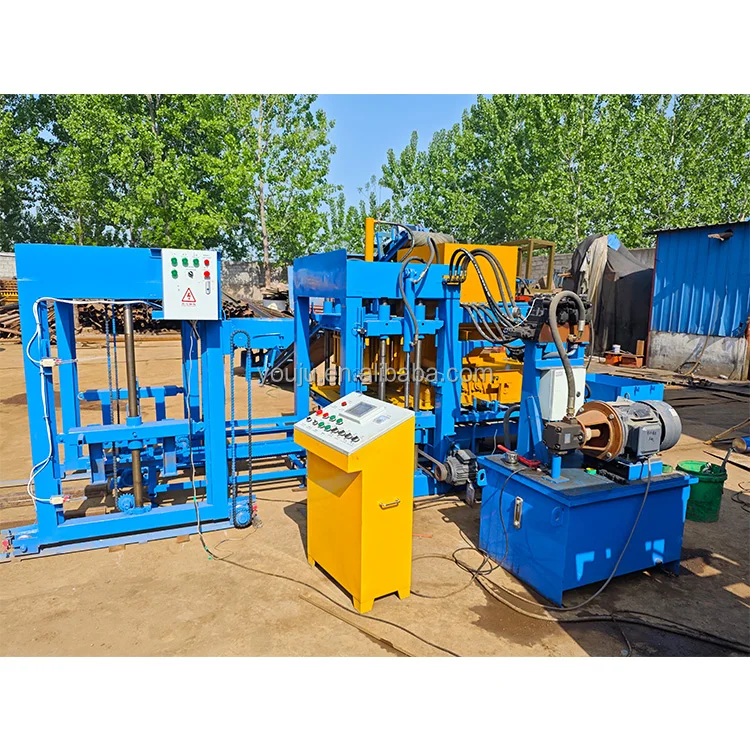
| Control System | Electronic control (PLC or relay logic — confirm before production) |
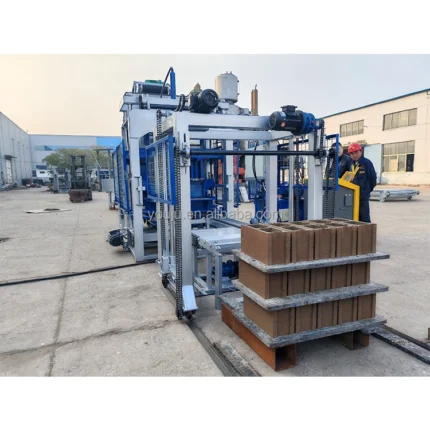
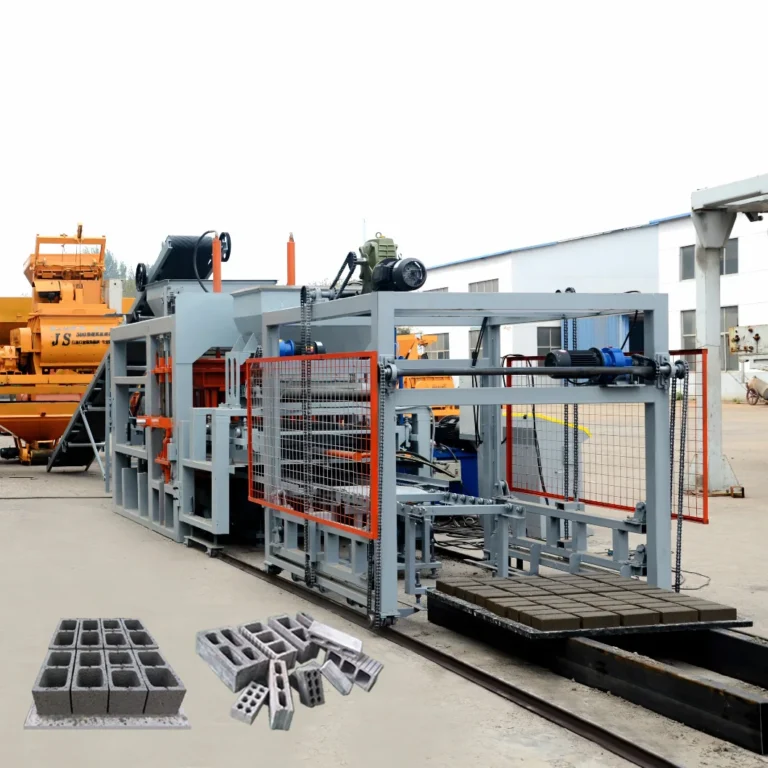
| Automation Level | Semi-automatic; optional auto stacker available (3–6 layers) |
| Stacking Method | Manual pallet handling standard; automatic stacking optional |
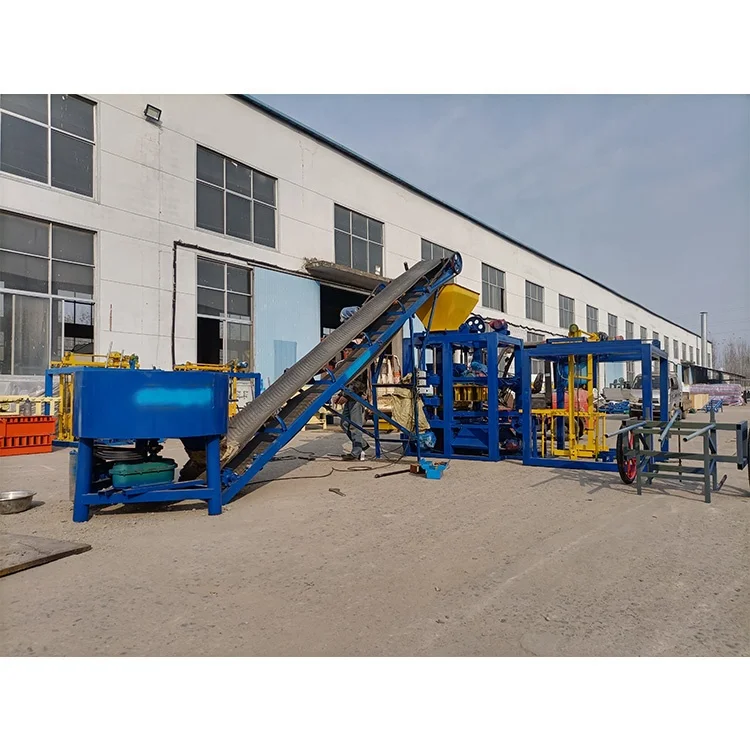
| Supporting Equipment Included | JQ350 pan mixer, 6 m belt conveyor, trolley |
| Cycle Time | (basis not stated in source — confirm per block format) |
| Output Capacity | (basis not stated in source — confirm per block format and material) |
| Hydraulic Pressure | Not applicable (mechanical vibration type) |
| Voltage & Frequency | (configurable — confirm with buyer before shipment) |
| Language Options | (confirm before shipment) |
Application Suitability
| Application | Material or Output |
|---|---|
| Hollow block production for masonry walls | Crushed stone, sand, cement, water |
| Solid brick production for load-bearing and infill | Fine aggregate, cement, fly ash blends |
| On-site block manufacturing for construction contractors | Locally sourced aggregate and cement |
| First block plant setup for entrepreneurs | Standard concrete masonry unit mixes |
| Format expansion for existing block producers | Custom mix designs matched to regional market demand |
What "Cycles per Hour" Leaves Out About the automatic QTJ4-24 block machine PLC controlled upgrade
A quoted cycle count means nothing without the block format, mix design, and pallet handling time attached to it.
When a buyer receives a capacity figure that simply reads "cycles per hour," the assumption buried inside that number is almost never the format they actually intend to produce. A hollow block and a solid brick of different dimensions demand different vibration durations, pressure profiles, and curing timelines. The automatic QTJ4-24 block machine PLC controlled upgrade path exists precisely because production realities on the ground rarely match catalogue defaults. Mismatched vibration force against local aggregate size distribution leads to inconsistent compaction, and operators end up adjusting manually — defeating the purpose of electronic control [NEED_CITE: block density variation linked to uncalibrated vibration parameters].
Control Parameters Set Against Your Mix, Not a Catalogue
The QTJ4-24’s electronic control system stores vibration duration and material feed timing per mould format. When configured correctly at commissioning, each cycle reproduces the same compaction sequence regardless of operator experience level. This is where the automatic QTJ4-24 block machine PLC controlled upgrade earns its name — the control logic remains consistent whether you run the semi-automatic base configuration or add the optional auto stacker later.
Upgrade Path Without Replacing the Press
A common trap in block plant investment is buying a machine sized for today’s volume with no room to grow. The QTJ4-24 supports a staged automation approach: start with manual pallet handling and the included JQ350 pan mixer, then add automatic stacking (3–6 layers) as daily throughput demands increase. The core press frame, vibration system, and control logic stay in place throughout.
How Vibration Force and Frame Rigidity Interact on the Shop Floor
The lower platform vibration from two 3 kW motors combines with the 1.5 kW upper attached vibrator to compact concrete from both directions. This dual-level approach reduces the void ratio in thicker block formats where single-direction vibration leaves the core under-compacted. The dragon gate frame with four vertical wear-resisting guide shafts keeps the mould aligned during each cycle — critical because even minor lateral drift across thousands of cycles accelerates mould wear and degrades dimensional tolerance. The cycloidal pin wheel delivery device synchronizes material feed timing with the press cycle, preventing the hopper from starving the mould mid-stroke [NEED_CITE: vibration alignment tolerance and mould service life in stationary block presses].
Reading the Spec Sheet Against Your Actual Production Targets
Pallet size determines what fits in your existing curing yard. The 850×450 mm pallet on the QTJ4-24 must align with your forklift tine spacing and curing rack dimensions — specifying a pallet without this check leaves finished blocks stacked by hand in the yard. The 14.25 kW overall power draw dictates your transformer and dedicated circuit sizing before the machine arrives. Voltage and frequency confirmation is not a paperwork formality; a 50 Hz motor running on 60 Hz supply shifts the vibration frequency, altering compaction density in ways that do not show up until the first batch cures. The two listed mould formats (390×190×190 mm hollow block at 4 pcs/mould and 240×115×53 mm solid brick at 21 pcs/mould) produce vastly different daily volumes, and any capacity discussion must state which format is assumed.
The Hidden Cost of Skipping Voltage and Language Confirmation
When voltage, frequency, and control display language are not confirmed before production, the machine arrives on site and cannot run. A PLC screen displaying in a language the operator cannot read turns a semi-automatic system back into a manual one — the operator bypasses the sequence and runs by guesswork. Batch consistency disappears. This is not a theoretical failure mode; it happens on commissioning sites where the language confirmation step was skipped during the order process [NEED_CITE: industrial equipment commissioning delays caused by unconfirmed control language and voltage].
Why Procure the QTJ4-24 Through a Single-System Supplier
Block machinery as a single focus means the press, mould, pallet, and handling equipment are specified as one matched system. The QTJ4-24’s mould design is set against the block formats your regional market actually purchases, including custom drawings when standard formats do not match. Configuration is based on your local aggregate sieve analysis and target mix design rather than a generic default — the vibration duration and feed timing are adjusted during commissioning to match. The automation level is selectable and upgradeable, so capital outlay scales with demand rather than locking you into a fully automatic line before volume justifies it. Installation support includes operator training on the control interface in the confirmed language, and mould and wear parts availability is addressed before the first replacement cycle is due.
Documentation & Verification
- Line layout showing capacity per block format, not a single headline number
- Voltage, frequency, and control language confirmation signed before production starts
- Mould drawing and format list matched to your target market, including custom options
- Factory test record documenting cycle time and dimensional tolerance per format before dispatch
- Wear parts and mould replacement list with part numbers for reorder
Installation, Commissioning & Support
- Foundation pad sized to the 3600×1700 mm working footprint with clearance for pallet trolley movement
- Dedicated circuit rated for the 14.25 kW total draw, voltage and frequency confirmed pre-shipment
- Machine arrives in working-state configuration; guide shafts and hopper assemblies verified on site
- First-run parameter tuning sets vibration duration and feed timing against your actual aggregate
- Operator training covers the confirmed control language, mould change procedure, and daily inspection points
- Wear parts list provided at commissioning for local reorder planning
What We Need to Size Your Line Correctly
To move from general inquiry to a configuration proposal for the QTJ4-24, we need your target block format and daily volume requirement, the sieve analysis of your locally available aggregate, and the voltage and frequency standard at your site. If you have an existing curing yard, share the pallet dimensions and forklift specifications already in use so the handling equipment is matched from day one.
Frequently Asked Questions
Q: How is output capacity calculated, and which block format does each figure assume?
A: Output capacity is calculated by multiplying cycle time, pieces per mould, and effective production hours. Each figure must state the block format assumed — a 390×190×190 mm hollow block at 4 pcs/mould produces a different hourly rate than a 240×115×53 mm solid brick at 21 pcs/mould. We provide a capacity table per format, not a single unqualified number.
Q: Can the QTJ4-24 automation level be upgraded after installation?
A: Yes. The semi-automatic base configuration supports an optional auto stacker handling 3 to 6 layers per pallet. The electronic control logic and press frame remain unchanged during the upgrade, so the investment in the original machine is preserved. Upgrading stacking does not require replacing the press.
Q: How are vibration parameters adjusted to match my local aggregate?
A: During commissioning, vibration duration and excitation force are tuned against your specific aggregate size distribution and mix proportions. The dual-level platform vibration — lower and upper — allows independent adjustment so compaction density meets block strength requirements for your target format.
Q: What voltage, frequency, and control language options are confirmed before shipment?
A: Voltage, frequency, and PLC display language are confirmed in writing before production begins. This prevents commissioning delays caused by mismatched electrical supply or an operator interface in an unreadable language. The confirmation document is part of the shipping package.
Q: How does press cycle time synchronize with upstream mixing and downstream handling?
A: The cycloidal pin wheel delivery device times material feed to the press cycle. The included JQ350 pan mixer and 6 m belt conveyor must deliver mixed material faster than the press consumes it, and downstream pallet handling must clear finished pallets before the next cycle. We calculate the full line balance during layout design.