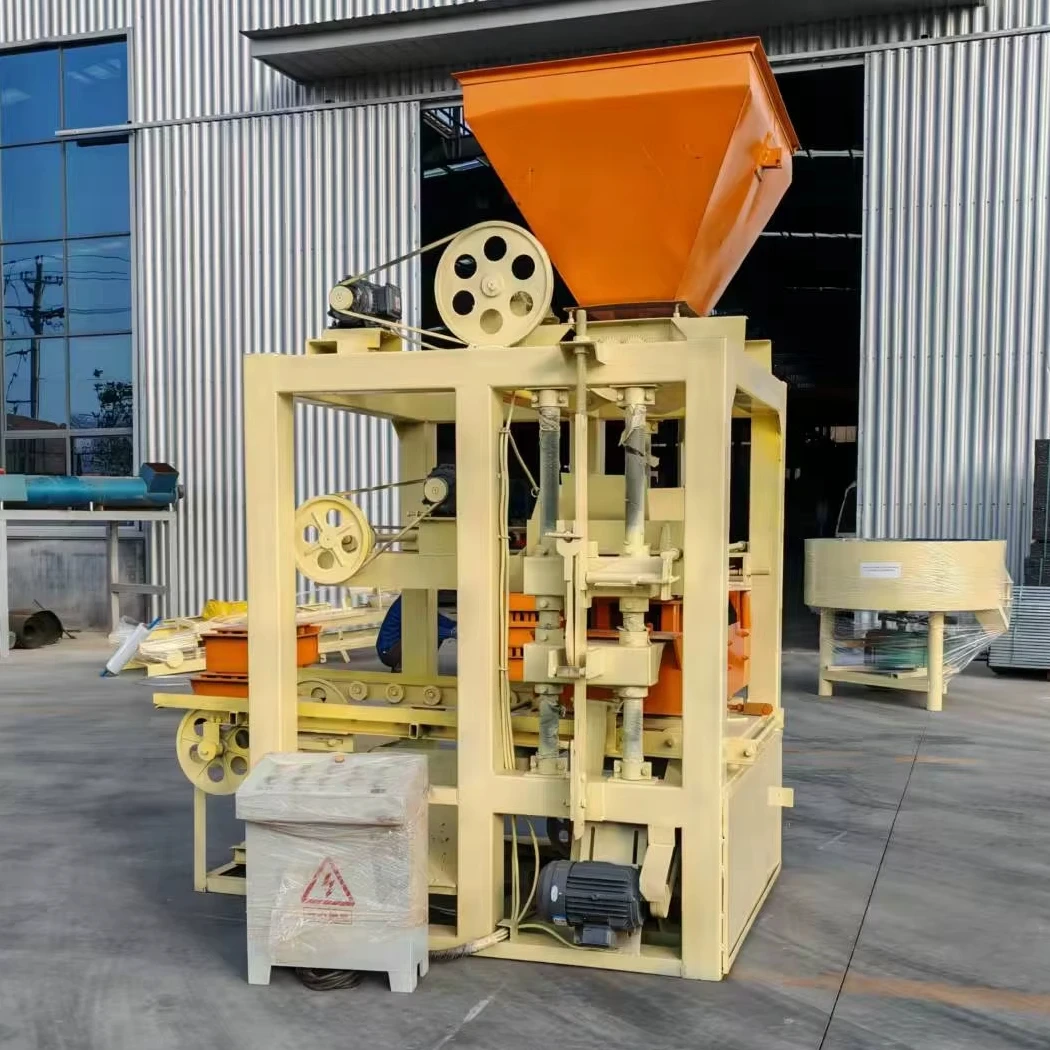
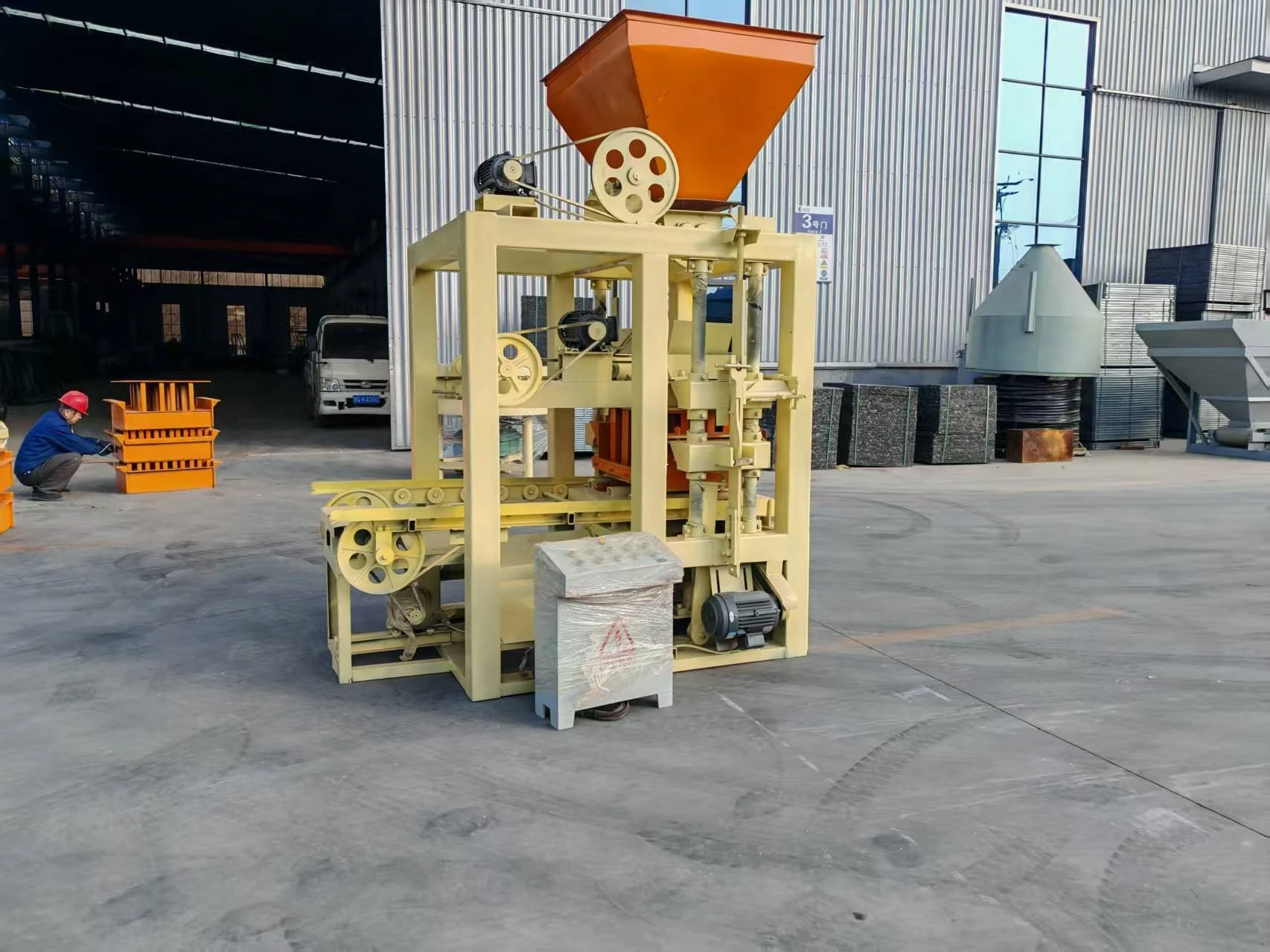
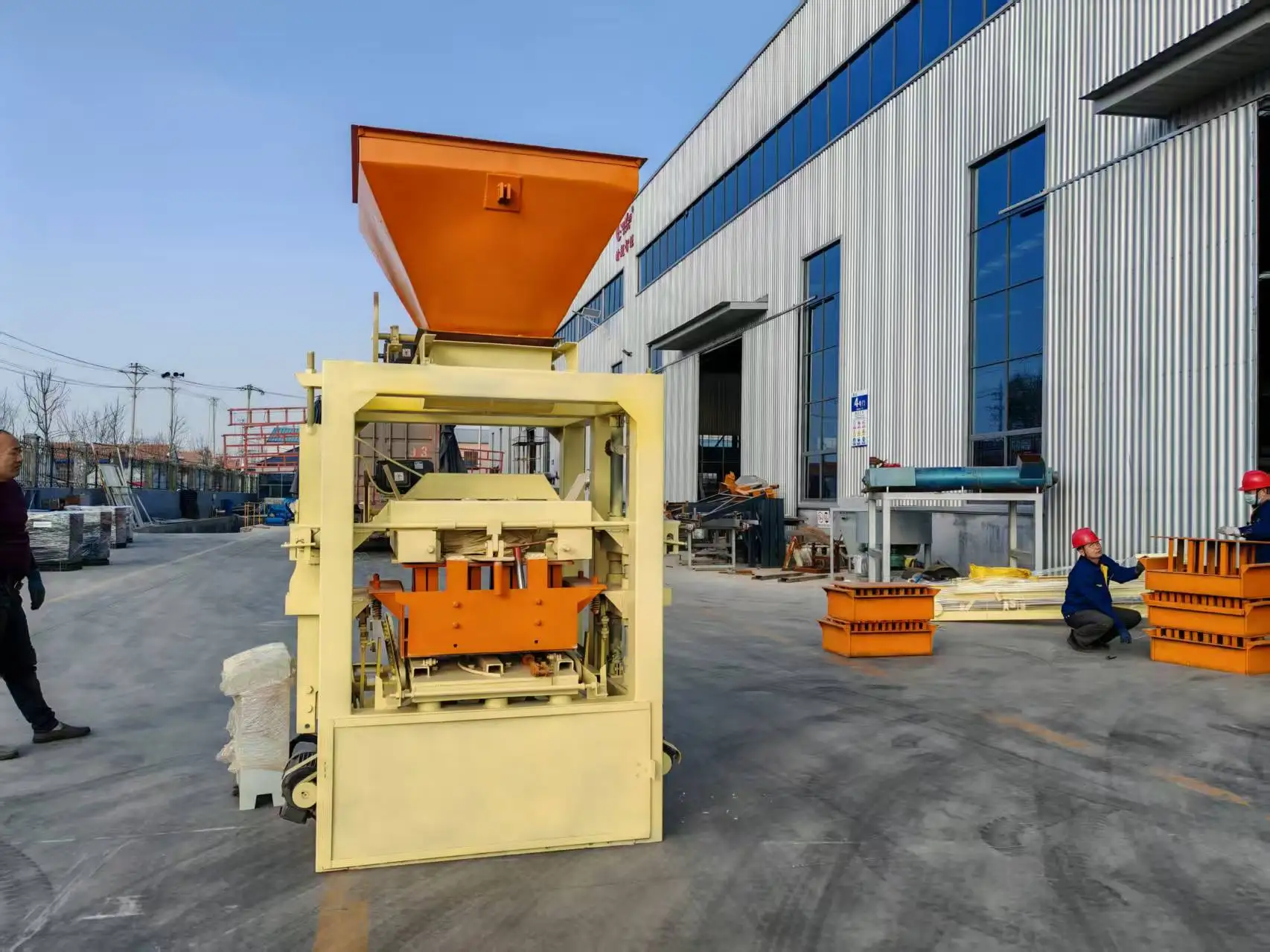
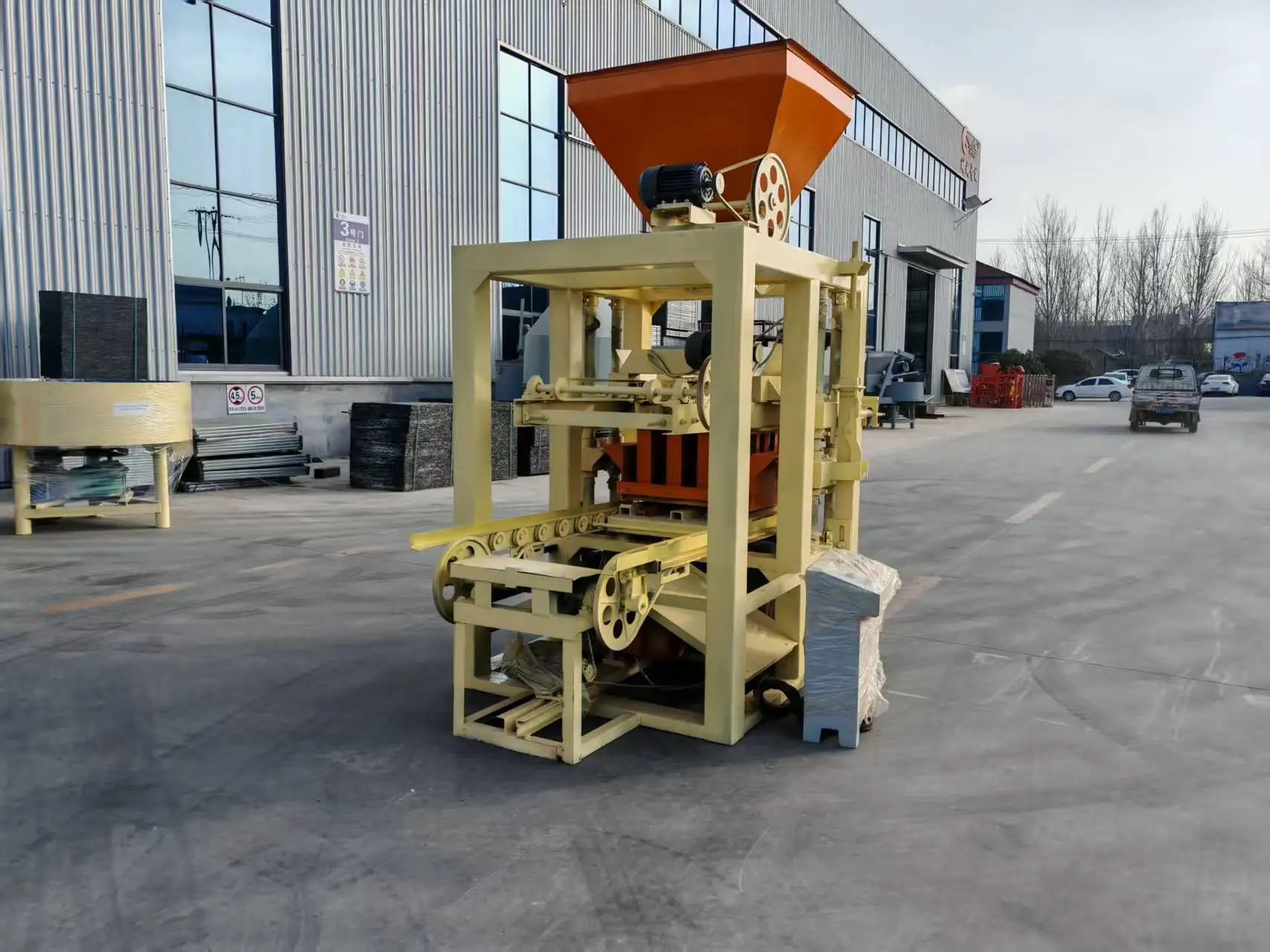
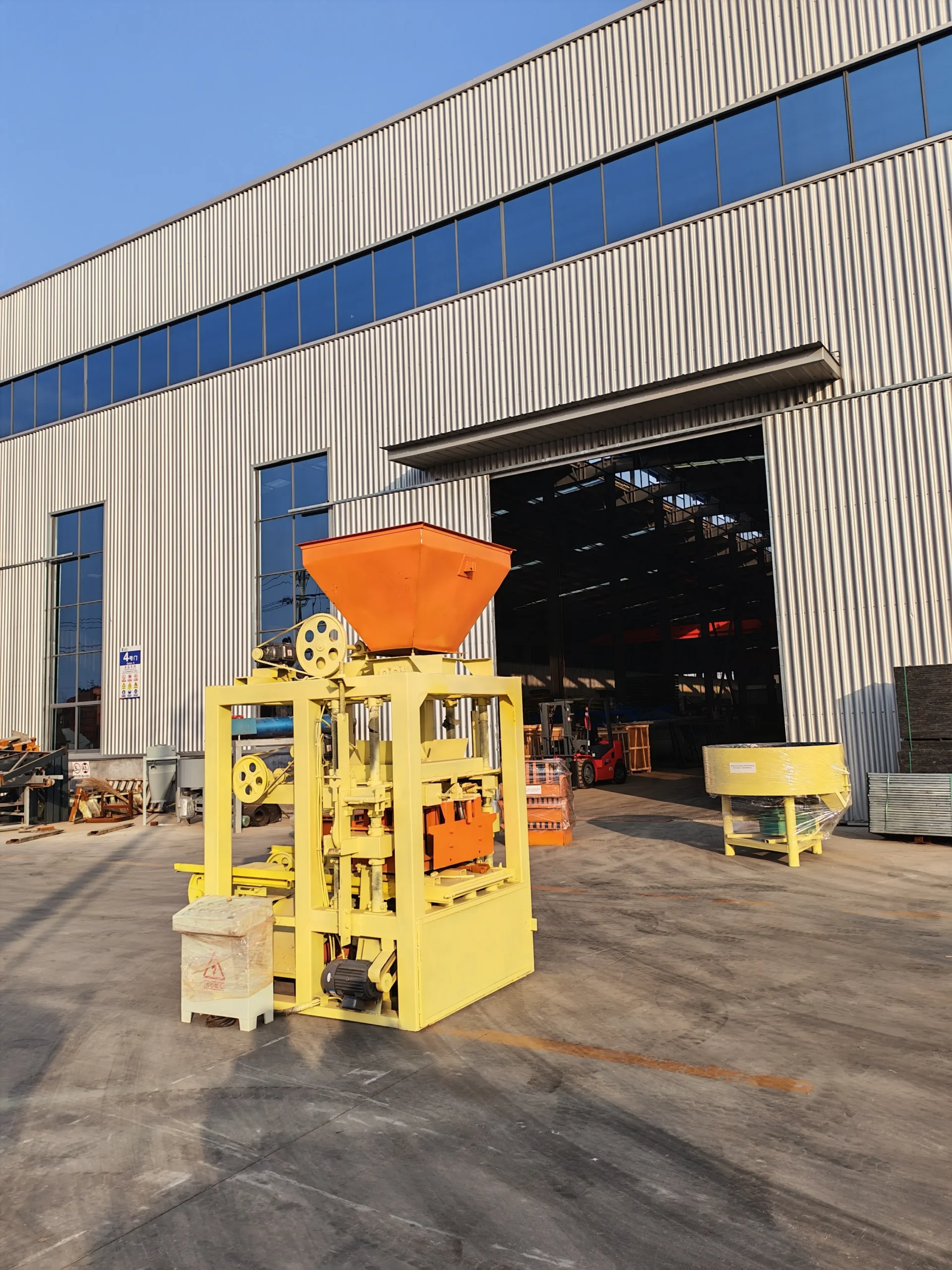
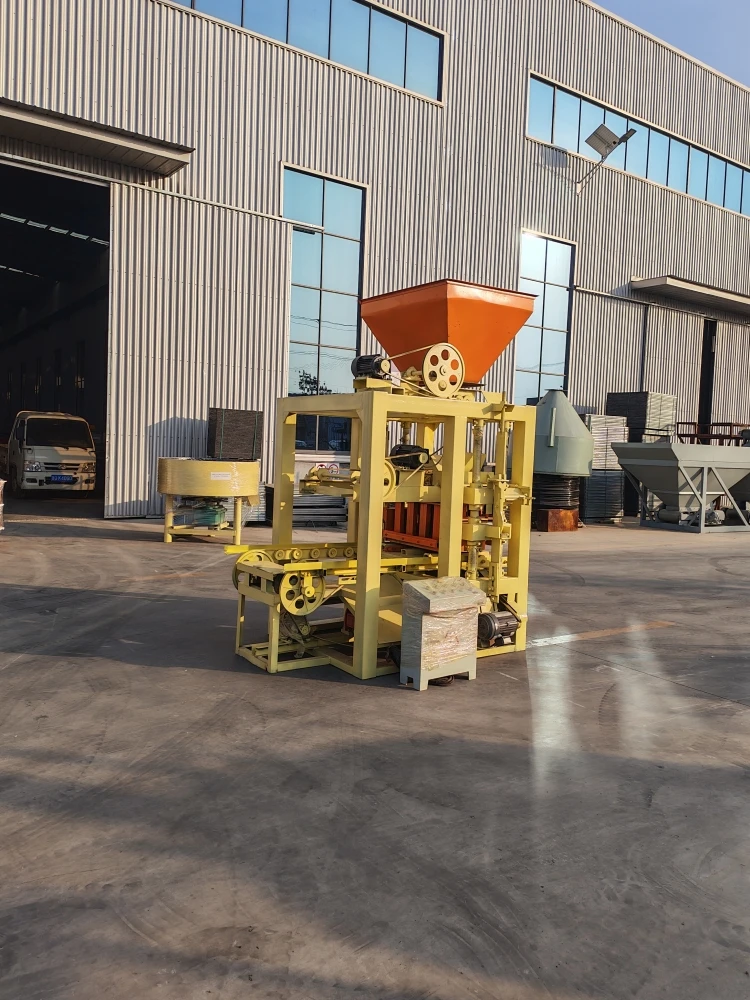
Description
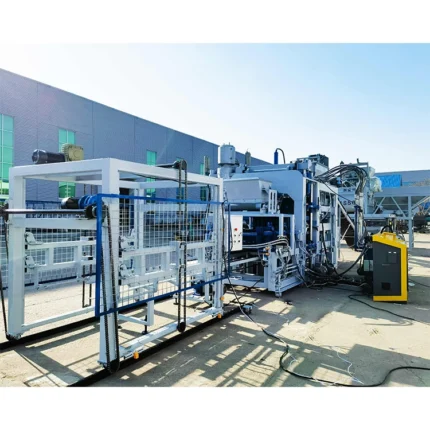
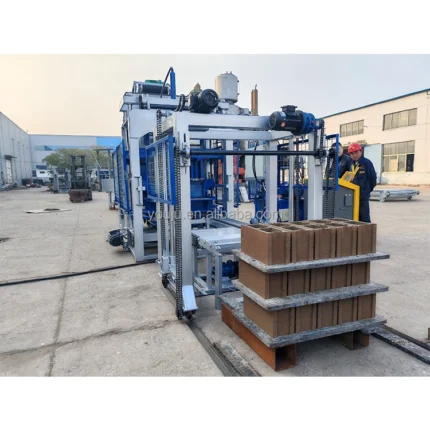
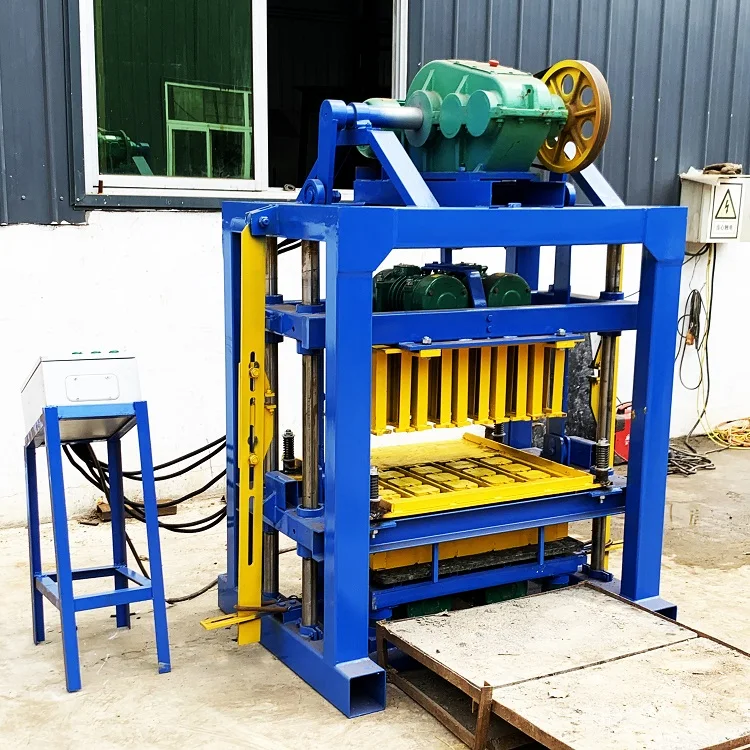
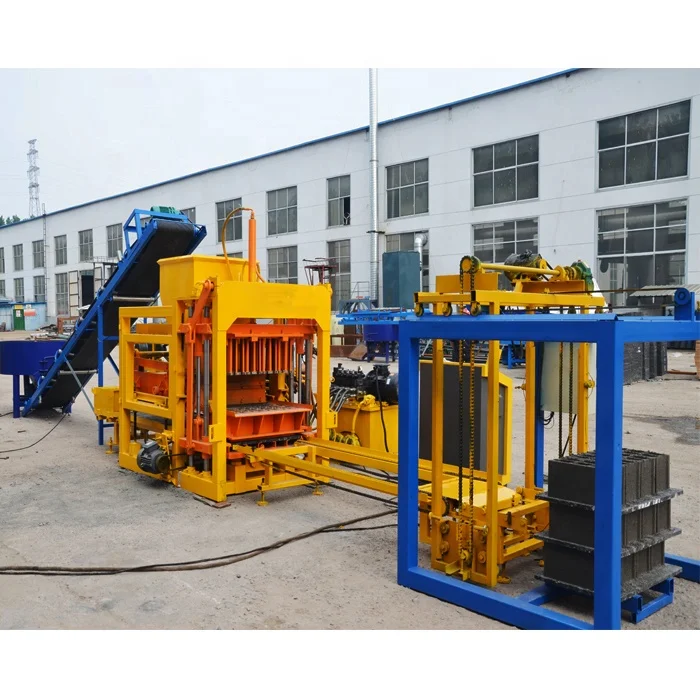
Matched Control Architecture — The QTJ4-24 pairs PLC logic with its 45 kN vibration system so operators manage parameters rather than manual timing, reducing batch variation common in purely mechanical setups.
Technical Specifications
| Parameter | Value |
|---|---|
| Model | QTJ4-24 |
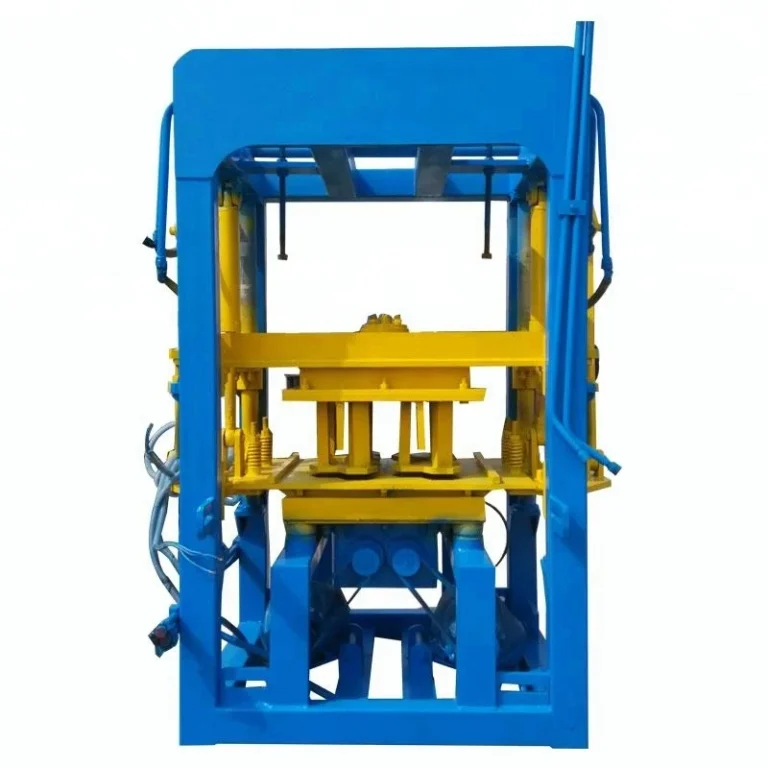
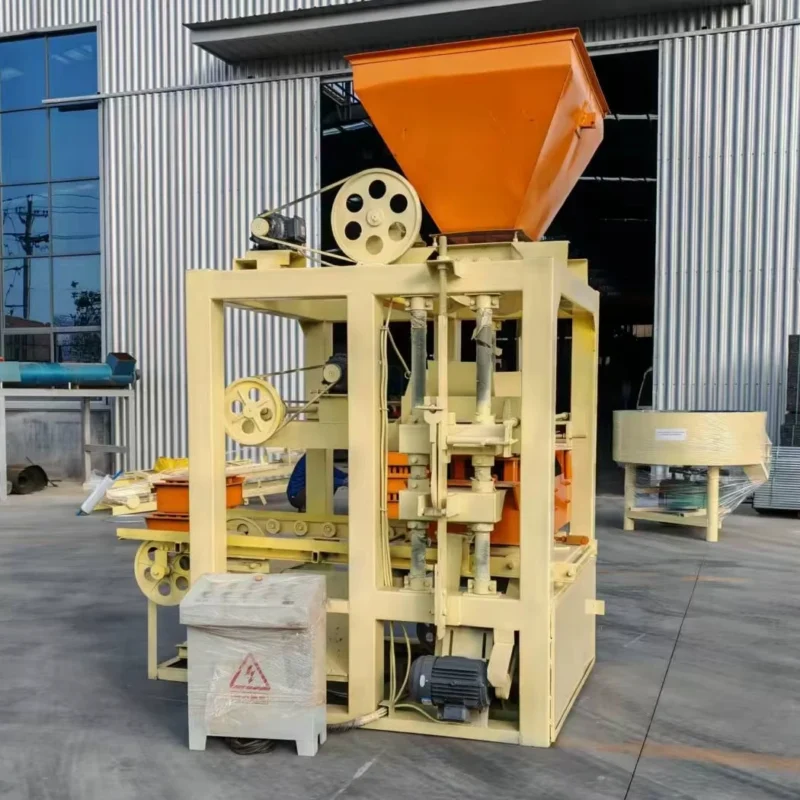
| Product Type | Semi-Automatic Concrete Block Making Machine |
| Overall Dimensions (L×W×H) | 3600×1700×2560 mm |
| Pallet Size | 850×450 mm |
| Molding Cycle | 24–26 s |
| Total Power | 11.95 kW |
| Vibration Force | 45 kN |
| Vibration Configuration | 2×3 kW lower vibrators + 2×1.5 kW upper vibrators |
| Molding Method | Mechanical (pressure + vibration) |
| Material Feeding | Full-automatic spiral distribution |
| Mold Lifting Reducer | 350-type |
| Control System | PLC controlled |
| Net Weight | 2 T |
| Automation Level | Semi-automatic |
| Raw Materials | Cement, sand, stone |
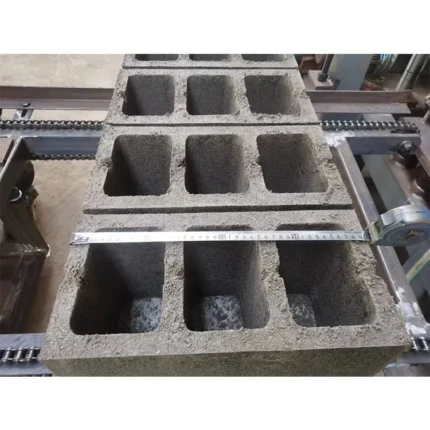
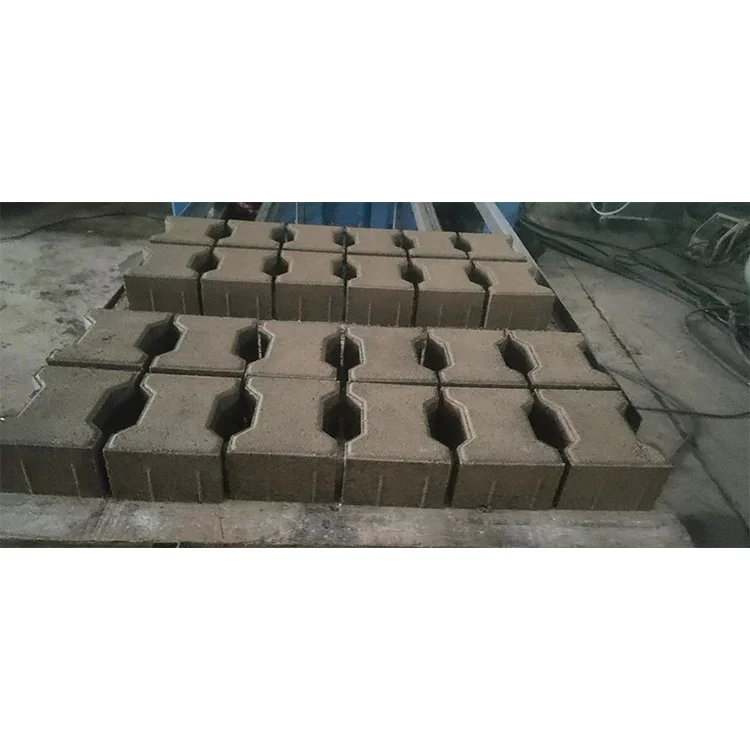
| Mould Formats | Hollow block, solid block, interlocking brick, paving brick |
| Output Capacity | (basis to be confirmed) |
| Warranty | 1 year for whole machine (excluding spare parts) |
Application Suitability
| Application | Material or Output |
|---|---|
| Small-to-medium block plant startup | Hollow blocks from cement, sand, crushed stone aggregate |
| On-site construction block production | Solid blocks mixed with locally available fine and coarse aggregate |
| Format expansion for existing producers | Interlocking bricks and paving bricks using standard cementitious mixes |
| Entrepreneur first-line investment | Multiple block formats from a single mechanical press with spiral feeding |
Why the PLC Language Question Beats the Price Negotiation
A control panel the operator cannot read turns an automatic QTJ4-24 block machine PLC controlled system back into a guessing game.
I once shipped a semi-automatic press to a South Asian block plant without confirming the HMI display language or the local three-phase voltage. The machine sat on its pallets for four days while an electrician rewired the panel and the operator stared at fault codes he could not parse. Commissioning delays like this cost more than the price difference between two competing quotes [NEED_CITE: voltage and frequency standards by export market]. That is why the first document I now request is a single-line diagram of the buyer’s incoming supply, followed by the preferred operator language for every screen and alarm message.
What PLC Control Actually Removes from the Operator
On a purely manual press, the operator decides when to start the vibrator, when to stop it, and when to lift the mould. Every decision introduces variation. The automatic QTJ4-24 block machine PLC controlled logic takes over cycle timing, spiral feeder activation, and mould lifting sequence, leaving the operator to load raw material and remove finished pallets. Batch-to-batch repeatability improves because the press follows the same time and amplitude parameters regardless of shift changes or operator fatigue.
Where the Upgrade Path Leads
Starting with semi-automatic operation keeps the initial investment contained while the plant learns its local mix behaviour. When daily volume justifies it, the same PLC platform can accept add-on modules for automatic pallet feeding, wet stacking, and cubing. The control cabinet is pre-wired for these I/O expansions, so the transition does not require a full rewiring or a replacement controller [NEED_CITE: PLC I/O expansion practices in block machinery].
Reading the Numbers Behind Block Density
The 45 kN total vibration force comes from four motors — two 3 kW units below the mould table and two 1.5 kW units above — working in a superimposed pattern. Lower vibrators compact the aggregate skeleton while upper vibrators settle the face mix, producing uniform density through the block height. The 24–26 s molding cycle is measured on a standard hollow block; denser paving formats typically require longer vibration holds, which the PLC can store as separate recipes. The 850×450 mm pallet size defines the molding area, and the 350-type reducer on the mould lift is sized to handle repeated shock loads without gear backlash. Because the QTJ4-24 uses mechanical pressure rather than hydraulics, there are no hydraulic hoses to leak or pump seals to replace, simplifying daily maintenance. The 11.95 kW total power draw means a standard 400 V three-phase supply with a 20 A breaker is generally sufficient, but the exact voltage and frequency must be confirmed before the motor windings are wound.
The Hidden Cost of Skipping Electrical Confirmation
When voltage and frequency are assumed rather than verified, the first power-up can burn out a vibrator motor or trip the upstream breaker repeatedly. Replacing a motor on-site adds weeks of downtime while the correct winding is sourced internationally [NEED_CITE: motor winding replacement lead times for export machinery]. The PLC itself may boot but throw undervoltage alarms that the operator cannot clear. These are not warranty claims — they are specification gaps that fall on the buyer.
Why Buyers Place Repeat Orders Here
Block machinery is the sole product focus, so the press, moulds, pallets, and handling equipment are specified as one matched system rather than assembled from unrelated suppliers. Every QTJ4-24 is configured against the buyer’s actual mix design and target block format instead of a catalogue default. Mould drawings are supplied for each format the buyer’s market demands, including custom profiles from buyer sketches. The automation level is selectable and expandable, so a plant can start semi-automatic and add stacking modules when volume justifies it. Installation support includes on-site commissioning with operator training conducted in the confirmed HMI language.
Documentation & Verification
- Capacity calculation sheet stating output per block format assumed
- PLC program printout with confirmed display language and alarm texts
- Voltage and frequency confirmation record signed before motor winding
- Electrical schematic showing dedicated circuit and breaker sizing
- Mould drawing pack with cycle time noted per format
- Factory test record on buyer’s specified raw material mix
Installation, Commissioning & Support
- 3600×1700 mm footprint requires a level concrete slab with anchor bolt inserts
- 11.95 kW total load needs a dedicated 400 V three-phase circuit with appropriate breaker
- Machine ships partially dismantled; mould table and hopper reassemble on site
- First-run vibration amplitude tuned to the buyer’s aggregate and cement ratio
- Operator trained on PLC menu navigation in the confirmed HMI language
- Wear parts list supplied with mould liner and vibrator motor replacement intervals
Starting the Technical Conversation
Send your target block formats with dimensions, your local aggregate sieve analysis, and the three-phase voltage and frequency at your site. Include the preferred PLC display language and the pallet racking or forklift system already in use so the 850×450 mm pallet output matches your curing workflow. If you plan to add automatic stacking later, mention it now so the control cabinet ships with the expansion I/O pre-wired.
Frequently Asked Questions
Q: How is output capacity calculated and which block format is assumed?
A: Capacity is stated per block format, not as a single cycles-per-hour figure. A 400×200×200 mm hollow block has a different cycle and pallet pattern than a 200×100×60 mm paving brick. We supply a line capacity document showing output for every format you intend to produce so your daily target is realistic.
Q: What PLC language options are available and can the display be switched after delivery?
A: The HMI can be loaded with multiple language files before shipment, typically English plus the operator’s preferred local language. Switching languages after delivery is possible if the language pack was included in the original PLC program; adding a new language later requires a program update.
Q: How do I confirm the voltage and frequency match my plant before shipment?
A: We request a photo of your main distribution board nameplate or a single-line diagram from your electrician. Motor windings and the PLC power supply are then configured to your exact voltage and frequency before the factory test, preventing rewiring delays on arrival.
Q: What is the upgrade path from semi-automatic to fully automatic stacking and cubing?
A: The PLC cabinet ships with reserved I/O channels and conduit entries for future pallet feeder and stacker modules. When your volume justifies automation, the add-on stations plug into the existing controller without replacing the main PLC or rewiring the press.
Q: Which mould formats are available and how long does a mould change take?
A: Standard formats include hollow blocks, solid blocks, interlocking bricks, and paving bricks, all sized to the 850×450 mm pallet. Mould change involves unbolting the mould box and lowering the new one onto the locating pins; the exact changeover time depends on operator familiarity and is covered during on-site training.