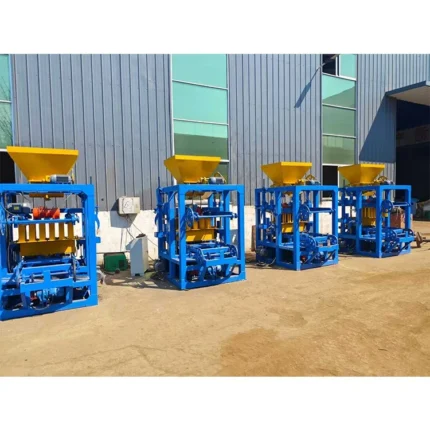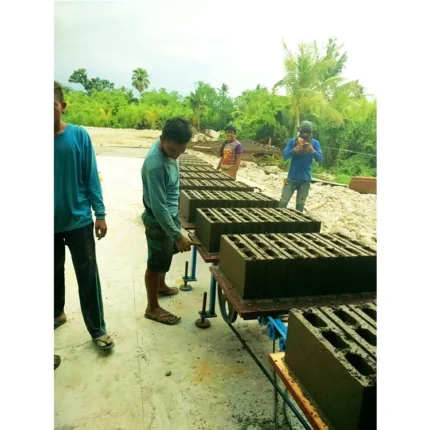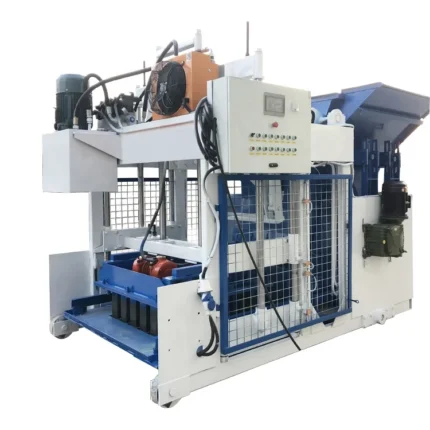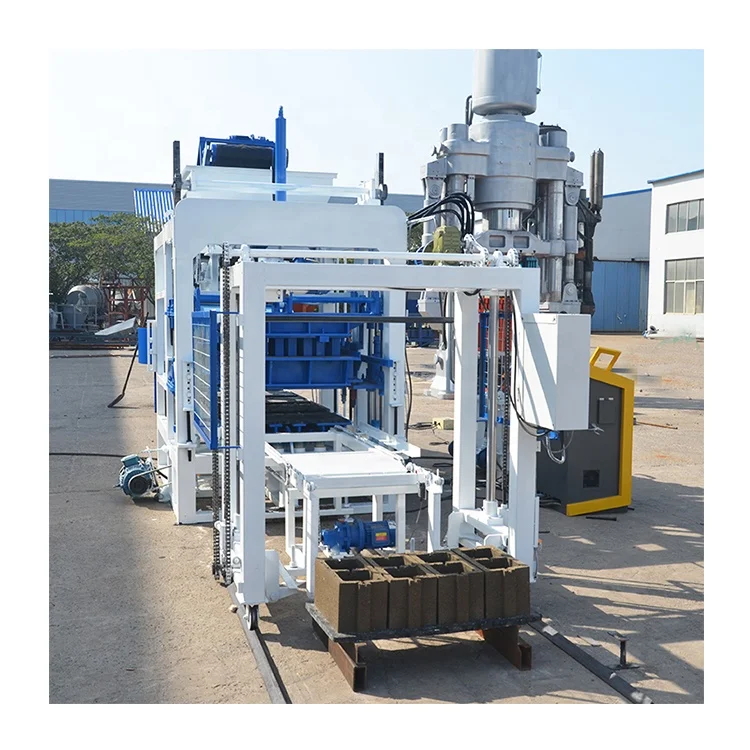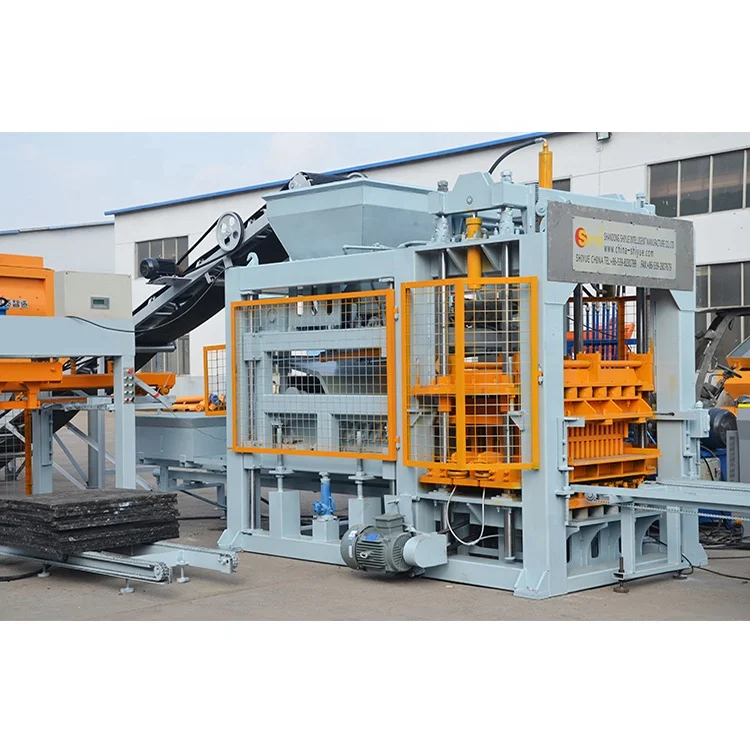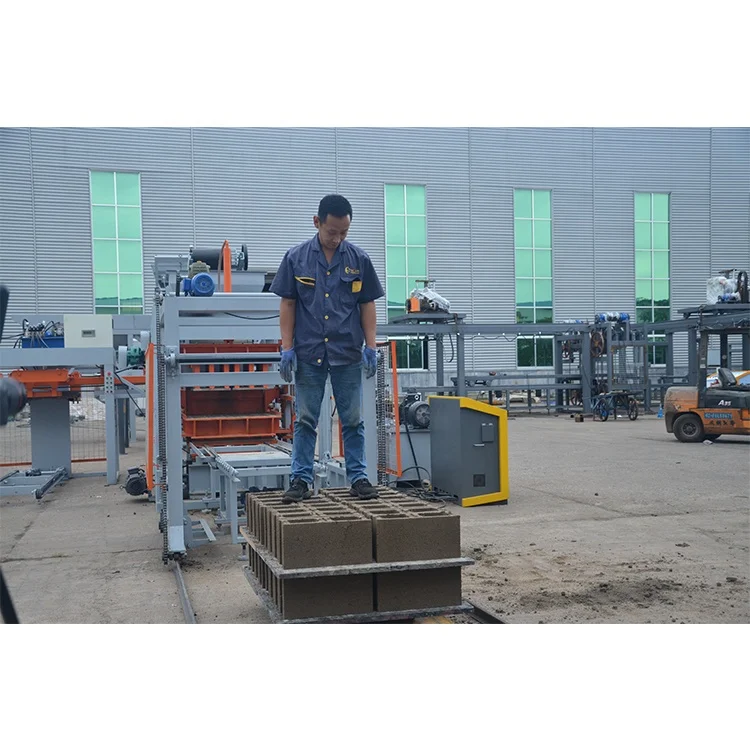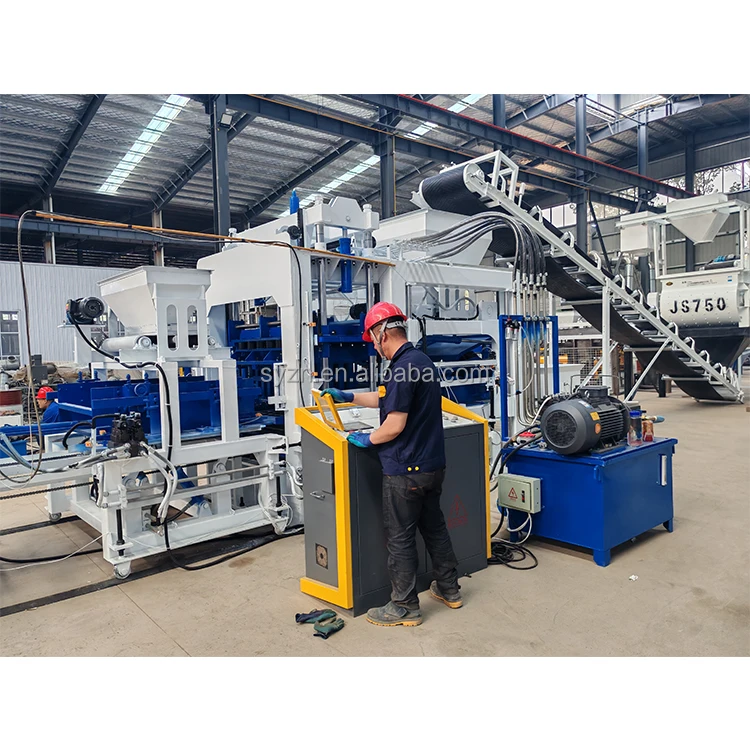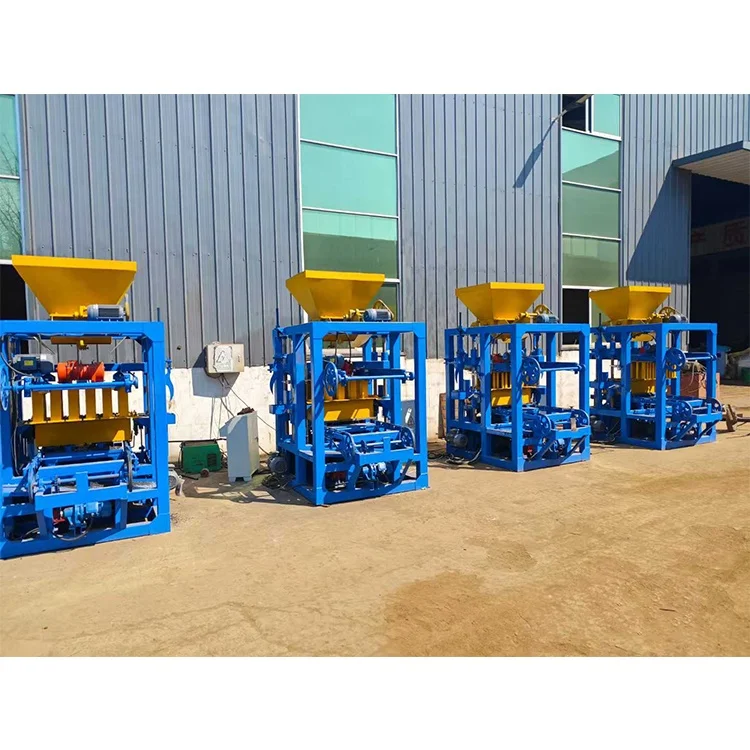
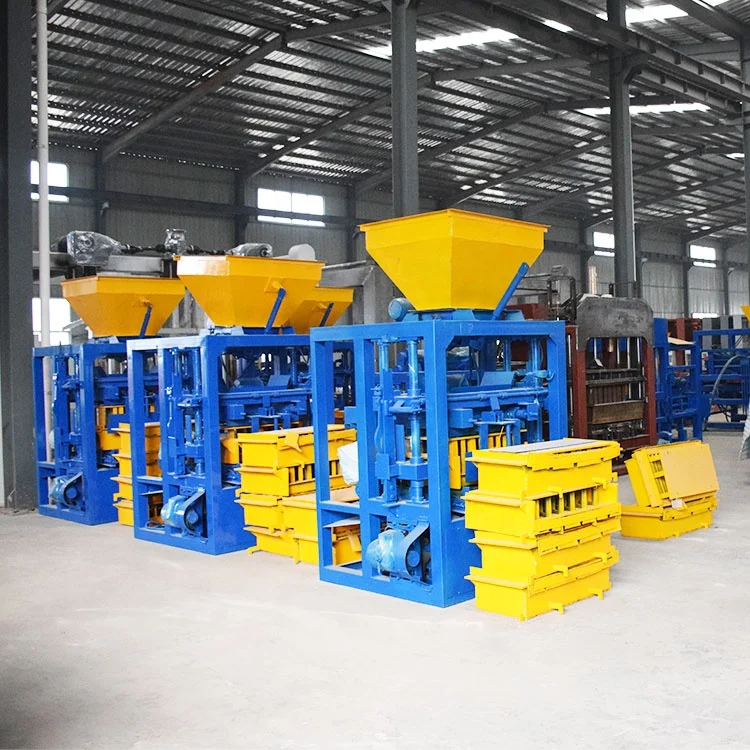
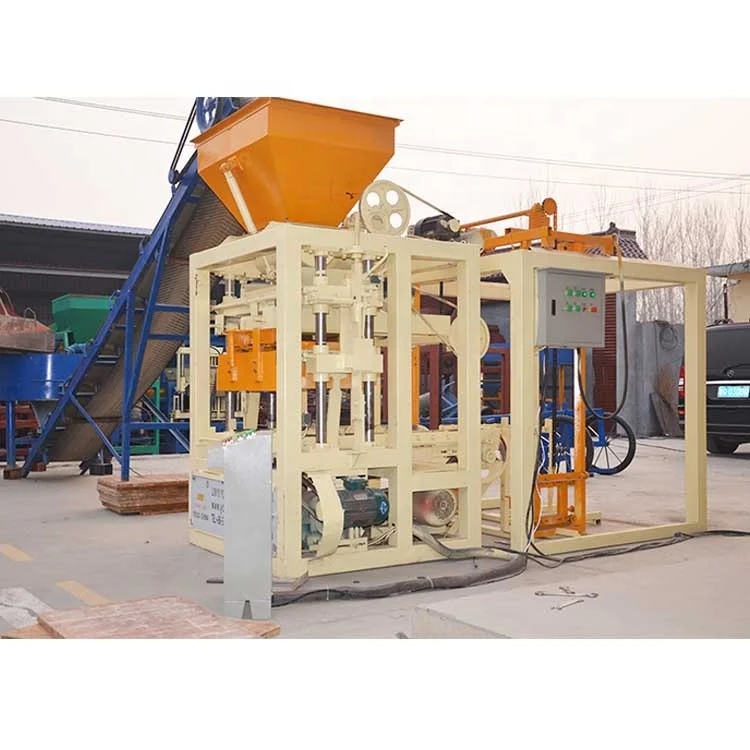
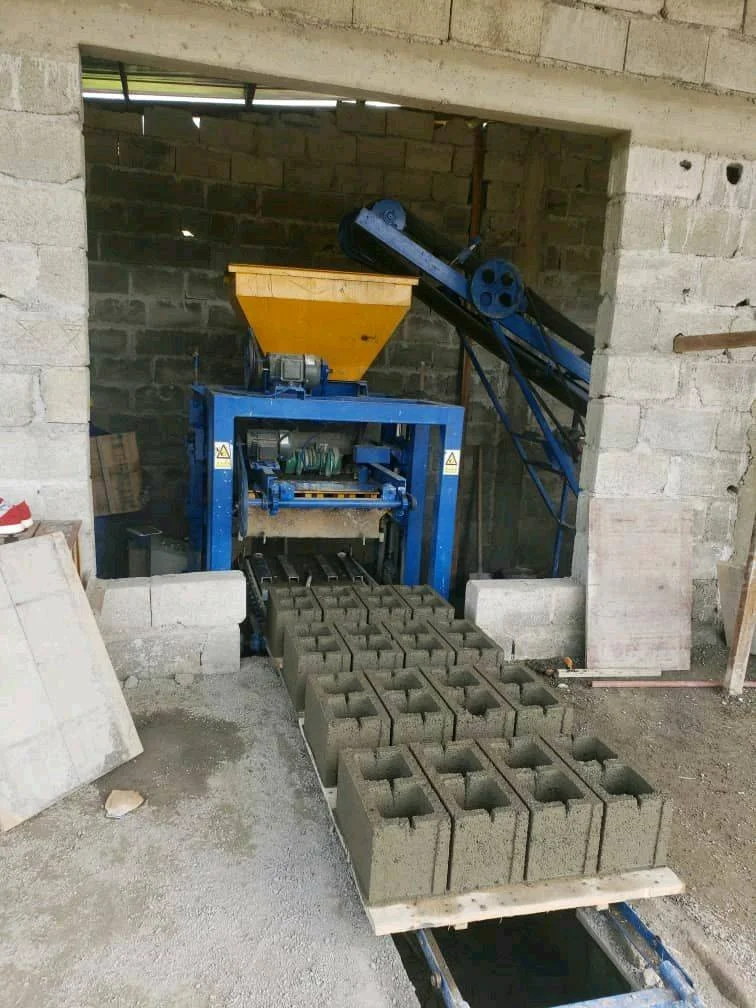
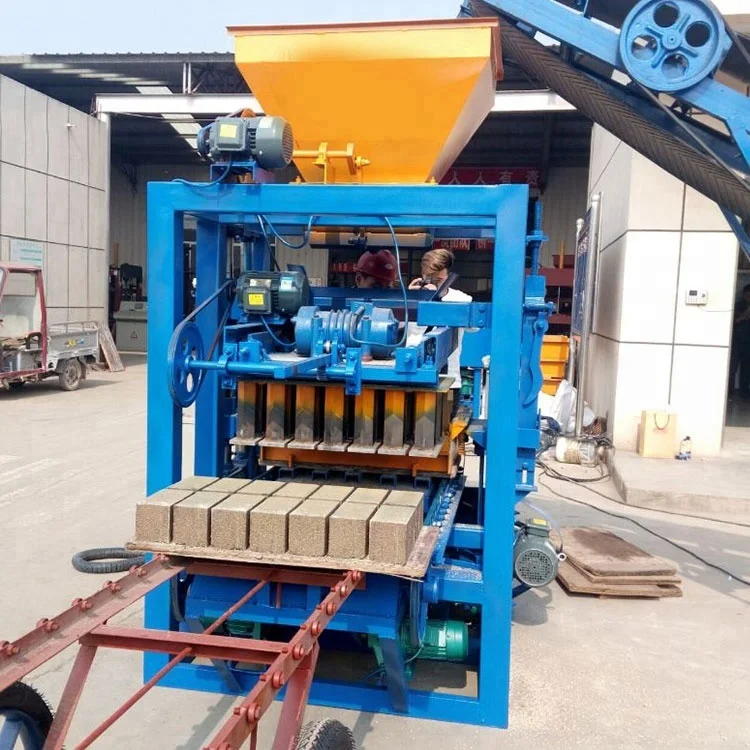
Description
Consistent Cycle Logic — the QTJ4-24 governs its 24–26 s moulding sequence through electrical-mechanical interlocking rather than operator pace, giving semi-automatic plants a measurable step toward batch-to-batch uniformity.
Technical Specifications
| Parameter | Value |
|---|---|
| Model | QTJ4-24 |
| Product Type | Semi-Automatic Concrete Block Making Machine |
| Rated Power | 11.95 kW |
| Voltage & Frequency | 3-phase (basis to be confirmed) |
| Control System | Electrical control cabinet with mechanical interlocking (PLC available on request) |
| Overall Dimensions | 3600 mm × 1700 mm × 2560 mm |
| Net Weight | 3.5 T |
| Pallet Size | 900 mm × 450 mm |
| Mould Format Options | 400×200×200 mm (4 pcs/mould) / 390×240×190 mm (3 pcs/mould) / 390×120×190 mm (6 pcs/mould) / 240×115×53 mm (21 pcs/mould) |
| Cycle Time | 24–26 s |
| Output Capacity | 4 pcs of 400×200×200 mm hollow block per mould, cycle 24–26 s (basis to be confirmed for other formats and daily operating hours) |
| Vibration Type | Table vibration feeding + fluctuation vibration molding |
| Feeding Method | Manual feeding (two feed ways available) |
| Automation Level | Semi-automatic (mechanical + manual operation) |
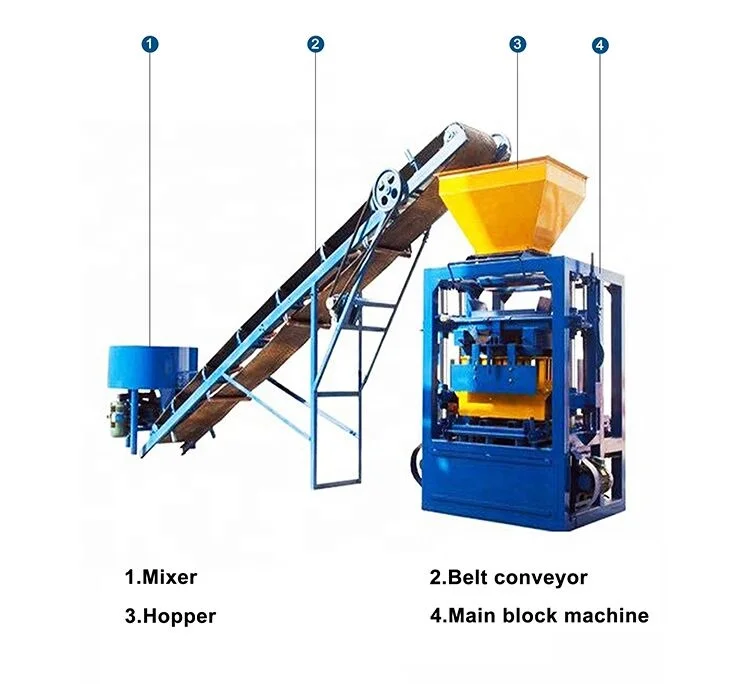
| Recommended Mixer | JQ350 or JQ500 vertical mixer |
| Recommended Conveyor | 6 m or 8 m belt conveyor |
| Wire Specification (Main Machine) | 3×6 mm |
| Wire Specification (Mixer) | 3×4 mm |
| Wire Specification (Conveyor) | 3×2.5 mm |
| Warranty | 1 year (excluding spare parts) |
| Assembly State | Stationary installation on precast concrete ground |
Application Suitability
| Application | Material or Output |
|---|---|
| Hollow block production | Crushed stone, cement, and local aggregate blends for load-bearing and partition walls |
| Standard solid brick production | River sand, fly ash, or stone dust mixed with cement for masonry courses |
| Paving brick production | High-density aggregate mixes for pedestrian and light-traffic paved surfaces |
| Multi-cellular brick production | Lightweight aggregate or aerated concrete mixes for non-structural infill |
| On-site contractor block making | Locally sourced sand and gravel for project-specific wall construction |
Why Voltage Confirmation Must Precede the PLC Discussion
An automatic QTJ4-24 block making machine arriving with the wrong voltage rating sits idle until a transformer or rewired panel shows up.
I watched a South Asian buyer wait three weeks for a step-down transformer because the 415 V / 50 Hz supply at his site never made it onto the order sheet. The control cabinet had already been built for 380 V. Every day the machine sat under a tarp, his curing racks stayed empty and his crew drew wages without producing a single block. Voltage and frequency are the least exciting specs on any quotation, yet they gate every other decision about control language, motor winding, and PLC selection [NEED_CITE: voltage and frequency standards by export market]. Locking these values down before production begins is the single most effective way to avoid a costly commissioning delay.
Control Logic That Replaces Operator Guesswork
On a purely manual egg-laying press, the operator decides when to stop the vibrator and lift the mould head. That judgement drifts across a ten-hour shift, especially in hot climates where fatigue sets in early. The QTJ4-24 removes that variable with an electrical-mechanical interlock that synchronises upper and lower vibrators with mould lifting. The automatic QTJ4-24 block making machine holds the vibration window inside the 24–26 s cycle whether it is the first block of the morning or the last before shutdown, so density variation between batches stays within a narrow band.
Upgrade Path From Semi-Automatic to Intelligent Line Control
Semi-automatic operation is the right entry point for many first-plant entrepreneurs and on-site contractors, but demand eventually outpaces what two operators can feed and stack by hand. The electrical cabinet architecture on this press leaves room for a PLC-controlled semi-automatic block machine upgrade later, adding automatic pallet feeding and stacking without replacing the core press. That means the capital you spend on the QTJ4-24 today carries forward into the automated line of tomorrow rather than becoming dead weight the moment you scale.
What the Specification Sheet Actually Tells You
The 11.95 kW rated power covers the main vibration motor and the hydraulic pump that drives the mould head. Table vibration feeding paired with fluctuation vibration moulding delivers a two-stage compaction profile: the first stage settles the mix into the mould cavity, and the second stage drives out trapped air for higher density. The 900 mm × 450 mm pallet size is worth cross-checking against your existing curing racks and forklift tine width before you confirm the order. Four hollow blocks of 400×200×200 mm come off each cycle, while switching to standard solid bricks at 240×115×53 mm yields 21 pieces per mould — a format shift that changes daily output calculations substantially [NEED_CITE: CE machinery directive requirements for industrial equipment]. Choosing the right format assumption up front prevents the gap between quoted capacity and actual production.
The Hidden Cost of Skipping the Electrical Schematic Review
Buyers who approve a quotation without requesting the hydraulic and electrical schematic often discover after arrival that the contactor brand or relay layout is unfamiliar to their maintenance team. Sourcing a replacement contactor locally in a remote market can add days of downtime to what should be a routine swap. Worse, if the interlocking logic does not match the operator’s training, the very safety feature meant to prevent faulty operation becomes a source of confusion. Reviewing the schematic before production lets your electricians flag any component substitutions or language issues while the cabinet is still on the assembly bench [NEED_CITE: electrical component availability in emerging markets].
Why Sourcing the QTJ4-24 Here Makes Sense
Block machinery is our single focus, so the QTJ4-24 is specified as a matched system — press, mould, pallet, and conveyor — rather than assembled from separate suppliers who shift blame when cycle times clash. We set the vibration parameters against the buyer’s actual mix design and local aggregate, not a catalogue default, because a machine tuned for clean silica sand will underperform on high-clay river sand. Mould design covers the formats your market actually sells, including custom drawings when a local housing project calls for a non-standard kerbstone. The automation level is selectable, letting you start semi-automatic and move to PLC-controlled pallet handling as volume grows. Installation and commissioning include operator training on the interlocking control sequence so your crew can run the press confidently from day one.
Documentation & Verification
- Line layout drawing showing QTJ4-24 footprint with pallet flow and curing area
- Machine specification sheet confirming rated power and vibration type per unit
- Mould drawing and format list for every block size included in your order
- Voltage and control language confirmation signed before cabinet assembly
- Factory test record running your chosen mould format at rated cycle time
- Operation and maintenance manual covering interlocking logic and wiring diagrams
Installation, Commissioning & Support
- Stationary installation on a level precast concrete pad to support the 3.5 T net weight
- Dedicated 3-phase circuit sized for 11.95 kW with correct voltage and frequency confirmed
- Main machine arrives assembled; belt conveyor and mixer shipped loose for on-site connection
- Commissioning includes first-cycle vibration tuning matched to your local aggregate sample
- Operator training on electrical-mechanical interlock sequence and mould change procedure
- Wear parts list provided covering vibrator components, hydraulic seals, and mould liners
Before You Send the Inquiry
Share your target block format, preferred pallet material, and the local aggregate you plan to use so we can match the vibration curve and cycle parameters to your mix. Confirm the voltage, frequency, and control panel language your electricians expect on site. If you already have curing racks or a forklift in place, send their dimensions so the 900 mm × 450 mm pallet can be validated against your handling equipment.
Frequently Asked Questions
Q: How is the 24–26 s cycle time controlled, and what happens if the operator intervenes mid-cycle?
A: The electrical-mechanical interlock governs the vibration and mould-lift sequence as one locked routine. If the operator triggers an early stop, the interlock prevents the mould head from lifting until vibration completes, protecting block integrity and reducing the chance of a collapsed green block on the pallet.
Q: Can the QTJ4-24 control system be upgraded to PLC with automatic pallet feeding later?
A: Yes. The cabinet architecture accommodates a PLC-controlled semi-automatic block machine upgrade that adds automatic pallet feeding and stacking modules. The core press and moulds remain in service, so you scale automation without replacing the entire line.
Q: What voltage and frequency configurations are available, and is the control display language selectable?
A: The automatic QTJ4-24 block making machine ships in standard 3-phase configurations; exact voltage and frequency must be confirmed before cabinet build. Control panel labels and display language are set to the buyer’s preference during the confirmation step to avoid on-site confusion.
Q: How does the electrical-mechanical interlocking protect against faulty operation?
A: On purely manual presses, an operator can lift the mould before compaction finishes, producing undersized blocks. The interlock ties vibrator run-time to mould movement, so the press simply does not respond to an out-of-sequence command, cutting green-block waste and preventing mechanical shock loads.
Q: What automation options exist between semi-automatic and fully automatic operation?
A: You can add a PLC module, automatic pallet feeder, and stacking station in stages. Each addition reduces one manual task — feeding, transfer, or stacking — while the QTJ4-24 press and its mould set continue running unchanged.