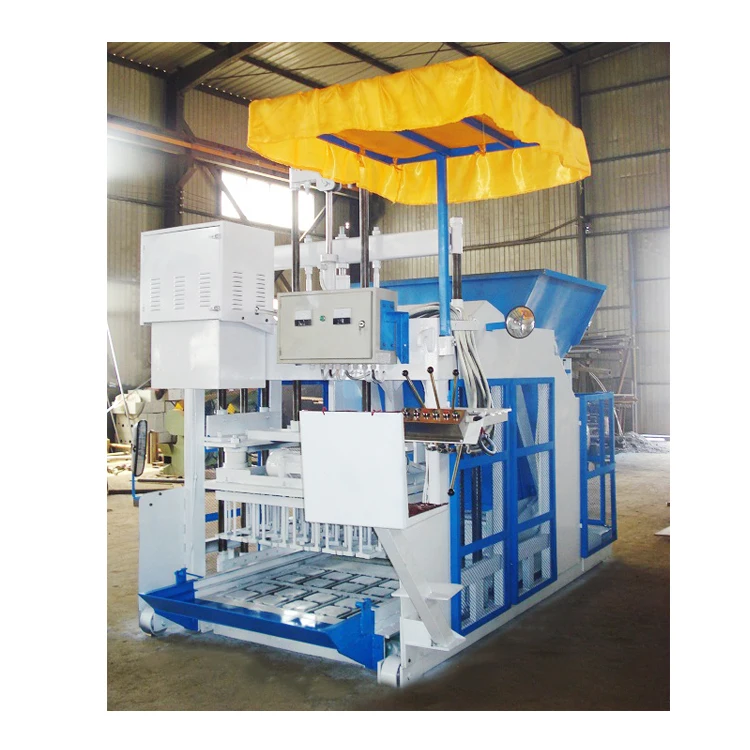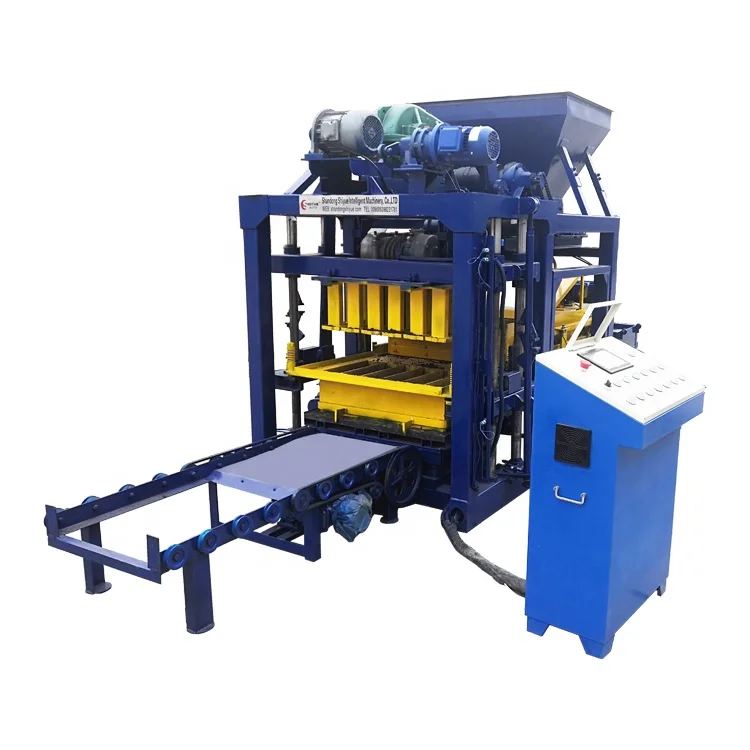
Description
Upgrade-Ready Control — automation level selectable from electric control through to PLC-managed pallet handling, so a first-time buyer can scale as demand grows without replacing the press.
Technical Specifications
| Parameter | Value |
|---|---|
| Model | QTJ4-25 |
| Product Type | Semi-Automatic Concrete Block Making Machine |
| Overall Dimensions (L×W×H) | 3060×1730×2580 mm |
| Total Weight | 4 T |
| Vibration Force | 45 kN |
| Cycle Time | 25 s |
| Pallet Size | 850×550 mm |
| Block Height Range | 40–280 mm |
| Workshop Area | 50–150 m² |
| Material Storage Area | 300–500 m² |
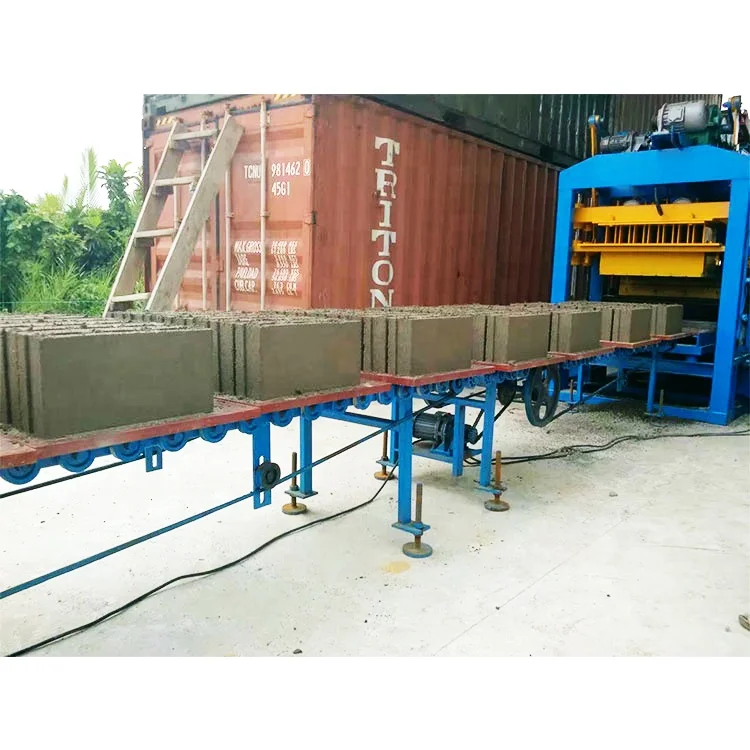
| Belt Conveyor Length | 8 m |
| Mixer Model | JQ500 |
| Motor Brand | Germany SIEMENS or ABB |
| Voltage & Frequency | 380V, 3-phase, 50Hz (customizable to local voltage) |
| Control System | Electric control (upgradeable to PLC) |
| Output Capacity | 480 pcs/hour based on 400×200×200mm hollow block, 4 pcs/mould |
| Output Capacity | 600 pcs/hour based on 400×150×200mm block, 5 pcs/mould |
| Output Capacity | 840 pcs/hour based on 400×100×200mm block, 7 pcs/mould |
| Output Capacity | 2880 pcs/hour based on 240×115×53mm solid brick, 24 pcs/mould |
| Automation Level | Semi-automatic |
| Warranty | 1 year (excluding wearing parts) |
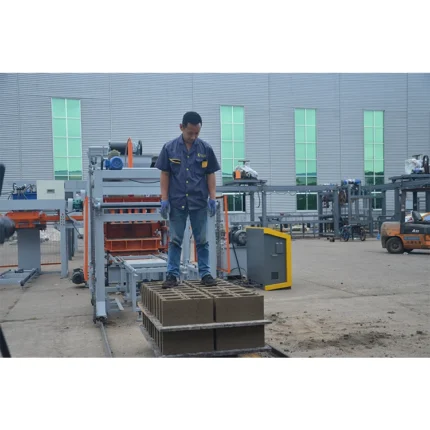
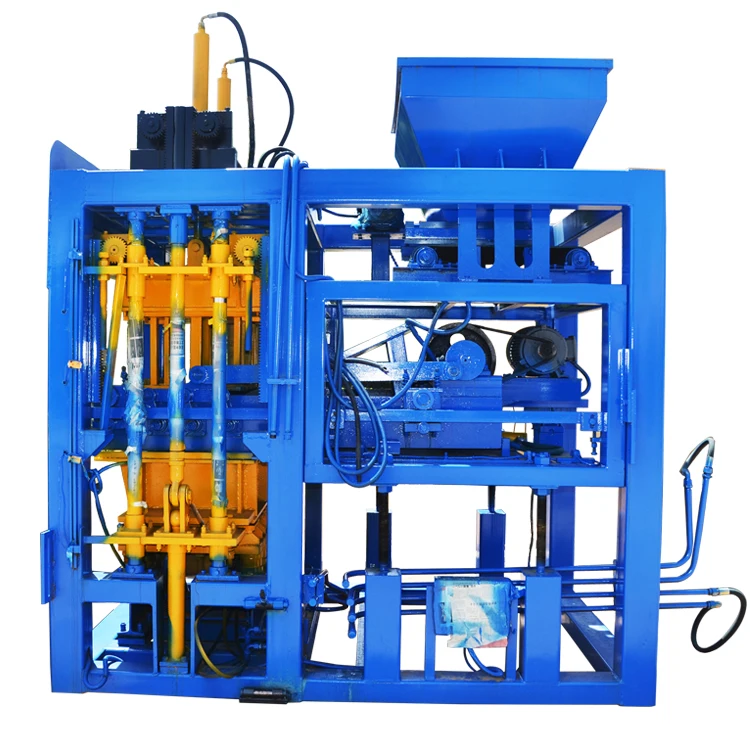
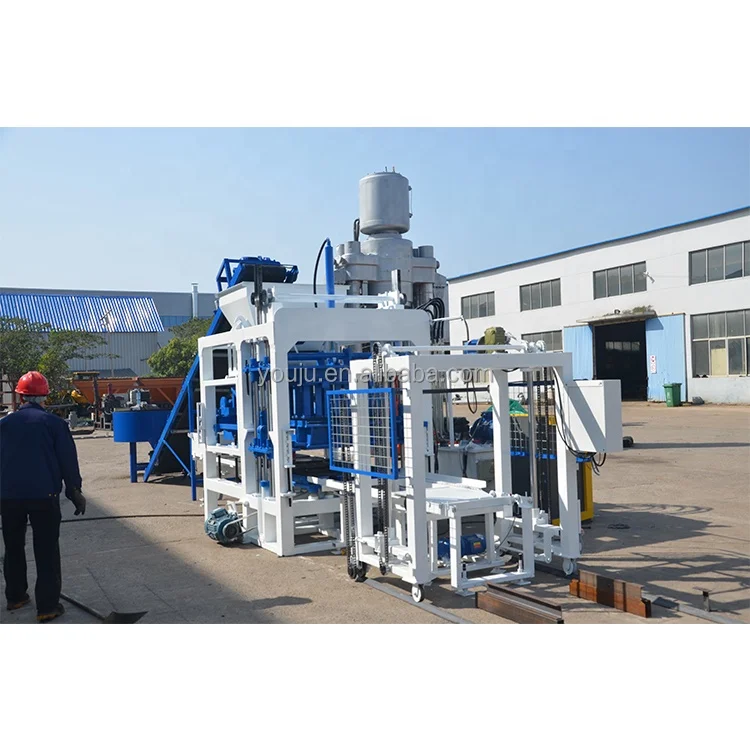
| Assembly State | Full production line equipment, container sea shipping |
Application Suitability
| Application | Material or Output |
|---|---|
| Hollow block production for load-bearing walls | Crushed stone, cement, fly ash mix |
| Solid brick forming for infill and partition walls | Concrete and sand aggregate blend |
| Interlocking paver manufacturing for driveways and walkways | Colored concrete with fine aggregate |
| Kerbstone and curb production for road edging | High-density concrete mix with coarse aggregate |
| Grassed and porous brick for landscaping | Permeable concrete with graded stone |
| Riverside and revetment bricks for erosion control | Heavy-duty concrete with reinforced mix design |
Why the Control Language Must Be Confirmed Before the Price
An operator who cannot read the HMI will change parameters they should not touch.
I have watched a block plant in West Africa lose an entire morning of production because the PLC display arrived in English and the local crew misread the vibration frequency setting. Every block that came off the line that morning cracked during curing. The automatic QTJ4-25 block machine ships with electric control as standard, and the upgrade path to a full PLC-controlled block making machine is straightforward — but none of that matters if the display language does not match the people standing in front of it [NEED_CITE: HMI language localization standards for exported industrial machinery]. Confirming voltage, frequency, and control language before production starts eliminates a commissioning delay that otherwise costs real daily output.
What the Control System Actually Controls
The electric control panel on this machine manages the vibration cycle, mould descent, and material feed timing. For a buyer starting with a small crew, this keeps the learning curve short and the wiring simple. When you move to the PLC-controlled block making machine configuration, the system takes over pallet feeding, stacking sequence, and curing rack indexing. Each of those functions currently handled by a manual operator becomes a timed, repeatable action, removing the batch-to-batch variation that comes from human fatigue late in a shift.
The Upgrade Path from Semi-Automatic to Intelligent
Starting semi-automatic does not lock you into manual pallet handling forever. The QTJ4-25 frame and hydraulic layout leave physical space for automatic pallet feeders and stackers that can be bolted on later [NEED_CITE: typical automation retrofit timelines for small block plants]. The control cabinet is sized to accept a PLC module and additional I/O cards without a full rewiring. This matters for entrepreneurs who want to keep initial capital low but know their output target will grow within the first two years of operation. You buy the press once and add intelligence in stages.
Reading the Specs That Decide Block Quality
The 45 kN vibration force must be matched to your local aggregate density and cement ratio. Too little vibration on a coarse crushed-stone mix leaves voids; too much on a fine fly-ash blend segregates the cement paste from the aggregate. The 25-second cycle time is achievable only when the JQ500 mixer keeps a continuous supply of material at the right moisture content — if the mixer falls behind, the press sits idle and the stated hourly output drops. Pallet size at 850×550 mm dictates how many blocks cure per square metre of floor space; measure your curing racks and forklift fork width before confirming the order. The 4 T total weight and 3060×1730×2580 mm footprint mean a level concrete pad of at least 150 m² is needed, with headroom for the belt conveyor’s 8 m run and the mixer’s loading height.
The Cost of Skipping the Configuration Conversation
Buyers who select a machine based on cycle time alone often discover after arrival that the vibration force does not compact their local river sand properly, producing blocks that crumble at the corners. Others find the pallet dimensions incompatible with their existing curing shelves, forcing a rebuild of the entire drying yard [NEED_CITE: common pallet-curing area mismatch cases in small block plants]. A control panel locked to one language or one voltage standard can sit unpowered for weeks while an electrician sources a transformer. Each of these problems is avoidable with a thirty-minute conversation before the quotation is finalized.
Why Buyers Source This Line Here
Block machinery is the single focus, so the press, mould, pallet, and handling equipment are specified as one matched system rather than assembled from separate vendors. The configuration is set against your actual mix design and target block format, not pulled from a catalogue default. Mould design covers the formats your market actually sells, and custom drawings are accepted when standard options do not fit. Automation level is selectable, meaning a buyer can start with the electric control panel and add PLC-driven pallet feeding and stacking when volume justifies the investment. Factory testing runs your specific mould and mix parameters before the machine is crated, so the first block produced on your site is not the first block the machine has ever made.
Documentation & Verification
- Line layout showing capacity calculation stated per block format assumed
- Machine specification sheet with vibration force and cycle time per mould
- Mould drawing and format list covering every block type quoted
- Pallet specification matched to 850×550 mm size and your curing setup
- Voltage and control language confirmation signed off before production
- Factory test record on your mix design and target block format before dispatch
Installation, Commissioning & Support
- Level concrete pad of at least 150 m² prepared to support 4 T static load
- Dedicated 3-phase circuit matching confirmed voltage and frequency before energizing
- Machine arrives as full production line in container; on-site reassembly supervised
- First-run parameter setting for vibration force and cycle time with your local aggregate
- Operator training on control panel functions, mould change, and daily greasing points
- Wear parts and mould replacement list provided with recommended reorder intervals
Before You Send the Inquiry
Provide the exact block formats your market demands, the daily output target per format, and the local aggregate type you plan to use. Confirm your site voltage, frequency, and the language your operators read on a control screen. If you already have curing racks or forklifts, share their dimensions so the pallet size and stacking height can be matched before the line is configured.
Frequently Asked Questions
Q: How is the 25-second cycle time verified per block format, and what does daily output look like for my specific product?
A: The 25-second cycle is measured under continuous material feed with a specific mould installed. Daily output depends on which block you run — 480 pieces per hour applies only to 400×200×200mm hollow blocks at four per mould. We provide a capacity table listing every format you plan to produce so you can calculate realistic shift output.
Q: What automation level does the QTJ4-25 ship with, and what is the upgrade path?
A: Standard configuration is semi-automatic with electric control. The upgrade path adds PLC-managed pallet feeding, stacking, and cubing without replacing the press frame. The control cabinet is pre-sized for additional I/O modules, so the retrofit is primarily mechanical bolt-on and wiring.
Q: How do I confirm voltage, frequency, and control display language match my site before shipment?
A: These three items are confirmed in writing before production begins. We require your local voltage and frequency values plus the preferred HMI language. A signed confirmation document is filed with your order, and the factory test runs on those exact settings.
Q: What mix design and local aggregate parameters must be matched to the 45 kN vibration force?
A: Aggregate size distribution, cement ratio, and moisture content all affect how the vibration compacts the mix. We request a sample or detailed description of your local materials and adjust vibration amplitude and cycle timing during the factory test to reach your target block strength.
Q: What does the mould change procedure involve, and how long does a format switch take?
A: The mould is bolted to the vibration table and connected to the hydraulic clamps. A format switch involves releasing the clamps, lifting the old mould, positioning the new one, and re-tightening. With practice and the correct tools on site, a trained crew completes the change within a single shift break.