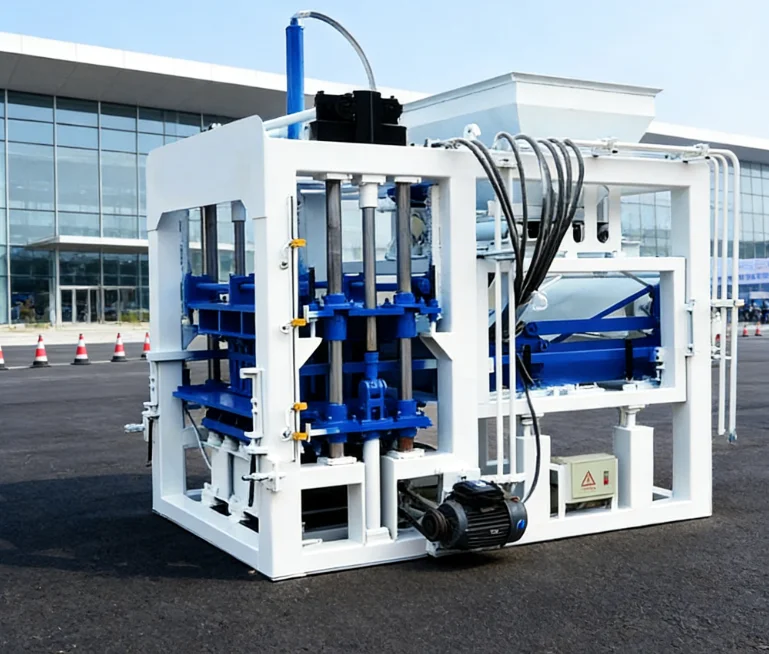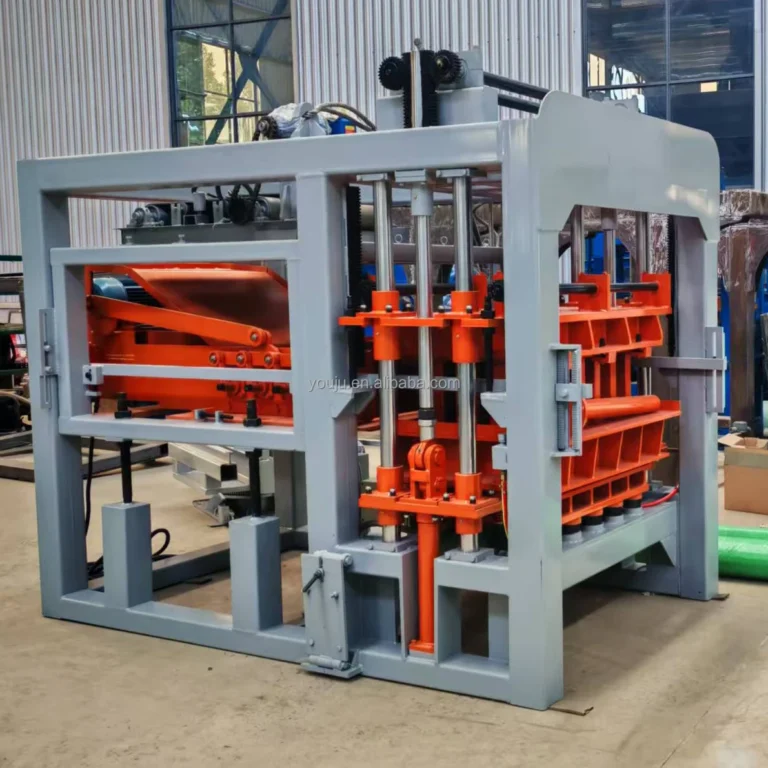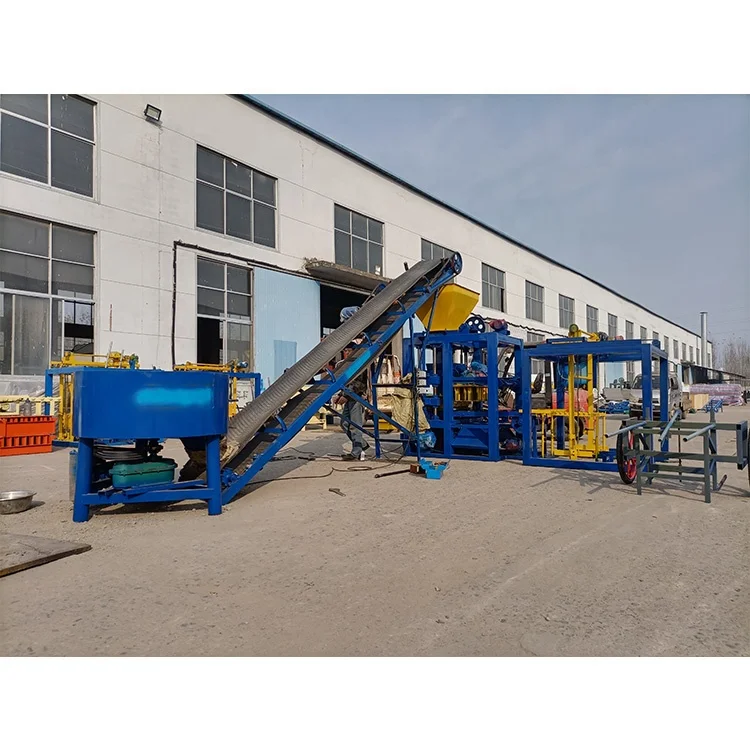


Description
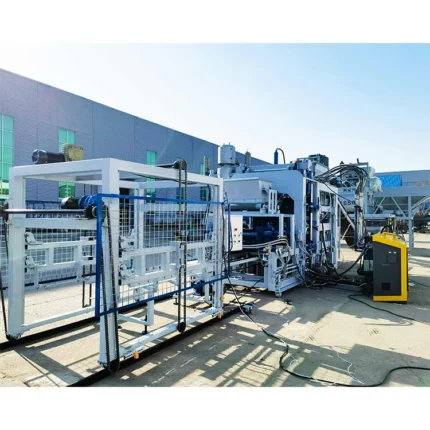
Matched System — The QTJ4-25 block making machine, pallet and mould are specified together against your actual mix design and target block format, not pulled from a catalogue default.
Technical Specifications
| Parameter | Value |
|---|---|
| Model | QTJ4-25 |
| Product Type | Semi-Automatic Concrete Block Making Machine |
| Rated Power | 17.9 kW |
| Voltage & Frequency | Configurable (confirm with buyer before production) |
| Control System | Semi-automatic operation |
| Overall Dimensions (L×W×H) | 6400 × 1500 × 2700 mm |
| Net Weight | 2500 kg |
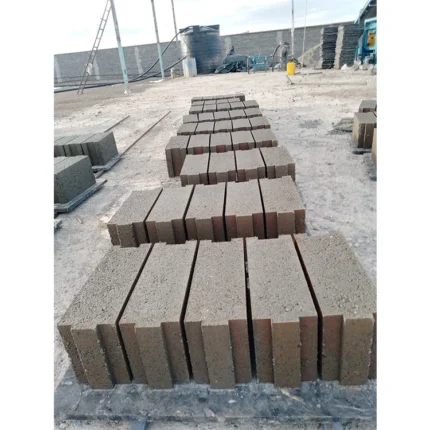
| Output Capacity | 960 pcs/h based on 400×200×200 mm hollow block, 4 pcs/mould |
| Daily Output | 7680 pcs/day based on 400×200×200 mm hollow block, 8-hour shift assumption not stated in source — confirm shift length |
| Cycle Time | 25 s |
| Vibration Frequency | 2800 r/min |
| Exciting Force | 60 kN |
| Pallet Size | 850 × 550 × 20 mm |
| Mould Format | Hollow, solid, paver, curbstone (mould change required) |
| Automation Level | Semi-automatic |
| Stacking Method | Manual (stack by hand, move with trolley) |
| Hydraulic Station | Equipped (pressure rating to be confirmed) |
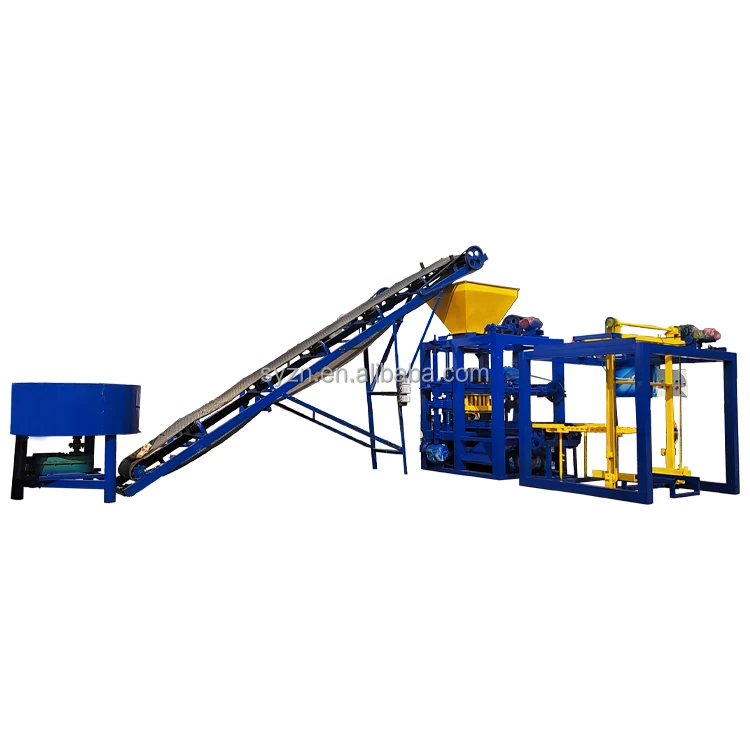
| Configuration Included | Host machine 1 set, block mould 1 set, JQ350 mixer |
Application Suitability
| Application | Material or Output |
|---|---|
| Hollow block production | Standard sizes (8-inch, 6-inch, 5-inch, 4-inch) from crushed stone, sand, cement and local aggregate |
| Solid block manufacturing | Dense concrete mix for load-bearing walls and structural partitions |
| Paving block production | Interlocking and rectangular pavers for walkways, driveways and municipal projects |
| Curbstone forming | Kerb units for road edging and landscape borders |
| On-site construction supply | Housing and development projects requiring daily block volumes without a fixed plant |
What "960 Pieces per Hour" Actually Means for Your Plant
The quoted cycle time only applies when the machine runs a specific block format with a mix it was set up for.
A semi-automatic block making machine upgrade rarely fails because the press itself breaks down. The bottleneck usually appears at the stations around it: pallets not feeding fast enough, curing racks full because nobody stacked them, or the mixer unable to keep up with a 25-second cycle. I have seen plants where the operator spent half the shift moving pallets by hand, turning a theoretical output into a fraction of the quoted number [NEED_CITE: semi-automatic block line throughput losses from manual handling]. The QTJ4-25 delivers its stated 960 pieces per hour based on a 400×200×200 mm hollow block, but that figure assumes pallets are ready, the mix arrives on time, and the curing area can absorb the flow. When you evaluate this PLC controlled QTJ4-25 block machine, the capacity calculation must match the format you actually sell and the shift pattern you run.
Removing Operator Guesswork from the Forming Stage
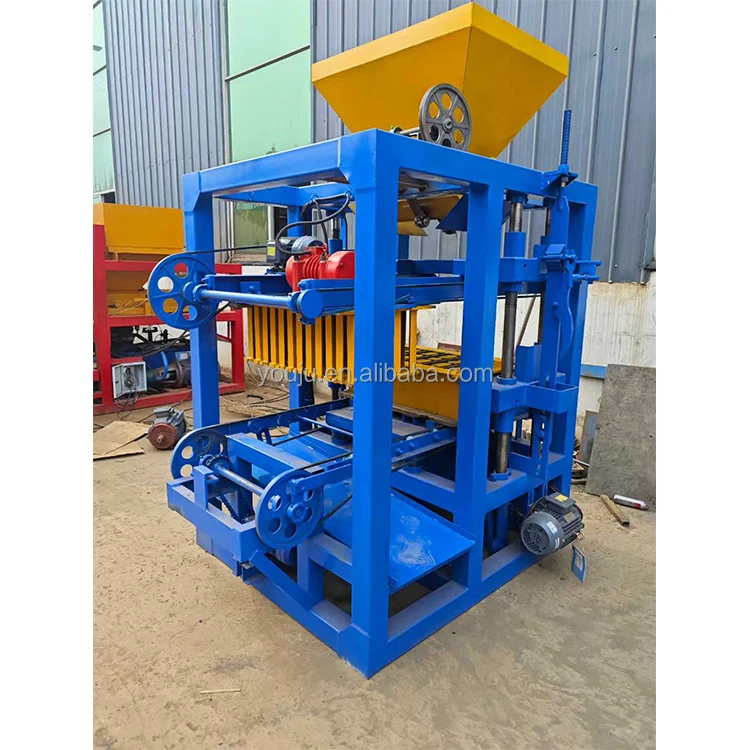
The primary value of moving from a manual egg-laying machine to a stationary semi-automatic line is repeatability. The QTJ4-25 pairs bed-mould vertical vibration at 2800 r/min with upper-mould compression, so the operator no longer decides how long to vibrate each block by eye. Once the cycle parameters are set, every press stroke follows the same sequence, which directly addresses density variation between the first pallet of the morning and the last.
Where Semi-Automatic Stops and Manual Takes Over
Semi-automatic means the forming cycle is controlled, but pallets still move to the curing area by hand and blocks are stacked manually onto racks. This keeps the initial investment lower while leaving a clear path to add automatic pallet feeding and stacking later. The PLC controlled QTJ4-25 block machine architecture supports that transition — the press does not need replacement when downstream automation is introduced, only additional stations [NEED_CITE: block plant automation upgrade sequence from semi-auto to full auto].
Vibration Force and Hydraulic Pressure in Practice
The 60 kN exciting force works in concert with the hydraulic station to compact the concrete mix inside the mould cavity. Higher vibration alone does not produce stronger blocks if the hydraulic pressure is insufficient to hold the upper mould against the material during compaction. The QTJ4-25 balance between these two forces must be matched to your specific aggregate gradation and cement content, because a mix that works in one region may be too dry or too wet for the same settings elsewhere. The 850 × 550 × 20 mm pallet size also determines how many blocks form per cycle and how the wet units travel to your curing area — if your existing forklifts and rack spacing are built around a different pallet dimension, the entire handling chain needs recalculating before the machine ships.
The Cost of Skipping the Mix Design Conversation
Ordering a block machine on catalogue specifications alone leads to predictable problems. The vibration frequency is set for a sand-and-cement mix, but the buyer runs volcanic ash or fly ash as a partial cement replacement, resulting in blocks that crumble at the edges. The pallet size quoted does not match the curing racks already on site, so every pallet needs custom shelving. The control panel arrives with a display language the operators cannot read, delaying commissioning by days [NEED_CITE: block machine commissioning delays caused by unconfirmed control language]. These are not warranty issues — they are specification gaps that a pre-order conversation about local materials and site conditions would have prevented.
Why This Supply Chain Works for Automation Upgrades
The QTJ4-25 is offered as part of a matched system rather than a standalone press. Machine, mould, pallet and handling equipment are specified together so cycle times align across stations. Configuration starts from your actual mix design and target block format instead of a default catalogue entry. Mould design covers the formats your market sells, with custom drawings available when standard options do not fit. The automation level is selectable — a buyer can begin with semi-automatic operation and add pallet feeding, stacking or cubing as production volume justifies the investment. Installation support includes operator training so the team understands how to read the forming cycle and adjust parameters when the raw material source changes.
Documentation & Verification
- Machine specification sheet listing all confirmed parameters before production starts
- Capacity calculation showing output per block format, not just the fastest cycle
- Mould drawing and format list matching your market requirements
- Pallet specification with dimensions and material grade for your curing setup
- Hydraulic and electrical schematic for local maintenance reference
- Factory test record on your target block format and mix design before dispatch
Installation, Commissioning & Support
- Foundation requirements based on 6400 × 1500 mm footprint and vibration isolation needs
- Dedicated electrical circuit sized for 17.9 kW total rated power draw
- Machine arrives with assembly state to be confirmed — plan crane and rigging accordingly
- First-run commissioning with vibration and hydraulic parameters tuned to your local aggregate
- Operator training covering cycle adjustment, mould change procedure and daily checks
- Wear parts and mould replacement list provided with part numbers for reorder
What to Prepare Before Requesting a Quotation
Send the block formats you sell most and the daily volume you need to sustain, along with details on your local aggregate type and cement source. Share your workshop dimensions, curing area layout and the forklift capacity already on site. Confirm the voltage and frequency standard in your region plus the preferred display language for the control panel. With these inputs, the configuration proposal can state capacity per format rather than quoting a single figure that assumes conditions different from yours.
Frequently Asked Questions
Q: What automation level does the QTJ4-25 provide, and which stations remain manual?
A: The QTJ4-25 automates the forming cycle with controlled vibration and hydraulic pressure, so block density remains consistent across the shift. Pallet feeding to the press, transfer of loaded pallets to the curing area, and block stacking onto racks are all manual operations at this tier. This keeps the initial investment contained while leaving the press ready for downstream automation when volume grows.
Q: Can the control system be upgraded with remote diagnostics later?
A: The semi-automatic architecture supports adding PLC modules and sensor feedback as requirements evolve. Remote diagnostics depend on the specific control hardware selected at the time of order, so this should be discussed before production. Upgrading later is simpler when the original wiring and sensor mounting points are planned during the initial build.
Q: How does cycle time vary when switching between hollow block and paver moulds?
A: The 25-second cycle applies to the 400×200×200 mm hollow block configuration. Switching to solid blocks or pavers changes the fill depth, vibration duration and hydraulic hold time, so the actual cycle length will differ per format. Request a capacity calculation that lists each mould you plan to run, with cycle times stated individually.
Q: What voltage and control language options are available for export markets?
A: Voltage and frequency are configurable to match the buyer’s local power supply, but the exact specification must be confirmed before production begins. The control panel display language is also set during configuration. Provide your site voltage, phase requirement and preferred operator language with the initial inquiry to avoid commissioning delays.